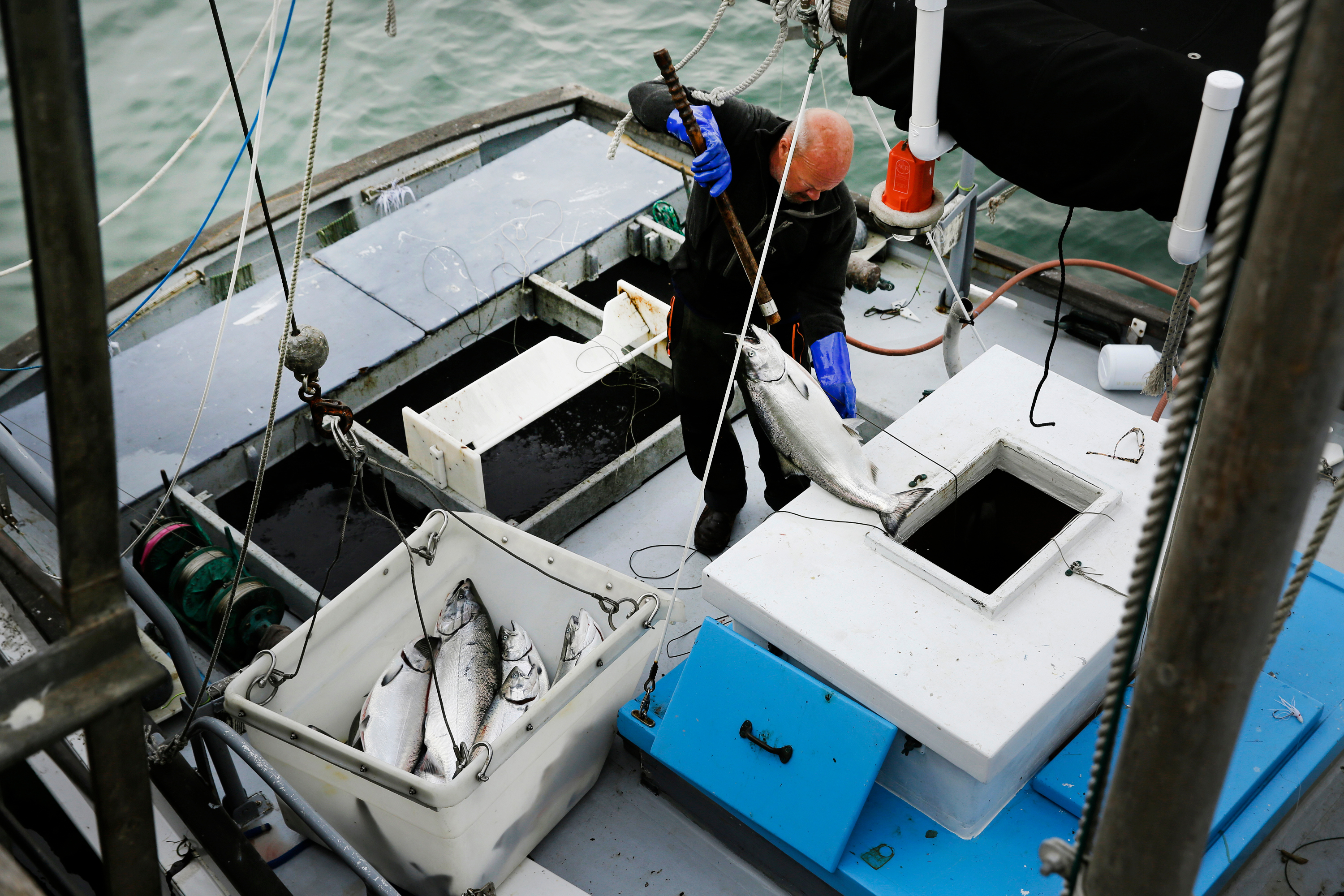

Commercial salmon fishing along the California coast will return for the first time since 2022 after a federal fishery council found on April 12 that some Chinook populations have rebounded.
Golden State Salmon Association members said the reopening was “long-awaited” but is still not a full recovery of the season.
“We’re cautiously optimistic,” the association’s executive director, Vance Staplin, said in a statement on April 12. “Businesses up and down the coast are desperate for the economic boost this season will bring, especially after so many recent bad years of no business caused by the shutdown of salmon fishing.”
Recovery of Sacramento River fall-run Chinook and Klamath River fall-run Chinook has allowed for more ocean salmon fishing opportunities this year, the California Department of Fish and Wildlife announced.
The Pacific Fishery Management Council reported on April 12 that the numbers showed that the council would be able to balance conservation and management goals while allowing fishing in some sections of the coastal waters.
“For 2026, the Council set fishing seasons designed to offer valuable opportunities for all users while carefully managing the resource for the future,” Pete Hassemer, council chairman, said.
The council, which manages fisheries off the West Coast, barred commercial salmon fishing for the past three years after recording historic low populations of Chinook salmon following years of prolonged and historic drought, severe wildfires, and ocean shifts.
In California, ocean commercial salmon fisheries will stay closed from the Oregon–California border to Point Arena. From Point Arena to Pigeon Point in Pescadero, about 50 miles south of San Francisco, there will be four multiday openings in May and three in August.
From Pigeon Point to the U.S.–Mexico border, the fishery will hold a series of multiday openings from May through August. All openings will depend on the remaining availability of the harvest.
The harvest limit in California is set at 83,000 Chinook salmon. Other fishing opportunities will be available in certain areas near Pigeon Point with a separate harvest limit of 20,000 Chinook, according to the council.
Sports fishing for salmon started on April 11 from Pigeon Point south to the U.S. border, but stormy weather kept many boats away. Only a small number of salmon were caught, according to the Golden State Salmon Association.
Coastal communities that rely on the annual salmon fishery are excited about the prospect of possibly becoming profitable again, Staplin said.
The commercial salmon fishery off the West Coast can bring in more than $1 billion for California and Oregon, the association reported.
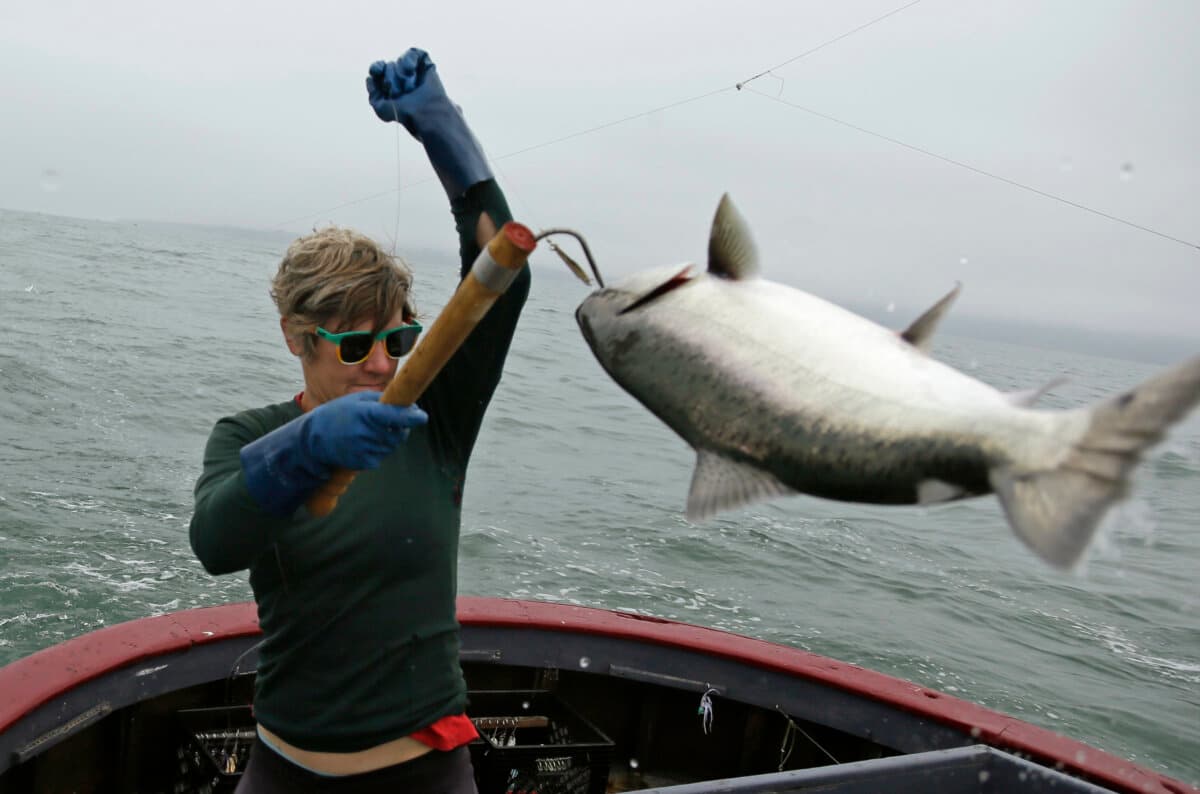
Commercial fisherman Sarah Bates hauls in a Chinook salmon on the fishing boat Bounty near Bolinas, Calif., on July 17, 2019. (Eric Risberg/AP Photo)
Concerns remain, according to the group. Juvenile salmon migrating from the Central Valley still face tough conditions after a warm and dry start to spring.
Fishing will continue to be tightly restricted, with quotas and limited openings designed to protect salmon populations, especially fish from coastal rivers in northern California, according to the association.
California’s salmon industry is valued at $1.4 billion in economic activity and 23,000 jobs each year in a normal season, the Golden State Salmon Association estimated.
The council’s recommendations, which were finalized at its meeting held from April 7 to April 12, are expected to be implemented into federal regulations by the National Marine Fisheries Service.