
These six museums in Northern California offer free entry and take visitors on journeys through history, from early technologies to maritime artifacts, firefighting equipment, and more.
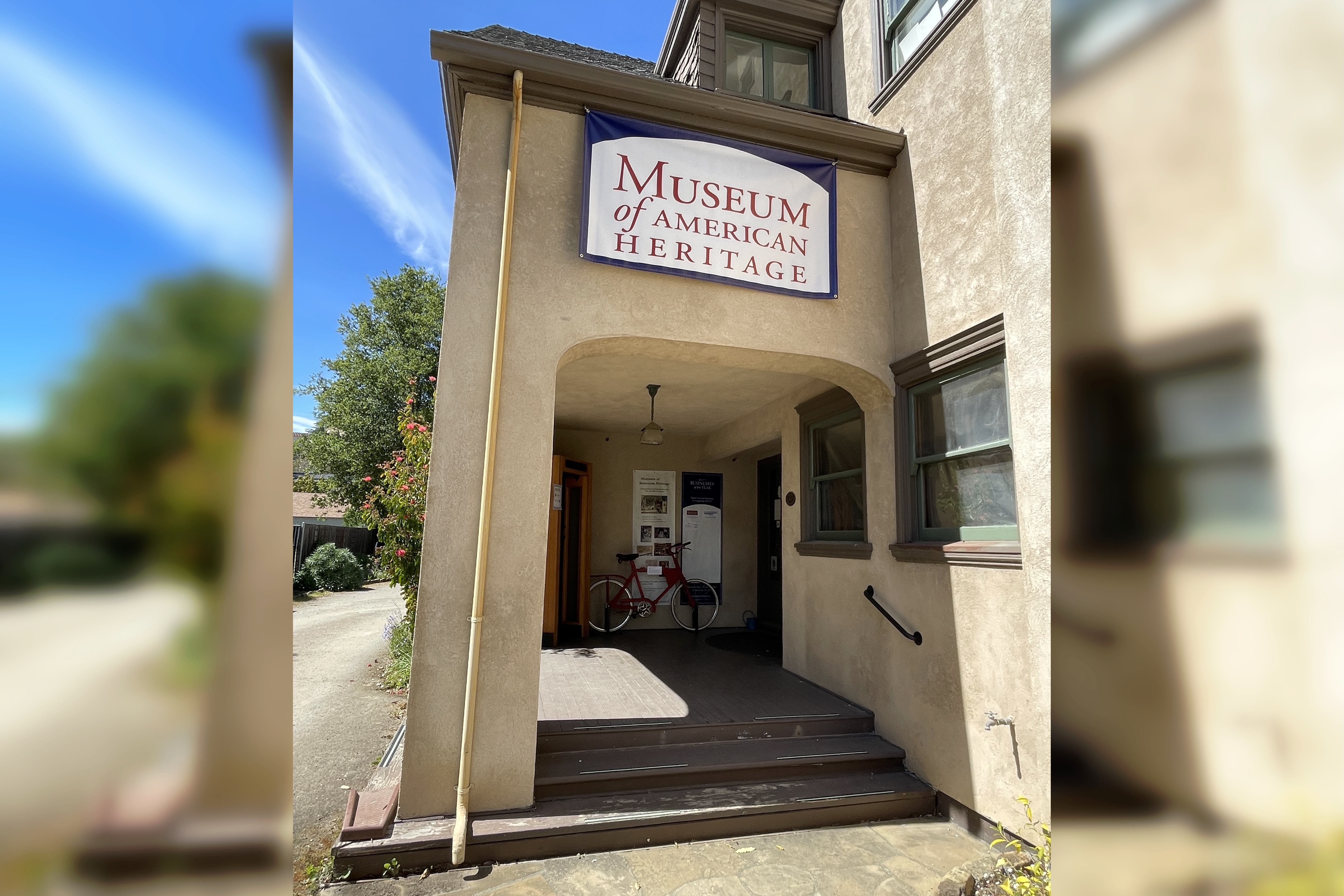
Museum of American Heritage
Located in Palo Alto, the Museum of American Heritage is dedicated to collecting, preserving, and displaying historic innovations and technologies from 1750 to 1950.
It opened to the public in 1990 with 600 artifacts and has continued to collect a broad range of electrical and mechanical items. The museum now has a vast collection of more than 8,000 artifacts displayed in rotating exhibits.
“In our modern world, it’s easy to overlook the individual innovations that have propelled technology forward. The Museum of American Heritage (MOAH) offers the chance to understand how these innovations have shaped daily life today,” Michelle Fabian, executive director at the museum, told The Epoch Times in an email. “This is especially meaningful for the communities of Palo Alto and the surrounding areas, where the inventions of Silicon Valley define innovation.”
She said permanent exhibits include a vintage toy exhibit, a 1920s to 1950s Chicago general store, a mid-century kitchen with a Hoosier cabinet and a 1930s monitor-top refrigerator, a 1915 Ford Model T, and a print shop containing a functioning intertype machine and several printing presses.
One of the current rotating exhibits is called “Minding the Store.” The exhibit features cash registers, scales, and other items found in a store.
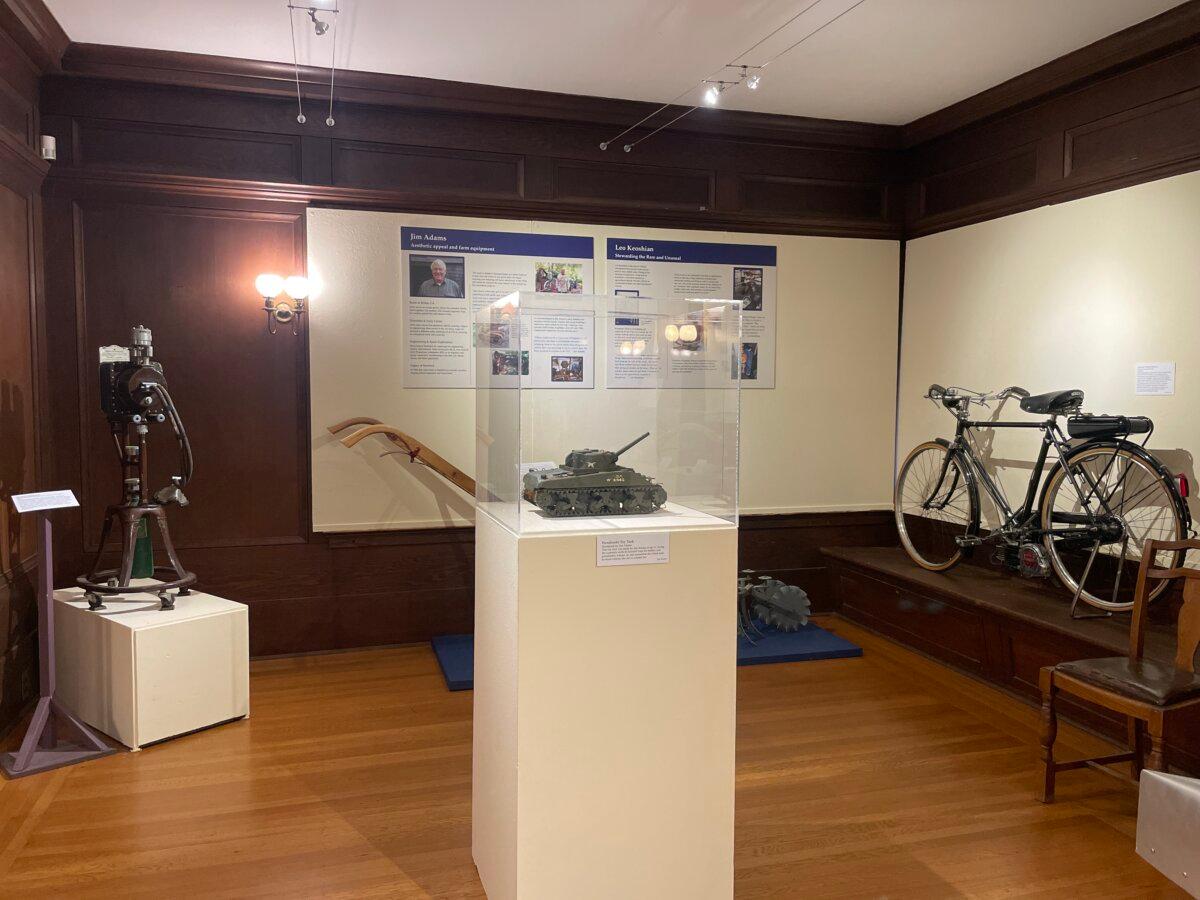
Items on display at the Museum of American Heritage. (Courtesy of Museum of American Heritage)
The museum is housed in the historic 1907 Williams House, which contains insights into the history of Palo Alto and the Williams family. Dr. Thomas Williams played a key role in the founding of the Palo Alto Medical Center, and the museum continues to preserve and maintain the Williams home and garden.
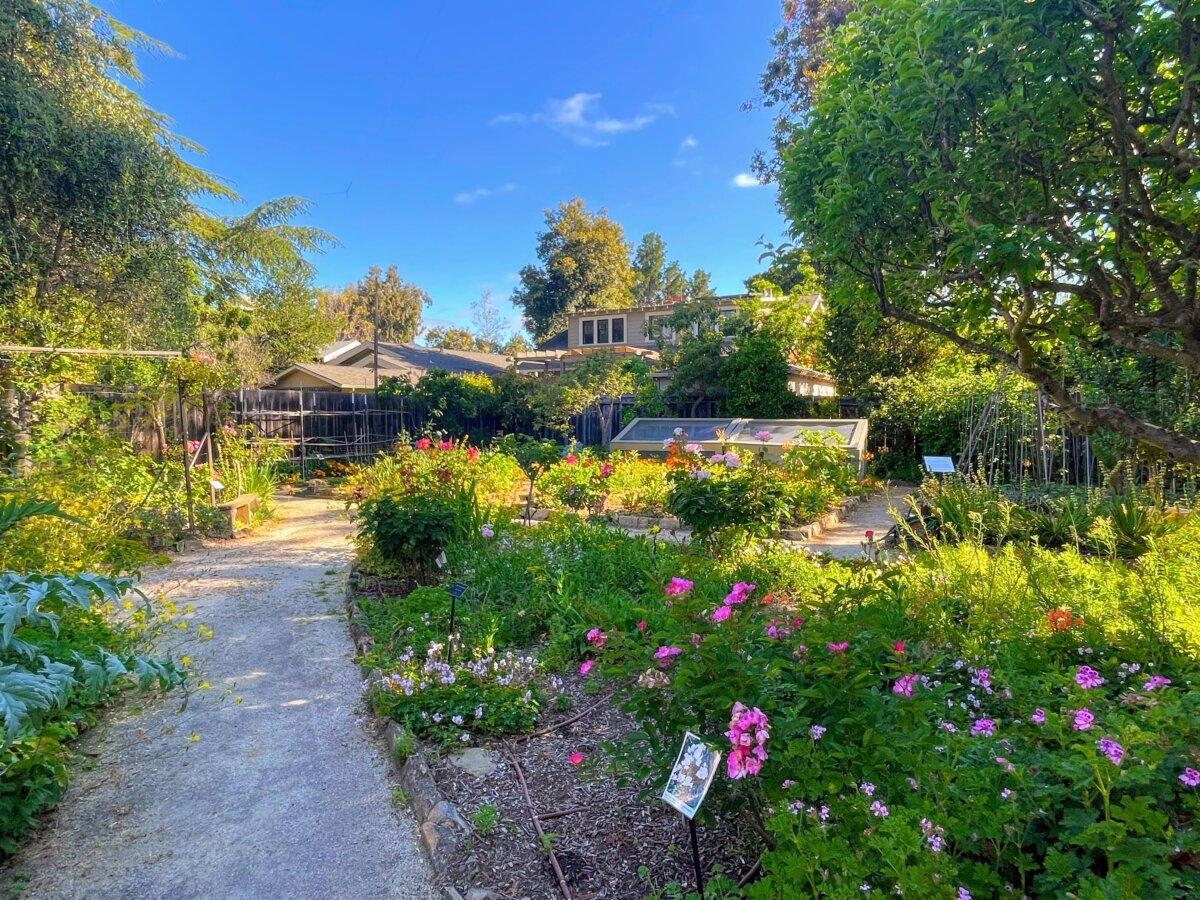
The Williams House garden at the Museum of American Heritage. (Courtesy of Museum of American Heritage)
The garden is open to visitors and is a re-creation of an early-20th-century California garden with all plants appropriate to the period.
The museum also has an off-site 13,000-square-foot warehouse that houses the part of the collection that’s not on display.
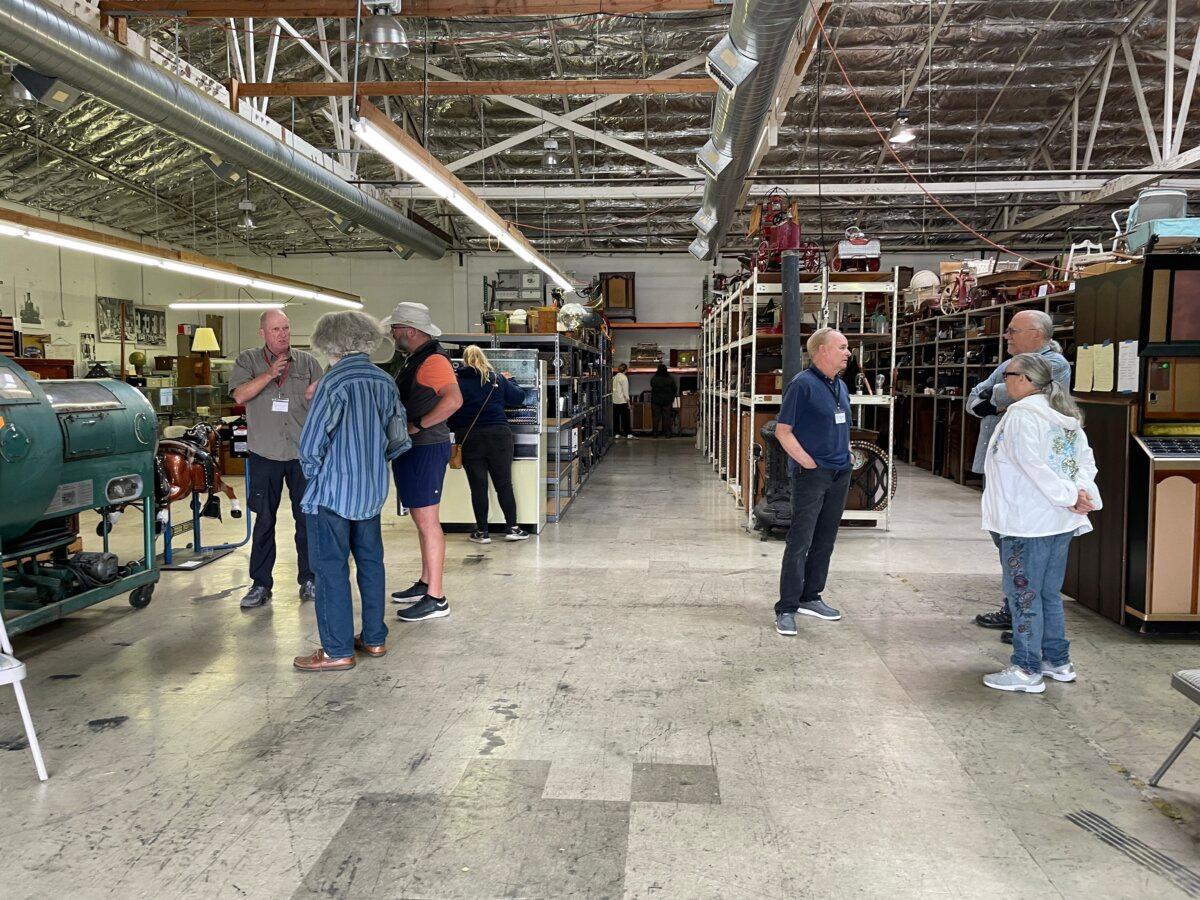
The Museum of American Heritage’s warehouse. (Courtesy of Museum of American Heritage)
Fabian said that this year the museum is celebrating its 35th anniversary with a special exhibit called “Honoring 35 Years of Collectors.” The exhibit is on display through Sept. 21 and honors six collectors, or hobbyists, who have donated parts of their collections to the museum.
For older visitors, the museum aims to bring a sense of nostalgia, and for younger ones, to spark curiosity, according to Fabian.
“Either way, it’s important for people to connect with history in a meaningful way. Innovators spent their lives creating these devices and we must continue to share and celebrate that history,” she said. “As time goes on, the inventions that started it all are becoming harder to find, and it’s our privilege to preserve and share them with our visitors.”
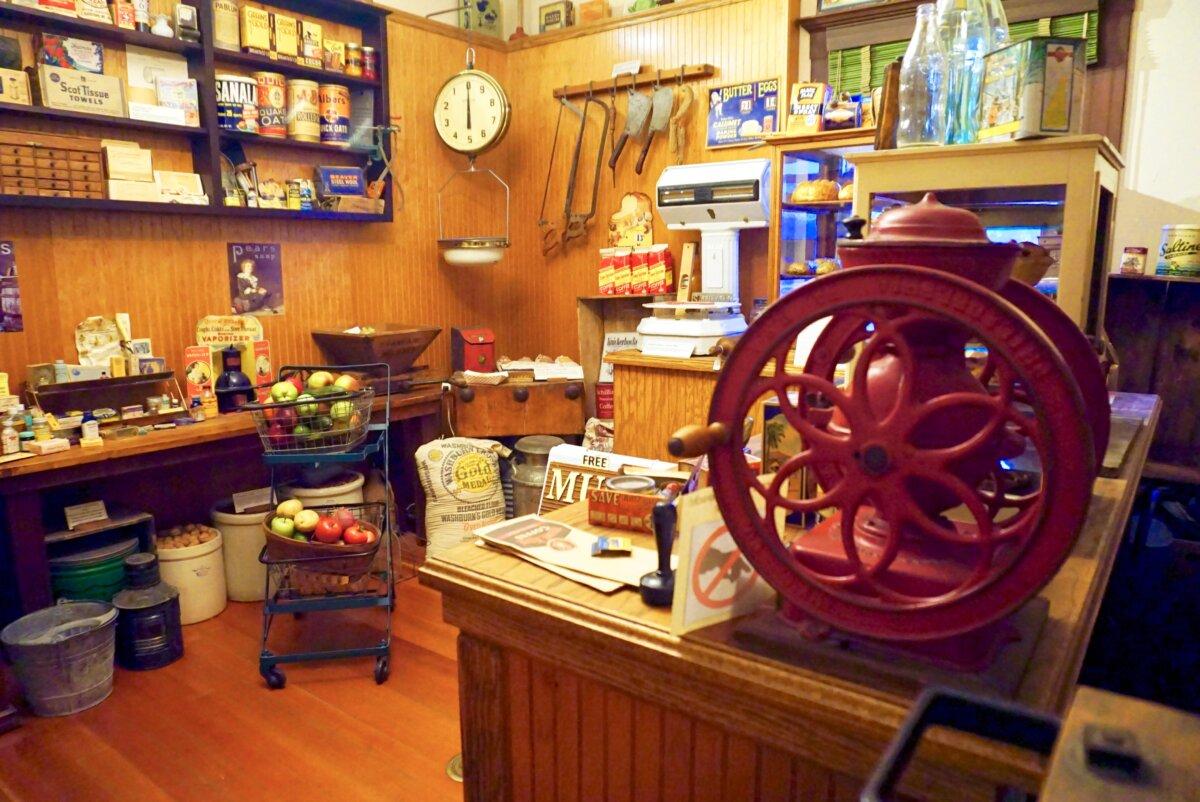
A general store exhibit at the Museum of American Heritage. (Courtesy of Museum of American Heritage)
Fabian said she enjoys hearing stories from visitors about how they remember their grandparents using a particular item or even used it themselves, and what the artifact means to them. Meanwhile, curious younger visitors may have never seen or heard of some of the items, such as a working 1903 phonograph.
She noted that the museum’s entire collection pays homage to the innovations that have inspired and contributed to our lives today. Significant innovations such as the phonograph, the telephone, vacuum tubes, typewriters, and many more have paved the way for exponential progress.
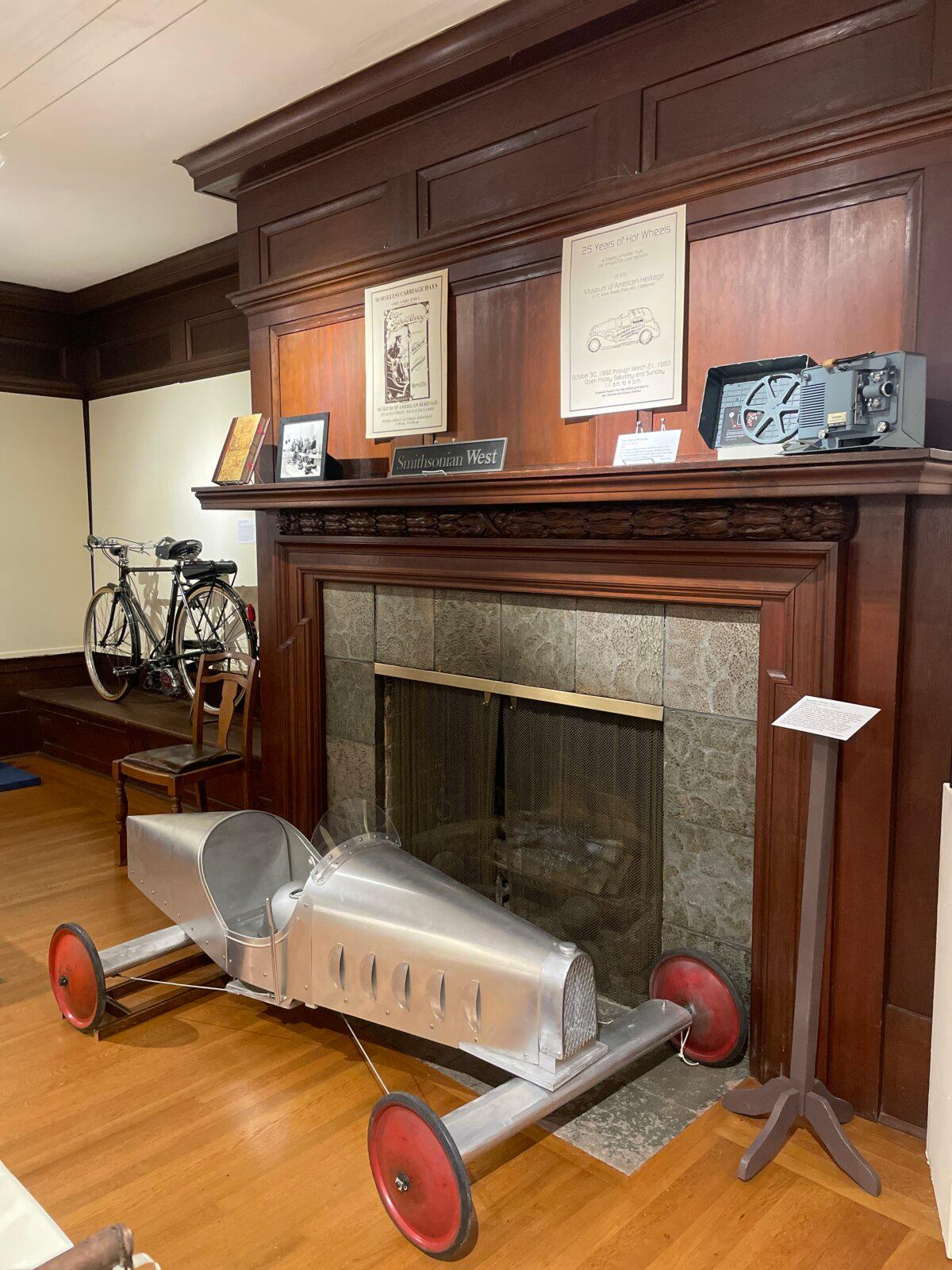
Items on display at the Museum of American Heritage. (Courtesy of Museum of American Heritage)
The MOAH exists today because of its founder, Frank Livermore (1919–2000), according to the museum’s website. Livermore saw an old Standard vacuum sweeper in a local junk shop and was intrigued by its mechanics. He bought the sweeper, marking the beginning of his passion for collecting antique machinery.
By the 1980s, his home in Menlo Park was crammed with vintage devices. Livermore’s friends joked that he should start a museum of his own and gave him a sign saying “Smithsonian West.” He ended up taking the idea seriously and officially formed a nonprofit museum.
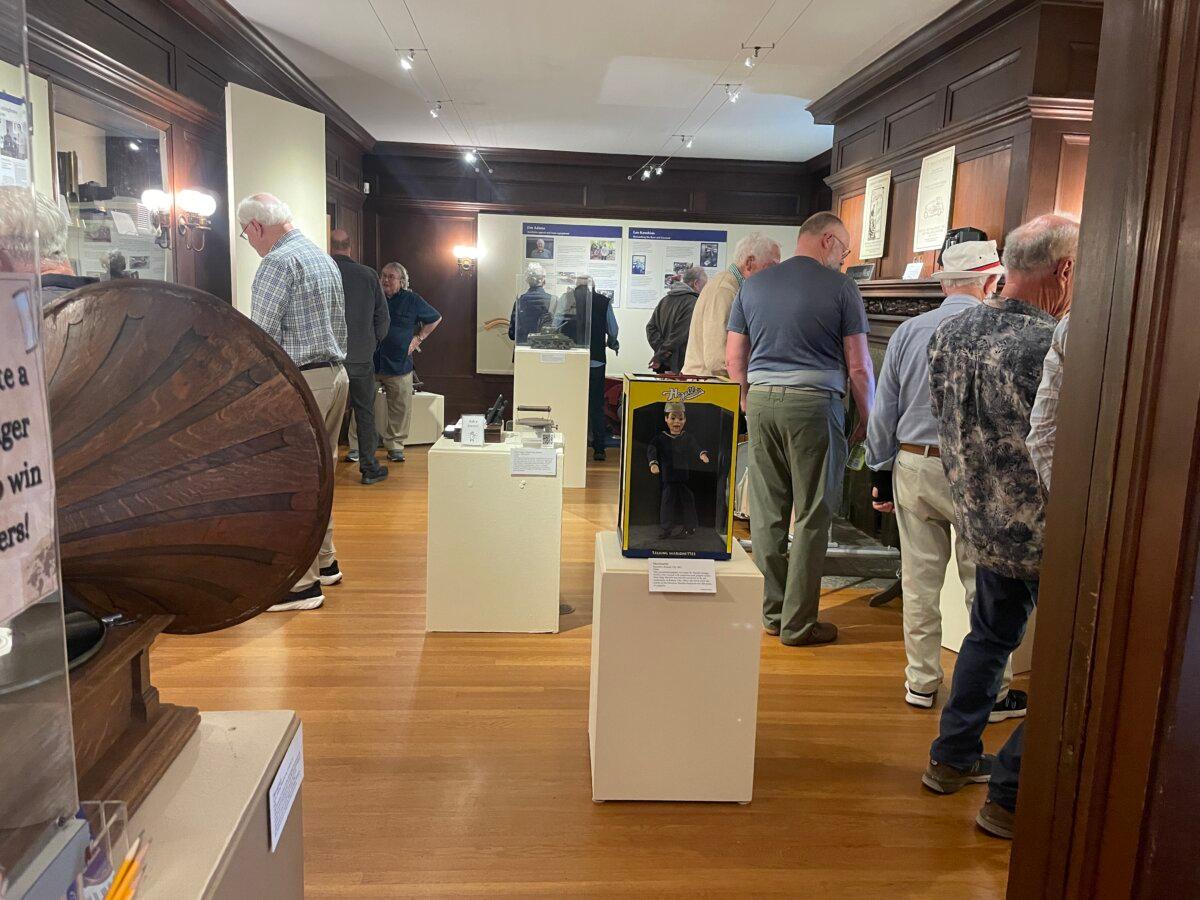
A reception honoring 35 years of the Museum of American Heritage. (Courtesy of Museum of American Heritage)
The MOAH is a small museum run by three staff members and supported by more than 50 volunteers; it does not receive any federal, state, or municipal funding, according to Fabian, who said proceeds from the museum’s memberships, donations, and fundraising events enable its operation.
The museum is open Fridays through Sundays, 11 a.m. to 4 p.m., and is located at 351 Homer Ave., Palo Alto.
Robert Louis Stevenson Museum
The Robert Louis Stevenson Museum in St. Helena offers a look into the life and legacy of the 19th-century influential literary figure.
The extensive collection includes personal effects, first editions, original manuscripts, artwork, and historical photographs belonging to or associated with Stevenson’s life and work.
In addition to the physical collection, the museum maintains an academic archive that is available online, free and accessible to researchers, educators, and enthusiasts around the world.
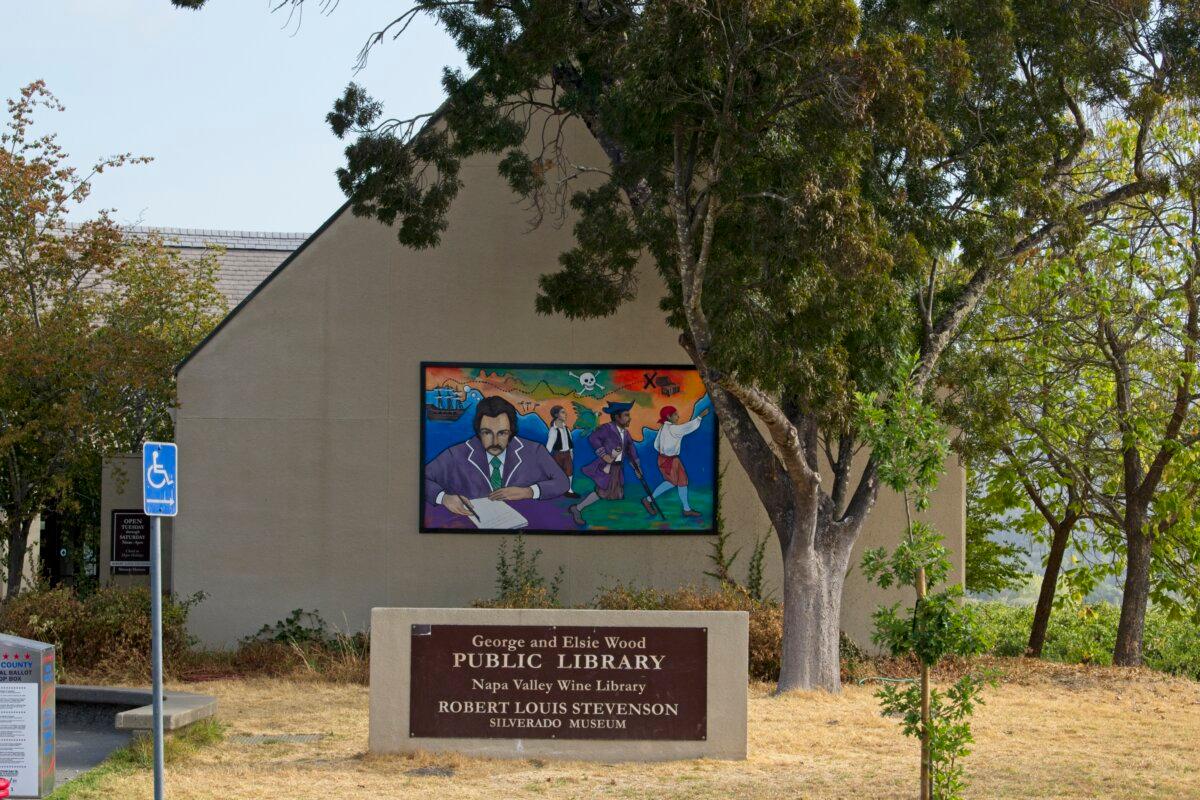
The front entrance to the Robert Louis Stevenson Museum. (Courtesy of Robert Louis Stevenson Museum)
“People should visit the museum not only to explore the life of a beloved author but also to step into a slice of literary and cultural history. Stevenson’s travels, relationships, and philosophies resonate far beyond the page,” Barrett Dahl, the museum’s executive director, told The Epoch Times in an email. “Whether you’re a fan of ‘Treasure Island,’ or ‘Strange Case of Dr. Jekyll and Mr. Hyde,’ interested in Victorian literature, or simply curious about global storytelling, the museum offers something both educational and inspiring.”
Some highlights of the museum include Stevenson’s personal writing desk and his chess set, both of which traveled with him around the world, according to Dahl. There is also a showcase of first editions of the author’s most iconic works, letters to friends and family, and rare photographs from his time in California and the South Pacific, she said.
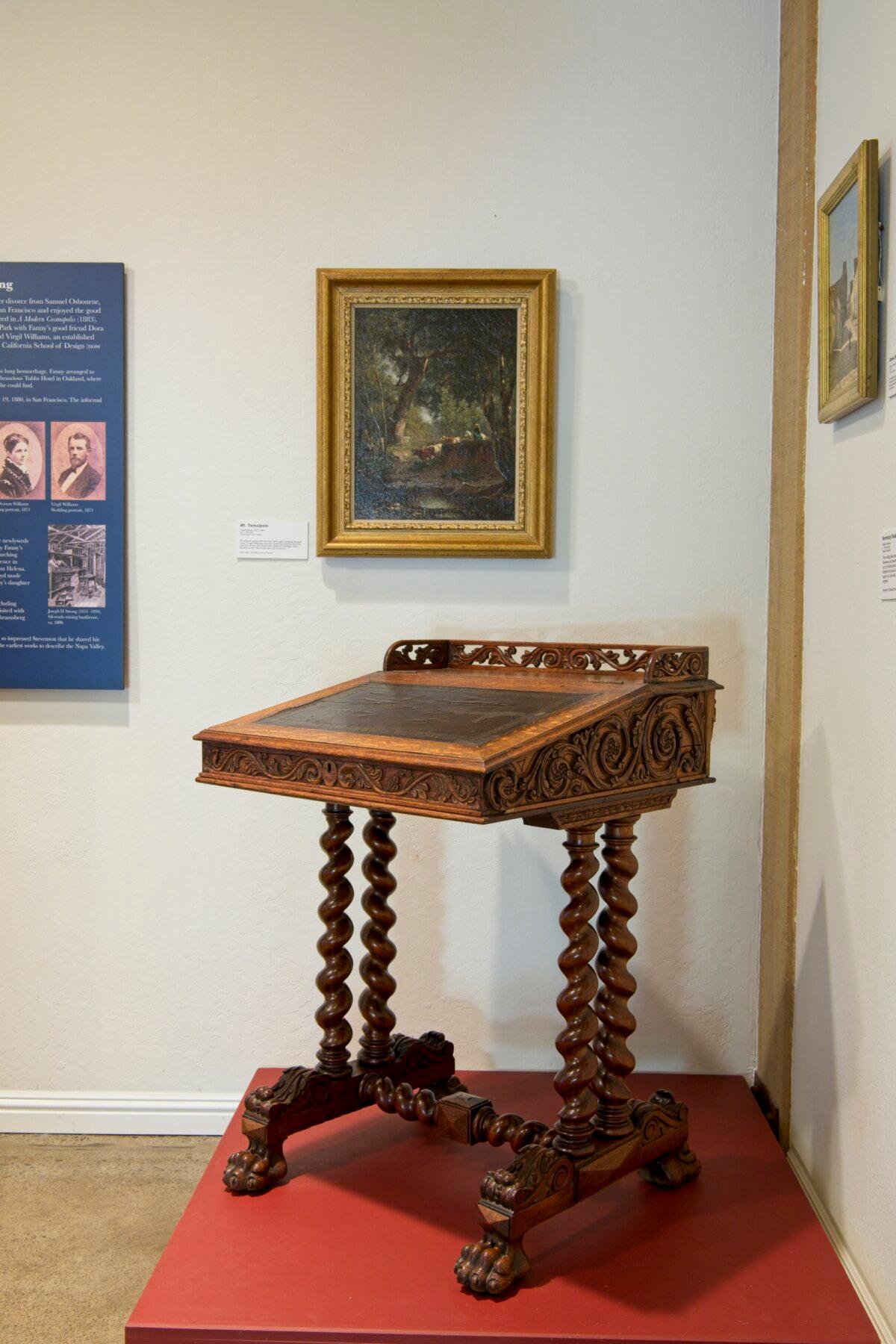
A desk on display at the Robert Louis Stevenson Museum. (Courtesy of Robert Louis Stevenson Museum)
Stevenson received critical and popular acclaim during his life, in particular for the works “Treasure Island” (1883), “Strange Case of Dr. Jekyll and Mr. Hyde” (1886), “Kidnapped” (1886), “The Master of Ballantrae” (1889), and “Catriona” (1893), according to the museum’s website.
Dahl said the museum hopes that visitors leave with a deeper understanding of Robert Louis Stevenson as more than just an author.
“He was a global traveler, a historian, a critic of colonialism, and someone who deeply valued individual freedom and cross-cultural connection,” she said. “His life story is a reminder of how literature and personal experience can shape the world around us.”
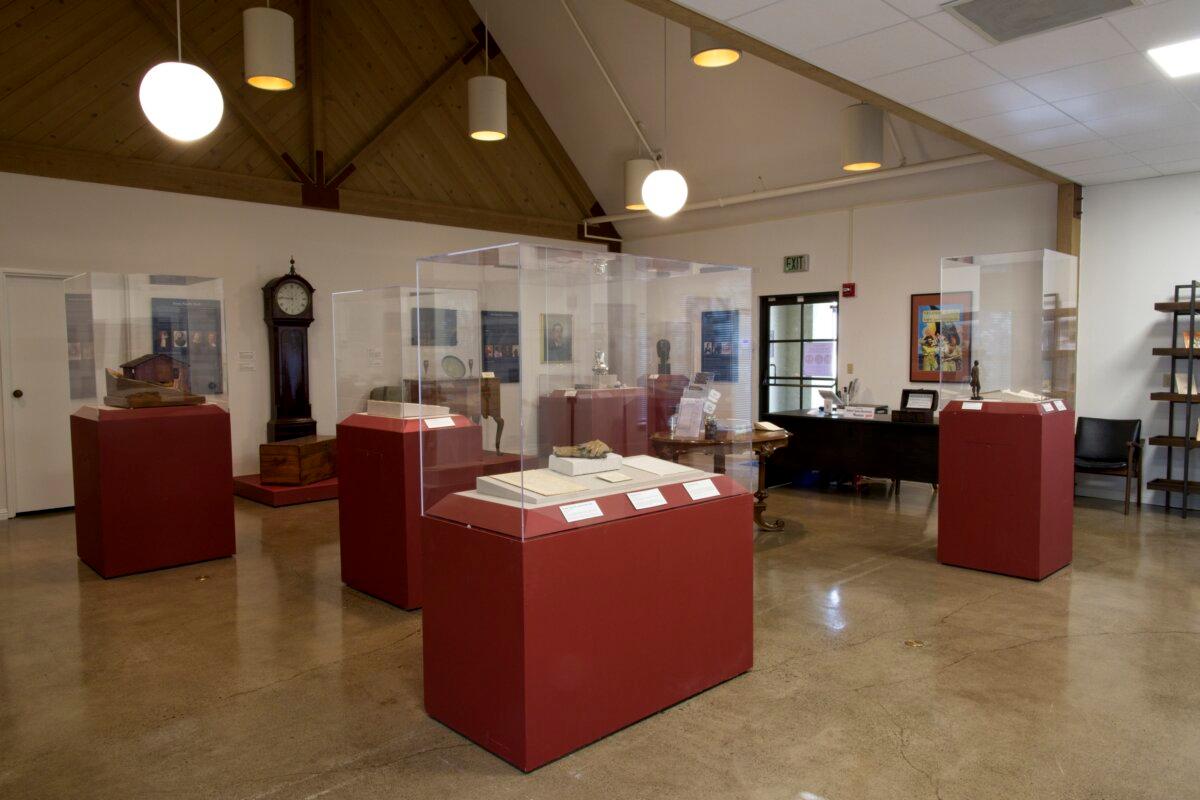
Items on display at the Robert Louis Stevenson Museum. (Courtesy of Robert Louis Stevenson Museum)
Dahl said Stevenson’s work continues to shape literature, film, and popular culture; and beyond that, his life offers valuable lessons in resilience, creativity, and empathy.
She noted that he lived with chronic illness but traveled extensively, formed deep cross-cultural bonds, and spoke out against injustice, particularly during the Samoan Civil War. Dahl said Stevenson’s legacy encourages us to engage thoughtfully with the world and with each other.
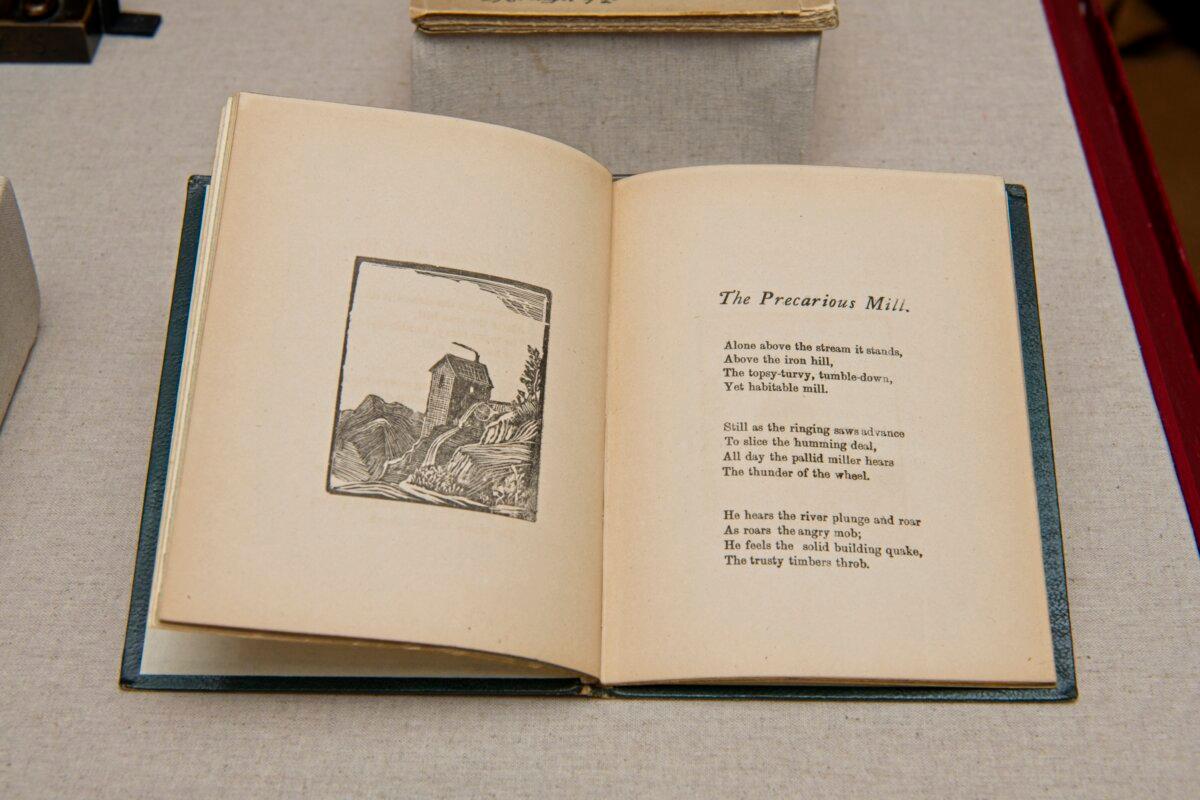
The poem “The Precarious Mill,” written by Robert Louis Stevenson, on display at the Robert Louis Stevenson Museum. (Courtesy of Robert Louis Stevenson Museum)
“Enchanted with life in the South Seas and convinced he could not endure another winter in Scotland, in January of 1890 Stevenson purchased an estate in Apia, Samoa,” the museum’s website states.
The climate of the tropics helped Stevenson’s health, and he lived on his estate, Vailima, in the hills of Samoa until his death in 1894 at the age of 44.
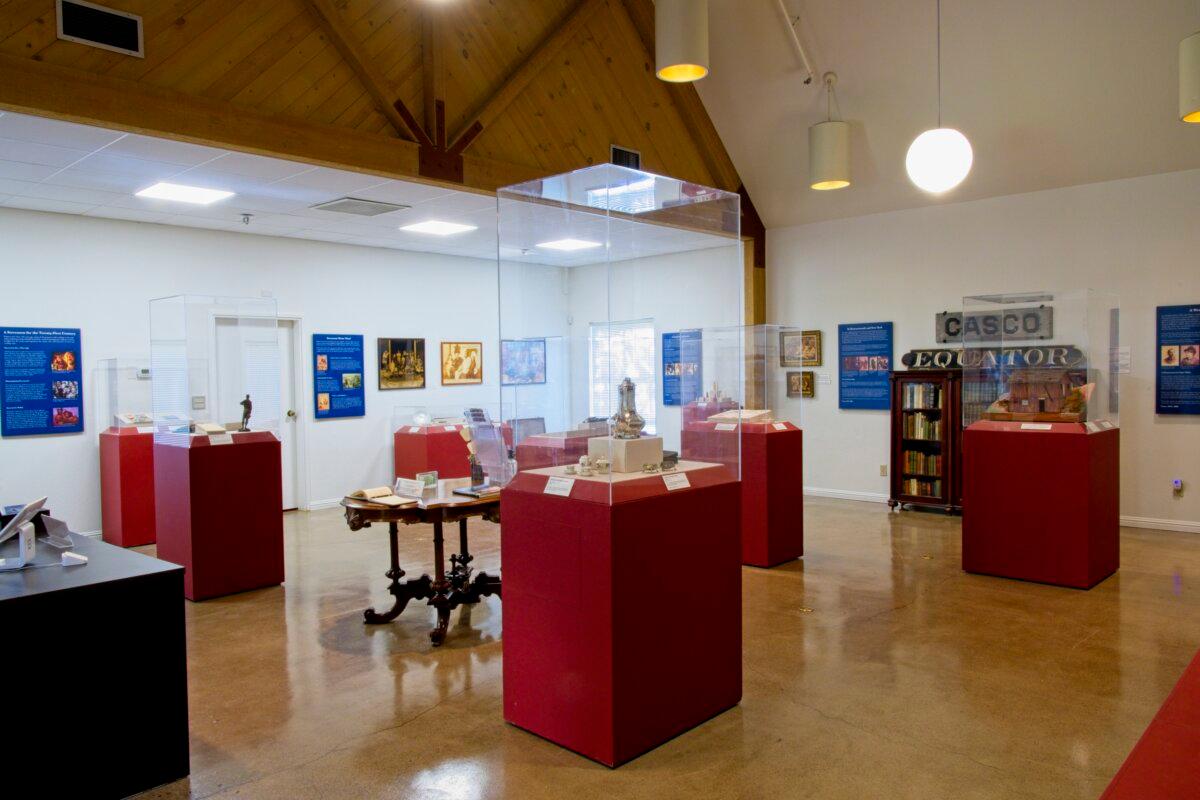
Items on display at the Robert Louis Stevenson Museum. (Courtesy of Robert Louis Stevenson Museum)
Dahl said this year marks the 175th anniversary of Stevenson’s birth on Nov. 13, 1850, and the museum will be celebrating and announcing more events this year.
The museum is open Tuesday through Saturday from noon to 4 p.m. year-round, and is located at 1490 Library Lane, St. Helena.
The Cable Car Museum
The Cable Car Museum, established in 1974, is a nonprofit educational facility located in the historic Washington/Mason cable car barn and powerhouse. The upstairs of the museum overlooks huge engines and winding wheels that pull cables, and downstairs is an area for viewing the large sheaves and cable line that enter the building through an underground channel, according to the museum’s website.
Exhibits on display include mechanical devices such as grips, track, cable, and brake mechanisms, as well as tools, models, and historic photographs.
The museum is also home to three antique cable cars from the 1870s: the Sutter Street Railway No. 46 grip car, the No. 54 trailer, and the only surviving car from the first cable car company, the Clay Street Hill Railroad No. 8 grip car.
The first cable car was tested by Andrew Smith Hallidie at 4 a.m. on Aug. 2, 1873, on Clay Street in San Francisco, according to the museum’s website.
Hallidie came up with the idea for a steam-engine-powered, cable-driven rail system in 1869 after he witnessed horses being whipped while they failed to pull a horsecar up Jackson Street on wet cobblestones.
Hallidie’s father, an inventor, had a patent in Great Britain for a cable. During the Gold Rush in the 1850s, Hallidie immigrated to the United States. He began using cable to help build suspension bridges and in a system he created for hauling ore from mines.
He entered a partnership to form the Clay Street Hill Railroad, which began construction of a cable line in May 1873 and began public service on Sept. 1, 1873.
The museum is located at 1201 Mason St., San Francisco, and is open Tuesday to Thursday from 10 a.m. to 4 p.m. and Friday to Sunday from 10 a.m. to 5 p.m. It is closed on Mondays.
San Francisco Fire Department Museum
The San Francisco Fire Department Fire Museum also doubles as a learning center for fire safety.
The museum’s collection dates back to the 1800s and includes a variety of antique firefighting equipment, including vehicles such as hose carts, buggies, and horse-pulled fire engines, as well as more modern firefighting vehicles, badges, extinguishers, helmets, hydrants, patches, speaking trumpets, and ribbons.
The museum has the first fire engine built in California, the Broderick Engine No. 1, nicknamed the “Old Fire Eater.” It was manufactured in 1855 by William Ellison Worth in San Francisco.
The museum’s website is also dedicated to documenting the 1906 fire, caused by an earthquake that destroyed the city. It includes fire reports, the water sources they used, the rescues, and the hardships that the firefighters endured during the four days of the fire.
The museum is open Thursday through Sunday from 1 p.m. to 4 p.m. as staffing permits, and is located at 655 Presidio Ave., San Francisco.
San Francisco Maritime Museum and Maritime Park Visitor Center
The San Francisco Maritime Museum is located at the Aquatic Park Bathhouse. The Art Deco-style building was built in 1938 and overlooks the Bay with views of Alcatraz and the Golden Gate Bridge.
Exhibits include nautical artifacts, models, and mural paintings, according to the San Francisco Maritime National Historical Park website.
The museum is open Wednesday through Sunday from 10 a.m. to 4 p.m., and is located at 900 Beach St., San Francisco.
The Maritime Park Visitor Center is inside a historic brick cannery warehouse at the corner of Jefferson and Hyde streets. It’s filled with Bay Area maritime information and artifacts, including a Fresnel lens from the Farallon Islands lighthouse.
One exhibit titled “A Walk Along the Waterfront” takes visitors through San Francisco’s historic waterfront past, from the times of native tribes to the early-20th-century industrialization period, according to the park website.
The visitor center is open weekdays from 1 p.m. to 5 p.m. and weekends from 10 a.m. to 5 p.m., and is located at 499 Jefferson St., San Francisco.
Edward Peterman Museum of Railroad History
The Edward Peterman Museum of Railroad History is maintained by the South Bay Historical Railroad Society. The Society’s goal is to preserve California railroad heritage and provide a learning experience with its museum exhibits.
The Society is located in the historic Santa Clara Depot built in 1863 in Santa Clara. The Society’s members and volunteers preserve and maintain four historical railroad buildings.
One of these is the Santa Clara railroad depot. Another is the Santa Clara Tower, which housed a machine that controlled switches and signals. The others are two maintenance buildings: a speeder shed that once housed a motorized track inspectors’ car, and a Section Tool House.
A collection of railroad artifacts are on display in the Santa Clara Depot. They’re mainly from western railroads but also from other parts of the country and Canada. The artifacts include lanterns, tools, signs, railroad right-of-way maps, former railroad employee service items, railroad operations papers, signals, and switch stands.
The museum has a unique three-wheeled velocipede that was used for railroad maintenance. A railroad track inspector rode and propelled the vehicle down the tracks by alternately pulling and pushing the dual wooden handles, according to the Railroad Society’s website.
A worker could carry all his tools for track and tie maintenance on the velocipede. The vehicle was built entirely of wood, except for the wheel rims, so that it would be lightweight enough for one person to get it on and off the tracks.
Also in the Depot are two scale model railroads depicting various railroad eras and places of operation.
The railroad museum is open Tuesday evenings from 5 p.m. to 8 p.m. and Saturdays from 10 a.m. to 4 p.m., and is located at 1005 Railroad Ave., Santa Clara.