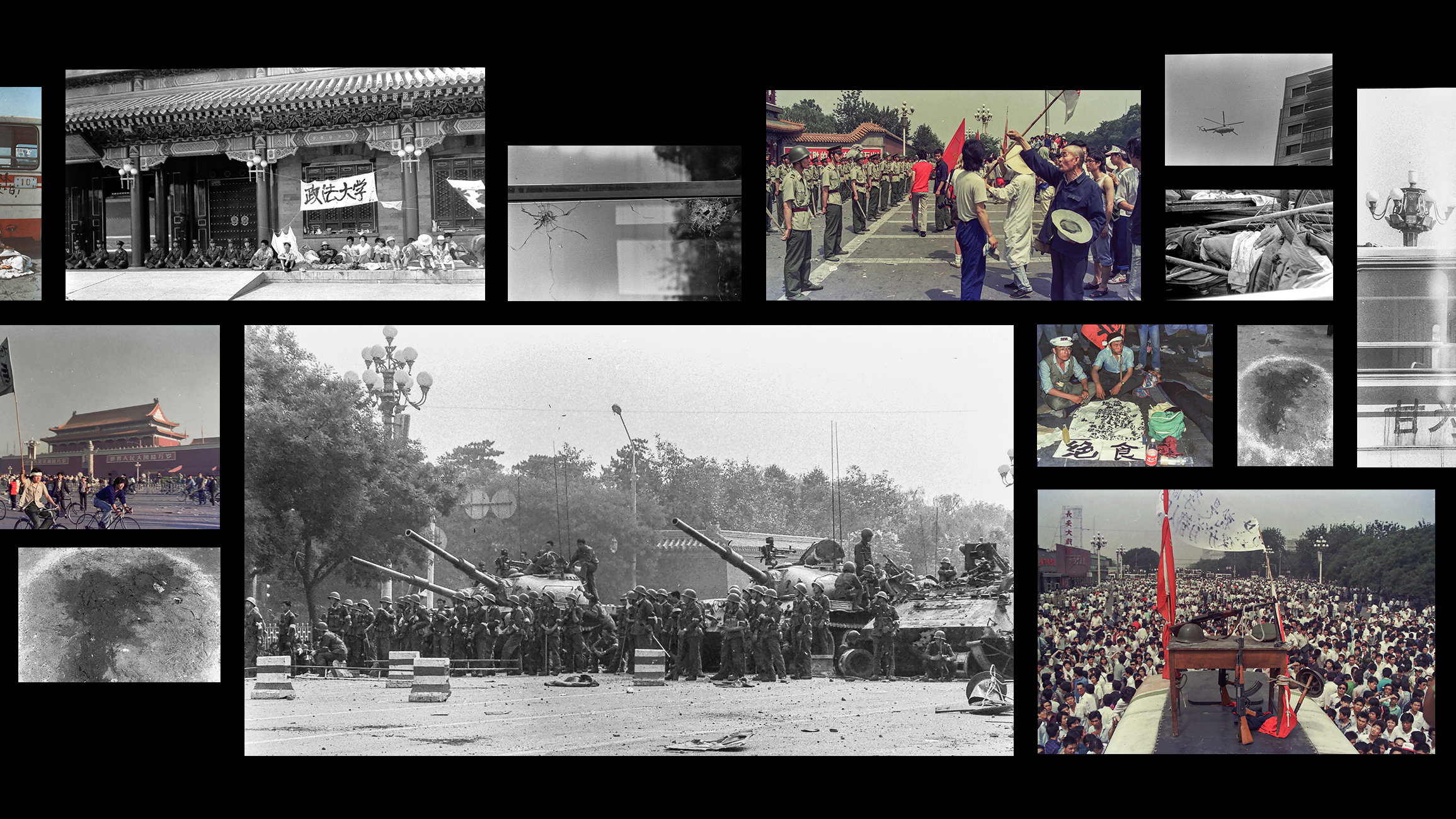

For decades, film rolls containing more than 2,000 photos documenting the 1989 Tiananmen Square democracy movement had been shut inside a metal box, never known to the world.
These photos, taken by a Chinese state media photographer and having survived the ensuing political purge campaigns after the massacre, eventually made their way to the United States, and were recently entrusted to The Epoch Times.
Now, The Epoch Times is making the photos public for the first time.
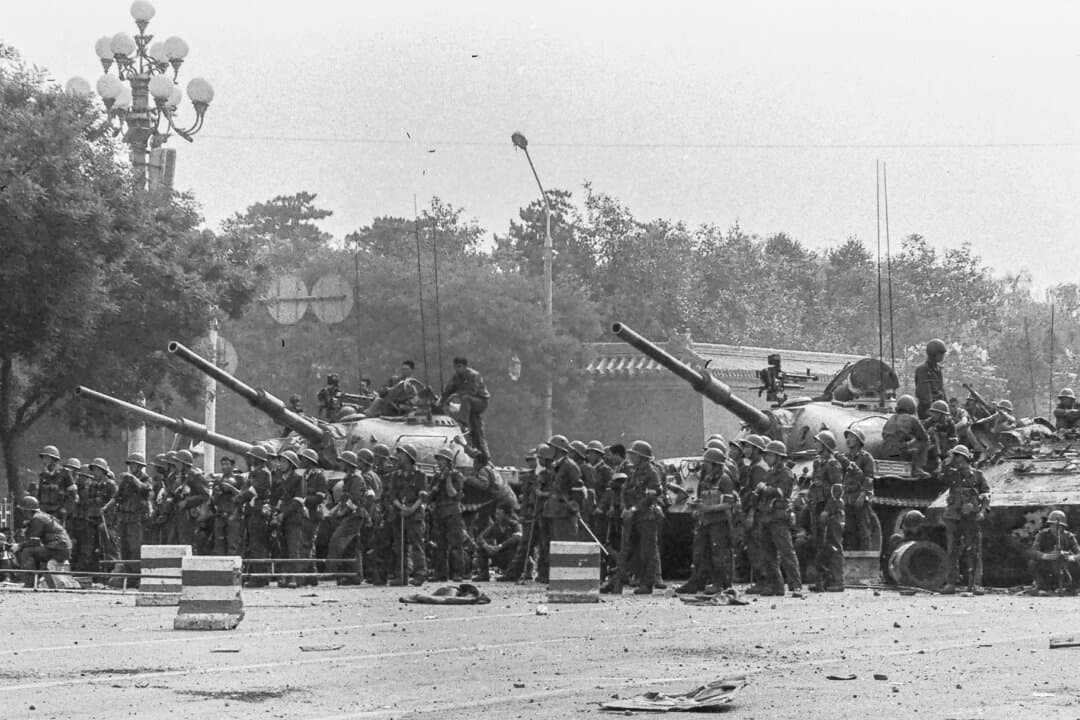
Tanks are geared up in an offensive position ahead of the Tiananmen Square massacre in Beijing in 1989. (Provided to The Epoch Times)
Thousands of people are estimated to have died on June 4 at the hands of the Chinese communist regime 37 years ago.
Communist authorities, framing a peaceful student-led movement as a riot to disrupt social order, hunted down participants nationwide while instituting systematic ideological reeducation to erase from history all but their version of events.
The photos, now scanned and digitized, provide a glimpse of those fleeting weeks in the spring of 1989 when hope hung thick in the air and more freedoms seemed so close at hand—until the gunfire proved otherwise.
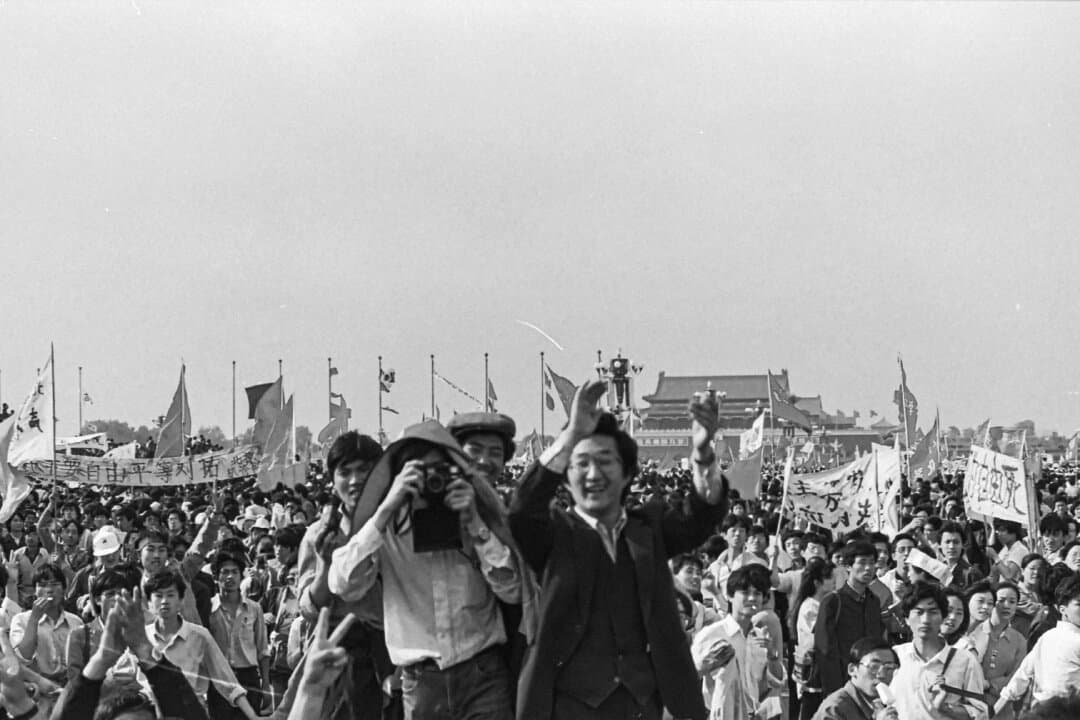
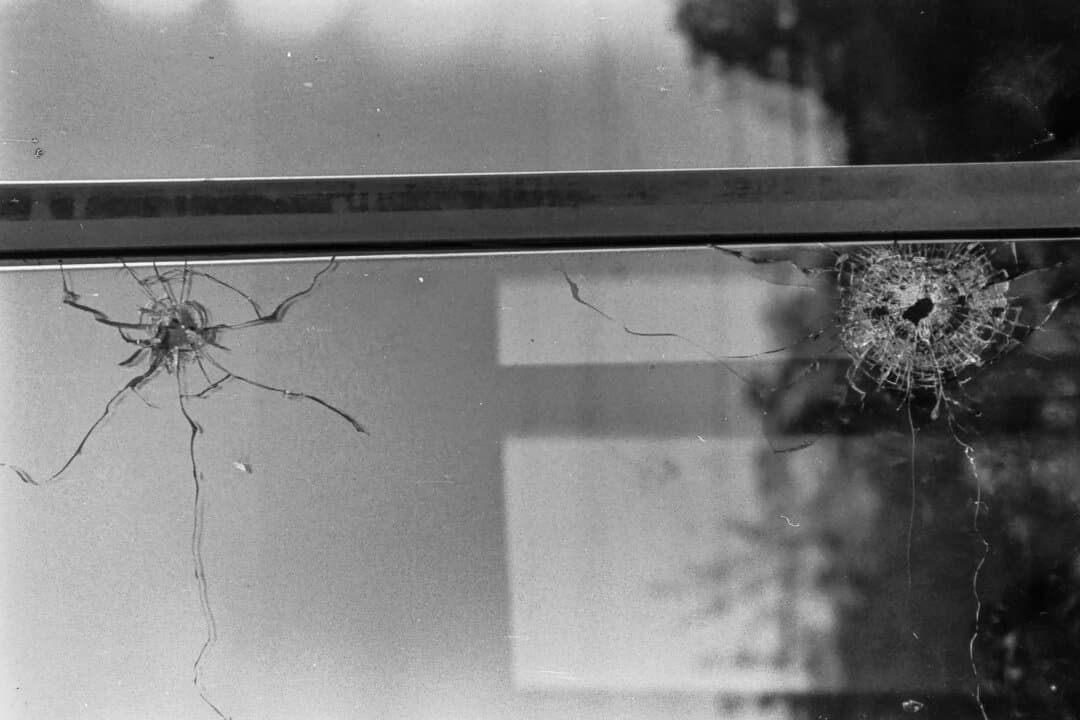
(Left) Pro-democracy protesters during a demonstration in Tiananmen Square in Beijing in 1989. (Right) Bullet holes left after Chinese authorities opened fire to suppress the pro-democracy movement in Beijing in 1989. (Provided to The Epoch Times)
Among those in the photos are students on hunger strike, wearing white cloth bands around their foreheads. They’re shown linking arms and staging million-strong street protests, with academics, media professionals, and military officers joining in solidarity. When the troops came in, these students—and civilian supporters—resisted with barricades and their own bodies.
For some time, they succeeded. As military trucks ferried tens of thousands of soldiers to Beijing following a martial law order on May 20, the students blocked them, sharing food and water while explaining their cause. The troops turned back.
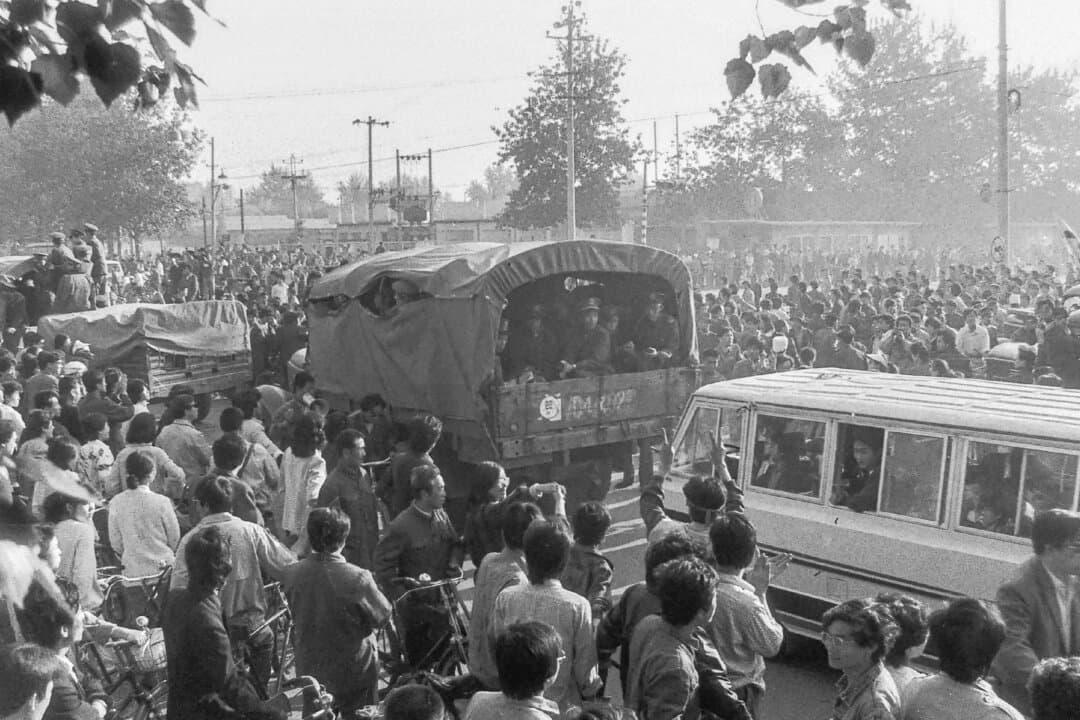
Pro-democracy protesters cheer at Chinese troops in Beijing around May 20, 1989. The troops eventually withdrew after the protesters gained their sympathy. (Provided to The Epoch Times)
Some of the photos show military officers waving to protesters. In one, several smile as they accept youtiao, golden brown fried dough sticks that are a Beijing breakfast staple. In another, a uniformed officer makes a victory sign amid a sea of protesters, many of whom are doing the same.
But their upbeat spirit didn’t last long.
Late into the night on June 3, heavily armed troops marched in again. This time, they didn’t hesitate to fire on civilians—indiscriminately.
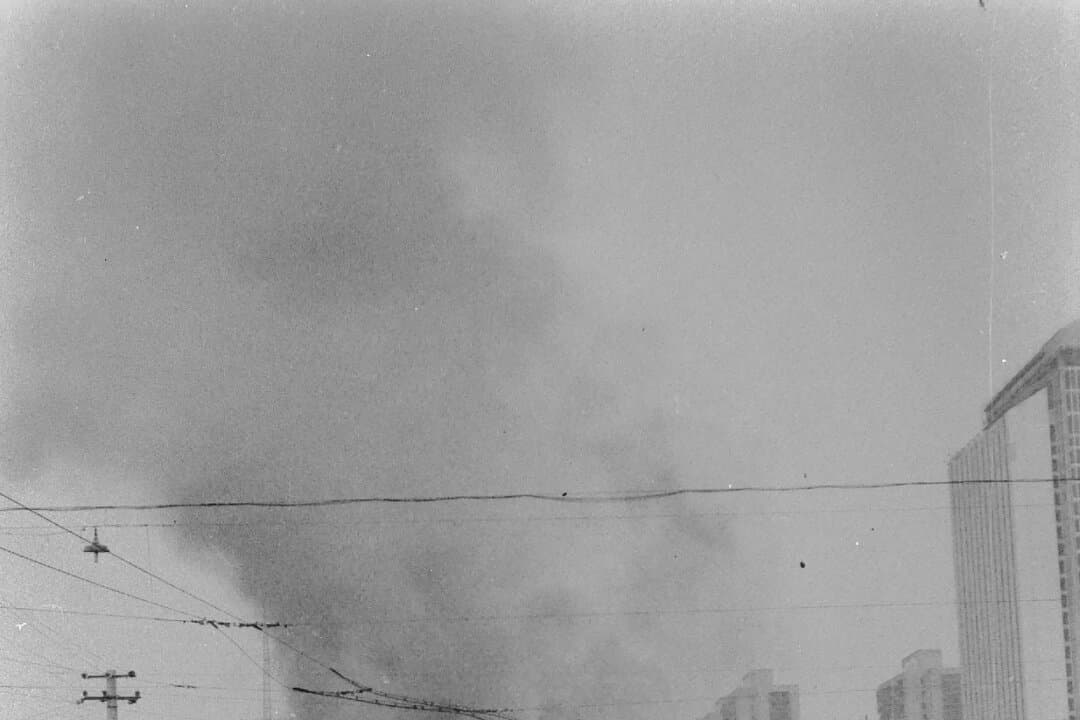
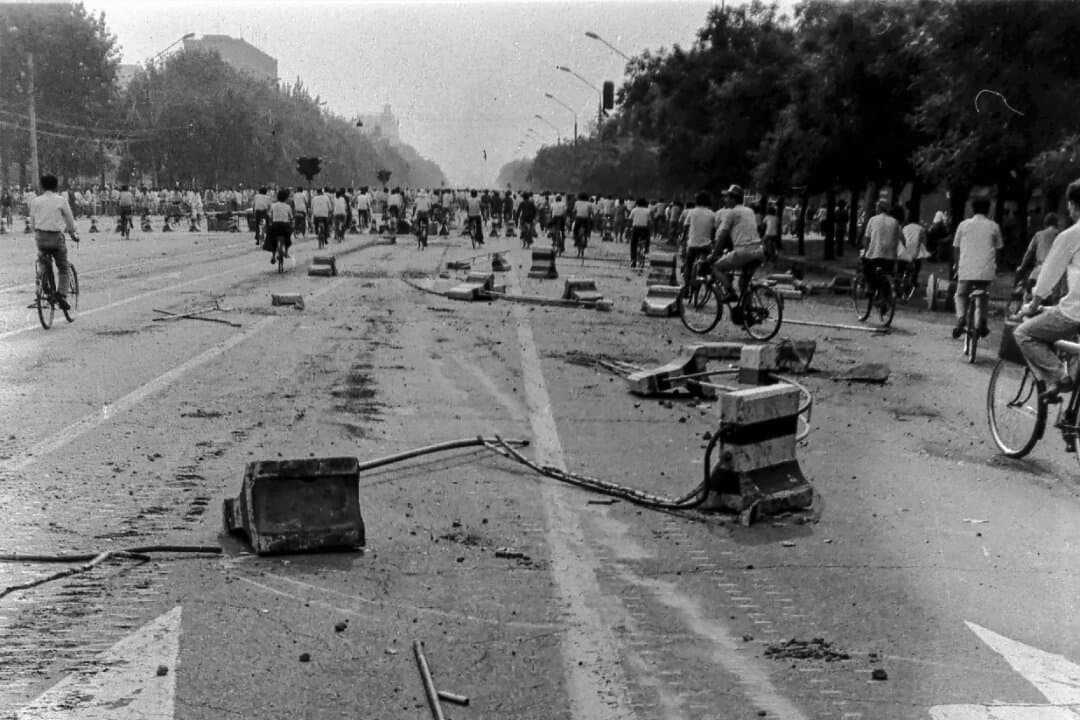
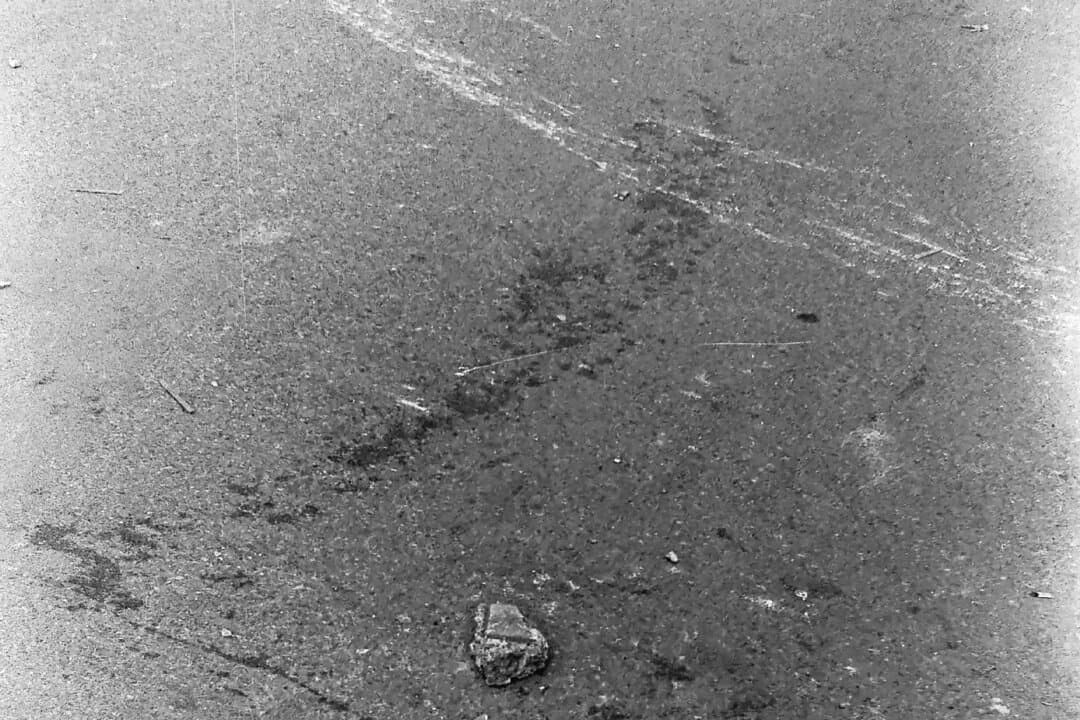
Burned vehicles, toppled barricades, and bloodstains on the ground during and after the suppression of the pro-democracy Tiananmen Square protests in Beijing in June 1989. (Provided to The Epoch Times)
The photographer documented bullet holes in a window and injured men on stretchers with blood soaking through their coverings.
“There were smashed heads, ruptured stomachs, and spilling intestines. Around them were mangled arms and legs, some still bleeding,” one eyewitness wrote on a public poster dated June 4. Those were the bodies of six student protesters, the witness said, adding that everyone around—except for the soldiers—was crying.
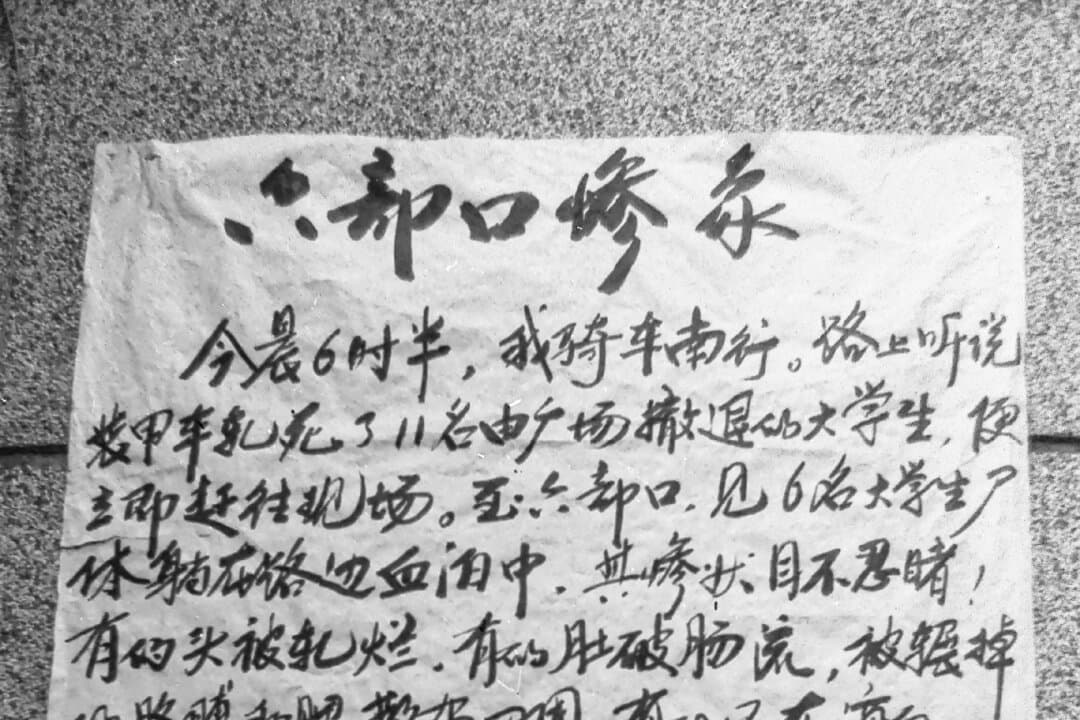
An eyewitness description of seeing six student protesters’ bloodied bodies in Tiananmen Square in Beijing in the early morning of June 4, 1989. (Provided to The Epoch Times)
The topic remains taboo in China.
The Chinese authorities have harassed a number of people they deemed to have been involved in providing the photos, including both Chinese nationals and citizens of the United States and Canada.
“Act quickly to eliminate the impact, stop posting them,” read one message from a Chinese police officer, which The Epoch Times obtained. Failing that, the officer warned, the targeted person would get on Interpol’s red notice, arrested, and sent back to China.
If that happened, the officer said, his entire family would suffer.
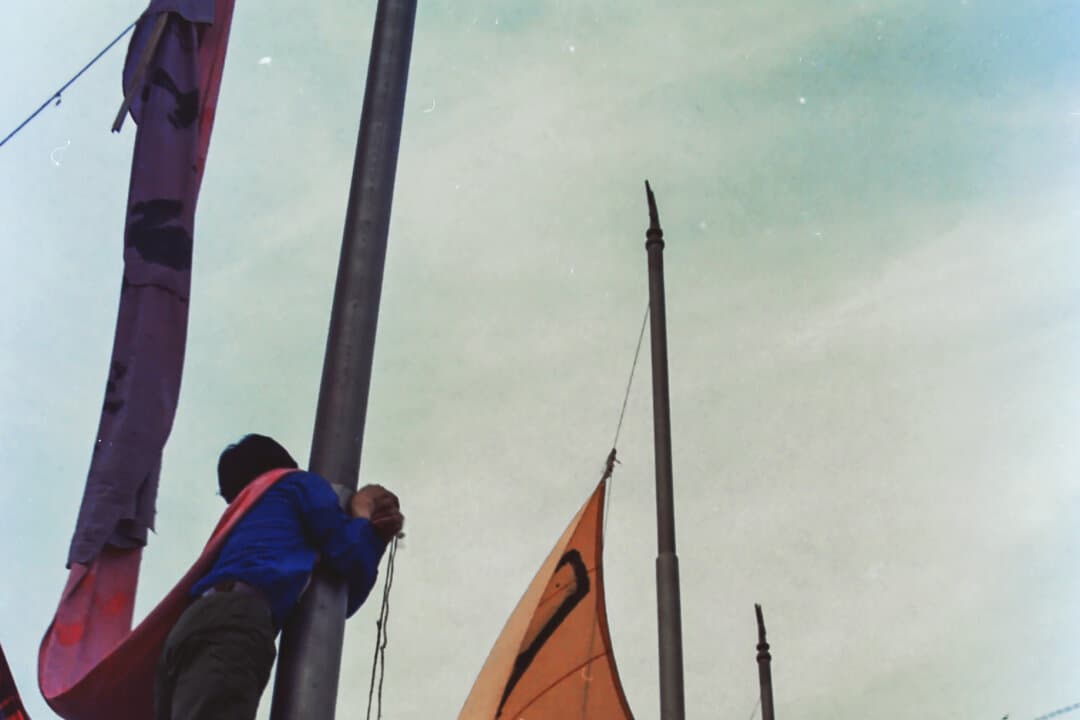
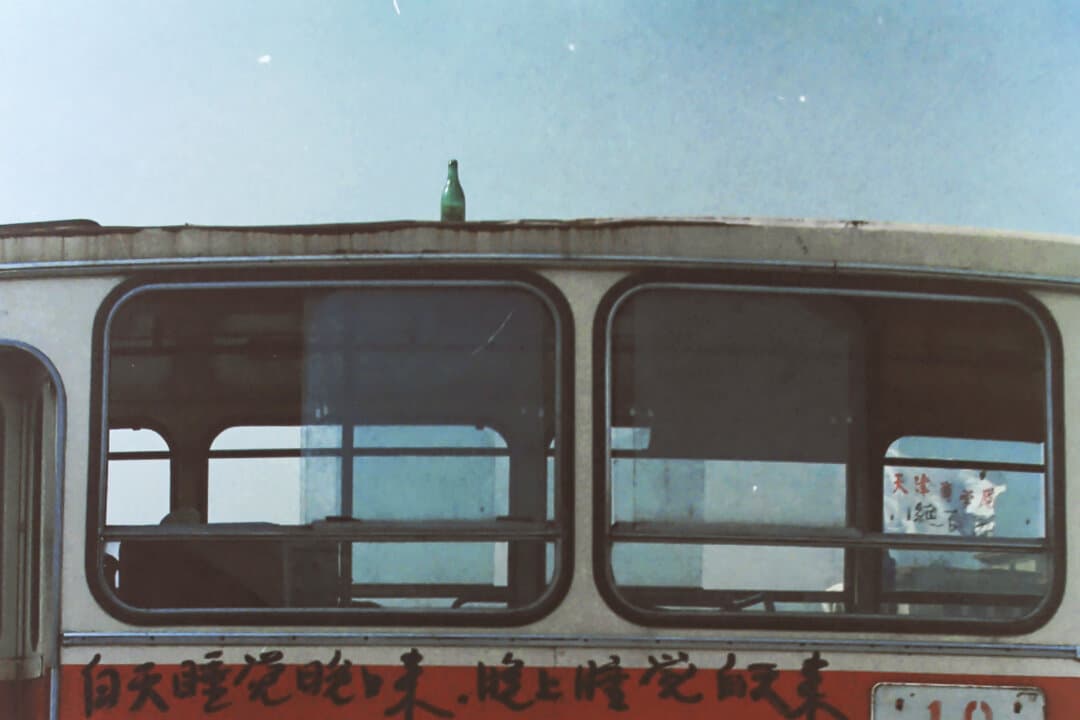
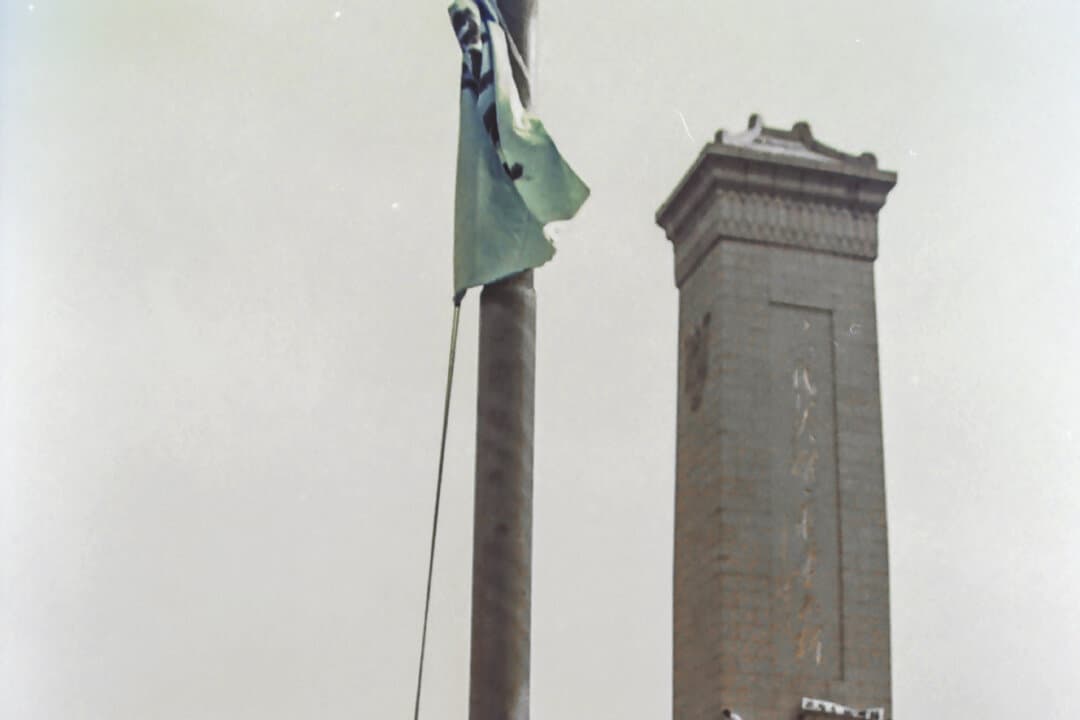
(Left) Pro-democracy protesters climb atop a flagpole to put up banners in Beijing in the spring of 1989. (Middle) A man sleeps in front of a bus, where lines of verse encourage people to join the pro-democracy protests in Beijing in the spring of 1989. (Right) Pro-democracy protesters in Tiananmen Square in Beijing in the spring of 1989. (Provided to The Epoch Times)
Interpol told The Epoch Times that its special task force reviews every notice request from each member country for compliance with its constitution, which requires the organization to conform with the Universal Declaration of Human Rights and not “undertake activities of a political, military, religious, or racial character.”
Another person threatened by the police officer told the officer that they are Canadian citizens.
“You are Canadian citizens—you all are, but your relatives are Chinese citizens,” the police replied, according to screenshots The Epoch Times viewed.
When the individual suggested they would cut ties with their relatives in China—with whom they have lost touch for more than a decade—the officer was unmoved.
“It’s too late,” the officer wrote.
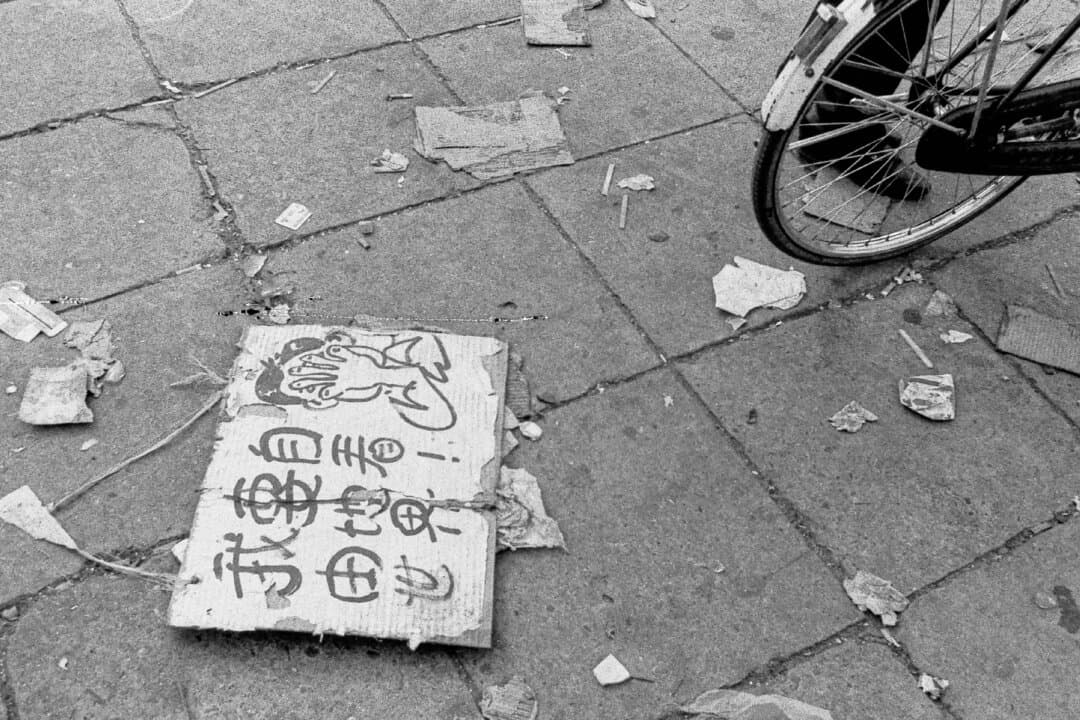
A placard on the ground that reads, “I want to look at the world freely,” during the pro-democracy protests in Beijing in the spring of 1989. (Provided to The Epoch Times)
A third person familiar with the issue said the authorities were actively collecting their personal details, sending the individual’s photo to relatives in China along with intimidating messages. The photo was meant as a warning: the regime knows who they are.
The Chinese police think they can enforce rules beyond China’s borders, the person, a U.S. citizen, told The Epoch Times. “They are arrogant enough to think that whatever the Communist Party says is the law anywhere,” the source said.
The targeted individuals have reported the intimidation tactics to the FBI and the Department of Homeland Security. The Canadian Security Intelligence Service is also aware of the matter.
Rep. Raja Krishnamoorthi (D-Ill.), who spoke at a June 4 presser commemorating the victims of the massacre, said the Chinese police’s actions amounted to “gaslighting.”
“They want you to forget, they want you to forget everything that’s happened in the past, and they want you to have a different impression of reality,” he told The Epoch Times. “I don’t think that people are going to forget, nor should they in any way be coerced into forgetting.”
Rep. John Moolenaar (R-Mich.), chairman of the House Select Committee on the Chinese Communist Party, organized the June 4 press event, which was held at the U.S. Capitol. He called the Chinese regime’s behavior “nuts.”
The Chinese Communist Party is actively engaged in transnational repression on American shores, he told The Epoch Times. “It’s a huge concern,” he said, adding that it’s all the more important that more “courageous leaders” keep coming out with the truth.
Across China, communist officials stepped up measures to censor any mention of the massacre ahead of the anniversary, just as they have done every year.
Several activists told The Epoch Times that security officers had followed dissidents to ensure they didn’t do anything out of line. Some reported restrictions on their movements. Others described police ordering them not to try circumventing the internet firewall or post comments online.
Chinese military general Xu Qinxian in May 1989 paid the price for defying the Communist Party when he refused verbal orders to deploy troops against the demonstrators.
For his defiance, he was stripped of his command of the elite 38th Group Army and jailed for five years.
In a closed-door trial, he recalled telling a political commissar that he’d rather lose the job than risk becoming “a person condemned by history,” footage that emerged in late 2025 shows.
Footage of the secret trial of Chinese military general Xu Qinxian, who refused orders to deploy troops to Beijing in May 1989. He was stripped of command of the elite 38th Group Army and imprisoned for five years. (Human Rights in China)
Enes Kanter Freedom, a former NBA player who has championed persecuted groups in communist China, said he wasn’t surprised to hear about the Chinese regime’s suppression over the release of the Tiananmen photos.
“The Chinese Communist Party will erase everything from history that is going to be used against them,” he told The Epoch Times.
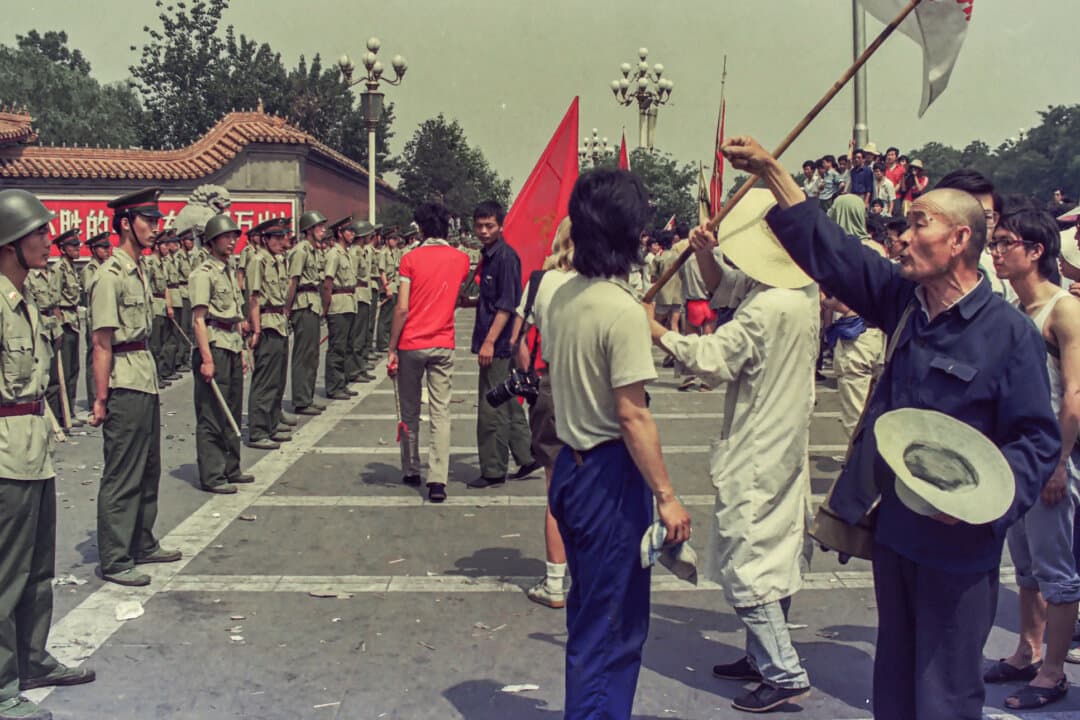
People gather near Zhongnanhai, the Chinese leadership compound, following the death of reform-minded leader Hu Yaobang in Beijing in 1989. (Provided to The Epoch Times)
He recalled seeing his name pulled from the Boston Celtics roster on Chinese media portal Sohu after he highlighted China’s persecuted groups on social media. Chinese internet giant Tencent, which had a five-year NBA broadcasting deal, pulled livestreams of all Celtics games—a sign of “how big of a dictatorship” Beijing is, Freedom said.
“It’s very shameful,” and it’s one more reason why there needs to be more voices from the West to “expose their hypocrisy,” he said.
The third source was in elementary school when the democracy movement happened.
Too young then to understand, the individual handed food and water to the students and saw them as brothers and sisters. To be able to shed more light on it now is an honor, the person said.
The photos, the source said, reveal the awakening back then of people from all segments of society, including many deeply embedded in the Communist Party system.
They are a testament that “Chinese people have guts,” the individual said. “They are different from the Chinese Communist Party, and they know right from wrong.”
And no matter how the regime tries to “exert power and hide the truth,” the person said, there’s a limit to what coercion can achieve.
“It can make threats and inflict pain on people and their loved ones, but people have a soul, and that it can never kill,” the source said.
The present “darkness” is temporary, and at the end of it, there will be light, the source said.