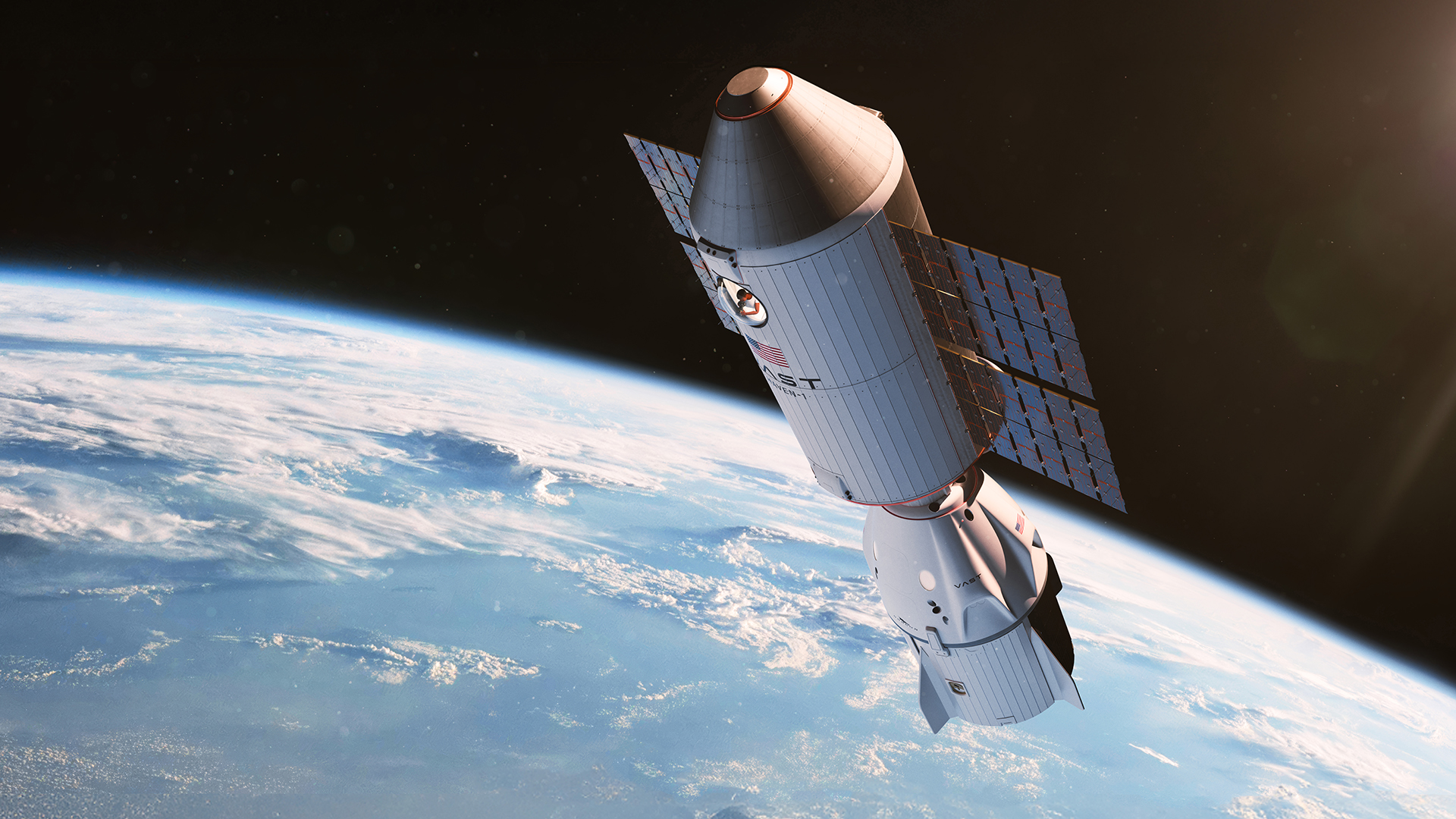

The world could have its first commercial space station operating in low Earth orbit as early as 2027.
Vast, a commercial space station company based in Long Beach, California—one of several private spacefaring companies working to provide NASA with a replacement to the aging International Space Station—released an update on the construction of its Haven-1 module on Jan. 20.
Previously anticipated to launch in 2026, this latest update pushes the launch to the first quarter of 2027. But Vast leadership still celebrated the progress the company made over the past year, affirming that Haven-1 was still on track to provide the world’s first commercial outpost in space.
“From the beginning, our business plan has been about building a sustainable future in orbit, one that meets today’s market while creating the foundation for what comes next,” Max Haot, CEO of Vast, said in a statement. “Haven-1 is not a concept; it is real, flight-tested hardware designed to carry forward a continuous human presence in low-Earth orbit for America and its allies. By vertically integrating design, manufacturing, testing, and operations, we’re moving with both speed and autonomy. Haven-1 brings the next era of space stations within reach and helps ensure there is no gap in our ability to live and work in space beyond the [International Space Station].”
Development milestones reached in 2025 included the installation of the module’s docking system and a full pressure test of the primary structure, the creation of which marked the first instance of space station manufacturing and testing in the United States in more than 20 years since the completion of the ISS.
Vast also successfully launched the unmanned Haven Demo spacecraft into orbit in November 2025 as a means to test the systems required for Haven-1.
“Vast is now the only operational commercial space station company to have successfully flown and operated its own spacecraft in orbit,” the company said in its statement. ”On Nov. 2, 2025, Haven Demo, an in-orbit testbed for key space station technologies and the first step in our stepping stone approach, achieved mission success. Through Haven Demo, core systems, including power, avionics, ground systems, propulsion, and guidance, navigation, and control, were validated in space, directly informing the final design of Haven-1.”
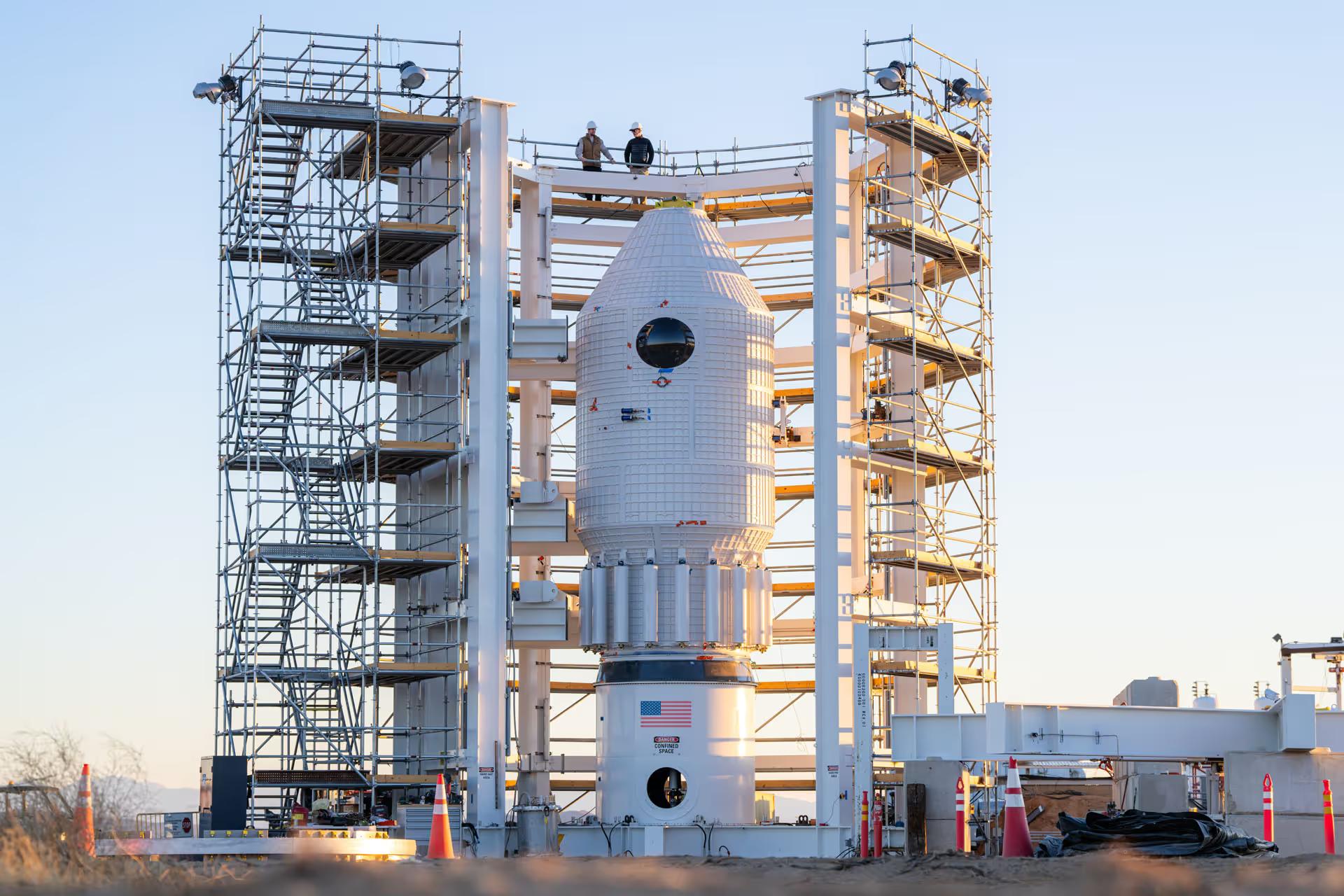
Vast’s Haven-1 space station primary structure undergoes testing at a facility in Mojave, Calif., in late 2025. (Courtesy of Vast).
Now that the primary structure is complete, the three phases of integration lie ahead. First up will be the installation of pressurized fluid systems, which include the life support, propulsion, and thermal control systems. Those systems will undergo leak, pressure, and functional testing.
Next, avionics, guidance, navigation and control systems, and air revitalization hardware will be incorporated, followed by the completion of the crew habitation and interior closeouts, the installation of the thermal radiator, exterior shielding for micrometeoroids and orbital debris, and the solar panels.
The company aims to complete that integration and begin conducting a suite of environmental systems tests at NASA’s Neil Armstrong Test Facility later this year.
Whenever it is ready to fly, Haven-1 will head to low Earth orbit from Cape Canaveral, Florida, on top of a SpaceX Falcon 9 rocket.
Unlike station plans released by the private space company Axiom, which seeks to connect its initial modules to the ISS, Vast’s Haven-1 was designed from the start to be a free-flying, standalone crewed station. It is intended to be the first step for Haven-2, which is Vast’s proposal for a multi-module successor station to the ISS, providing the capability to support a continuous human presence in low Earth orbit.
The ISS is set to undergo a controlled de-orbiting procedure, burning up in the atmosphere over the ocean by 2030.