
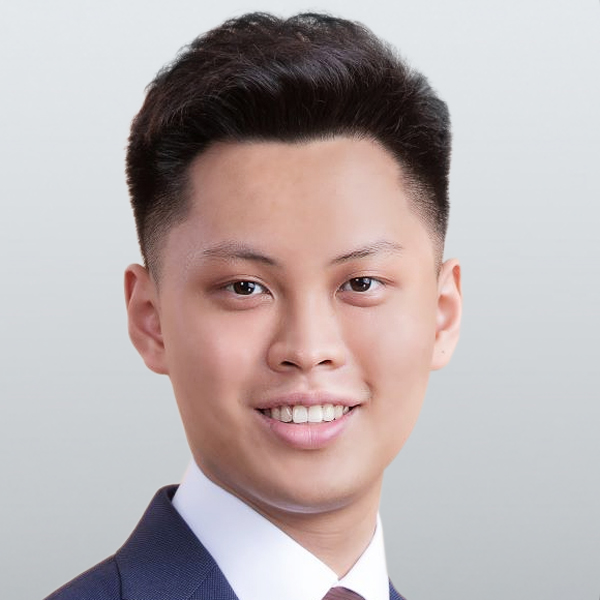
Chinese state television aired footage on Jan. 8 showing armed police escorting Chen Zhi into custody after Cambodia extradited him to China a day prior.
Chen, founder and chairman of Cambodia-based Prince Holding Group, was indicted by the United States in October 2025. U.S. prosecutors allege that his conglomerate is a front for multibillion-dollar online fraud schemes and money laundering operations.
“Chen is a CCP asset,” alleged a former Chinese Communist Party (CCP) operative who previously worked at the Prince Group, fled to Australia, and now uses the alias “Eric” out of fear of retaliation from authorities.
“The Prince Group is not a normal business conglomerate, but one of the most important agents for Beijing in Cambodia and across Southeast Asia,” Eric told The Epoch Times.
“Once Chen is in China, no matter how he’s dealt with, at least [the CCP] doesn’t have to worry about him being caught by the U.S. one day.”
Chen’s sudden repatriation suggests that the CCP moved urgently to keep him from falling into foreign custody after the U.S. military plucked leader Nicolás Maduro out of Venezuela on Jan. 3, said Lai Jianping, a former Beijing lawyer and independent scholar.
The U.S. military’s successful capture of Maduro could give Washington leverage to pressure governments such as Cambodia’s to hand over individuals wanted by the United States without long-distance military intervention, he said.
“Chen is an important CCP asset,” he said, noting that the United States, the UK, China, Thailand, and other countries all wanted him.
“He is an extremely sensitive figure,” Lai said. “Who holds him makes a big difference.”
Cambodia framed the extradition of Chen and two other suspects as bilateral cooperation against transnational crime, saying it was carried out at the request of relevant Chinese authorities after months of joint investigation.
And although the United States doesn’t have an extradition treaty with Cambodia, Beijing’s cautious public posture—such as limited coverage by major state-run media and a nonanswer from the foreign ministry—has fueled speculation that Chen is politically sensitive and that China did not want him to end up in U.S. custody.
At the Chinese foreign ministry’s regular news briefing in Beijing on Jan. 8, a reporter asked about Chen’s repatriation. Chinese foreign ministry spokeswoman Mao Ning did not confirm the case, saying that “competent authorities” would release information and that reporters should “stay tuned.”
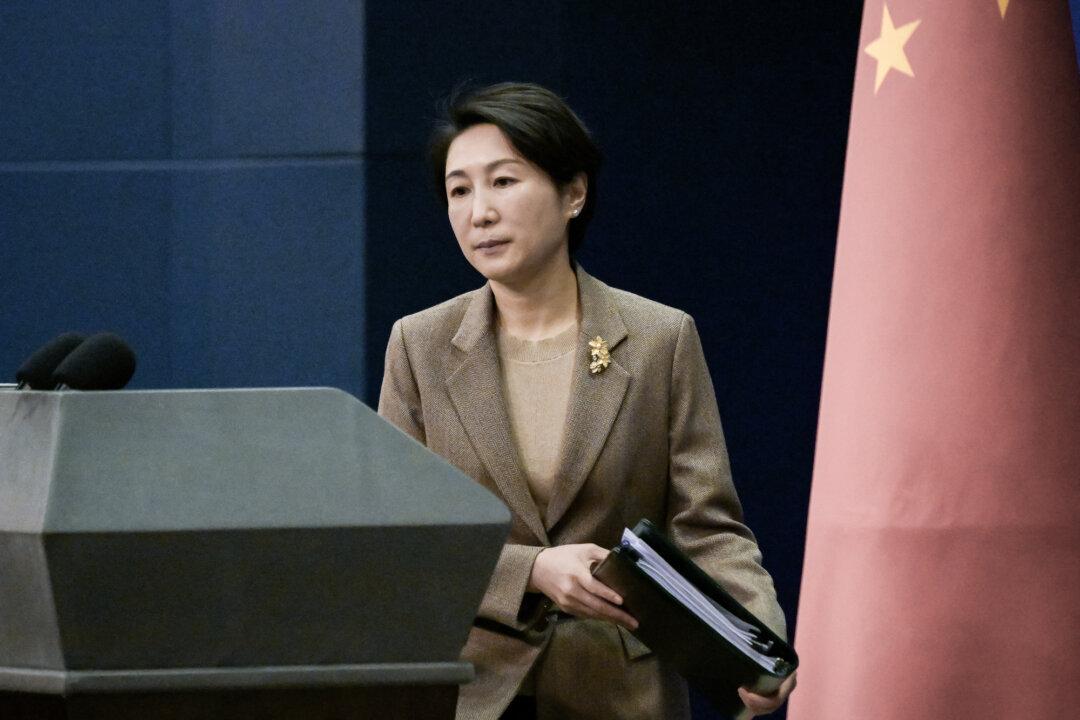
Chinese foreign ministry spokeswoman Mao Ning arrives for a news conference in Beijing on Jan. 15, 2024. Mao did not confirm Cambodia's repatriation of Chen Zhi during a recent news briefing, saying “competent authorities” would release information as necessary. (Pedro Pardo/AFP via Getty Images)
China’s foreign ministry and public security authorities did not respond to media inquiries.
China’s biggest state-run media outlets—CCTV, People’s Daily, and Xinhua—did not report Chen’s repatriation until close to 5 p.m. on Jan. 8, roughly a day after Cambodia said it had already occurred.
Inside China, coverage of Chen has been sparse and tightly controlled. Chinese authorities have not publicly provided further details beyond Mao’s remark and online discussions about Chen’s case on Chinese social media have largely been deleted by various platforms, leading many netizens to accuse the CCP of shielding Chen and discouraging public discussion.
China has not publicly announced formal charges against Chen.
US Charges, Seized Assets
The U.S. Department of Justice (DOJ) charged Chen in New York with wire fraud and conspiracy to commit money laundering in October 2025.
“To effectuate the schemes, Chen and his coconspirators caused Prince Group to build and operate forced-labor scam compounds across Cambodia in which workers were made to execute the scams at high volumes,” the indictment states.
Prosecutors alleged his network was tied to industrial-scale online fraud, including the use of “pig-butchering” schemes.
Pig-butchering schemes are sophisticated long-con scams that often involve romance or friendship fraud, in which scammers spend weeks or months building trust online before pressuring victims to pour large sums into fake investments—and then stealing it all.
“The schemes resulted in billions of dollars in losses incurred by victims in the United States and around the world,” the indictment states.
The DOJ also moved to seize more than 127,000 Bitcoin tied to Chen—valued at roughly $15 billion at the time—while multiple jurisdictions, including the United States, the UK, Singapore, Thailand, Taiwan, and Hong Kong, have frozen or seized assets linked to him.
“Chen and his co-conspirators used their political influence in multiple countries to protect their criminal enterprise and paid bribes to foreign public officials to avoid disruption by law enforcement,” the indictment states.

The exterior of the building listed by Prince Holding Group's website as its headquarters in Phnom Penh, Cambodia, on Jan. 8, 2026. U.S. authorities indicted the conglomerate last year, alleging it is a front for multibillion-dollar online fraud schemes and money laundering operations. (AP Photo)
Prince Group did not respond to a request for comment. On Nov. 11, 2025, the organization denied the allegations and called the charges “baseless.”
Two days earlier, China’s National Computer Virus Emergency Response Center issued a report accusing the United States of stealing Chen’s cryptocurrency.
Sheng Xue, a Chinese Canadian writer, journalist, and vice chair of the Federation for a Democratic China, said Chen’s case looks more like CCP elite politics than a law enforcement operation.
Sheng said Beijing’s claim that the United States “stole Chen Zhi’s Bitcoins” is in reality an accusation that Washington confiscated the Chinese regime’s own treasure. She said the U.S. efforts to seize some 127,000 Bitcoin and the UK’s freeze on 19 London properties connected to Chen effectively cut off a major source of wealth for the political elite.
The DOJ declined to comment beyond an Oct. 14 statement, the indictment, and the civil forfeiture complaint filed that month.
Chen Zhi and Prince Group
Chen, born in 1987 in Lianjiang County in China’s Fujian Province, entered Cambodia’s real estate market in 2011 and built what became Prince Group. He became a Cambodian citizen in 2014 and launched the company the following year.
The company expanded rapidly from property into banking and finance— through Prince Bank—along with tourism and other businesses. The DOJ notes that Prince Group operated dozens of business entities in more than 30 countries.
Chen’s ascent was closely linked to Cambodia’s political elite.
In July 2020, he was awarded the “Oknha” title, a prestigious civilian honor usually bestowed on wealthy donors and business figures closely connected to the state, often through patronage networks. He subsequently served as an adviser to former Cambodian Prime Minister Hun Sen and his son, Hun Manet, the current prime minister.
Prince Group also cultivated a public profile in China. It won the Corporate Social Responsibility Model Award at the China Finance Summit in 2021 and 2022, and Chinese state media promoted the group.
Chen was a citizen of China, Cambodia, Vanuatu, St. Lucia, and Cyprus, and he lived in Cambodia, Singapore, Taiwan, and the UK, according to the DOJ.
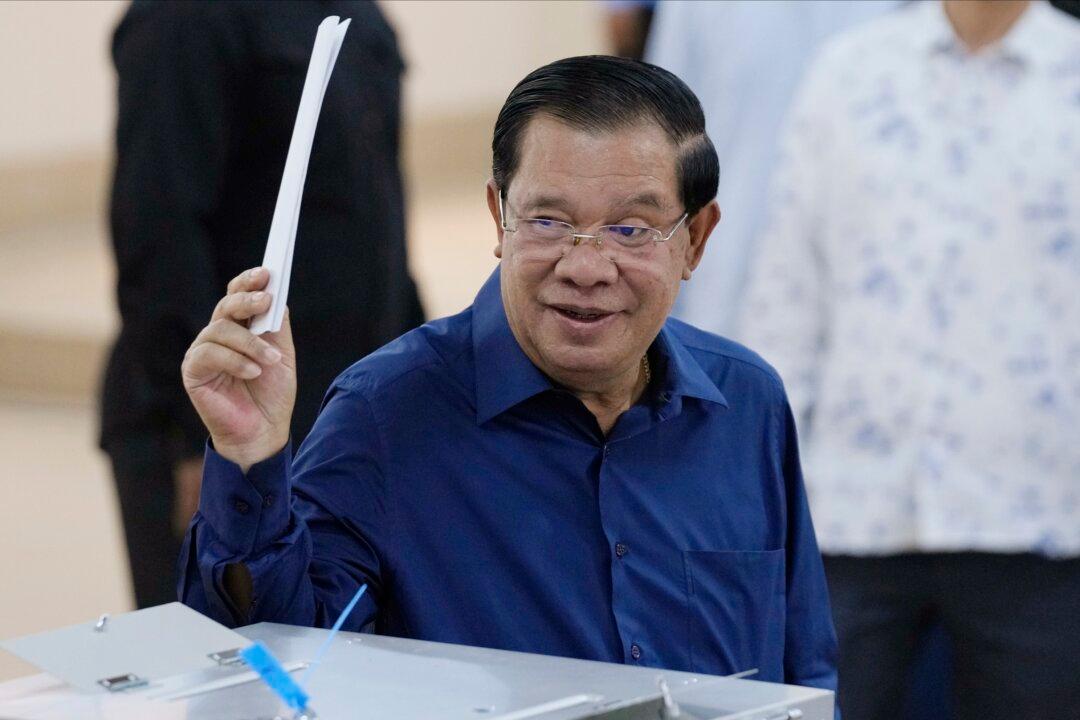
Cambodian Prime Minister Hun Sen raises a ballot before voting at a polling station in Ta Khmau, Cambodia, on July 23, 2023. Cambodia extradited Chen Zhi, chairman of the Prince Group, to China on Jan. 7, 2026. (Heng Sinith/AP Photo)
Sheng told The Epoch Times that Chen has familial ties to Huang Kunming, the CCP party secretary of Guangdong Province. She alleged that Chen helped manage wealth and launder money for the CCP’s “Fujian faction.”
The Fujian faction refers to a network of officials whose careers overlapped with—or were advanced by—Xi’s long tenure in Fujian Province, and who later rose through the ranks after Xi became the Chinese regime’s leader.
Based on her independent investigation, Sheng alleges that Chen’s main role was laundering money for CCP elites. She alleges that Chen had access to influential individuals within the Ministry of Public Security and the Ministry of Foreign Affairs, as well as the Xi family’s base in Shenzhen, including the Shenzhen Guesthouse.
The Epoch Times could not independently verify the claims.
Chen’s Cambodian citizenship was revoked in December 2025, according to local media reports.
Shortly after Chen’s extradition was announced, Hun Sen, who served as Cambodia’s prime minister from 1985 to 2023, appeared to distance himself from the case.
On the evening of Jan. 7, his spokesperson—without directly naming Chen—told local media that some individuals were using the names of Cambodia’s prime minister and ruling party chairman as a protective umbrella to cover illegal conduct—and that those people were precisely the targets that the ruling party intended to “crack down” on.
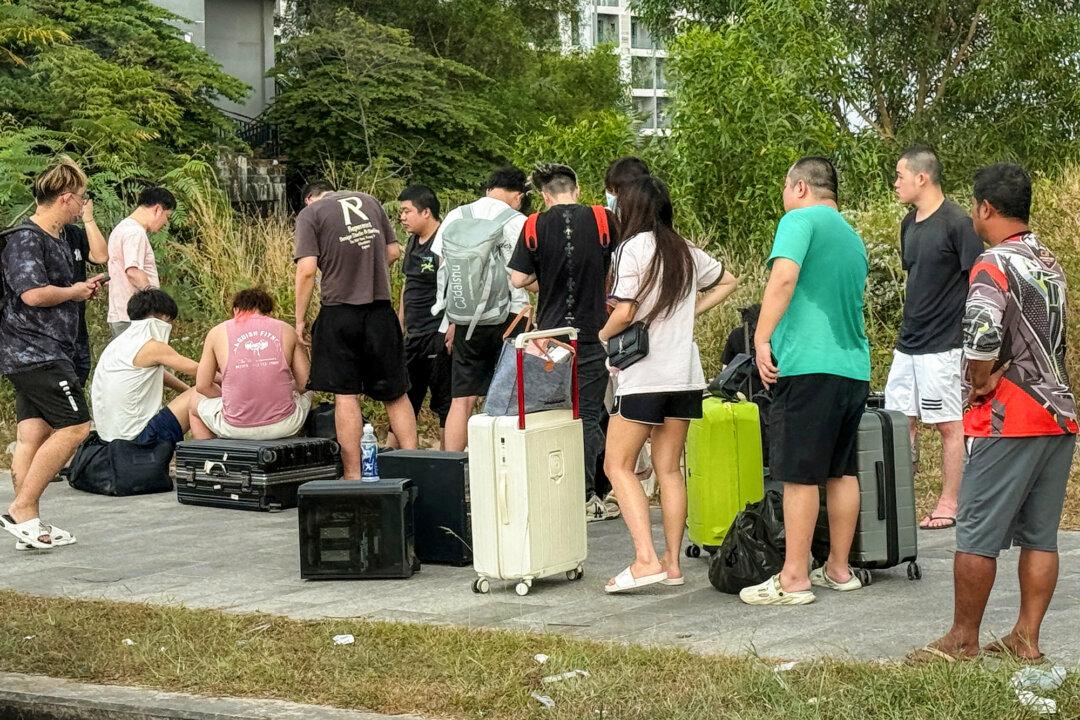
Workers gather with their luggage after leaving a suspected scam center compound in Sihanoukville, Cambodia, on Jan. 15, 2026. Hundreds of people fled the suspected Cambodian cyberfraud center after the arrest of alleged scam kingpin Chen Zhi. (Tang Chhin Sothy/AFP via Getty Images)
‘Dark Dealings’
Eric, the former CCP agent who worked at the Prince Group, said that fraud compounds in Southeast Asia have a “symbiotic relationship” with the CCP’s global infrastructure project, the Belt and Road Initiative.
He described “dark dealings” in which the CCP uses those networks to support overseas expansion and benefit chains tied to the descendants of CCP elites and senior officials.
Prince Group, he said, is not a conventional conglomerate but “one of the most important agents” for the CCP in Cambodia and across Southeast Asia.
Eric said the group supports Chinese overseas operations with money, manpower, and transportation, while Chen’s business network functioned as a funding pool and logistics base for Chinese intelligence operations.
Eric said he witnessed senior political-security officials from Beijing and Chongqing hold closed-door meetings at Chen’s private clubhouse in Cambodia, known as Yunxuan Pavilion.
In one meeting, he said the officials discussed fabricating charges against Wang Liming, also known as Badiucao, an exiled Chinese political cartoonist known for anti-CCP satire.
He added that Prince Group often hosted Chinese officials and handled logistics for those meetings.
Eric also alleged that during one of those meetings, he saw Chen plead with a Chinese official to pull strings with the Ministry of Public Security and go easy on him as pressure mounted to arrest him.
Eric’s account appears to align with DOJ allegations.
The U.S. complaint alleges that Chen and his co-conspirators used their political influence to shield operations “from law enforcement in multiple countries, including from the Chinese Ministry of Public Security (MPS) and Ministry of State Security (MSS),” and that Prince Group executives bribed officials for advance information on law-enforcement actions.
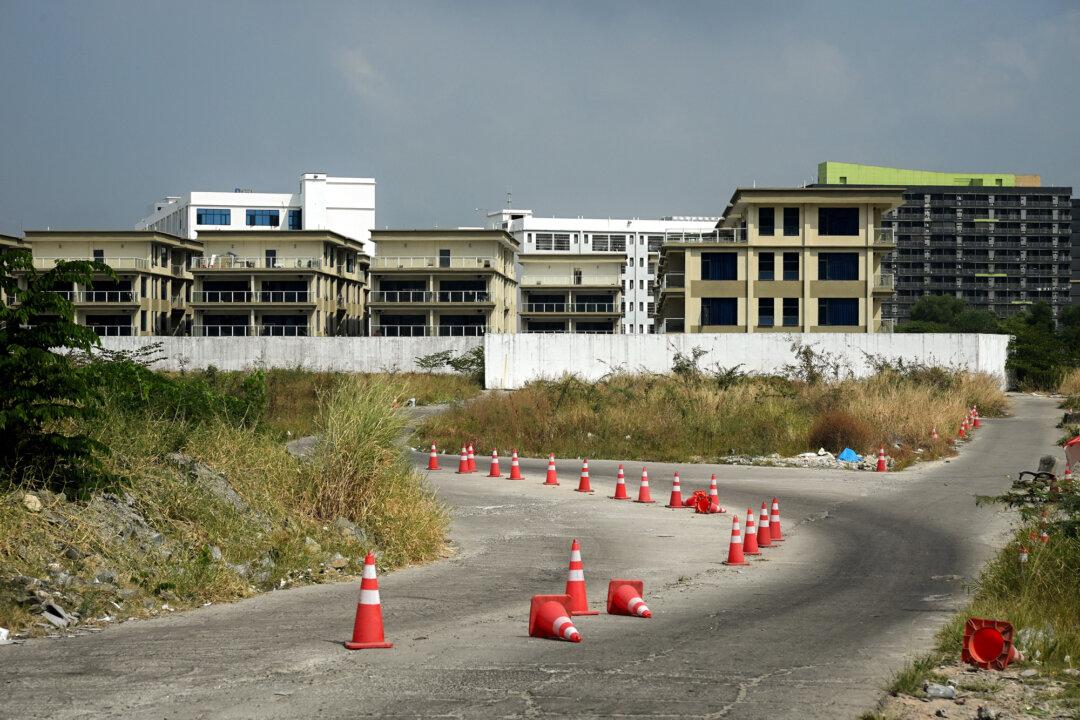
Buildings known as Jinbei 6 are part of a suspected compound built and operated by the Prince Group, headed by the internationally sanctioned Chen Zhi, in Sihanoukville, Cambodia, on Jan. 15, 2026. (Tang Chhin Sothy/AFP via Getty Images)
Sheng said once Chen is in China, a U.S. trial becomes far harder—making the handover to China a way to avoid the diplomatic and legal complications of extraditing him to the United States or the UK.
“It feels like the Chinese and Cambodian authorities are putting on a show,” she said.
Lai described what he called a broader pattern: Chinese state security operatives, he alleged, often pose as businessmen and operate with little constraint, backed by state resources.
Chen, he said, is “at least a Chinese informant,” and likely a member of Chinese state security.
Such figures, he noted, also serve as “white gloves” for elite families—holding secrets and moving money—and protecting them becomes a political priority.
Lai predicted that now that Chen is back in China, authorities could stage a limited public case—possibly invoking “state secrets” to avoid open proceedings—and then let the story fade.
“After the dust settles, whether he actually serves time ... no one will know,” he said.
Ning Haizhong, Li Yun, and Luo Ya contributed to this report.