


A key plank of President Donald Trump’s program to deport illegal immigrants is expected to reach the nation’s highest court.
The policy in question allows authorities to detain illegal immigrants who have been in the country for years, and do so without releasing them on bond.
Adopted last year, it represented a change from how previous administrations interpreted a specific provision of the Immigration and Nationality Act (INA). It also led to a flood of lawsuits from immigrants challenging detention.
Legal experts have speculated that the justices would intervene after several appeals courts issued conflicting interpretations of the law. The result was a patchwork of enforcement across the country, raising questions about how millions of illegal immigrants would be detained.
In a ruling rejecting Trump’s policy, the U.S. Court of Appeals for the Second Circuit suggested that it “would be the broadest mass detention-without-bond mandate in [the] Nation’s history for millions of noncitizens.”
Trump’s Policy
The Illegal Immigration Reform and Immigrant Responsibility Act, which amended the INA, required detention without bond for illegal immigrants seeking entry into the country.
The provision at issue says individuals seeking admission “shall be detained” if an immigration officer determines they are “not clearly and beyond a doubt entitled to be admitted.”
 Under Trump’s second administration, the government said this detention mandate applied to individuals who already entered the United States. Multiple illegal immigrants argued that portion of the INA didn’t apply to them because they were already in the country and therefore no longer seeking admission or undergoing a formal admissions process.

A man is detained by federal agents after his hearing at an immigration court inside the Jacob K. Javitz Federal Building in New York City on Oct. 1, 2025. A policy adopted by the Trump administration in 2025 represented a change from how previous administrations have interpreted the Immigration and Nationality Act. (Charly Triballeau / AFP/Getty)
Instead, they said another provision of the INA—Section 1226—applied and allowed them to receive bond hearings.
Trump’s interpretation represented a dramatic change in federal policy, David Super, a professor at Georgetown University Law Center, previously told The Epoch Times.
The position that illegal immigrants apprehended in the interior of the United States may be held without bond “has not been the policy of any prior administration, including the first Trump administration,” Super said.
The policy is part of the administration’s broader immigration strategy, which includes ending so-called catch and release efforts, or releasing migrants as they await hearings after being apprehended at the border.
The administration stated that by last month, it had achieved a full year of zero releases at the border.
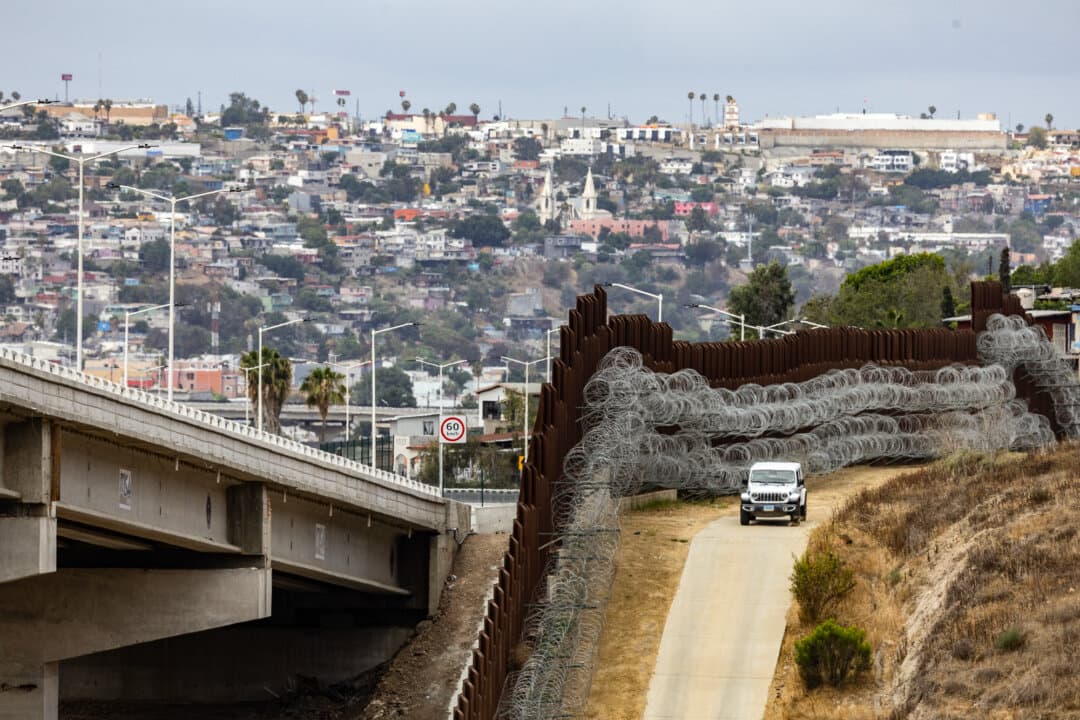
Border Patrol agents monitor the U.S.–Mexico border near San Diego on May 27, 2026. A Trump administration policy allows authorities to detain without bond illegal immigrants who have been in the country for years. (John Fredricks/The Epoch Times)
Then-Attorney General Pam Bondi suggested in March that the policy helped deter crime. The U.S. Court of Appeals for the Eighth Circuit upheld the administration’s interpretation of the INA.
“Imagine how many illegal alien crimes could have been averted if the Left had simply followed the law,” Bondi said during an appearance on Fox News.
Attorneys previously told The Epoch Times the policy bolstered immigration enforcement. If detainees are released, the government has to hope people will appear for their immigration proceedings.
Keeping individuals detained gives the government “all the leverage,” making it easier to convince detainees to self-deport instead of waiting months or longer for an immigration hearing they’ll probably lose, former federal prosecutor Neama Rahmani told The Epoch Times.

Marvin Suazo, 43, passes through a Transportation Security Administration checkpoint at the Miami airport while self-deporting to Honduras, in Miami on May 25, 2026. Legal experts say a patchwork of conflicting rulings on immigration detention policy has created confusion in the law enforcement community. (John Moore/Getty Images)
Conflicting Court Rulings
Several judges and groups such as the American Civil Liberties Union have been critical of the policy, alleging that it misinterpreted the law and deprived migrants of their right to due process.
“The government cannot mandatorily detain millions of noncitizens, many of whom have lived here for decades, without an opportunity to seek release,” Amy Belsher, director of immigrant rights litigation at the New York Civil Liberties Union, said in a press release. “It defies the Constitution, the Immigration and Nationality Act, and basic human decency.”
Belsher was responding to the Second Circuit’s decision, which was one of three rejecting the administration’s interpretation. Two federal appeals courts have upheld it, leading to conflicting policies for different regions of the country.
Arkansas, Iowa, Minnesota, Missouri, Nebraska, North Dakota, and South Dakota are subject to the U.S. Court of Appeals for the Eighth Circuit, which ruled in Trump’s favor in March.
“Being ‘admitted’ does not merely mean being present in the United States; under immigration law, it signifies having made a lawful entry into the country,” Judge Bobby Shepherd said in the court’s majority opinion.
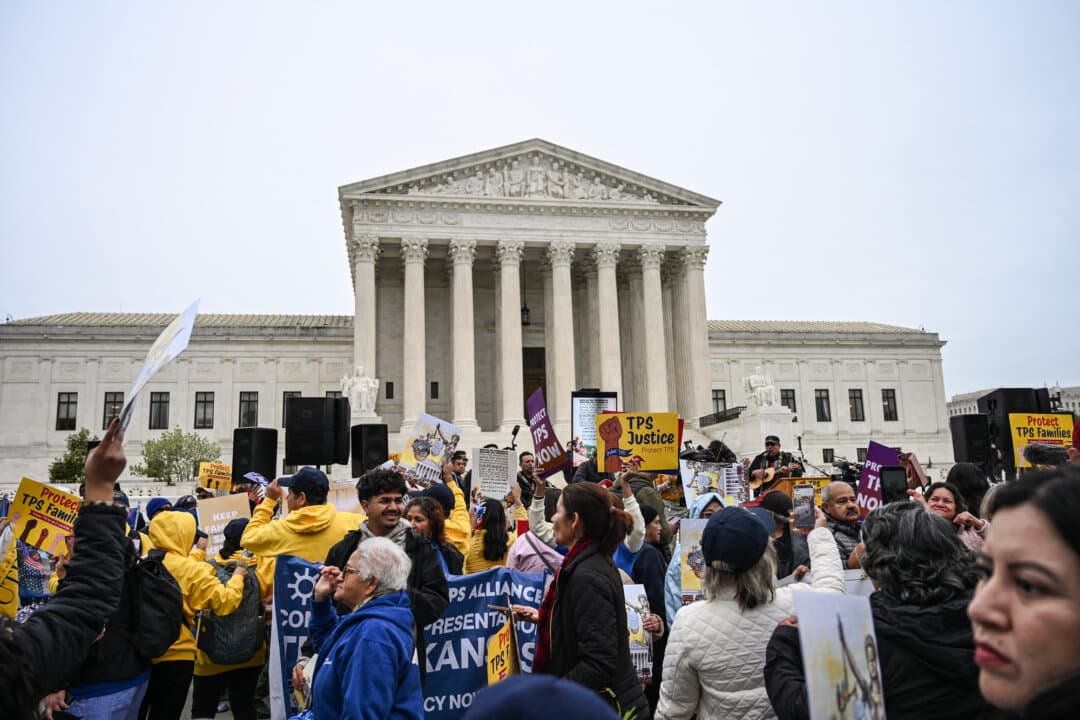
Members of the National TPS Alliance rally at the Supreme Court in Washington on April 29, 2026. The Trump administration interpets the Illegal Immigration and Immigrant Responsibility Act to require detention without bond for illegal immigrants (Alex Wroblewski / AFP via Getty Images)
Farther south, the U.S. Court of Appeals for the Fifth Circuit also agreed with the Trump administration. Writing for the majority, Judge Edith Jones said two Mexican citizens were still “applicants for admission” and “seeking admission” under the INA even though they had been in the United States for years.
That decision applied to Louisiana, Mississippi, and Texas. Alabama was subject to a different ruling by the U.S. Court of Appeals for the 11th Circuit, which also covers Georgia and Florida.
The 11th Circuit stated on May 6 that “hundreds of district courts” have weighed in with “distinctly contrary conclusions.”
“Simply put, the language that Congress has chosen to use does not grant to the Executive unfettered authority to detain, without the possibility of bond, every unadmitted alien present in the country,” the court said. “Nowhere in the text, structure, or history of [immigration law] does that reading find steady footing.”
A similar ruling came from the Sixth Circuit, which covers Kentucky, Michigan, Ohio, and Tennessee. Other Midwestern states—Illinois, Indiana, and Wisconsin—were left with a more fractured decision after the Seventh Circuit deadlocked on the issue. Its May 5 decision left a federal district court’s ruling favoring detention reviews largely intact.
Other cases are pending in the First Circuit and Ninth Circuit.
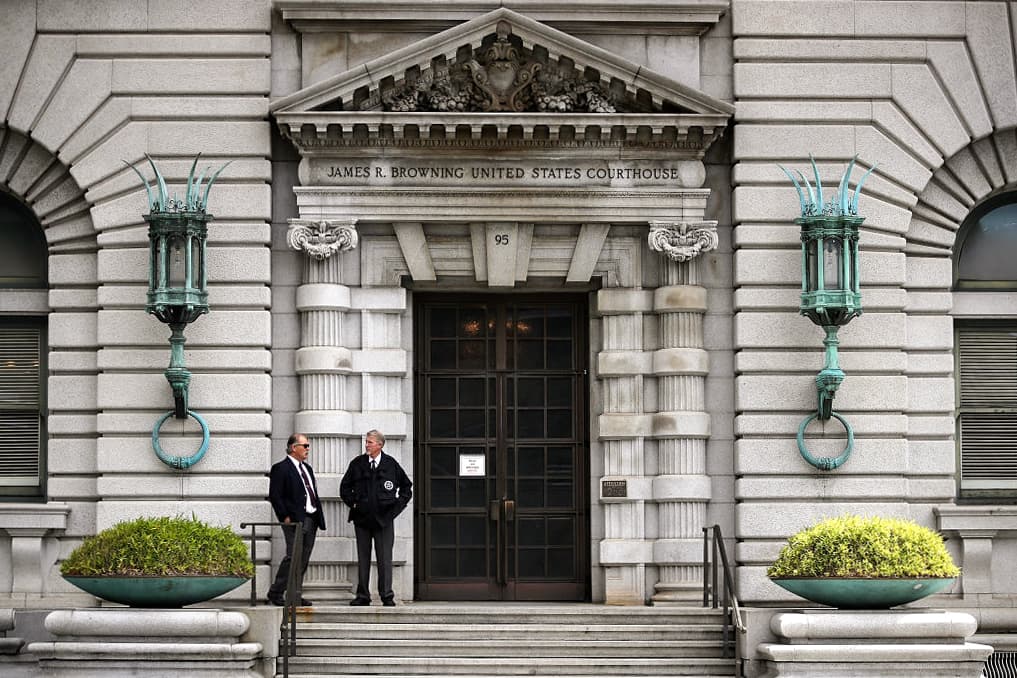
Security guards stand in front of the Ninth U.S. Circuit Court of Appeals in San Francisco on June 12, 2017. Several appeals courts have issued conflicting interpretations of the Illegal Immigration and Immigrant Responsibility Act. (Justin Sullivan/Getty Images)
Potential Supreme Court Decision
Legal experts have said that this patchwork of conflicting rulings on immigration detention policy has created confusion in the law enforcement community. The split among federal courts of appeals will be difficult for the Supreme Court to ignore when those rulings eventually reach the justices, they said.
Former immigration judge Andrew Arthur predicted that the high court will hear a case on the government’s detention policy at some point.
“This is going to the Supreme Court, because it’s a major issue that needs to be resolved on a nationwide basis, because there should be a uniform rule of immigration in the United States,” Arthur, a resident fellow at the Center for Immigration Studies, told The Epoch Times.
Right now there is nothing stopping someone who lives in the Fifth Circuit, where the rule is being enforced, from moving to the Second Circuit, “because they know that they’re not going to be detained [there] if they get taken into custody.”
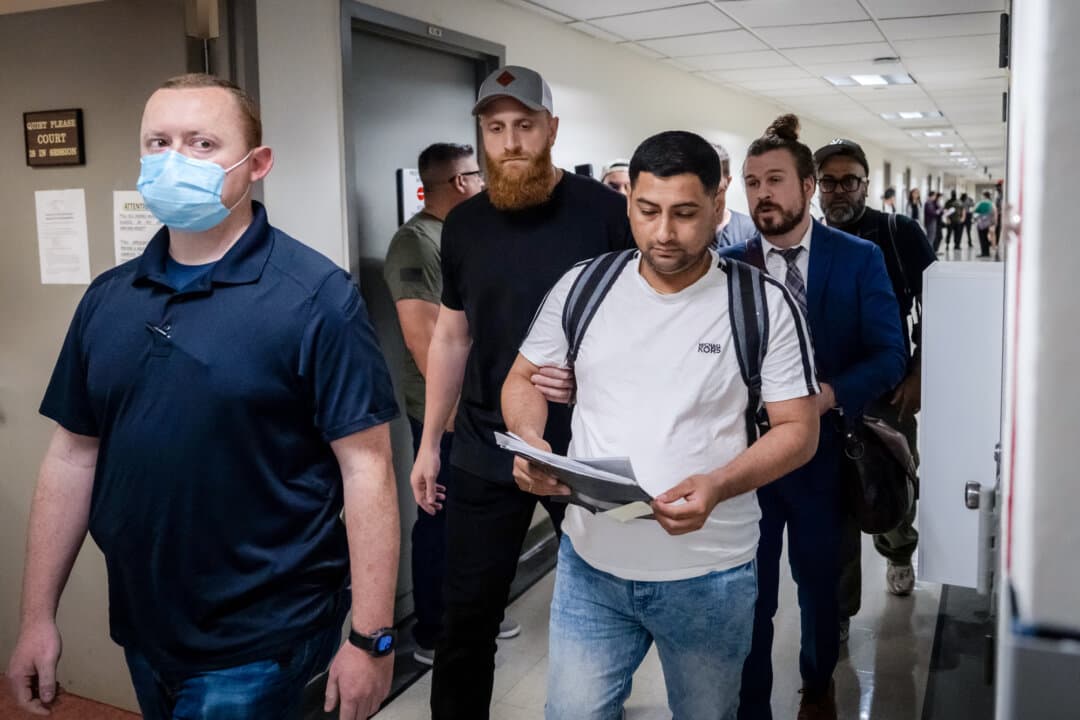
A man is detained by plainclothes officers with Immigration and Customs Enforcement after his immigration court hearing at the Jacob K. Javits Federal Building in New York City on June 6, 2025. Former federal prosecutor Neama Rahmani said the detention issue ‘affects hundreds of thousands, maybe millions of people.’ (Adam Gray/Getty Images)
Rahmani said the detention issue “affects hundreds of thousands, maybe millions of people.”
“You can’t have one district or one circuit handling detainees one way and another handling it a completely different way,” he told The Epoch Times. “It doesn’t make any legal or logical sense. So the Supreme Court should do its job. They should step in.”
It’s unclear how the court will rule, and Rahmani said it was “too hard” to make a prediction on this issue.
Matt Crapo, director of litigation at the Federation for American Immigration Reform, told The Epoch Times he was “cautiously optimistic” the justices would uphold the policy.