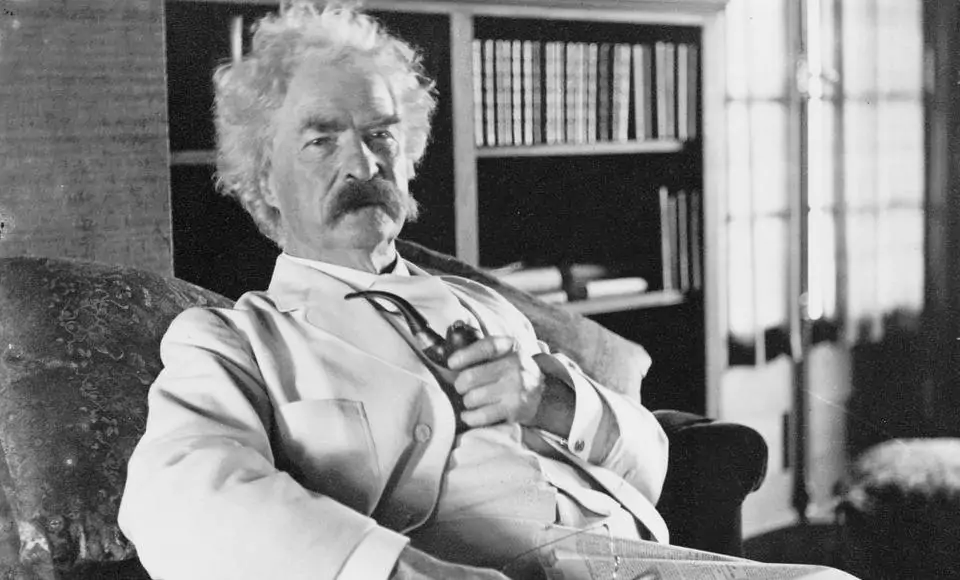
In his later years, Samuel Clemens (1835–1910), better known by his pen name Mark Twain, became increasingly embittered and cynical. “If you pick up a starving dog and make him prosperous, he will not bite you. This is the principal difference between a dog and a man,” he wrote in “Pudd’nhead Wilson.” Of religion he said, “Faith is believing what you know ain’t so.”
Twain had cause for his bitterness. In his youth, he lost several siblings, including his beloved brother Henry. In his own home, death was also familiar. The loss of his 24-year-old daughter Susy to spinal meningitis was a particularly crushing blow. His disastrous and foolish ventures into business often backfired, bringing him at one point to bankruptcy.
Yet Twain was also capable of empathy and generosity as broad as the Mississippi River on which he’d once piloted paddle-wheelers. In the support and counsel he gave to former President Ulysses S. Grant who was dying, Twain not only demonstrated this generosity and friendship, he also helped give America one of its finest autobiographies.
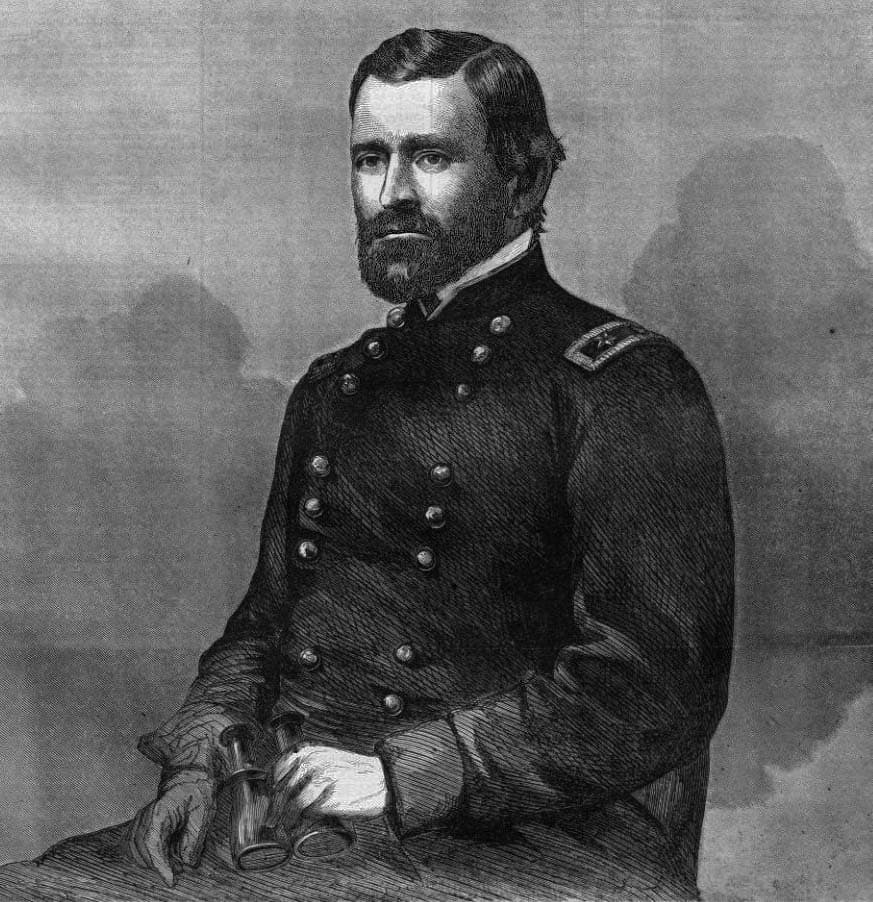
Gen. Ulysses S. Grant. Mark Twain helped Grant complete his memoirs. <a href="https://upload.wikimedia.org/wikipedia/commons/e/e0/General_Ulysses_S._Grant_2.jpg">(CC BY-SA 2.0)</a>
A Roast and a Friendship
In 1870, the still largely unknown Mark Twain was introduced to Grant at the White House. Twain described that meeting in a letter to his wife, Livy, “I shook hands and then there was a pause and silence. I couldn’t think of anything to say. So I merely looked into the General’s grim, immovable countenance a moment or two, in silence, and then I said: ‘Mr. President, I am embarrassed—are you?'”
The two men had no further communication until 1879, when Twain was invited to a banquet honoring Grant to deliver one of the toasts. The toast assigned to him, which followed all the other portentous speeches of the evening, was “To the Babies.” Twain rose and proceeded to mildly roast the former commander of the Union armies by reminding the audience that Grant, too, had once been a baby, when his “whole strategic mind” was “trying to find out some way to get his big toe into his mouth.” The audience remained silent until Grant laughed and then joined him in merriment. Afterward, Grant approached Twain and said, “I am not embarrassed—are you?”
The friendship born that night deepened over the next few years.
Crisis
In 1884, a business, Grant & Ward, in which Grant had invested with his son, collapsed, the result of partner Ferdinand Ward’s cheating and embezzlement. Humiliated, Grant was bankrupt.
At the invitation of Century Magazine, and in an effort to make ends meet, Grant began writing a series of articles on his role in the Civil War. The editors urged him to write his memoirs, as did Twain, but Grant refused, fearing he lacked the talent to make the project worthwhile.
Then, in October 1884, came the blow that changed his mind and his relationship with Twain. Twenty years of cigar smoking had left its mark. Grant was diagnosed with cancer of the mouth, a death sentence at that time. He faced the prospect of leaving his beloved wife, Julia, impoverished. He contacted the Century editors and agreed to write his memoirs for the customary royalties of 10 percent.
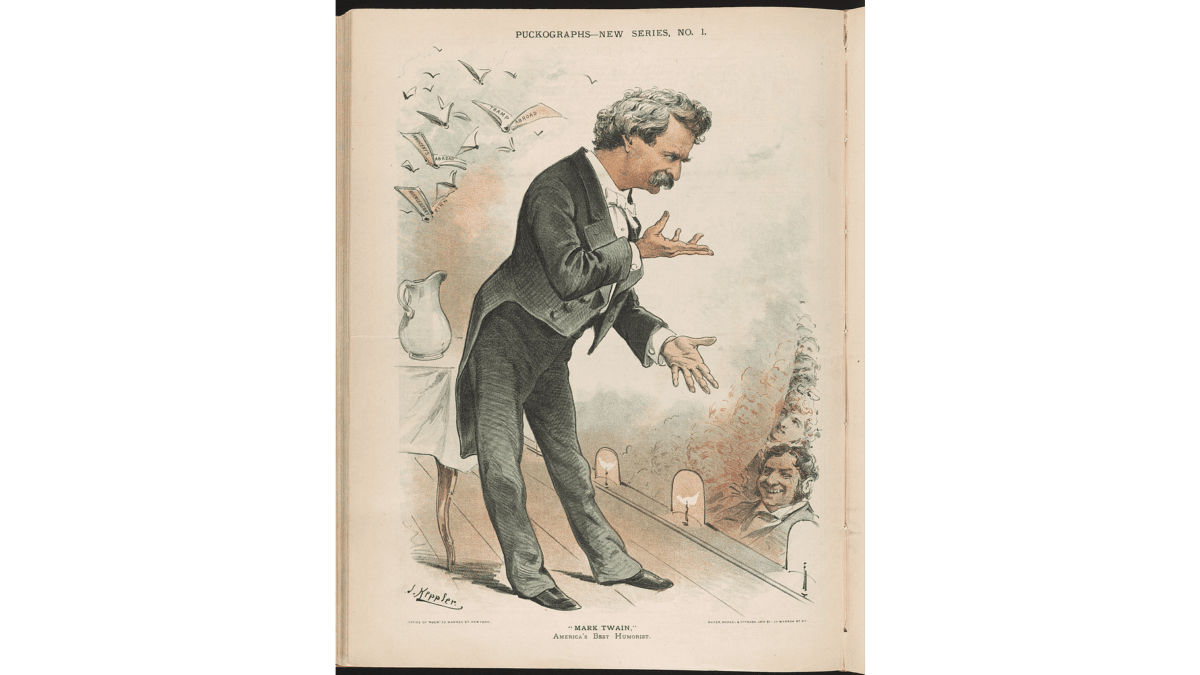
"Mark Twain, America's Best Humorist," by J. Keppler of an illustration in Puckographs. (Public Domain)
Twain to the Rescue
The arrangement shocked Twain. He foresaw the success that such a book would bring, and saw, too, that his friend deserved a better deal. He informed Grant that he would see the autobiography published with the author and Julia receiving 70 percent in royalties. Twain convinced Grant to renege on his arrangement with Century and agree instead to his offer.
Then, Twain went above and beyond in supporting his dying friend. While Grant wrote for long and exhausting hours every day while battling pain—“He made no braver fight in the field than he made on his deathbed,” Twain wrote—Twain launched a campaign of his own. His own recently founded publishing house, Charles L. Webster & Co., would put the book into print. He advertised it widely and recruited several thousand agents, many of them Union veterans, to go door to door, raising pre-publication subscriptions by emphasizing patriotism and the general’s exploits.
These efforts paid immense dividends. After the book was in print, Twain wrote to an English publisher and fellow bibliophile: “We have printed & sold 610,000 single volumes, at an average of $4 each; using 906 tons of papers; & in the binding, 35,261 sheep, goat, & calf skins, & 25 1/4 miles of cloth a yard wide.”
Victory
Grant did not live long enough to see the final product. He completed writing and editing his manuscript just three days before his death. “One day he put aside his pencil and said there was nothing more to do,” Twain wrote. He left behind a two-volume, 1,215-page work that many critics and readers—then and now—consider an American masterpiece.
Five months later, “The Personal Memoirs of U.S. Grant” made Julia wealthy. Though he didn’t live to see it, Grant had won his last campaign. The memoir has never been out of print since its publication.
It’s true that in his writing, speeches, and personal conversations of his later years, Mark Twain often spoke with a barbed tongue and wrote with a pen that dripped acid as well as ink. He was a man who seemed beaten about by life and had lost faith in hope and happiness as the years passed. But if actions speak louder than words, then somewhere beneath that curmudgeonly scoffing and pessimism was a heart of gold.
Correction: I previous version of this article misspelled the name Clemens. The Epoch Times regrets the error.
What arts and culture topics would you like us to cover? Please email ideas or feedback to features@epochtimes.nyc