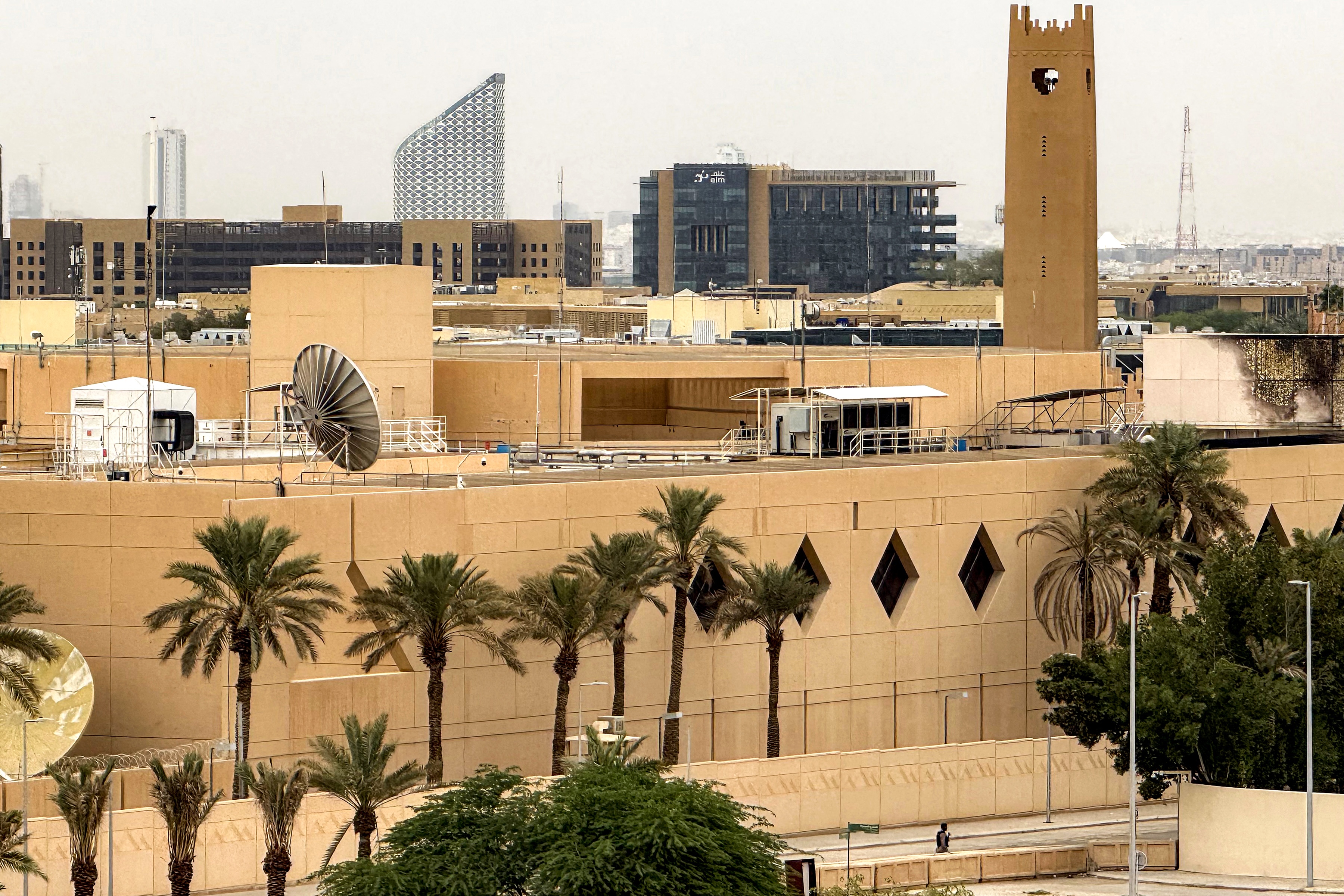


The U.S. State Department has warned of the potential for unforeseen escalation in the Middle East, asking Americans in the region to exercise heightened vigilance.
“Do not travel to Iran for any reason. U.S. citizens should leave Iran now,” the alert issued on Sept. 19 states.
Updates issued by U.S. embassies state: “This military conflict has the potential to escalate rapidly. Americans outside the Middle East should seriously reconsider travel to and through the region.”
The alert states that Americans should “be aware of potential flight cancellations, airspace closures, and travel disruptions” and encourages citizens to enroll in the Department of State’s Smart Traveler Enrollment Program.
Specifically, the renewed warning was related to attacks by the Iran-backed Houthi terrorist group in Yemen against targets in Saudi Arabia that included civilian airports.
“U.S. diplomatic facilities, including outside the Middle East, have been targeted,” the State Department warned. “Iran and groups supportive of Iran may target other U.S. interests overseas or at locations associated with the United States and Americans throughout the world, including U.S. businesses and other institutions.”
The U.S. embassies of Bahrain, Iran, Iraq, Israel, Jordan, Kuwait, Lebanon, Oman, Qatar, Saudi Arabia, and the United Arab Emirates (UAE) published the new alert on their respective websites on Sept. 19 and Sept. 20.
Throughout the U.S.–Iran conflict, which started in February, the State Department has issued multiple alerts for the broader Middle East and warned Americans to avoid travel to the region.
On several occasions, the department has sent out “worldwide caution” alerts for Americans amid the conflict, with the last occurring on July 22.
Level 4 “Do Not Travel” advisories have already been issued in the Middle Eastern countries of Syria, Iraq, Iran, and Yemen.
Iran on Sept. 20 appeared to respond to the fresh U.S. State Department alert, releasing a warning to Washington and its allies.
U.S. attacks or attacks from any of its allies would prompt sustained retaliation from Tehran.
“We warn that if regional countries ... align themselves with [the United States] ... all of them will be considered accomplices in this wrongdoing and can no longer expect restraint or civility from Iran’s powerful Armed Forces,” an Iranian military command said in a statement carried by the semiofficial Tasnim News Agency.
Aside from attacks in the Strait of Hormuz, Tehran has struck infrastructure in nearby countries, including Qatar, the UAE, Jordan, Bahrain, and Saudi Arabia.
Late last week, U.S. President Donald Trump told Axios that Iranian officials still want to negotiate and make a deal with the United States. He indicated that he has not made a decision on it yet, noting that Iran is “losing in every way.”
Houthi Offensive
Fighting between the Saudi-led coalition government in Yemen and the Houthis has escalated in recent weeks, with the Iran-backed terrorist group advancing to capture Yemen’s coastal areas for control of the strategic Strait of Bab el-Mandeb, which has historically handled about 15 percent of global trade.
Tensions further escalated on Sept. 10 when the Houthis captured the strategic Yemeni port city of Mokha. The Houthi offensive has also spilled over the northern border into Saudi Arabia, with repeated attacks on Saudi energy and military infrastructure in its south.
On Sept. 19, the Houthis claimed that they struck “sensitive” sites in Riyadh and Aramco facilities in Yanbu, calling the attacks a response to what they described as Saudi attempts to target the capital of Yemen, Sanaa.
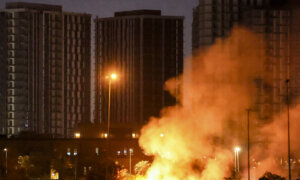
Smoke and flames were seen at a fuel depot near Riyadh’s main airport. The Saudi-led coalition said it intercepted a Houthi ballistic missile fired toward the capital—the first such reported targeting of Riyadh in this round of fighting that began in July—and reported no casualties.
Bab el-Mandeb Strait
In July, after the signing of a U.S.–Saudi civil nuclear deal and the 12th consecutive night of U.S. airstrikes on Iran, the Houthis declared a naval blockade on Saudi shipping in the Red Sea, which leads to the Bab el-Mandeb Strait in the south and the Suez Canal in the north. Two Saudi oil tankers were hit.
Saudi Arabia became more reliant on the Bab el-Mandeb Strait for oil exports to Asia following Iran’s disruptions to shipping in the Strait of Hormuz since February.
The attacks forced the closure of Saudi Arabia’s East–West Pipeline as a precaution on Sept. 11. U.S. Energy Secretary Chris Wright said he expected flows to resume shortly, while some industry analysts said the disruption may last for weeks.
Wright added that the Saudis had taken action to ship oil, which would not be transferred through the pipeline to Yanbu, out of the Hormuz Strait, with the assistance of the U.S. military.
Commander of U.S. Central Command Adm. Brad Cooper said on Sept. 19 that his forces have supported more than 2,000 transits of commercial vessels through the strait, moving more than 1 billion barrels of crude oil out through the Strait of Hormuz in recent months.
“Clearly, momentum is building,” he said. “The volume of crude oil, cargo, and liquid natural gas these past two weeks is higher than at any point in the past six months” under the “coordinated protection” of the U.S. Navy.
Trump said on Sept. 17 that his administration was approaching a decision soon on whether to start major attacks against Tehran or try to wind down the conflict.
“I have a big decision coming up. Do I want to go in and annihilate them [the Iranian regime] or do I not? It’s a big decision. Anything could happen with me,” he said.
Trump on Sept. 19 cut short his weekend trip to Camp David. He was originally due to leave on Sept. 20. The White House gave no official reason for the change.
The president is expected to address the U.N. General Assembly on Sept. 22 and host Chinese leader Xi Jinping for a summit at the White House later in the week.