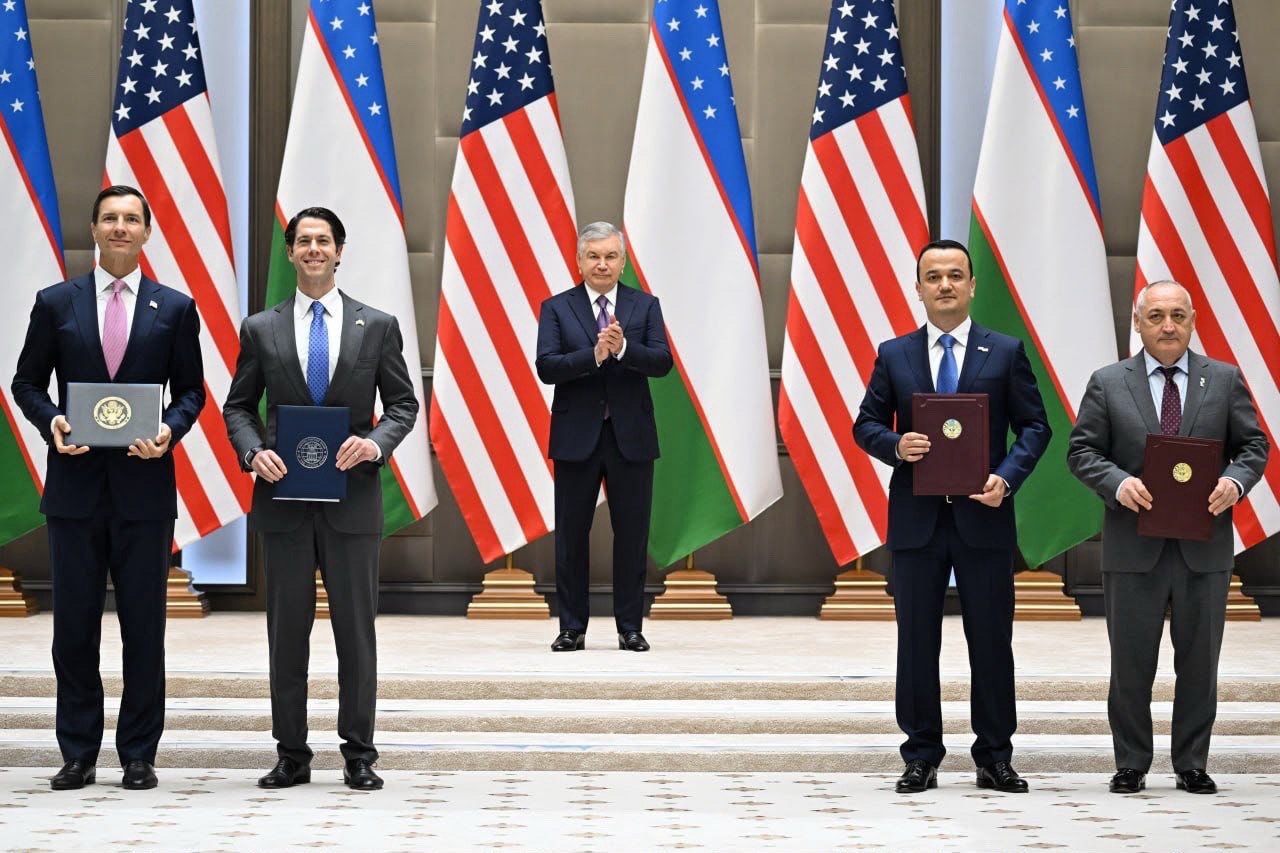


The United States and Uzbekistan are launching a joint platform to expand investment and export financing, with a goal to strengthen the U.S. supply chain in Central Asia’s second largest economy while countering Chinese interests in the region.
The platform, signed June 16, aims to identify and develop investment and export opportunities in Uzbekistan, with a focus on “priority and strategically aligned sectors,” according to a copy of the framework viewed by The Epoch Times.
In addition to critical minerals, the framework intends to deepen cooperation on energy, transport and aviation infrastructure, advanced manufacturing, and pharmaceuticals, creating project opportunities for U.S. and U.S.-aligned developers in Uzbekistan.
The signing took place as Central Asia began its largest annual international investment forum, the Tashkent International Investment Forum.
The United States and its allies are accelerating efforts to diversify their supply chains for rare earths and other critical minerals that are used in everything from mobile phones to defense equipment.
Central Asia is rich in resources, including rare earth minerals, offering a potential alternative supply to China, which currently holds a near-monopoly.
According to the framework, the platform will support cooperation between the United States and Uzbekistan and advances the two countries’ economic, commercial, and strategic interests.
On the U.S. side, the initiative is led by the government’s international investment arm, the International Development Finance Corporation (DFC), and its official export credit agency, the Export-Import Bank (EXIM), while the Uzbekistan side is represented by its Ministry of Investment, Industry, and Trade and the Uzbekistan Fund for Reconstruction.
It supports cross-border transactions and allows the two countries’ authorities to mobilize private capital and international entities for financing, and coordinate project preparation, the document said.
A steering committee, co-chaired by one U.S. and one Uzbek representative, will meet bi-monthly or as necessary to advance project pipeline coordination and provide policy support, the document states.
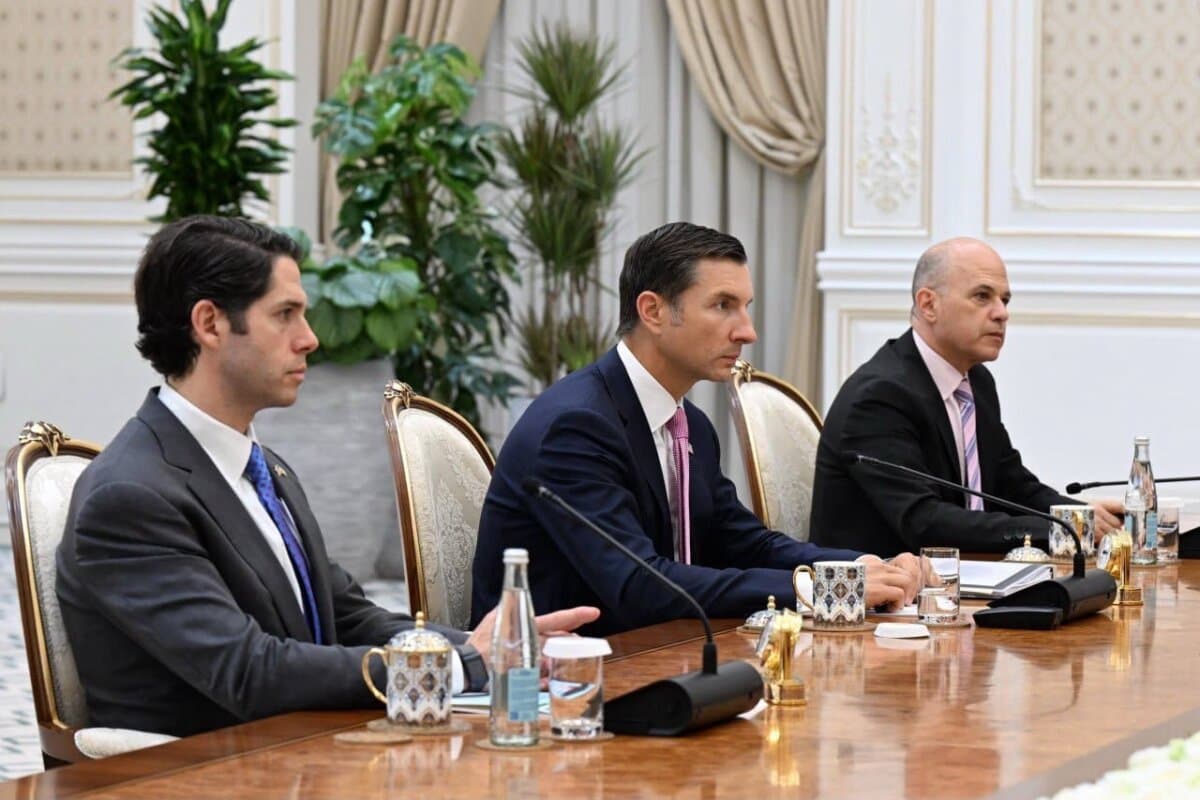
The framework proposes the creation of a joint investment and financing holding company or a similar vehicle to support future projects.
The framework is valid for five years, with the possibility of renewal.
DFC CEO Ben Black, who signed the agreement with the Uzbekistan officials along with EXIM Chairman John Jovanovic, credited President Donald Trump for committing the United States to strengthening America’s strategic interests across Central Asia.
Leading that effort is the “monumental telecommunications partnership to build safe and reliable digital networks in Kazakhstan, and the launch of our U.S.-Uzbekistan Joint Investment Platform,” Black told The Epoch Times on June 19. “A new era of U.S.-Central Asia cooperation is underway.”
Washington has been boosting its presence in Uzbekistan and other Central Asian nations—an area traditionally under Russian influence and, more recently, courted by China.
In November 2025, the United States and Kazakhstan signed 29 agreements totaling $17 billion to advance economic cooperation on sectors from energy to aviation.
Also in November, EXIM signed the “Buy American, Build the Future” agreement with Uzbekistan to make the United States Uzbekistan’s preferred partner for critical sectors such as energy, aviation, minerals, and advanced technologies. Uzbekistan agreed to prioritize American equipment and technology to promote industrial modernization.
The “landmark agreement” was “a clear signal that the U.S.-Uzbekistan relationship is built for the long haul,” Jovanovic told The Epoch Times.
“Uzbekistan holds tremendous potential for investment, growth, and industrialization,” he said.
“Under President Trump’s leadership, we now have a comprehensive strategy for Central Asia so American companies can compete and win in regions where foreign adversaries are vying for influence,” Jovanovic said, adding that the current platform “positions both the U.S. and Uzbekistan for a stronger bilateral relationship and lasting success.”
Chinese investment in Uzbekistan had skyrocketed over the past decade, from $284 million in 2016 to $10.7 billion in mid-2025, according to data compiled by the Eurasian Development Bank. More than half of this capital flew to the energy sector, with manufacturing accounting for about 30 percent, the bank said in a report released last December.
Sitting near the heart of Central Asia, Uzbekistan also emerged as a vital trade route for Beijing to Europe or the Middle East.
In 2024, China, Uzbekistan, and Kyrgyzstan signed an agreement to construct a railway connecting the three nations, as part of a flagship project under Beijing’s Belt and Road Initiative, a multibillion-dollar program aimed at bolstering the communist regime’s geopolitical sway by building infrastructure.
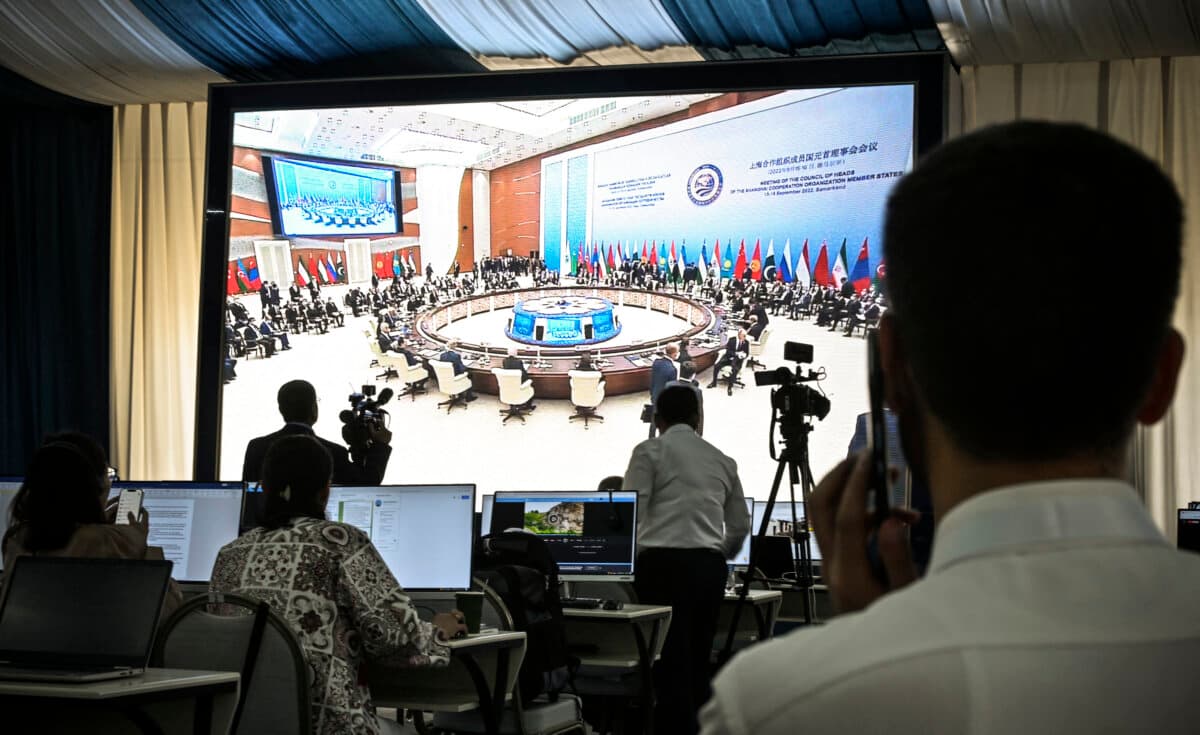
Uzbekistan is also a founding member of the Shanghai Cooperation Organization. China established the regional power bloc in 2001 along with Russia, Kazakhstan, Kyrgyzstan, Tajikistan, and Uzbekistan—all part of the former Soviet Union.
In recent years, China has surpassed Russia to become the top trading partner of these Central Asian states. In 2025, bilateral trade between China and Central Asia surpassed $106 billion, a 12 percent increase from the previous year, doubling the 6 percent growth seen in 2023, according to China’s official data.
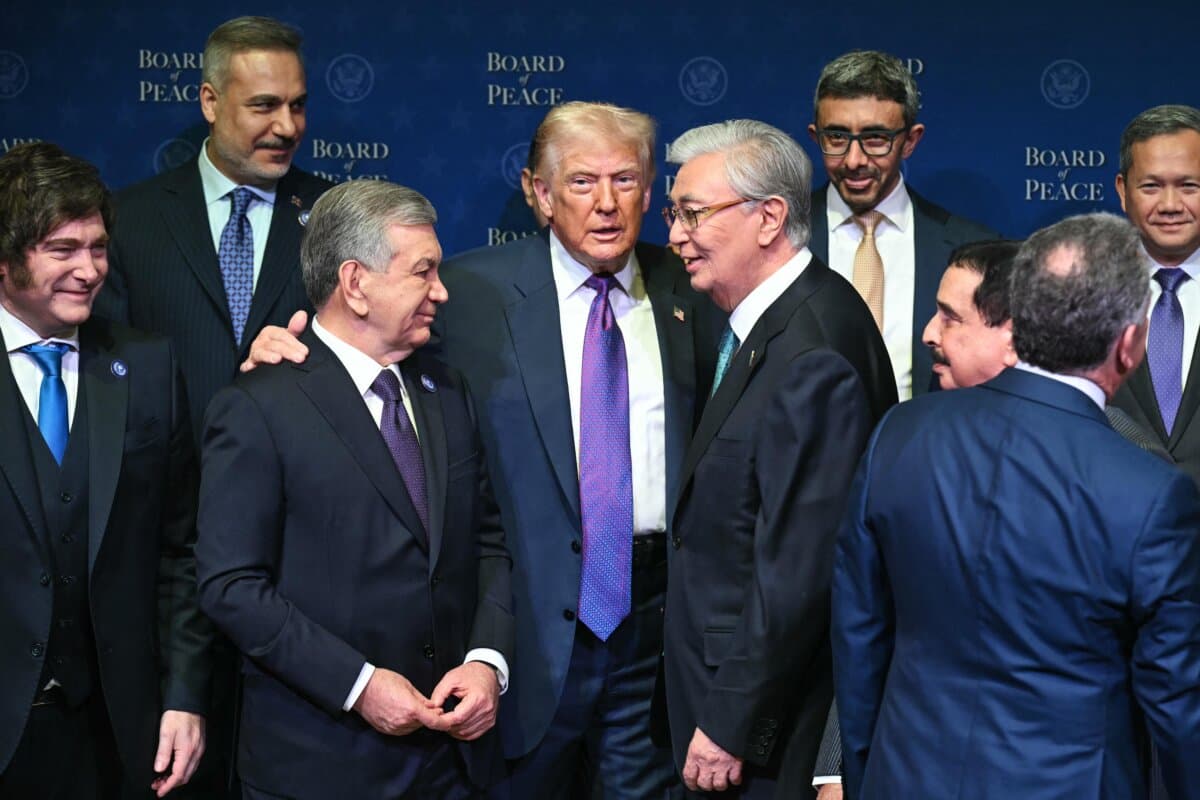
The Trump administration has bolstered economic cooperation with Central Asian nations, particularly Kazakhstan and Uzbekistan, the region’s two biggest economies.
William Kimmitt, under secretary of commerce for international trade, recently highlighted Central Asia’s underdeveloped economic potential.
“It’s an area that we have put an immense amount of focus on, for the reasons you identify, critical minerals, and just the tremendous opportunity that’s there in a part of the world that really has been overlooked for too long,” Kimmitt said at a Hudson Institute event on June 18.
He pointed to a landmark deal that the American locomotive parts manufacturer Wabtec signed with Kazakhstan Temir Zholy, the national railway company, last year. Under the $4.2 billion contract, the Pennsylvania-headquartered company will provide Kazakhstan with 300 locomotives.