
U.S. officials have urged the Chinese regime to fulfill the commitments it made in a 2025 trade deal with the United States, particularly on rare earth supply and the purchase of American farm goods.
U.S. Treasury Secretary Scott Bessent and Trade Representative Jamieson Greer, who since last year have led U.S. trade negotiations with China, had a video conference on Nov. 6 with Chinese Vice Premier He Lifeng.
During the online meeting, Bessent emphasized the importance of China “fully and immediately implementing its commitments” made in Busan, South Korea, and “raised concerns about recent Chinese actions,” according to a readout from his office.
The Treasury chief said that “continued progress depends on concrete results” and that the United States “will closely assess China’s implementation of the arrangement.”
Greer also stressed the “critical importance of China taking concrete actions to fully implement its past commitments,” particularly on “agricultural purchases, rare earths, and other critical minerals,” the Office of the U.S. Trade Representative said in a separate statement.
“The Trump Administration will continue to pursue balanced trade with China by monitoring compliance of past commitments while unlocking lasting benefits for American farmers, ranchers, manufacturers, and workers,” the office said.
Under the Busan agreement, unveiled at an October 2025 summit involving President Donald Trump and Chinese leader Xi Jinping, China agreed not only to purchase more U.S. soybeans, but also to roll back export controls on rare earths and other critical minerals essential to a wide range of U.S. industries.
During the Nov. 7 phone call, He, China’s economic czar, expressed Beijing’s concern over Washington’s recent trade and economic curbs, according to a summary of the meeting released via state-run media Xinhua.
He also agreed to continue strengthening communications with the U.S. side and manage differences between the two countries, Xinhua stated, calling the latest session “candid, in-depth, and constructive.”
The United States and China extended the one-year trade deal by two months, through Jan. 10, after negotiating teams led by Bessent, Greer, and He last met in New York in September.
Bessent said at the time that China had been fulsome in its commitment to buying soybeans but still behind schedule on its commitments to purchase other U.S. agricultural products.
In addition to soybeans, Beijing pledged to buy at least $17 billion of U.S. farm products annually through 2028, the White House said in May after Trump and Xi met in Beijing.
China’s commerce ministry earlier this week said Beijing was open to purchasing more U.S. agricultural products—but only if the proposed reciprocal tariff cuts were implemented.
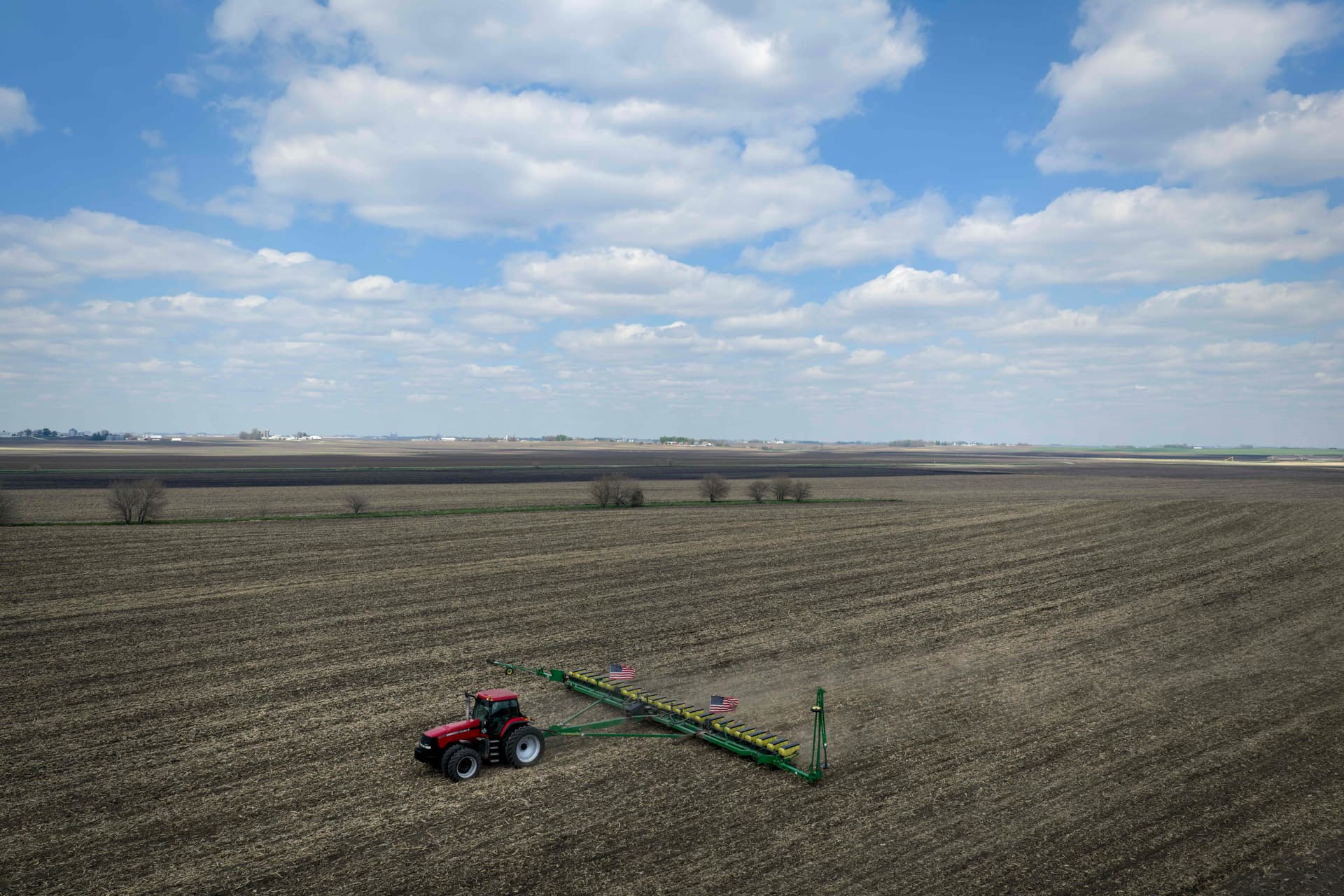
A U.S. farmer plants soybeans on farmland near West Bend, Iowa, on May 6, 2026. (Scott Olson/Getty Images)
The latest phone contact between top U.S. and Chinese trade negotiators came just weeks before Trump and Xi are set to sit down on the sidelines of the Asia-Pacific Economic Cooperation summit in the southern Chinese city of Shenzhen.
The United States has sought to diversify agricultural trade and reduce dependence on China as the communist regime repeatedly used soybeans as a bargaining chip when trade ties soured. China, the world’s largest soybean importer, halted its U.S. purchases in 2018 and again in early 2025 as trade tensions heightened, resulting in huge losses for American farmers.
In recent years, Washington has been expanding exports to Southeast Asian nations, which have emerged as the fourth-largest buyer of American farm goods, according to a recent report from the U.S. Department of Agriculture.