

U.S. forces completed an additional round of strikes against Iran that started on the afternoon of July 15 after early-morning attacks that targeted an island near the Strait of Hormuz, according to a statement from the U.S. Central Command (CENTCOM).
“U.S. Central Command ended an evening wave of strikes against Iran at 9 p.m. ET on July 15,” CENTCOM announced via a post on X.
The post said that U.S. forces “struck Iranian command centers, air defense sites, missile and drone capabilities, and coastal surveillance facilities to further degrade Iran’s ability to threaten innocent mariners crewing commercial vessels transiting the Strait of Hormuz.”
Precision munitions were also used to strike targets in the Iranian city of Bandar Abbas, CENTCOM said.
In response, the Iranian army targeted U.S. communication systems and fuel storage facilities at the Azraq military base in Jordan, Iranian state media reported. The Jordanian base hosts U.S. military personnel and operations.
Iran’s Revolutionary Guards also told state media they targeted U.S. soldiers and an early warning radar system being hosted at the Ali Al Salem air base in Kuwait.
There was no immediate comment from CENTCOM, the Pentagon, or Jordan on Iran’s claims.
CENTCOM said in an earlier statement on X that the new strikes involved Iran’s “military capabilities used to threaten vessels freely transiting through the Strait of Hormuz.”
“The U.S. military is holding Iran accountable at the Commander in Chief’s direction,” the CENTOM post states.
Earlier in the day, the United States launched a 90-minute wave of attacks against Iran’s Greater Tunb Island, located near the strait, CENTCOM said. Those strikes began at 6 a.m. ET and were completed by about 7:30 a.m. ET, it said.
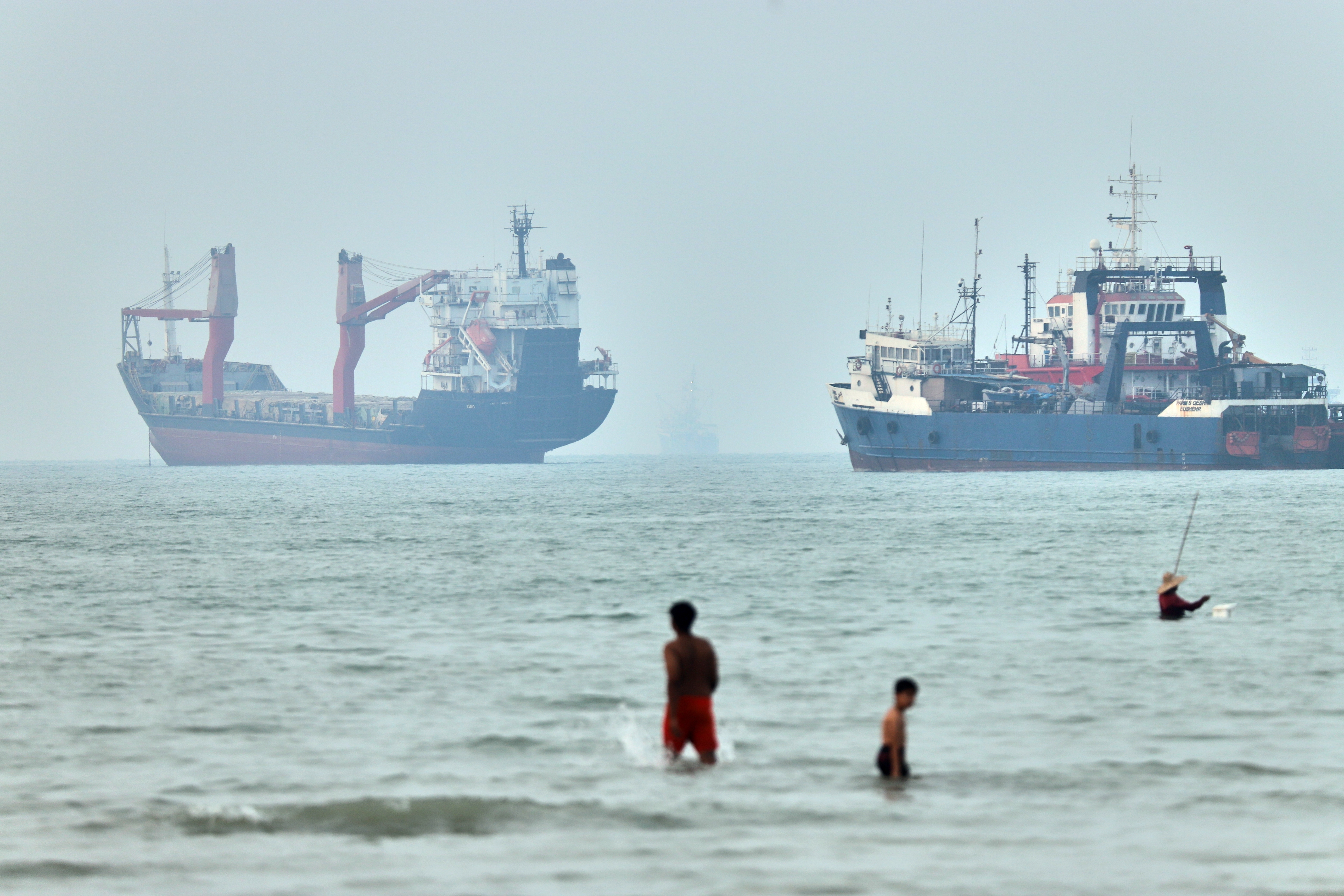
The reason for the strikes was also to degrade Iran’s capacity to launch attacks on shipping in the strait, a key waterway that connects the Persian Gulf to the Indian Ocean and that is used to transport about one-fifth of the world’s traded oil in peacetime.
On Wednesday evening, CENTCOM announced that the United States had disabled a ship in the Iranian Gulf that was seeking to bypass U.S. sanctions to transport oil into Iran.
CENTCOM said that a vessel flying the flag of Curaçao had been seen transiting in international waters and was sailing toward Kharg Island.
“The commercial vessel ignored multiple warnings as it attempted to violate the U.S. blockade. A U.S. aircraft disabled the vessel after firing hellfire missiles into the ship’s smokestack. The ship is no longer transiting to Iran,” CENTCOM wrote.
Since the past weekend, the United States has continued to strike Iranian targets after Tehran attacked commercial ships in the strait this month. A memorandum of understanding that established a framework for a peace deal signed by Tehran and Washington is effectively over, U.S. President Donald Trump has said.
In a new warning on the evening of July 14, Trump told Fox News that the United States will soon target Iran’s civilian infrastructure, including bridges and power plants, if Iranian officials do not return to the negotiating table.
“I’ll save the energy targets for last, but ultimately we’ll hit energy targets,” the U.S. president told Fox News reporter Trey Yingst on July 14.
“We’re going to hit them very hard tonight. We’re going to hit them very hard tomorrow night. We’re going to hit them very hard the night after, and then next week it gets really bad for them because next week come the power plants. Next week come the bridges.”
Before a ceasefire was announced in April, ending a previous wave of fighting that started on Feb. 28, Trump also said the military would launch attacks against power plants and bridges. He also said a “whole civilization will die” if the Iranian regime refuses to negotiate.
Trump has called for Iran to end its controversial nuclear program, open the Strait of Hormuz, and dilute or hand over enriched uranium that is believed to be buried following a round of strikes launched by the United States and Israel last summer.
While speaking to Fox News, the president was asked whether he would attempt to seize Kharg Island, a key oil production port used by Iran, but he said it was not likely—for now.
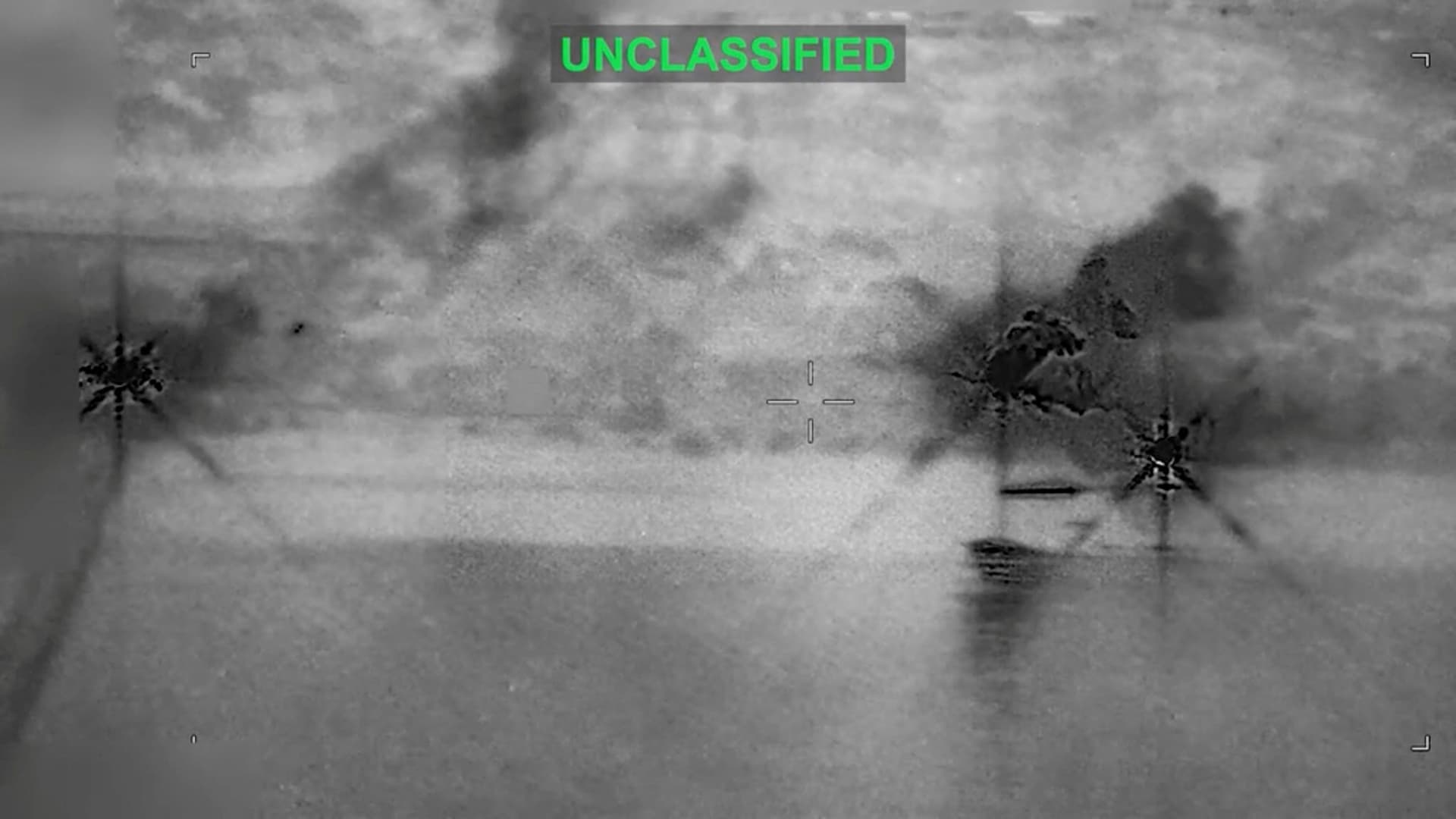
Smoke rises at an unknown location following a new wave of strikes against Iran, in this still from video footage released on July 7, 2026. (U.S. Central Command/Handout via Reuters)
“I think it’s unlikely,” Trump said. “If we degrade them far enough and deep enough back, I would do that.”
Responding to the July 15 strikes, an Iranian Ministry of Foreign Affairs official, Esmaeil Baghaei, told state-run media that no negotiations with the United States are planned and that Tehran is focused on defense against the fresh U.S. activity.
“We currently have no plans for negotiations and are focused on defense,” Baghaei said, according to Iran’s PressTV.