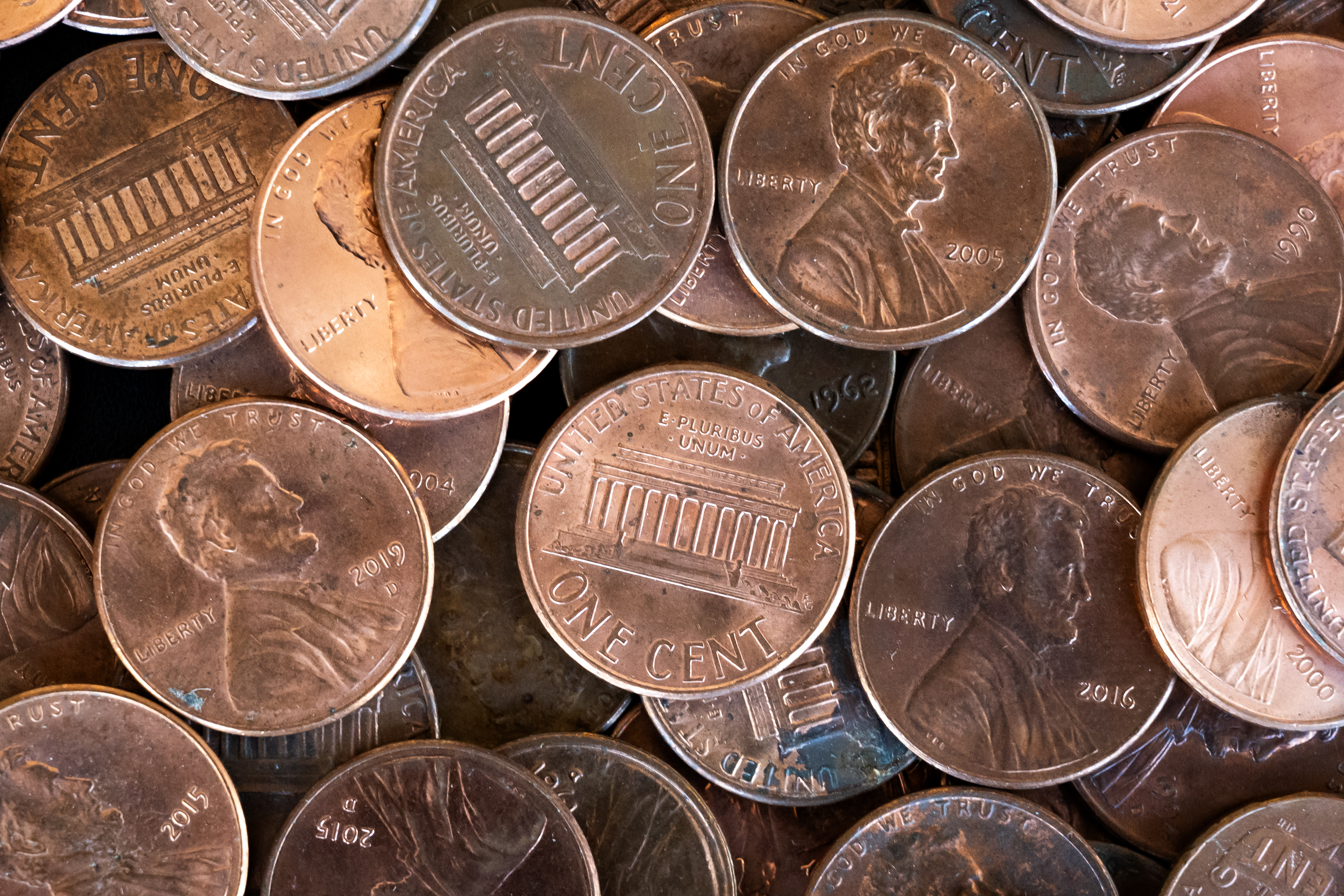
The United States Mint discontinued the penny on Nov. 12, bringing an end to the 1-cent coin that had been produced since the 1700s.
The least valuable piece of U.S. currency had become the most expensive one to produce, costing more than three times the coin’s face value. As the Trump administration takes measures to cut costs, concerns arise about potential currency shortages and the effects on cash transactions across the country.
Here’s what to know:
Costly Penny Production Ends
Treasury Secretary Scott Bessent and Treasurer Brandon Beach visited a Philadelphia mint on Nov. 12 to oversee the production of the final U.S. penny in a special ceremony to commemorate its more-than-230-year distribution run.
President Donald Trump in February called for Bessent to end production, citing its production cost.
“For far too long, the United States has minted pennies which literally cost us more than 2 cents,” Trump said in a Feb. 9 Truth Social post.
“This is so wasteful! I have instructed my Secretary of the US Treasury to stop producing new pennies. Let’s rip the waste out of our great nation’s budget, even if it’s a penny at a time.”
Pennies had been in production since the Coinage Act of 1792. The U.S. Mint made them from copper, but by 1982, the coins were made primarily of zinc with copper plating.
Authority to stop penny production rested with the Secretary of the Treasury, who could determine that newly minted coins were no longer needed. The U.S. Mint stated on its website that Bessent was the first to suspend production, deeming it “no longer necessary to meet the needs of the United States,” and that rising production costs from 1.42 cents to 3.69 cents per penny influenced his decision.
The U.S. Mint said in a press release that it would continue to make “numismatic versions of the penny in limited quantities for historical and collector purposes,” but those amounts will be nowhere close to the billions it used to produce over the course of a year.
In fiscal year 2024, the U.S. Mint said it produced and shipped approximately 3.2 billion pennies, and it expects to save approximately $56 million per year in production costs thanks to the penny suspension.
Pennies Remain Legal Tender
All pennies already in circulation will retain their market value and remain legal tender. As of fiscal year 2024, pennies accounted for 57 percent of the total 5.61 billion coins in circulating production, and a penny’s typical lifespan is 30 years.
Other coins that have fallen out of circulating production but remain legal tender include half-dollar coins featuring the likeness of former President John F. Kennedy, several dollar coin variations, including the Sacagawea Golden Dollar and the Susan B. Anthony Dollar, and the quarters featuring all 50 states on the back side.
Due to their small amounts, pennies allowed cash transactions to be conducted with precision and result in exact change, and the cessation of production has triggered worries about shortages and new limitations on physical payments.
Challenge to Cash Payments
The National Association of Convenience Stores has expressed concerns about a shortage of pennies and the issues it could pose for business owners since September.
“Without the production of new pennies, cash transactions would need to be rounded to the nearest nickel,” the association stated. ”There are some states and localities with cash laws that would prohibit this type of rounding.”
The American Bankers Association said that retailers and banks might round cash transactions to the nearest 5 cents, a practice already in place in Canada and Australia after they phased out their lowest-value coins.
Convenience store chain Kwik Trip announced that it would round down prices to the nearest 5 cents for all cash transactions, in favor of customers.
“At Kwik Trip, we’re committed to making everyday transactions simple and fair,” said Scott Zietlow, CEO and president of Kwik Trip. “This change reflects our ongoing focus on guest experience. We apologize for any confusion this may create for our guests.”
Efforts have been made to advocate to Congress and the Trump administration to resolve their concern. However, the U.S. Mint appeared convinced that enough pennies were in circulation.
“There are an estimated 300 billion pennies in circulation—far exceeding the amount needed for commerce. Retailers and other businesses can continue to price goods and services in one-cent increments,” the U.S. Mint said.
Savannah Husley Pointer contributed to this report.