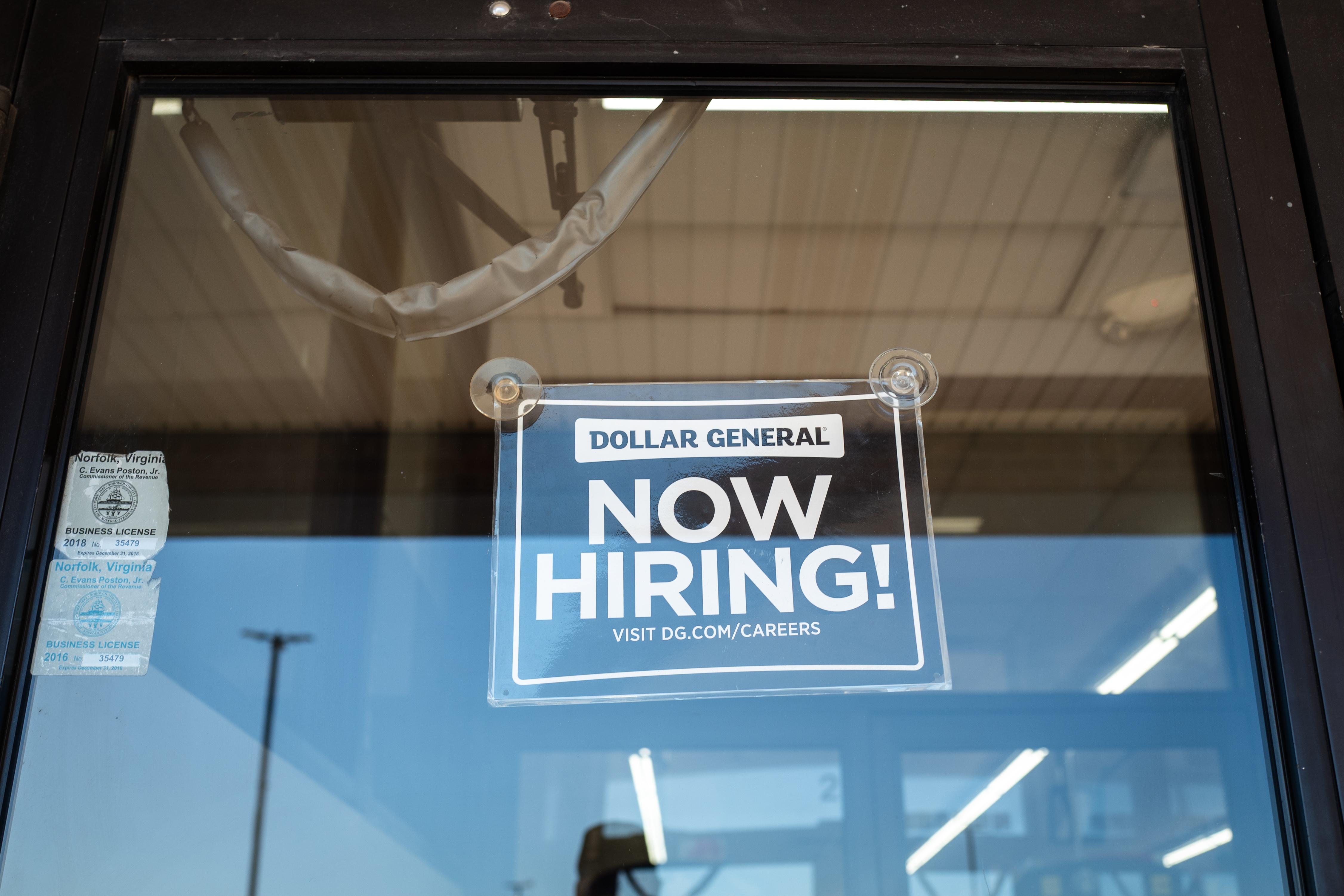

Hiring momentum slowed in September following the previous month’s blockbuster jobs report, U.S. government data show.
The economy added 29,000 new jobs last month, from the downwardly revised 133,000 in August, according to a report released by the Bureau of Labor Statistics on Oct. 2.
Economists had penciled in a gain of 90,000.
The sharp deceleration in the September jobs report comes as various labor market indicators had suggested that U.S. companies were going on a hiring spree heading into the busy holiday season.
“This is the low-hire, low-fire labor market we have been talking about,” Ken Mahoney, CEO at Mahoney Asset Management, told The Epoch Times in an email.
“The 12-month average gain going into this report was only about 45,000 jobs a month, so September fits a slow trend more than a break in the economy.”
September’s employment gains were centered in healthcare (17,000), construction (11,000), and manufacturing (9,000).
Healthcare employment has been a major contributor to overall job growth over the past two years, although last month’s increase came in below the 12-month average of 33,000.
Manufacturing has been on an upward trajectory since its recent low in December 2025, the bureau stated. The federal government’s numbers match the employment expansion observed in private-sector manufacturing surveys.
Financial activities posted the largest private-sector job losses, shedding 7,000 positions. The sector’s employment levels have steadily declined since May 2025, with 129,000 positions being eliminated, mostly in insurance carriers and related activities.
Government payrolls fell by 17,000, from an upwardly adjusted 44,000 in August.
Wage growth stalled, with average hourly earnings rising at a lower-than-expected pace of 0.1 percent. On a 12-month basis, average hourly wages slowed to 3 percent, also below expectations.
Individuals continued returning to the workforce for the second straight month.
The labor force participation rate climbed to a four-month high of 61.8 percent, from 61.4 percent in July—the lowest since the 1970s, excluding the COVID-19 pandemic years—as almost 500,000 people joined the workforce.
In addition to August’s revision, July’s reading was adjusted lower by 31,000 to negative 10,000.
Full-time and part-time employment changed little last month. The number of people holding two or more jobs rose to almost 9 million from 8.805 million in the prior month.
“Companies are not adding many people, and they are not laying many off either. A lot of firms already right-sized earlier, and AI may be taking a little of the edge off new hiring, but this is not a wave of firings,” Mahoney said.
Unemployment benefit claims remained below 200,000 for the third consecutive week. Planned job cuts declined by about 20 percent in September, according to global outplacement firm Challenger, Gray, and Christmas.
Wall Street Cheers Weak September Payrolls
Investors cheered the weaker-than-expected September jobs data as it could force the Federal Reserve to reconsider an interest rate hike.
The blue-chip Dow Jones Industrial Average and the tech-heavy Nasdaq Composite Index rose by more than 300 points. The broad-market S&P 500 jumped by about 0.8 percent.
U.S. Treasury yields were down across the board, with the benchmark 10-year falling to 5.18 percent for the first time in a week.
The 30-year yield sank to 5.57 percent. The two-year, which is sensitive to Fed policy expectations, tumbled to 4.73 percent.
Despite soft employment data, inflation is still the central bank’s focus, says Larry Holzenthaler, senior portfolio manager at Catalyst Capital Advisors.
“While the weak payrolls number perhaps creates less urgency for the Fed, inflation remains the primary concern,” Holzenthaler told The Epoch Times in an email. “This has the potential to slow down the pace of Fed rate hikes, but higher rates remain the broad theme, I would say.”
Traders trimmed their bets of an October rate hike. Investors now see an 84 percent chance of no action later this month, according to the CME FedWatch Tool.
However, December is still in play as the odds of a quarter-point increase stand at 64 percent.
The Federal Open Market Committee will hold its next two-day policy meeting on Oct. 27 and Oct. 28.