
As Japan moves to strengthen its military capabilities amid growing security concerns in the Indo-Pacific, the United States has signaled strong support for Tokyo’s defense buildup, backing plans that include the temporary deployment of U.S. missile systems on Japanese territory and expanded cooperation on missile development and production.
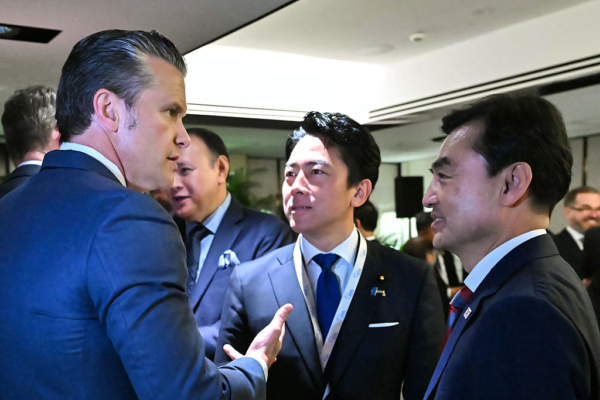
Japanese Defense Minister Shinjiro Koizumi and U.S. Secretary of War Pete Hegseth reached a series of agreements during a meeting on May 30 on the sidelines of the Shangri-La Dialogue security forum in Singapore. The talks underscored deepening military coordination between the two allies amid rising regional tensions and concerns over China’s expanding military influence.
According to statements issued by both governments, the two countries agreed to accelerate joint research, development, and production of missiles, improve data-sharing for missile defense systems, and expand military training and operational cooperation.
A key outcome of the meeting was an agreement to temporarily deploy U.S. ground-based missile capabilities to Japan in conjunction with upcoming bilateral exercises.
The two countries also pledged to enhance flexible air deployment operations and continue strengthening force posture arrangements in Japan’s southwestern island chain, a strategically important area near Taiwan and key maritime routes.
Koizumi briefed Hegseth on measures Japan has taken in recent years to bolster its defense capabilities, including efforts to increase military spending and improve deterrence. According to Japan’s Defense Ministry, Koizumi said the country had made progress toward further strengthening its own defense capabilities. Hegseth welcomed those initiatives.
The Pentagon said the two defense chiefs reaffirmed the alliance’s central role in maintaining peace and stability in the Indo-Pacific and discussed Japan’s ongoing review of its strategic documents and efforts to rapidly expand its defense capabilities.
The meeting reflects a broader shift in Japan’s security posture as Tokyo seeks a more active role in regional defense affairs. The discussions highlighted Japan’s ongoing transformation from a nation focused primarily on homeland defense to a more active security partner within the U.S.-led alliance network in Asia.
Long constrained by its postwar pacifist constitution, Japan has in recent years adopted policies that allow for greater military preparedness, citing an increasingly complex security environment that includes China’s military modernization, North Korea’s missile programs, and growing tensions across the Taiwan Strait.
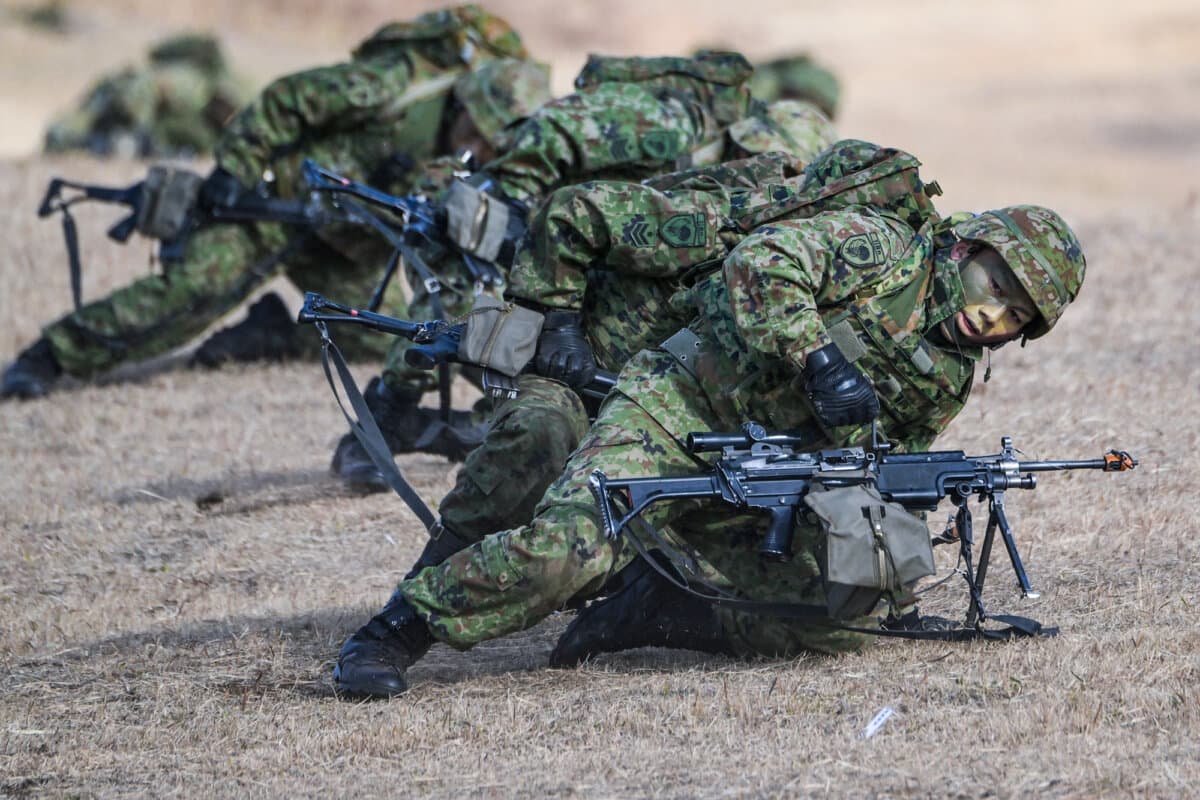
Japanese troops take position during a joint military drill and demonstration with participants from the UK, Canada, Germany, the United States, and others at Camp Narashino in Funabashi, Japan, on Jan. 7, 2024. (Richard A. Brooks/AFP via Getty Images)
The United States has consistently encouraged Japan’s defense buildup, viewing it as a critical component of allied deterrence in the region. During their discussions, Hegseth and Koizumi also emphasized the importance of increasing missile production capacity to address growing air-defense requirements and praised ongoing trilateral cooperation with Australia, including a framework for sharing air and missile defense data.
The strengthening of U.S.–Japan defense ties comes as countries across the Indo-Pacific deepen security cooperation amid strategic uncertainty and concerns about China’s growing military reach. Several regional governments are expanding defense partnerships and increasing military spending as questions persist about the long-term balance of power in Asia.
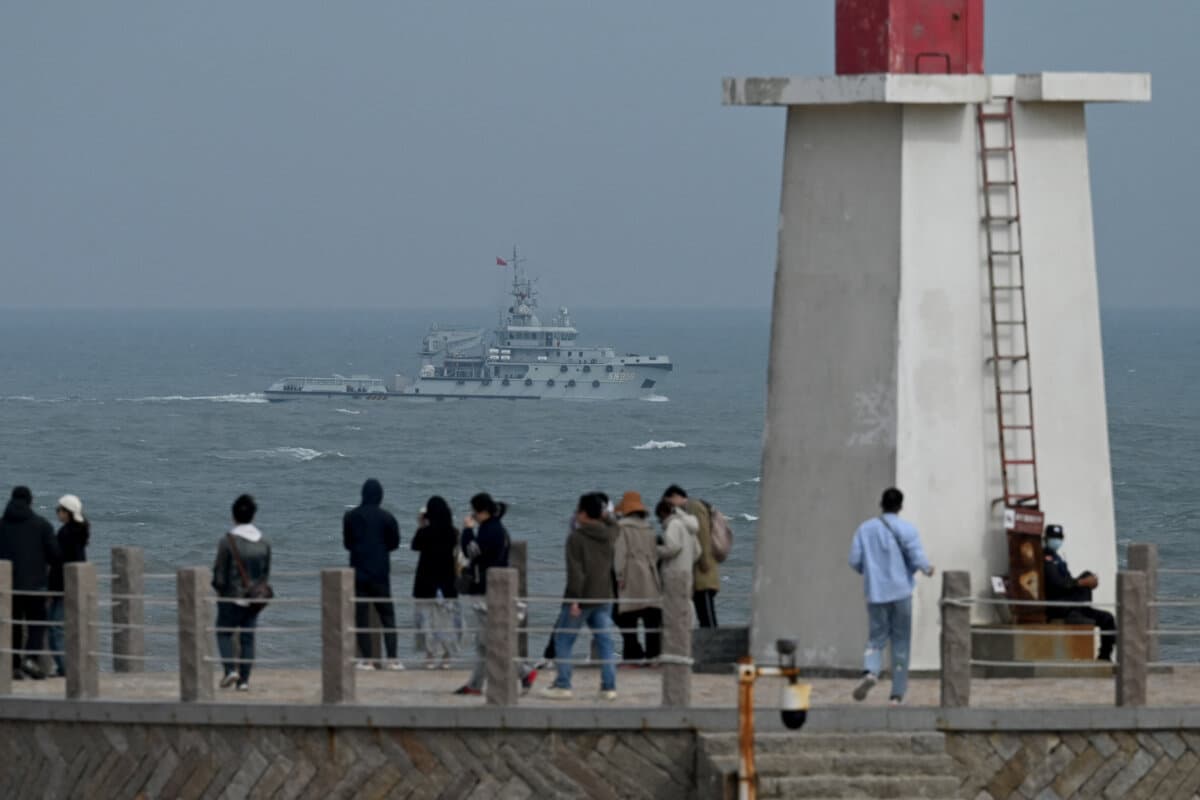
A Chinese navy tugboat sails in the Taiwan Strait, past tourists on Pingtan Island, the closest point to Taiwan, in Fujian Province, China, on April 7, 2023. (Greg Baker/AFP via Getty Images)
Beijing has long opposed Japan’s military expansion and has accused Tokyo of pursuing remilitarization and reviving elements of wartime militarism. The Chinese communist regime has repeatedly criticized Japanese defense reforms and increases in military spending.
The Japanese government rejects those accusations, arguing that its security policy remains strictly defensive. Japanese officials have instead pointed to China’s military activities in the East and South China Seas and around Taiwan as sources of growing concern for regional stability.
The agreements reached in Singapore add to a series of defense initiatives undertaken by the two allies in recent years, reflecting their shared focus on enhancing military readiness and expanding security cooperation across the Indo-Pacific.
Zhang Ting contributed to this report.