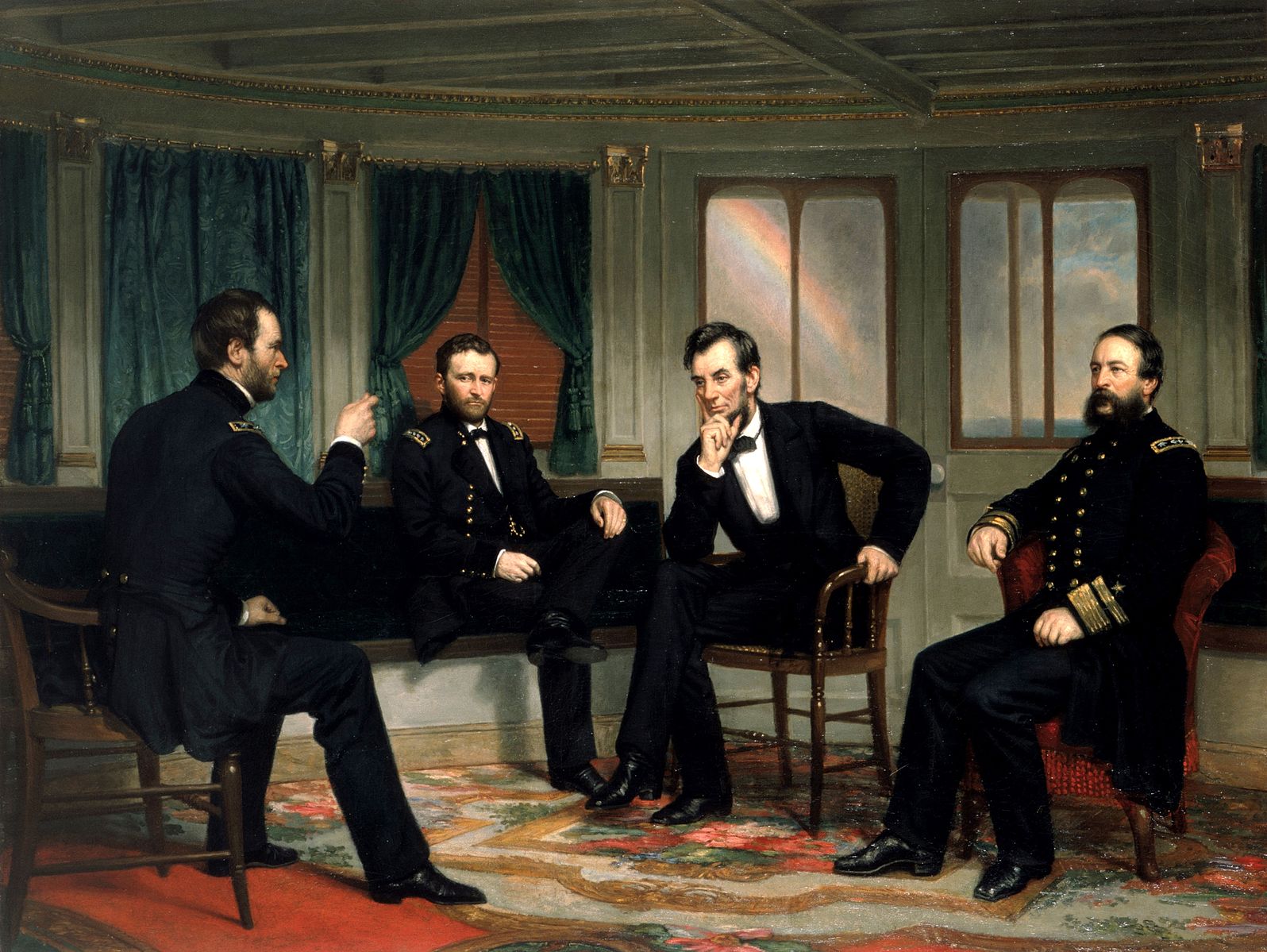

“He was a blend of contrasting qualities. His dynamic energy went along with philosophical reflectiveness … He combined democratic tastes and manners with a deep and sardonic distrust of democracy. His rebelliousness was accompanied by a profound respect for law and order. His logical ruthlessness was coupled with compassion.”
So writes British soldier military and historian B.H. Liddell Hart in “Sherman—Modern Warrior” of William Tecumseh Sherman (1820–1891), the Union general best remembered for his September 1864 conquest of Atlanta, followed by his army’s March to the Sea. That was an election year, and Abraham Lincoln was in a tight race for the White House against George McClellan and the Copperheads, the nickname for Democrats demanding peace be made with the South.
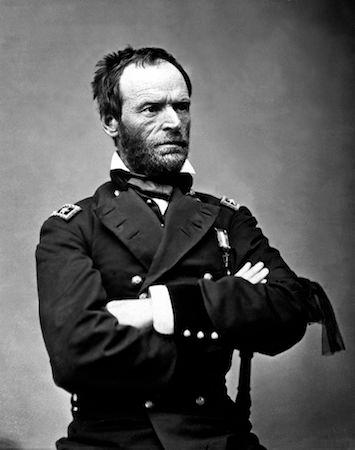
A photograph of William Tecumseh Sherman, 1865, by Matthew Brady. (Public Domain)
With the fall of Atlanta, however, Northern voters recognized that Southern resistance was eroding and that the war might soon be won. Their reinvigorated sense of victory gave Lincoln a sweeping victory at the polls.
Just days after Lincoln’s election, Sherman cast aside the conventional rules of war and commenced his long march east to lay waste to some of the South’s richest farmlands. Soon both he and his army disappeared into the Georgia hinterland, out of communication with his superiors. When asked where Sherman was, Lincoln replied, “I know what hole he went in at, but I can’t tell what hole he will come out of.”
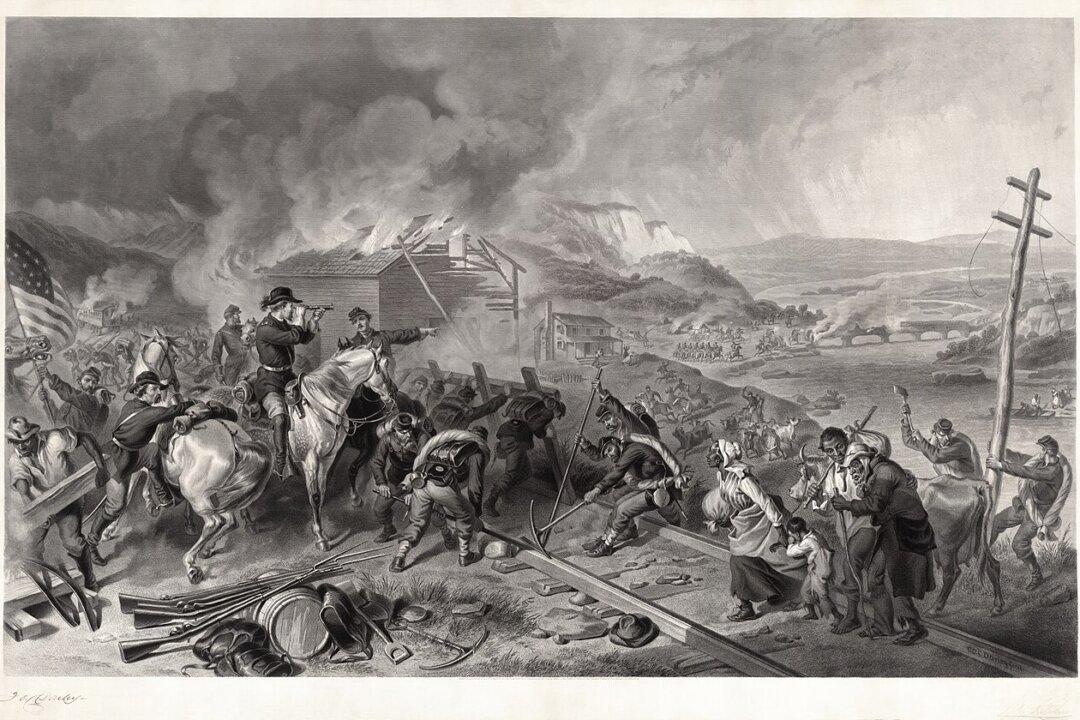
An engraving depicting General William T. Sherman’s March to the Sea, the 1864 campaign that hastened the end of the Civil War. (Public Domain)
Loyalty
Lincoln’s metaphorical holes serve as a broad description of Sherman’s pre-Civil War life with its twists and turns of fortune. During this time, he several times revealed a deep fealty to family and friends.
When Sherman was 9, for instance, his father died, and a friend of the family, attorney and later U.S. Secretary of the Treasury Thomas Ewing, took the boy into his home. This move radically changed the course of Sherman’s life. First, when his foster son was 16, Ewing helped secure Sherman an appointment to West Point. Years later, after graduation and a long engagement, Sherman married Ewing’s daughter and Sherman’s boyhood friend, Ellen. Despite long absences and quarrels over religion—Ellen was a devout Catholic—the two remained loyal and devoted to each other until Ellen’s death in 1888.
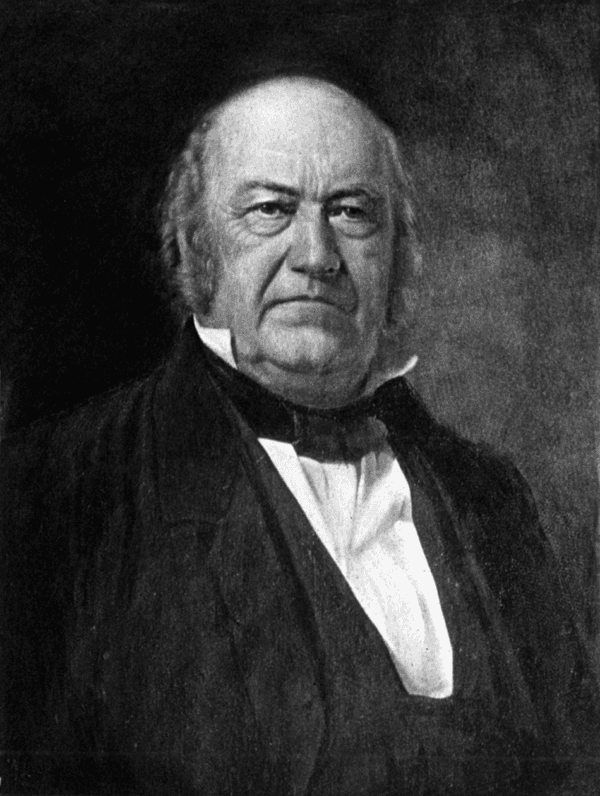
Thomas Ewing (1789–1871), the Ohio statesman who served as U.S. senator and as secretary of the treasury and the interior. After William T. Sherman’s father died, Ewing took the 9-year-old <span style="font-weight: 400;">William Tecumseh </span>Sherman into his home and later helped secure his appointment to West Point. (Public Domain)
Posted to California while in the Army, Sherman’s familiarity with that new state led him to leave the Army at age 33 to run a San Francisco bank. When the bank failed, Sherman not only saw much of his own investment go up in smoke, but also felt tremendous guilt because several of his friends, including two who later became renowned generals in the war, lost money as well. He cashed in some of his remaining assets and helped them recoup some of their investments.
Later, when war broke out, Sherman rejoined the Army, fought at Bull Run, and was then sent to Kentucky to help organize Union forces. Under immense pressure to build up his military force, he clashed with Secretary of War Simon Cameron, who had come to Louisville to assess the situation. When Sherman demanded many more men to defend the state and launch an offensive down the Mississippi, the Secretary declared his requests “insane,” a regrettable tag, that according to Liddell Hart some in the press used to declare Sherman “a lunatic.”
That stigma clung to him for some months, removed only by his heroic actions at the Battle of Shiloh, which drew praise from his commander, Ulysses Grant. This was the beginning of a close wartime friendship that benefited not only both men, but the Army as well. Once, when Sherman was defending Grant’s skills as a general, he said, “General Grant is a great general. I know him well. He stood by me when I was crazy, and I stood by him when he was drunk, and now, sir, we stand by each other always.”
Sherman stood by his family and friends.
Vision and Courage
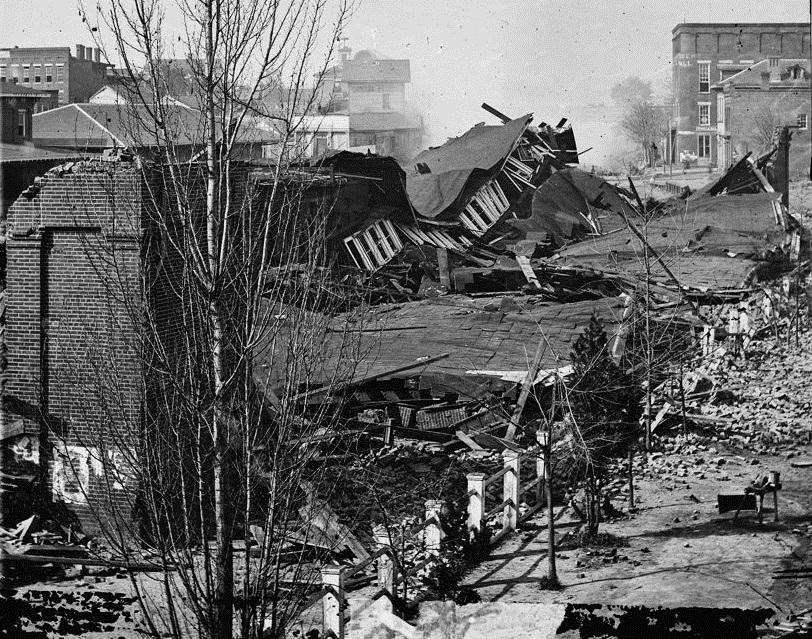
Ruins of the Atlanta Union Depot after Sherman’s troops set the city ablaze in 1864. (Public Domain)
Liddell Hart called Sherman the “world’s first modern ‘man of war,’” whose operations had “a far-reaching influence on the Second World War.” Sherman understood the strategy of movement and the importance of striking at the power base of an enemy rather than at its army. He attacked Atlanta with its “foundries, arsenals, and machine shops,” and the rest of the state for the crops that helped feed Southern armies.
When Sherman set out on his famous march, he commanded his men to leave behind all extraneous impediments, including tents, thereby demonstrating how an army might shed much of its gear in exchange for speed and maneuverability.
Moreover, he set an example of hardiness unmatched by most commanders. At night, Liddell Hart tells us, the soldiers frequently saw him slipping around the camp, and he was often awake at 4 a.m. to keep an eye on the guards and to listen for any sign of the enemy. By sharing in their hardships, Sherman gained the respect of his men, who commonly referred to him as “Uncle Billy.”
‘Know Thyself’
In the years after the war, Sherman was urged several times to run for the office of president. Unlike his friend Grant, he consistently rebuffed these proposals. He considered himself a military man, not a politician, and despised the compromises politics would demand of him.
In 1884, when he was again encouraged to make a run for the presidency, Sherman ended for once and for all these efforts when he famously said, “I will not run if nominated and will not serve if elected.” Despite the accolades and greater fame that the presidency offered, Sherman possessed the wisdom to realize he was not the man for that job, which would have made him miserable and consequently, spreading that misery to those around him.
“Know thyself” were the words inscribed on the Greek temple dedicated to Apollo at Delphi. This injunction aimed to encourage reflection on an individual’s attributes of character, the virtues and vices, the strengths and flaws.
In his personal life, on the field of battle, and in politics, Sherman demonstrated this Delphic self-awareness. He lived by a code of honor, understood what he could achieve, and realized his limitations.
What arts and culture topics would you like us to cover? Please email ideas or feedback to features@epochtimes.nyc