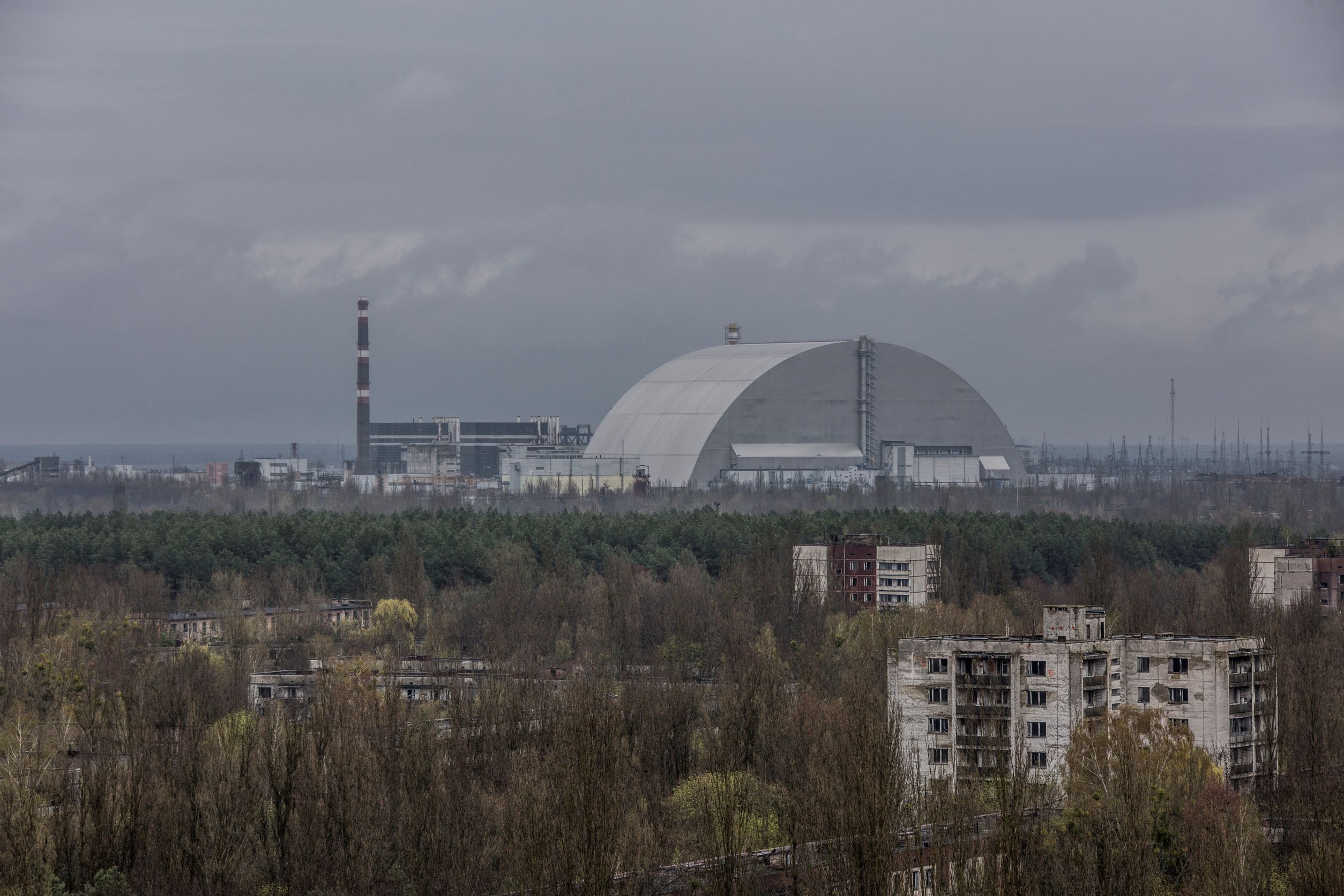

Russia has repeatedly sent drones and missiles along flight paths near the inactive Chernobyl Nuclear Power Plant during its attacks on Ukraine, raising the risk of a serious nuclear incident, Ukraine’s top state prosecutor told Reuters.
Prosecutor General Ruslan Kravchenko detailed the previously unreported Russian military activity near Ukrainian nuclear sites in written remarks, as Ukraine prepares to mark the 40th anniversary of the 1986 Chornobyl disaster on April 26.
Ukraine operates four nuclear power plants, including the Zaporizhzhia Nuclear Power Plant—Europe’s largest—which has been under Russian control since shortly after the full-scale invasion began in 2022. Kravchenko said both Chernobyl and the Khmelnytskyi Nuclear Power Plant lie along routes used by Russian hypersonic Kinzhal missiles.
According to Kravchenko’s office, 35 Kinzhal missiles have been detected within roughly 12.43 miles of either Chernobyl or Khmelnytskyi, with 18 passing near both sites on the same trajectory. Kravchenko argued that such flight paths serve no clear military purpose.
“Such launches cannot be explained by any military considerations,” he said, calling them acts of intimidation that endanger not just Ukraine but the wider region.
The International Atomic Energy Agency (IAEA) said it has repeatedly warned about military activity near nuclear facilities. IAEA Director General Rafael Grossi has urged restraint, warning of a nuclear safety crisis.
The Kinzhal missile, promoted by Russian President Vladimir Putin, is an air-launched hypersonic weapon capable of carrying a warhead weighing 1102.31 pounds and traveling at speeds of more than 4038 miles per hour. Kravchenko said that in at least three cases, such missiles fell to the ground within 6.2 miles of the Khmelnytskyi plant. The cause remains unclear, and there were no signs they had been intercepted.
The risks are heightened by the legacy of Chernobyl itself.
The 1986 explosion at Reactor No. 4 released radioactive material across Europe, prompting one of the largest emergency responses in history. Although the plant’s final reactor was shut down in 2000, the site remains highly sensitive.
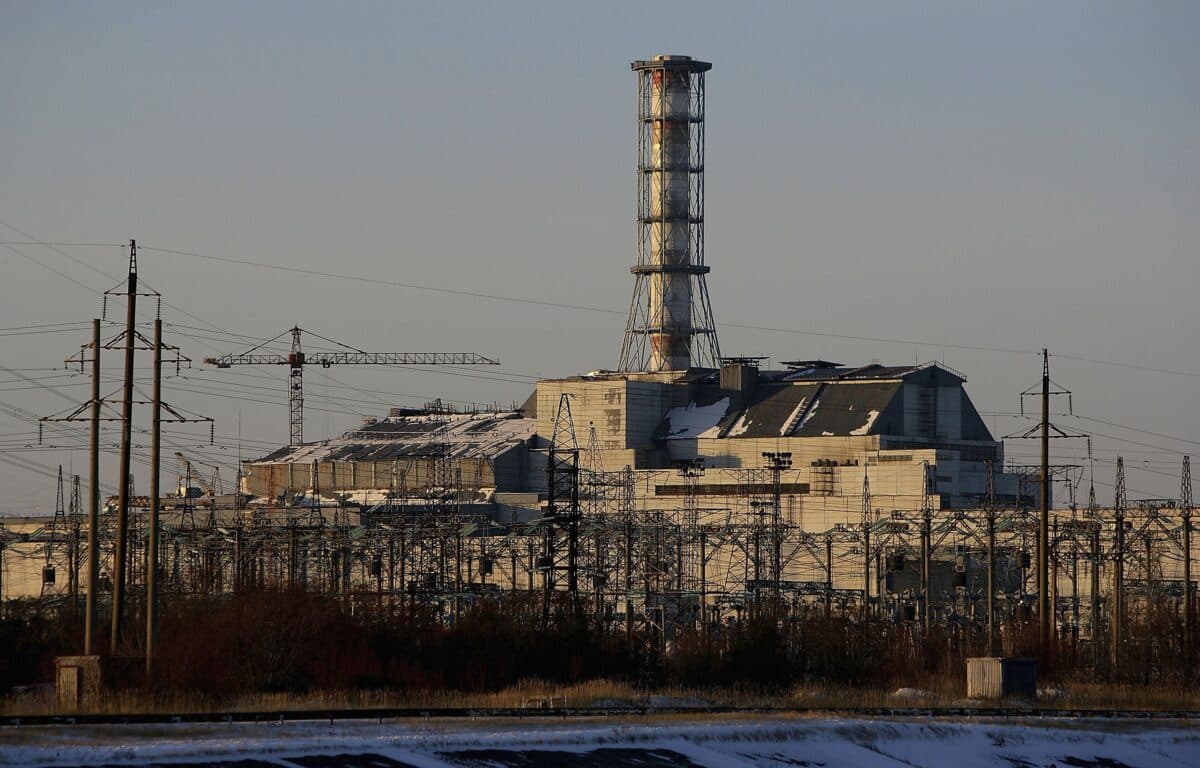
The Sarcophagus of the Chernobyl Nuclear Reactor number 4 in Chernobyl, Ukraine, on Jan. 25, 2006. (Daniel Berehulak/Getty Images)
Russian forces occupied Chernobyl for more than a month early in the invasion before withdrawing during their failed advance on Kyiv. Since mid-2024, Ukraine has detected at least 92 drones flying within a five-kilometer (3.2-mile) radius of the plant’s protective containment structure—though the true number is likely higher due to radar limitations.
That structure, built to contain lingering radiation from the 1986 disaster, was struck in February 2025 by what Ukraine identified as a Russian long-range drone. Russia denied responsibility, claiming it does not target nuclear infrastructure and suggesting Ukraine staged the incident.
The European Bank for Reconstruction and Development estimates repairs to the damaged containment shield could cost at least $586.83 million, warning that without intervention, the structure could face irreversible corrosion within four years.
Ukrainian prosecutors believe the strike was probably deliberate, citing the steep angle of impact consistent with a guided attack drone’s final dive. Kravchenko suggested Russian forces may be routing drones near Chernobyl to avoid Ukraine’s air defenses, which are concentrated around cities and critical infrastructure.
Located about six miles from the Belarusian border and just more than 62 miles from Kyiv, the Chernobyl site sits within a sparsely populated exclusion zone—an area that may make it a convenient but dangerous corridor for aerial attacks.
Alleged Ukrainian Attacks on Russian Nuclear Plants
In August 2024, Russia accused Ukraine of trying to attack the Kursk nuclear power station in western Russia, calling it an act of “nuclear terrorism.”
The Russian Defense Ministry said in a statement at the time that its air defense units shot down three Ukrainian drones overnight in the Kursk region and spoke of thwarting a Ukrainian attempt to carry out “a terrorist attack” against Russian facilities.
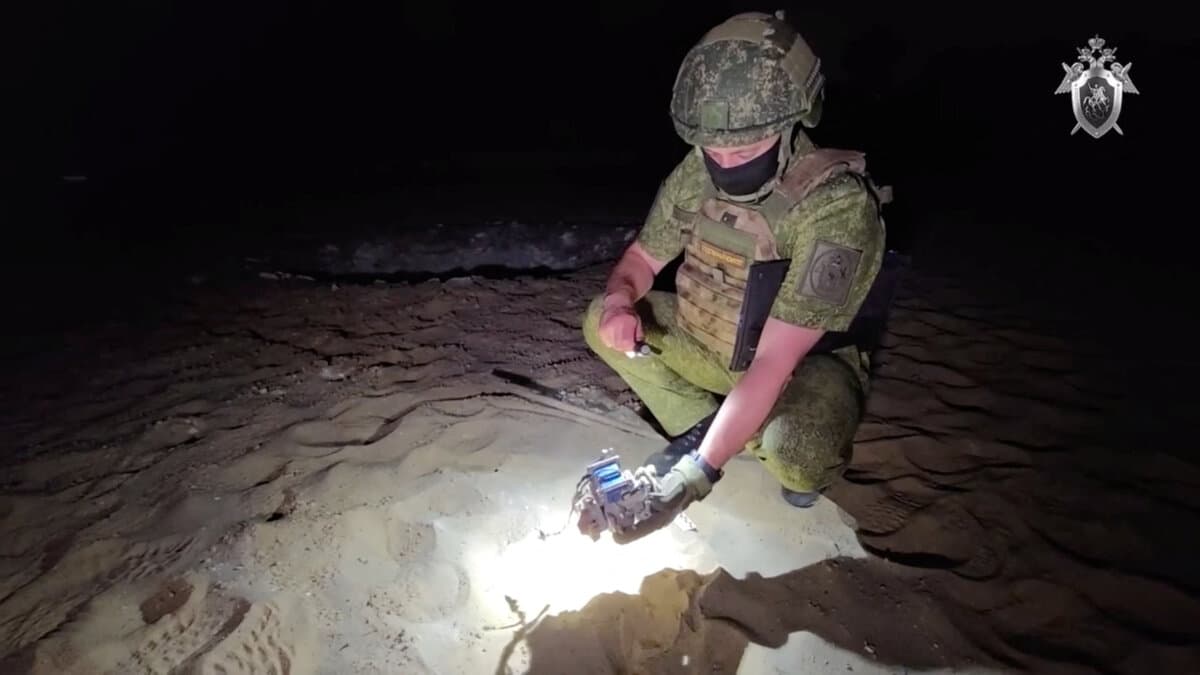
An officer of the Russian Investigative Committee examines remains of a drone on a beach following what local authorities called a Ukrainian drone attack, in this still image from a video released on July 9, 2025. (Russian Investigative Committee/Handout via Reuters)
Later that month, Russia said its forces had defused unexploded munitions fired by Ukraine that were shot down a few miles from the Kursk plant.
In August 2025, Russia said Ukraine launched drone attacks that sparked a fire at the Kursk plant. Russian officials said several power and energy facilities were targeted in the overnight strikes.
The fire at the nuclear facility was quickly extinguished with no injuries reported, according to the plant’s press service on Telegram. While the attack damaged a transformer, radiation levels remained within normal ranges.
The United Nations’ nuclear watchdog said at the time it was aware of media reports that a transformer at the plants had caught fire “due to military activity.”
Reuters contributed to this report.