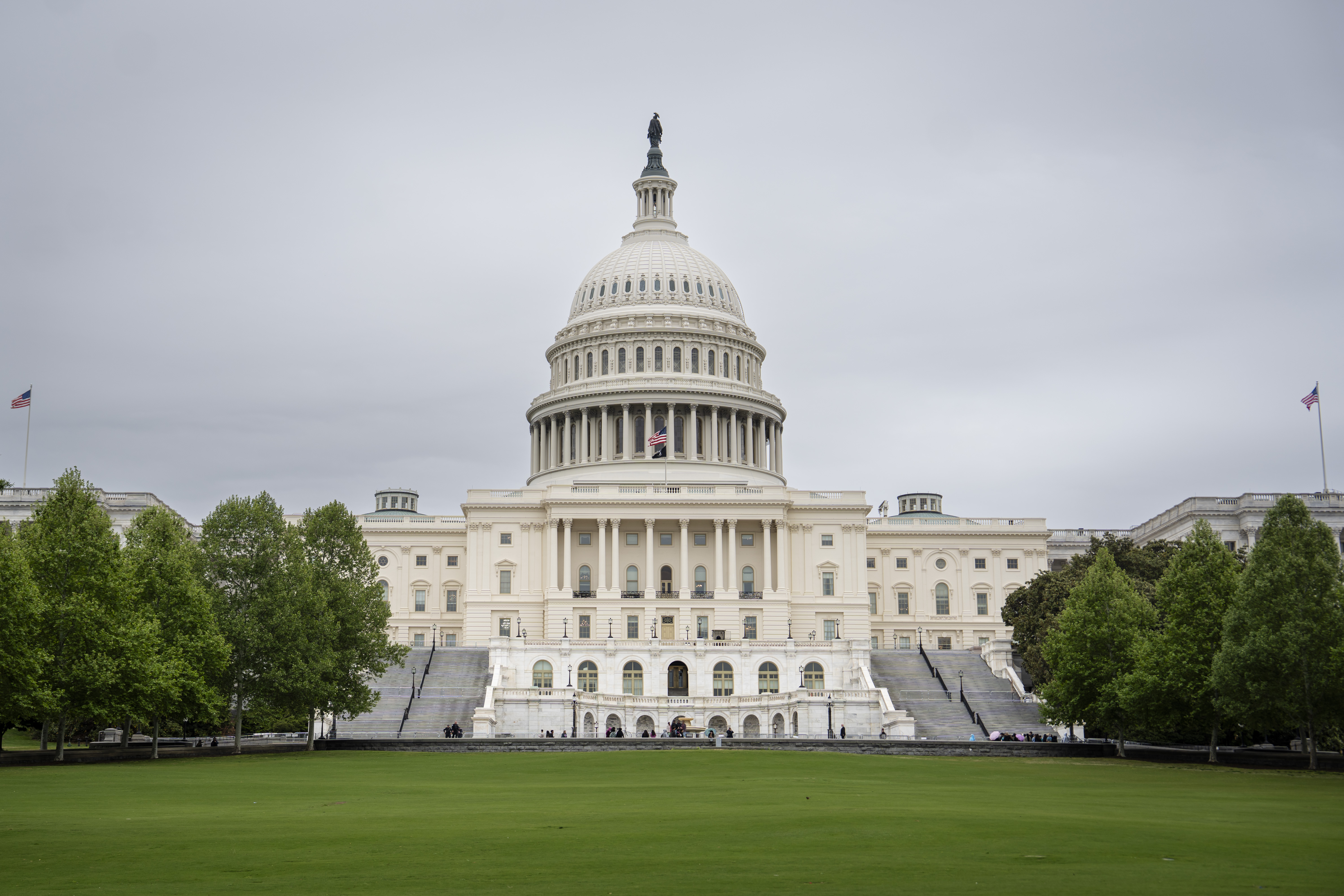

A bipartisan effort to force a House vote on new aid for Ukraine has officially cleared the required threshold, setting up a potential showdown in Congress over continued U.S. support for Kyiv.
The push succeeded after Rep. Kevin Kiley (I-Calif.) signed a discharge petition on May 13, giving supporters the 218 signatures needed to bypass House leadership and compel a vote on the legislation.
The bill, introduced by Rep. Gregory Meeks (D-N.Y.), the ranking Democrat on the House Foreign Affairs Committee, had stalled for months while supporters searched for one final signature to move it forward independently of Republican leadership.
Although the measure faces steep political obstacles—particularly due to strong Republican resistance and opposition from President Donald Trump—the petition’s success marks another challenge for House Speaker Mike Johnson (R-La.), whose narrow House majority has made it increasingly difficult to maintain control over the chamber.
The legislation would provide $1.3 billion in military assistance to Ukraine and authorize as much as $8 billion more through direct loans and additional support programs. It also includes provisions to replenish U.S. weapons stockpiles, fund Ukraine’s postwar reconstruction, and expand sanctions against Russia and organizations aiding its war efforts.
Every House Democrat signed the petition, joined by Republican Reps. Don Bacon of Nebraska and Brian Fitzpatrick of Pennsylvania. Combined with Kiley’s support, the coalition reached the majority required to force action on the House floor.
Kiley said recent developments in the conflict underscored the need for continued U.S. involvement.
“Recent Ukrainian gains have created an opportunity for peace, but the collapse of the recent ceasefire shows that leverage is needed for diplomacy to succeed,” he told The New York Times on Wednesday. “Congress can act now, in a bipartisan way, to strengthen that leverage and advance a durable peace that protects the interests of the United States and our allies.”
Discharge petitions are rarely successful because they require support from an outright majority of House members to override leadership and force debate on legislation. However, the tactic has become more prominent during Johnson’s tenure as speaker, with the Republican conference divided by ideological disputes and constrained by its slim majority.
The development also comes during a tense period in U.S. policy toward Ukraine. Trump, who has pushed for a negotiated settlement to the war and questioned long-term American involvement, has recently intensified criticism of Russian President Vladimir Putin as ceasefire negotiations have stalled and Russian military attacks have escalated.
Trump said on Tuesday that the war is “very close” to ending.
Russia launched a massive daytime drone assault on Ukraine on Wednesday, striking critical infrastructure in the country’s west, killing at least six people, and prompting NATO member Poland to scramble fighter jets.
Ukrainian President Volodymyr Zelenskyy said Moscow had launched waves of at least 800 drones since midnight, with the attacks deliberately focused on regions near NATO borders.
According to Zelenskyy, six people were killed and dozens more injured across several Ukrainian regions. A presidential adviser said Ukraine’s railway infrastructure was hit 23 times during the barrage, damaging trains, depots, and bridges, although rail traffic continued operating.
The assault marked the first major attack since a three-day U.S.-brokered ceasefire between Ukraine and Russia ended on Monday.
Reuters contributed to this report.