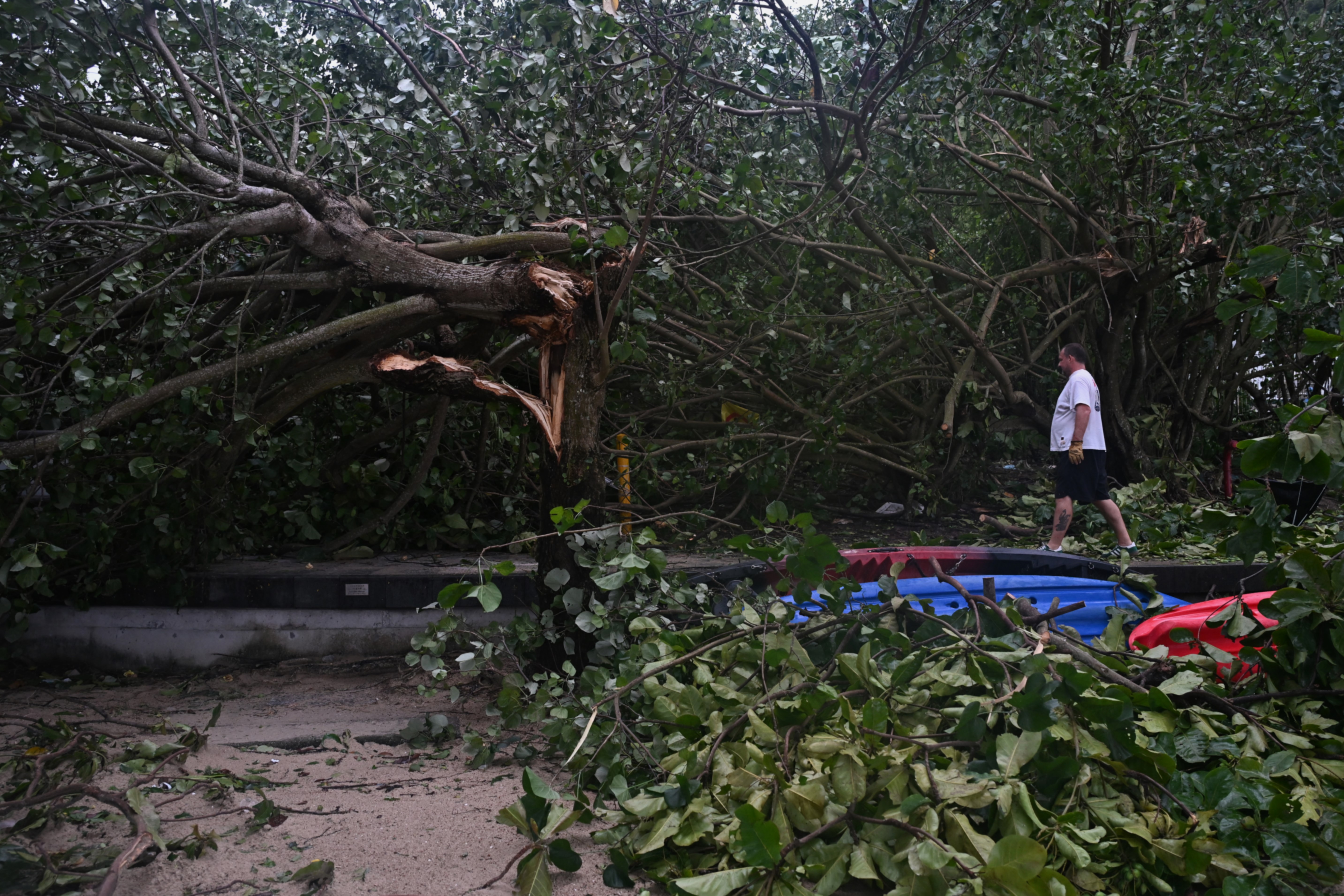

A typhoon swept across Hong Kong and southern China on Sunday, July 20, unleashing torrential rain and hurricane-force winds that toppled trees, tore down scaffolding, and triggered widespread disruption, including the cancellation of hundreds of flights.
Hong Kong authorities raised the city’s highest storm alert—Typhoon Signal No. 10—for nearly seven hours as Typhoon Wipha’s outer bands pounded the territory. Wind gusts reached up to 103 mph, and more than 4 inches of rain fell within just three hours.
More than 470 trees were reported downed across the city. Bamboo scaffolding at construction sites had collapsed, several major roads were blocked, and more than 250 residents sought refuge in temporary government shelters. Hospitals have so far treated 26 people for storm-related injuries, according to local officials.
Flights at Hong Kong International Airport were severely disrupted, with more than 500 planes grounded and approximately 100,000 passengers affected.
After sweeping past Hong Kong, Wipha made landfall near Taishan, in Guangdong Province, at around 5:50 p.m. local time, with sustained winds at around 73 mph.
In response, local governments across the region closed workplaces, construction sites, and public facilities.
Approximately 245,000 households in Guangdong lost power due to the typhoon, according to Chinese state media.
Airports in Shenzhen, Zhuhai, and Macau also canceled or delayed most daytime flights. Macau International Airport alone canceled 138 flights and rescheduled another 12. Public transportation and ferry services were suspended at the storm’s peak.
By Monday morning, all storm signals in Hong Kong had been lifted. Ferry and flight operations gradually resumed, and the Hong Kong-Zhuhai–Macau Bridge reopened to traffic.
Although Wipha weakened to a severe tropical storm as it moved westward along China’s southern coast, meteorological authorities continued to issue high alerts for heavy rainfall, flash flooding, and strong winds across Guangdong, Hainan, and Guangxi provinces. Offshore waters in South China were forecast to experience gale-force winds of force 8 to 10, and authorities also warned of potential landslides in vulnerable mountainous areas.