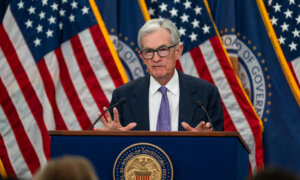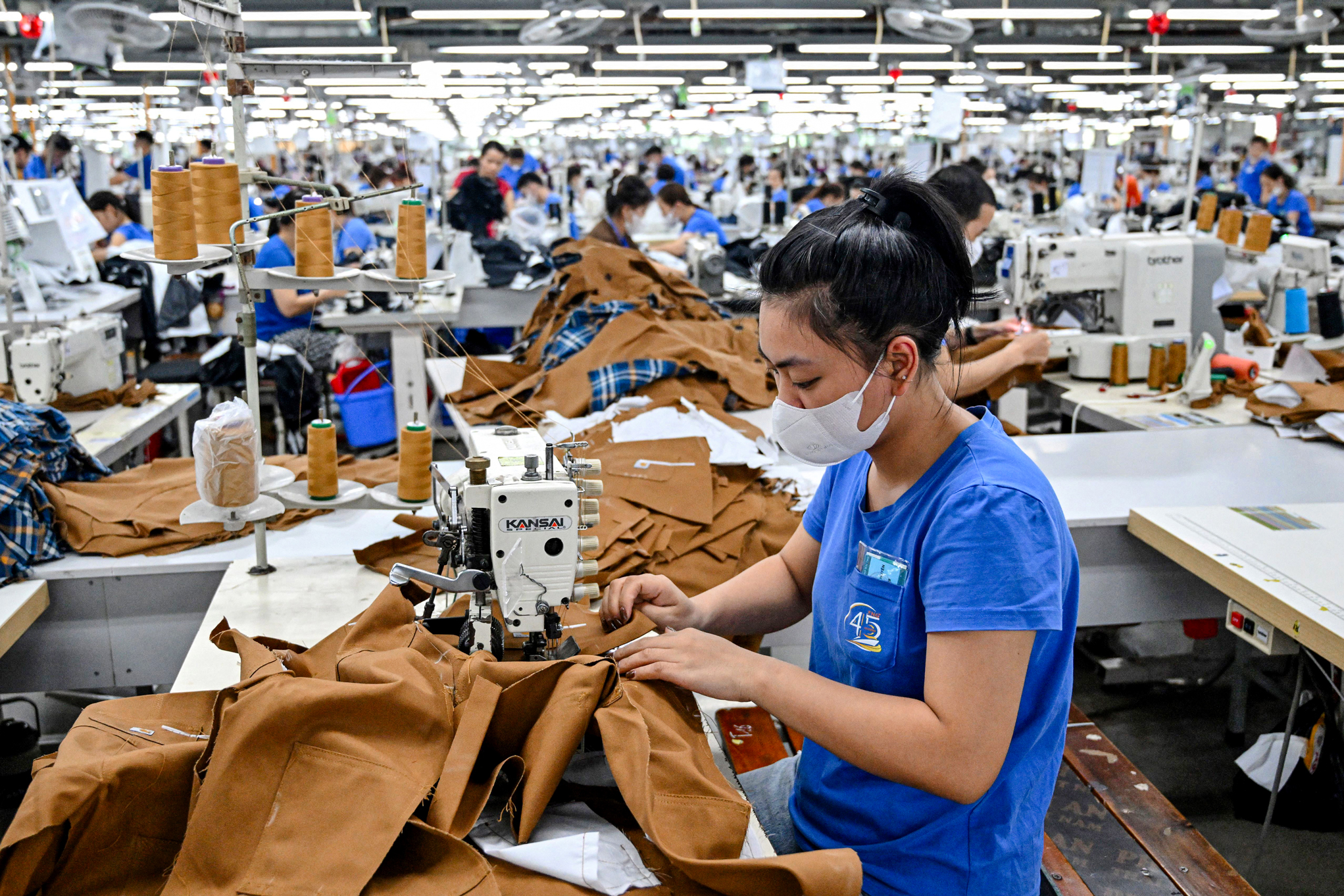

President Donald Trump, hours before the Aug. 1 tariffs deadline, announced new rates on transshipped goods.
Transshipping—a common practice of rerouting shipments to other countries to disguise the origin of merchandise and evade tariffs—has become a centerpiece of the current administration’s trade agenda.
U.S. officials say tariffs could curb this strategy of producing goods in China and then repackaging or relabeling them as “Made in Vietnam.”
The issue has been highlighted in multiple trade agreements, including with Indonesia and Vietnam, and Trump’s latest edict further restricts transshipping activity.
According to the White House, all items determined by Customs and Border Protection authorities to be transshipped to avoid applicable duties will face an additional 40 percent tariff.
For example, if China were to sell its products through merchandise exported by Thailand to the United States, Thailand would be slapped with an extra 40 percent tariff.
The start date for these new tariffs will take effect on Aug. 7, allowing Customs and Border Protection to adopt new measures and policies.
“Transshipments have always been illegal, and so we’re just going to put a 40 percent tariff on that,” U.S. Trade Representative Jamieson Greer said in an Aug. 1 interview with Bloomberg Television.
Companies will likely have to adjust their supply chains, “and no one wants to do that,” he noted.
“They just want the status quo. But we can’t have the status quo,” Greer said.
Canada was also caught in the crossfire of transshipment.
Under Trump’s executive order, the U.S. tariff on Canadian goods increases to 35 percent from 25 percent. Additionally, any Canadian products that fail to meet USMCA requirements and are found by U.S. authorities to have been rerouted to dodge tariffs will face a 40 percent penalty.
Meanwhile, in addition to new import duties, the White House aims to install rules of origin for transshipments.
This is aimed at ensuring importers understand that the products were manufactured in the market that exporters say they were.
The president’s modification of reciprocal tariff rates also contains a provision directing senior administration officials to submit a report every six months identifying countries engaged in circumvention schemes.
Enforcing the Rules
Leah Fahy, China economist at Capital Economics, says it remains unclear how the administration plans to enforce these rules.
She also notes that enforcement would be difficult for other countries.
“It is still not clear how this will be implemented in practice,” Fahy said in an Aug. 1 note.
At the same time, she believes it will have little bearing on the primary target for cracking down on transshipping: China.
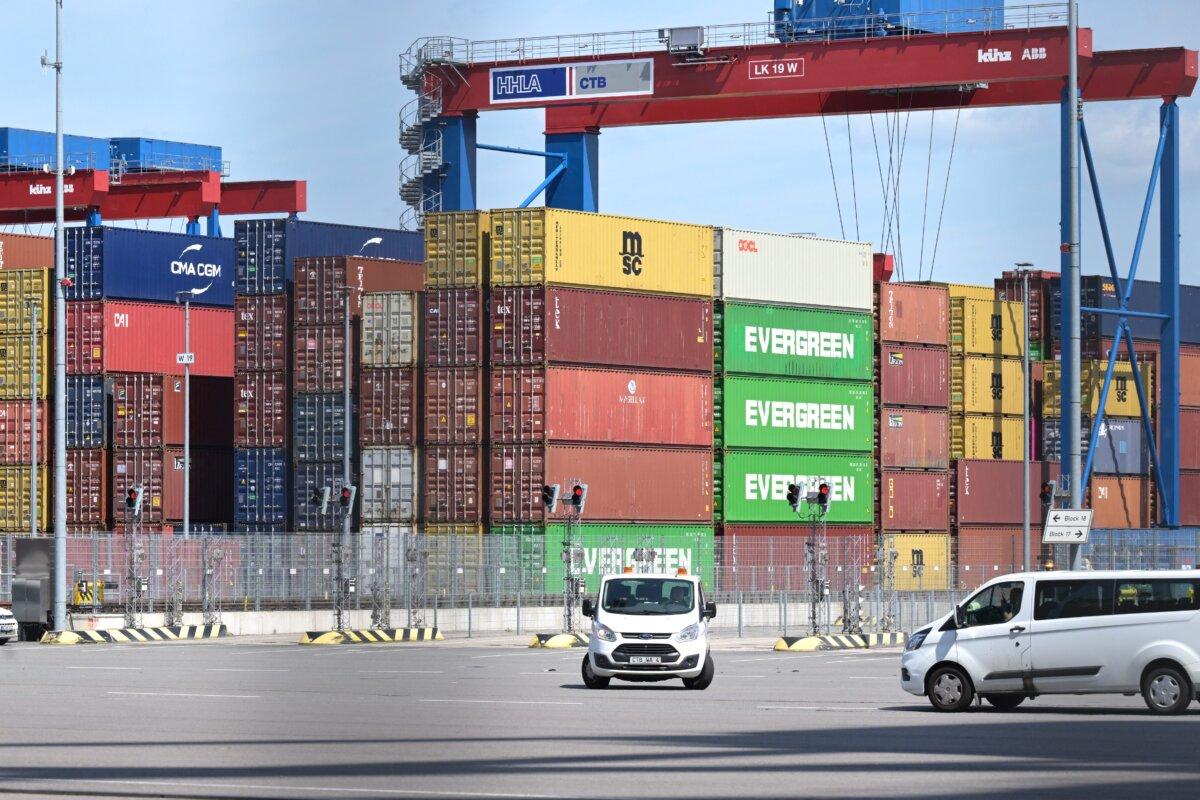
Cargo shipping containers at the Burchardkai container terminal at the harbour of Hamburg, Germany, on June 3, 2025. (Fabian Bimmer/AFP via Getty Images)
“As for the impact on China, we remain fairly sanguine. Enforcement is likely to be challenging, and even if outright rerouting is reduced, trade diversion will continue to dampen the impact of U.S. tariffs on China’s aggregate export performance,” she said.
World officials say they are awaiting further transshipment confirmation from the United States.
Chantawit Tantasith, Thailand’s deputy commerce minister, said that his government is awaiting “further clarification” on “the negotiation process and rules of origin.”
However, Greer notes that in addition to the higher tariff rates, U.S. government officials would employ basic trade enforcement tactics.
The Office of the U.S. Trade Representative will monitor countries that have made commitments and ensure they fulfill their side of the trade agreements.
“If they don’t, the president has his tariff authority,” Greer said.
“If you don’t, you can have the tariffs go back into place. This is basic trade enforcement that we intend to do here.”
China and Economics
Ultimately, trade actions and implementation by the White House signal that targeting transshipments is also about homing in on Asia’s trade connections with China.
As for the economic effects, unwinding this link could harm Southeast Asian markets, according to Deepali Bhargava, ING’s regional head of research in the Asia-Pacific.
“The recent surge in ASEAN [Association of Southeast Asian Nations] imports from China suggests that supply chains are deeply intertwined,” Bhargava said in a July 8 research note.
“While some companies might be diverting goods through ASEAN to avoid tariffs, other genuine ones export foreign components to ASEAN where the actual value added takes place.”
Vietnam maintains one of the world’s largest trade surpluses with the United States—more than $120 billion in 2024—and has been described by the Trump administration as a significant hub for rerouting Chinese goods to the U.S. market.
At the same time, Bhargava says, places such as Vietnam would enjoy a competitive advantage over Beijing, and the supply chain changes could kick into overdrive.
“While higher tariffs on value-added exports and potentially significant transshipments could hurt GDP growth, favourable tariff differentials might accelerate the supply chain shifts Vietnam has been benefiting from,” she said in a July 3 note.
Vietnamese goods entering the United States would be subject to a 20 percent tariff rate, lower than the 46 percent initially proposed. The U.S. tariff rate on China is 34 percent.
Reuters contributed to this story.