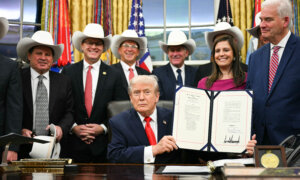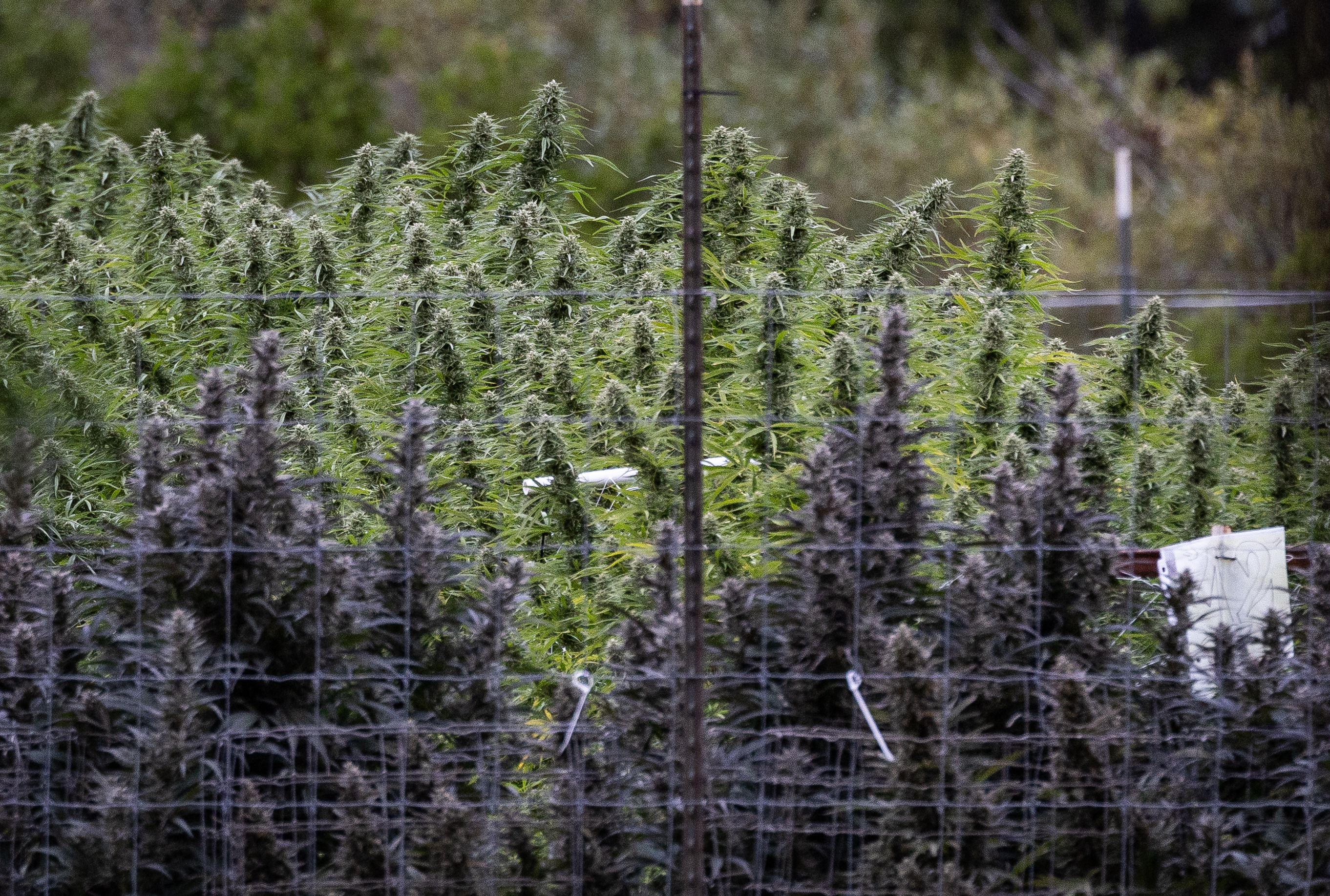

WASHINGTON—President Donald Trump signed an executive order on Dec. 18 directing Attorney General Pam Bondi to expedite the reclassification of cannabis for the purpose of allowing medical research.
“We have people begging for me to do this, people that are in great pain,” Trump said during the Oval Office signing ceremony.
“Frankly, I promised to be the president of common sense, and that is exactly what we’re doing.”
A senior White House official told reporters during a Dec. 18 briefing that the order intends to allow research that is prohibited under the existing classification.
“The president has heard from so many people who have talked about the potential benefits of medical marijuana and CBD use, but he’s also heard from patients and from doctors that there’s not enough research to inform medical guidelines and that many patients are using these products without talking to their doctor about them,” the official said.
Administration officials are also directed to work with Congress to pass legislation that gives Americans more access to products containing CBD, a non-intoxicating compound found in cannabis plants.
A clause in the recently passed One Big Beautiful Bill Act restricted the amount of THC—an intoxicating compound found in some cannabis plants—that could exist in hemp products, but the White House is seeking a legislative solution to allow so-called full-spectrum products that contain higher levels of THC and other compounds.
The order maintains restrictions for products deemed to “pose serious and potentially life-threatening health risks.”
Marijuana is currently listed as a Schedule I narcotic, along with heroin and others, under the Controlled Substances Act—signed into law by President Richard Nixon in 1971—which means it is defined as a substance having no medicinal value.
Trump said anecdotal evidence and studies conducted in other nations prompted the reclassification.
“The facts compel the federal government to recognize that marijuana can be legitimate in terms of medical applications when carefully administered,” he said.
Cannabis will remain illegal federally while classified as Schedule III—along with ketamine, testosterone, and anabolic steroids—under the regulatory authority of the Drug Enforcement Administration.
“I want to emphasize that the order I am about to sign is not the legalization, or it doesn’t legalize marijuana in any way, shape, or form, and in no way sanctions its use as a recreational drug,” Trump said. “It has nothing to do with it.”
Joining the president for the signing ceremony were Dr. Michael Hogue, CEO of the American Pharmacists Association; Dr. Ilana Braun, chief of adult psychosocial oncology at Harvard Medical School; and Jim Hoyt, national second vice president of the National Fraternal Order of Police and American Legion, among others.
The Centers for Medicare and Medicaid Services will begin offering up to $500 in hemp-derived products for seniors enrolled in the programs beginning after the fourth quarter of 2026, according to administrator Dr. Mehmet Oz.
He acknowledged the debate around access to cannabinoids.
“It’s tough, and I know there’s going to be a lot of discussion about it,” Oz said. “That’s why we’re so passionate about making it clear that this patchwork that we’re working with now, the laws and regulations, they’re leaving patients and doctors without adequate guidance on the safeguards of how to use these products.”
Critics of the change pointed to potential health effects as one reason to not increase access to marijuana products.
“Though gaps remain in our knowledge about the health effects of cannabis use, the current evidence is enough to sound an alarm; cannabis is addictive; cannabis use disorder is on the rise; and those affected by cannabis use disorder are at an increased risk of premature death,” Dr. Laura Bierut and Fang Fang wrote in a study published in February in the Journal of the American Medical Association.