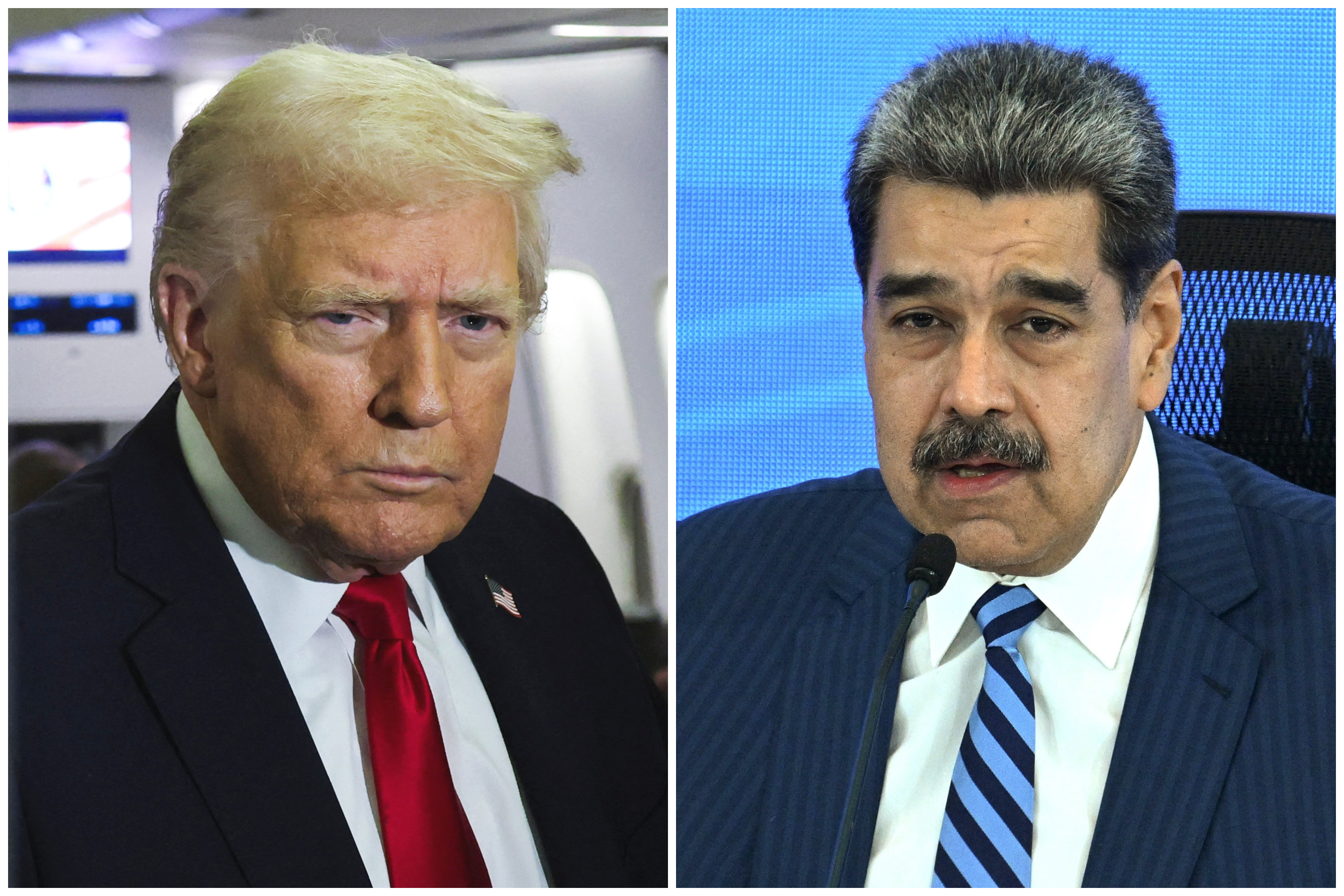
President Donald Trump confirmed on Nov. 30 that he has spoken with Venezuelan leader Nicolás Maduro amid rising tensions between the two nations.
“I don’t want to comment on it. The answer is yes,” Trump said while speaking to reporters aboard Air Force One.
It follows a New York Times report that Trump and Maduro spoke earlier this month and discussed possibly meeting in the United States.
Regarding the conversation, the president said, “I wouldn’t say it went well or badly, it was a phone call,” and declined to share any further details.
It also comes one day after Trump announced that all airspace over Venezuela should be considered “closed in its entirety.”
The Federal Aviation Administration issued a warning to airlines on Nov. 21 about a “worsening security situation and heightened military activity in the region,” sparking several canceled flights to Venezuela.
But when asked if those comments meant that an airstrike against Venezuela was imminent, Trump said, “Don’t read anything into it,” adding, “We consider Venezuela to be not a friendly country.”
Tensions between the United States and Venezuela continue to mount as the Trump administration puts pressure on drug smuggling operations in the Caribbean.
More than 20 lethal strikes on the alleged drug trafficking boats in the Caribbean and Eastern Pacific have been undertaken by U.S. armed forces since September, killing more than 80 people designated by the administration as “narco-terrorists.”
Anonymous claims about some of those actions, which have alleged potential wrongdoing by Pentagon chief Pete Hegseth, are currently being reviewed by the House and Senate armed services committees.
Responding to The Washington Post’s report, which claimed that Hegseth had ordered the survivors of the first attack killed, which would constitute a war crime, the secretary said, “Our current operations in the Caribbean are lawful under both U.S. and international law, with all actions in compliance with the law of armed conflict—and approved by the best military and civilian lawyers, up and down the chain of command.”
Trump told reporters, “I wouldn’t have wanted that. Pete said that did not happen.”
Many within the Trump administration have repeatedly said that Maduro heads an extensive drug trafficking network. Maduro has continued to deny those allegations.
The Trump administration also views the Venezuelan regime as a security threat and has denounced the legitimacy of the Maduro presidency.
“Neither Maduro nor his cronies represent Venezuela’s legitimate government,” U.S. Secretary of State Marco Rubio said in a Nov. 16 statement.
The United States under the Biden administration recognized opposition leader Edmundo Gonzalez’s government as the legitimate and democratically elected government after the disputed 2024 election. If Maduro were to leave the country, it is expected that Gonzalez’s government would take power.
Reuters and Emel Akan contributed to this report.