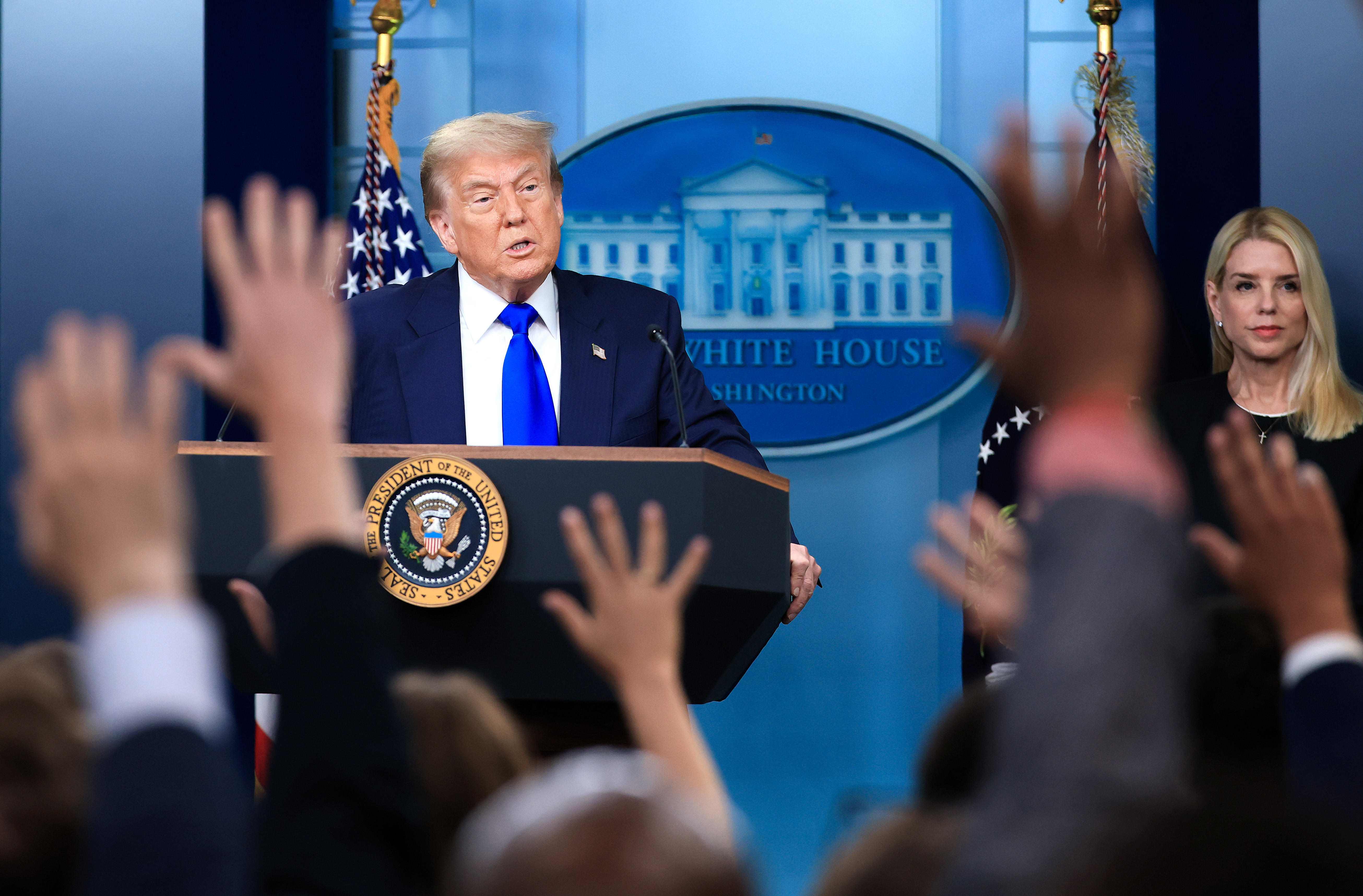

The United States and Vietnam have reached a trade agreement, President Donald Trump confirmed on July 2.
“I just made a trade deal with Vietnam. Details to follow!” Trump wrote in a July 2 post on his social media platform, Truth Social.
Trump and White House officials have stated that they expect a flurry of trade deals to be announced leading up to the highly anticipated July 9 deadline for the president’s reciprocal tariffs.
Trump, writing in a follow-up post, confirmed that the terms include Vietnam paying a 20 percent tariff rate “on any and all goods sent into” the United States and a 40 percent levy on any transshipping.
Vietnam, in exchange, will provide the United States “total access” to its market for trade.
“We will be able to sell our product into Vietnam at zero tariff,” the president said.
“Dealing with General Secretary To Lam, which I did personally, was an absolute pleasure.”
Without a bilateral trade pact, Vietnamese shipments to the United States would have been subjected to a 46 percent blanket tariff.
Both sides have engaged in multiple rounds of trade negotiations over the past three months.
On April 4, Trump said he had had a call with Vietnamese leader To Lam.
“[He] told me that Vietnam wants to cut their Tariffs down to zero if they are able to make an agreement with the U.S.,” Trump wrote on social media.
“I thanked him on behalf of our Country, and said I look forward to a meeting in the near future.”
On April 2, Trump announced plans to impose a 46 percent reciprocal tariff on goods imported from Vietnam. However, he later introduced a 90-day pause to allow time for negotiations with each country.
Since the president’s April 2 announcement that upended international trade, Vietnam has reduced several levies affecting U.S. exports, including those on airplanes and agricultural products.
The U.S. trade deficit with Vietnam was $123.5 billion last year, up 18 percent from 2023, according to the U.S. Trade Representative’s Office.
The United States has also been asking other nations to ban transshipments, a practice that involves Chinese goods being minimally altered or simply relabeled in a third country, such as Vietnam, and then sent to the United States.
In response to Trump’s tariff announcement in April, Beijing has launched a charm offensive to strengthen ties with U.S. trading partners.
During a visit to Vietnam on April 14–15, Chinese leader Xi Jinping promoted China as a reliable trading partner. While in Hanoi, he called for closer cooperation with Vietnam and urged the country to resist “unilateral bullying.”
Vietnam has benefited from the U.S.–China trade dispute as many companies that have moved production out of China have relocated to Vietnam.
Appearing at a Senate Appropriations Committee hearing in June, Commerce Secretary Howard Lutnick was asked whether the administration would accept a trade agreement with a country such as Vietnam if both sides agreed to zero percent levies.
“Absolutely not. That would be the silliest thing we could do,” Lutnick said, pointing to China’s use of Vietnam as a third-party market to send products to the United States and skirt tariffs.
The National Trade Estimate Report, released in March, identified various tariff and non-monetary trade barriers, such as import restrictions, product registration requirements, and lackluster intellectual property protections.
‘Flurry’ of Deals Coming
Ahead of the self-imposed early July deadline, several senior administration officials said they anticipate numerous trade deals.
In an interview with Bloomberg Television earlier this week, Treasury Secretary Scott Bessent, who had recently suggested an extension for trade negotiations until Labor Day, said that “a flurry” of agreements would be announced in the final week before the July 9 deadline.
“Whether it’s at Treasury, at USTR, at Commerce—people who’ve been around for 20 years are in amazement, and they’re saying these countries are coming with offers that they can’t believe,” Bessent said.
“All these countries are pulling back.”
Speaking to the Fox Business Network in late June, National Economic Council Director Kevin Hassett stated that various deals are expected to be unveiled after the One Big Beautiful Bill reconciliation package passes in Congress.
“We know that we’re very very close to a few countries and are waiting to announce after we get the Big Beautiful Bill closed,” Hassett said. “And so I think you’re going to see a sequence of trade bills, really starting from around the Fourth of July.”
The president reaffirmed this past weekend that letters will be sent to U.S. trading partners in the coming days.
“We made deals, but I‘d rather just send them a letter, a very fair letter, saying: ’Congratulations, we’re going to allow you to trade in the United States of America. You’re going to pay a 25 percent tariff, or 20 percent, or 40 or 50 percent.' I would rather do that,” Trump said in an interview with Fox Business Network’s “Sunday Morning Futures” on June 29.
To date, the United States has reached one other trade deal, an agreement with the United Kingdom to extend greater access to American agricultural products.
Meanwhile, Washington and China agreed to deescalate trade tensions, allowing rare earth exports and easing tech restrictions.
Trump told reporters aboard Air Force One on July 1 that India could be the next major nation to establish a deal and reduce barriers for U.S. companies. Bessent said in a Fox News interview that the two sides were close to an agreement that would lower tariff rates in both economies.
“We are very close with India,” the Cabinet secretary stated.
Emel Akan contributed to this story.
Correction: A previous version of this article misstated when President Donald Trump confirmed the trade agreement. The Epoch Times regrets the error.