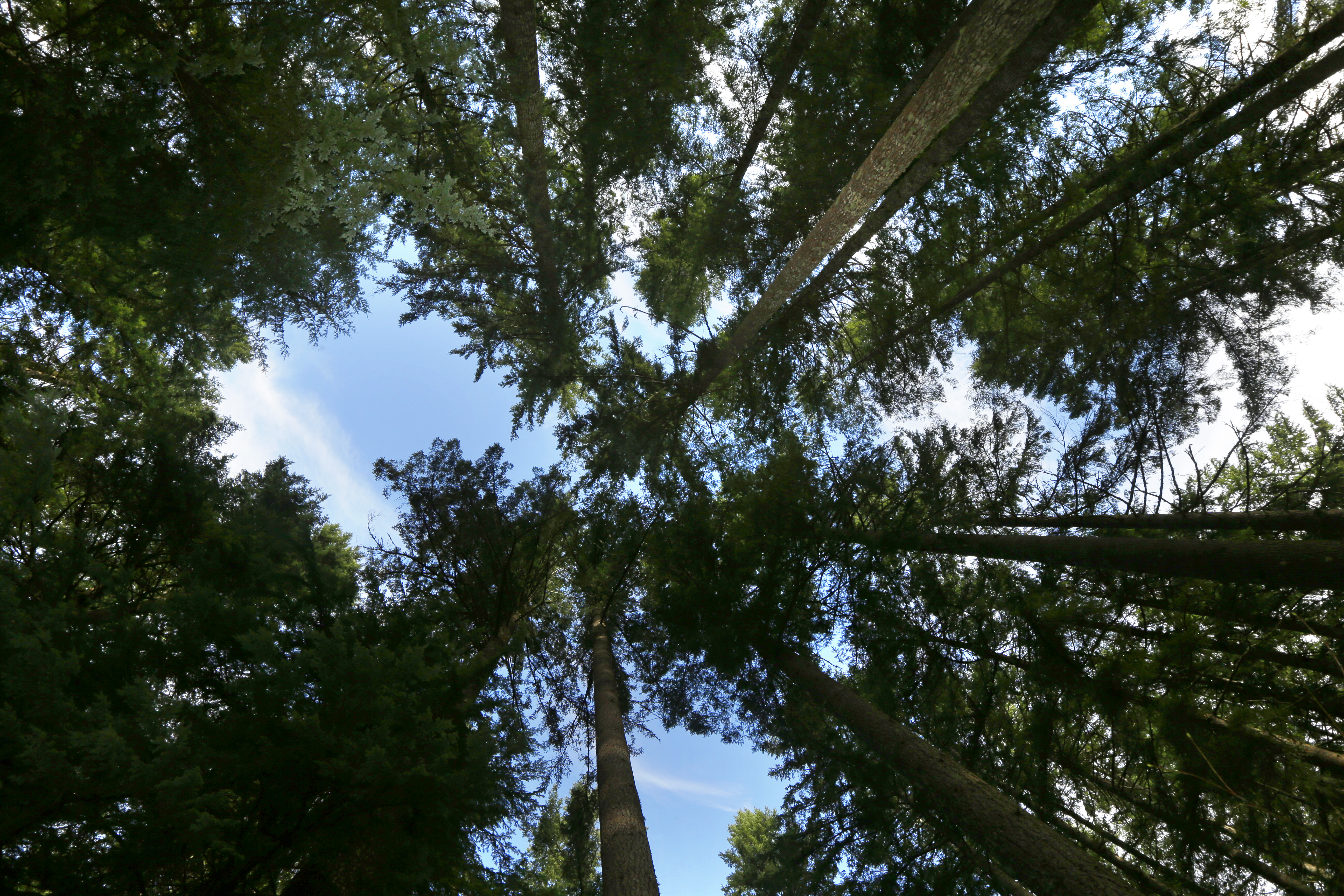

The Trump administration is moving ahead with its plan to possibly release 2.5 million acres of some of the world’s most productive timberland in western Oregon, the U.S. Bureau of Land Management (BLM) announced on Feb. 18.
“Bringing timber production back to historic levels is essential for reviving local economies and reducing the threat of catastrophic wildfires,” BLM Acting Director Bill Groffy said. “President [Donald] Trump has made it clear—enhanced domestic timber production is vital for our national security, economic prosperity, and effective wildfire management.”
The agency will publish an official notice on Feb. 19 to open a public comment period about making revisions to the 2016 resource management plans for the region that would allow more timber to be harvested. The public will be able to comment until March 23.
The lands are part of the Oregon and California Railroad Revested Lands, known as the O&C Lands, taken over by Congress in 1916, which lie in a checkerboard pattern through 18 counties in western Oregon.
Revenue from timber harvested on the lands is shared between the U.S. Treasury and 18 western Oregon counties, funding local services, such as schools, libraries, public safety, and infrastructure projects.
The American Forest Resource Council (AFRC), a prominent timber industry association in Portland, Oregon, applauded the decision, calling it an “important and necessary step.”
Since 2016, management plans severely restricted 80 percent of the land for timber harvests in the region and undermined revenues for western Oregon counties. The timber also continued to grow, and forests became overstocked, increasing the risk of catastrophic wildfire across much of the region, according to the AFRC.
“The status quo is not working for our forests, communities, and the working people who steward them,” AFRC President Travis Joseph said. “If we manage the O&C Lands sustainably and responsibly, current and future generations will benefit. They can support thousands of additional family-wage jobs, provide renewable building materials, strengthen domestic wood supply, reduce wildfire risk, and generate stable revenue for essential public services.
“But that only happens if we modernize our current approach and restore common sense, science-based management to all of the O&C Lands,” Joseph said.
In March 2025, Trump signed an executive order designating the production of timber, lumber, paper, bioenergy, and other wood products as critical to the nation’s well-being. Trump blamed past heavy-handed federal policies for making the U.S. reliant on foreign producers.
Environmental organizations didn’t immediately comment about the BLM’s announcement but were opposed to Trump’s executive order that was signed last year.
“This executive order sets in motion a chainsaw free-for-all on our federal forests,” said Blaine Miller-McFeeley, senior legislative representative on Earthjustice’s policy and legislative team. “Americans treasure our forests for all the benefits they provide, such as recreation, clean air, and clean drinking water.”

A female barred owl sits on a branch in the wooded hills, Dec. 13, 2017, outside Philomath, Ore. To save the imperiled spotted owl from potential extinction, U.S. wildlife officials are embracing a contentious plan to deploy trained shooters into dense West Coast forests to kill almost half a million barred owls that are crowding out their smaller cousins. (AP Photo/Don Ryan)
Tension between environmental activists and the timber industry in Oregon reached a peak in the 1990s over the northern spotted owl’s habitat—a legal fight that endures three decades later.
In 1994, the United States adopted then-President Bill Clinton’s Northwest Forest Plan to manage 24 million acres of federal land in Washington, Oregon, and Northern California.
Clinton’s plan ended logging on millions of acres of federal old-growth forest to protect endangered species and habitats, particularly of the northern spotted owl. As a result, logging on federal lands in Oregon, Washington, and California was reduced by about 75 percent, according to HistoryLink.org.
In Oregon, 67 timber mills were closed, and more than 7,000 mill workers lost their jobs in the 1990s during the height of a moratorium on logging, according to Willamette Magazine.
The positive environmental impact on northern spotted owl populations appears to be minimal. A study published in 2021 by the U.S. Forest Service revealed the species population shrank by at least 65 percent between 1995 and 2018 after being crowded out by barred owls.