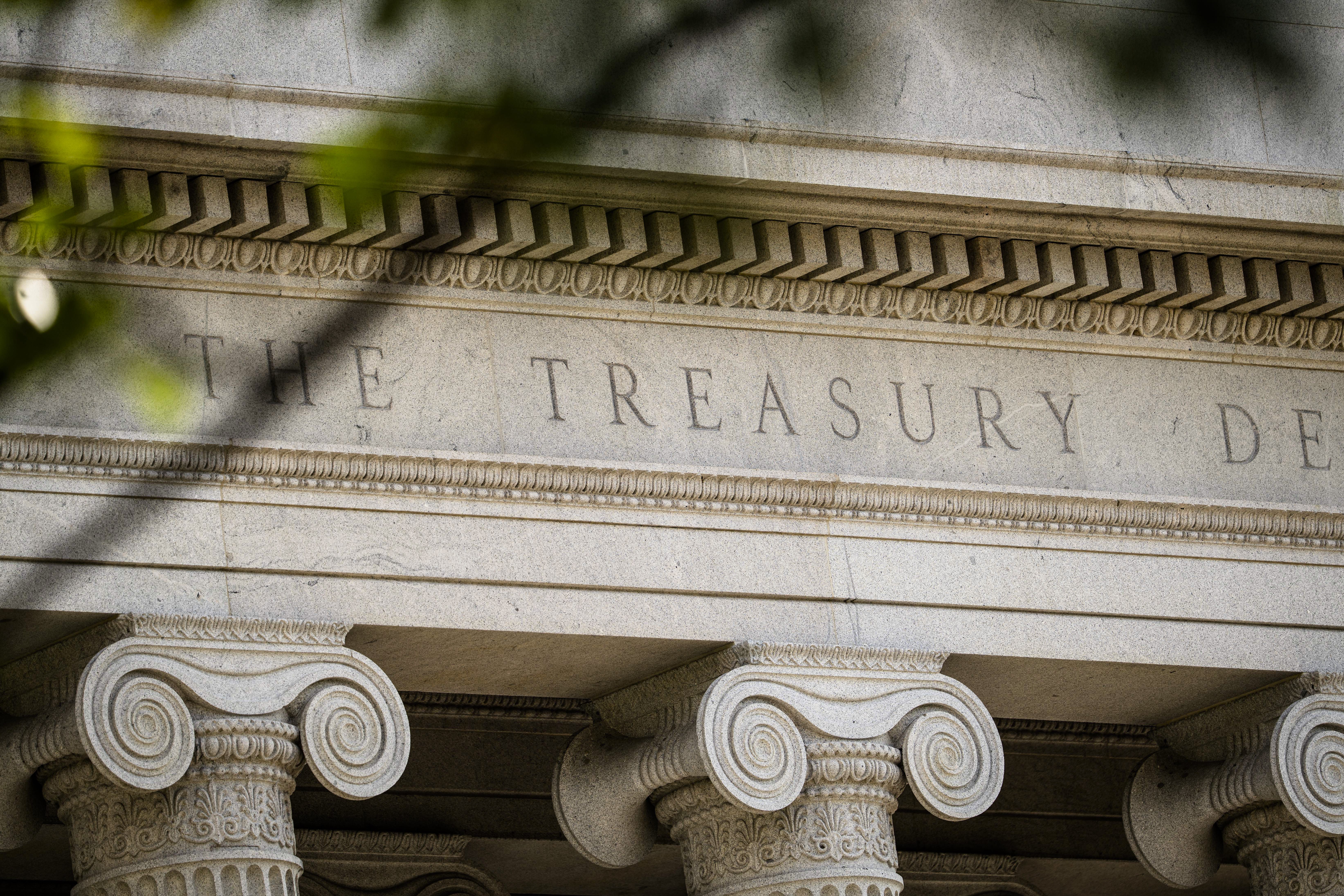

Treasury Secretary Scott Bessent announced on Dec. 12 that his agency soon will subject certain money-transfer businesses to “enhanced reporting requirements” to enable greater scrutiny of “funds going to areas of concern, such as Somalia.” In addition, some money-transfer businesses will be receiving “notices of investigations,” which will include IRS review, he said.
Bessent gave that update 11 days after the Treasury Department began probing allegations that Somali welfare fraudsters in Minnesota were transferring ill-gotten gains to their native land, where terrorists allegedly take a slice of those funds. Bessent launched that probe shortly after City Journal, a publication of the Manhattan Institute for Policy Research, released an investigative report titled, “The Largest Funder of Al-Shabaab Is the Minnesota Taxpayer.”
In a post on X, Bessent wrote: “Egregious fraud in Minnesota has cost taxpayers hundreds of millions of dollars, including funds sent to Somalia through money services businesses.” Those services function outside formal banking networks, he explained.
Under President Donald Trump’s leadership, Bessent said, the Treasury Department vows to continue probing “this deeply disturbing scam.”
Multiple other federal agencies are investigating Somalis and others accused of welfare fraud and immigration fraud in Minnesota. Federal prosecutors began charging suspects in one of the scandals more than three years ago; dozens of people have already been convicted in a program designed to feed hungry children. Recent revelations about additional Minnesota fraud cases sparked national attention, presidential orders, and other actions, such as the measures Bessent announced.
A “geographic targeting order” will specify regions in which money-transfer businesses must comply with the soon-to-be-revealed requirements. Those orders “are time-limited and location-specific and remain a temporary solution to information gaps,” the Treasury Department wrote in a 2024 report.
That type of order has been used to combat other alleged terrorist funding at the U.S.-Mexico border and elsewhere.
“This important tool will be used to make sure information regarding any such illicit activity is quickly reported” to the Financial Crimes Enforcement Network, an arm of the Treasury Department, Bessent’s latest announcement said. In turn, that information will be shared with law enforcement officials. Thus, investigators will be able to “develop additional leads through increased scrutiny on funds going to areas of concern, such as Somalia.”
“Additionally, Treasury personnel are on the ground working hard to uncover the facts,” Bessent wrote, adding, “Under President Trump, we will not stop until we fully investigate, analyze, and permanently end this massive fraud ring.”
The high risk of “money laundering and potential links to terrorism” has long been a concern related to informal money-transfer methods such as the “hawala” network, the type used in Somalia, the Corporate Finance Institute explains.
“Hawala, originating from an Arabic term for transfer or trust, is an informal method of transferring money without any money physically moving from one place to another,” the institute said.
Each sender delivers cash to an intermediary called a “hawaladar” in his home country, along with a password. That hawaladar contacts a second hawaladar in the recipient’s location. Trusting that the sender’s agent will cover the owed funds later, the second hawaladar pays a recipient who provides the correct password. Transfers complete quickly, sometimes within hours, avoiding time lags and higher fees of traditional banking systems.
Similar ancient money-transfer methods are in use globally. They “pre-date western banking systems and existed as far back as 5800 BC,” according to the Treasury Department.
While these informal systems “can and do provide legitimate services to many customers,” criminals exploit them for their “security, anonymity, and versatility,” a 2003 Treasury advisory warns.
Under the USA Patriot Act, a terrorism-prevention law enacted in 2001 after the 9/11 attacks on America, these informal networks must comply with recordkeeping and reporting requirements. Violations of U.S. financial-transfer laws and rules can result in criminal and civil penalties.