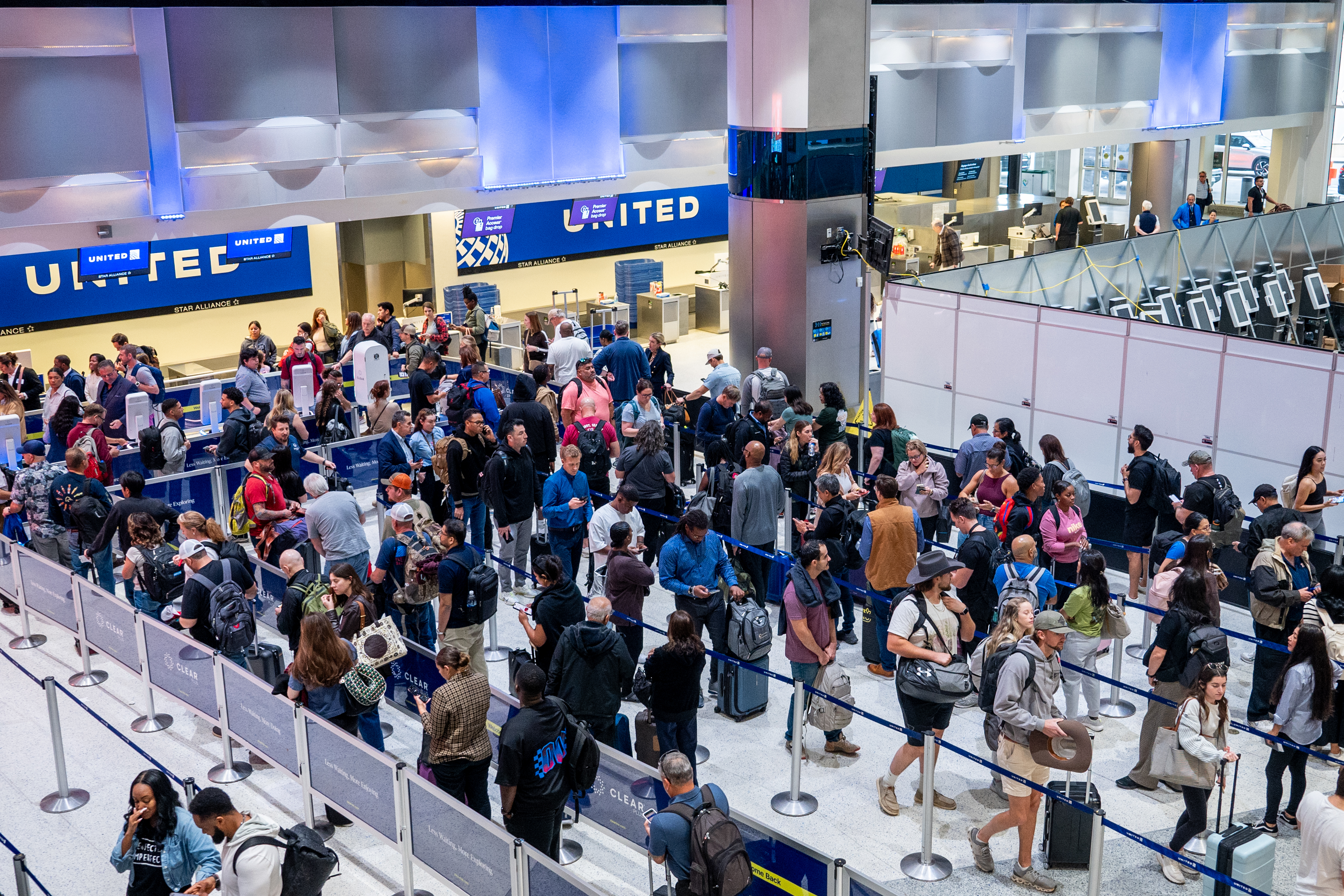

Airlines and the broader travel industry are feeling the financial and operational pressure of the Federal Aviation Administration’s order to reduce flights at 40 major United States airports amid the ongoing government shutdown.
On the morning of Nov. 7, the Federal Aviation Administration (FAA) initiated cuts at major airports around the country. The reductions, which are aimed at easing the burden on unpaid air-traffic controllers, started at 4 percent of daily flights and are scheduled to rise to 10 percent by Nov. 14.
Major carriers have already canceled hundreds of flights in response to the directive. American Airlines, for example, canceled about 220 flights on Friday, Delta roughly 170, and United fewer than 200, according to company statements. The initial cancellations largely affected smaller aircraft and regional routes, with long-haul international flights largely unaffected.
The order comes as the U.S. government shutdown stretches into its 38th day. On Nov. 4, FAA Administrator Bryan Bedford said in a Fox Business News interview that between 20 percent and 40 percent of the nation’s air traffic controllers are currently not showing up for work on any given day as they go without pay.
In an interview with CNBC, Robert Isom, CEO of American Airlines, said his airline and likely others will begin to address the issue by cutting the frequency of flights heading between certain destinations each day. The airline is not currently canceling service to smaller markets.
However, he anticipates that the operational and business impact will worsen in the coming days.
“As this problem grows and as cancellations grow, there’s not a lot of slack in the system,” Isom told CNBC. “Managing the airline, managing the industry, becomes exponentially harder as you increase the level of cancellation.”
In a statement released to the media, United spokesman Josh Freed said 80 percent of passengers affected by flight cuts are being rebooked with minimal impact right now.
As of about midday, investor confidence as gauged by stock price remained unchanged as the airline industry began to cut flights. The stock prices of major, publicly traded passenger carriers Delta Air Lines, American Airlines, United Airlines, and Southwest Airlines had changed by less than 1.5 percent from their opening bell price.
Leaders of the airlines and connected industries are now calling on Congress to reach a deal and reopen the government. The pressure is mounting as the impacts widen and the United States nears the peak of the holiday travel season.
Major employers such as Hartsfield-Jackson Atlanta International Airport, Dallas Fort Worth International Airport, Denver International Airport, Los Angeles International Airport, New York’s LaGuardia Airport, John F. Kennedy International Airport, and Newark Liberty International Airport are also feeling the impact of the prolonged shutdown.
In a Nov. 5 statement, Kevin Burke, president and CEO of Airports Council International–North America, said that America’s airports are “reaching a breaking point” after dealing with more than a month of disruption caused largely by the shutdown. During the shutdown, about 13,000 air traffic controllers and 50,000 security screeners have been working without pay.
“The current trajectory is unsustainable,” Burke said in a statement. “Pay federal employees, and restore operational certainty for the millions of air travelers who take to the skies every day.”
The airline industry, Isom said, feels that the government shutdown is no longer a partisan issue: it’s about minimizing disruption.
“We’re not political in any of this. We’re for getting the government back open,” Isom said in an interview with CNBC. “Whether you’re a Democrat or Republican, you need to understand the impact on the traveling public, on all of our team members, and ultimately on the health of the industry in the long run.”