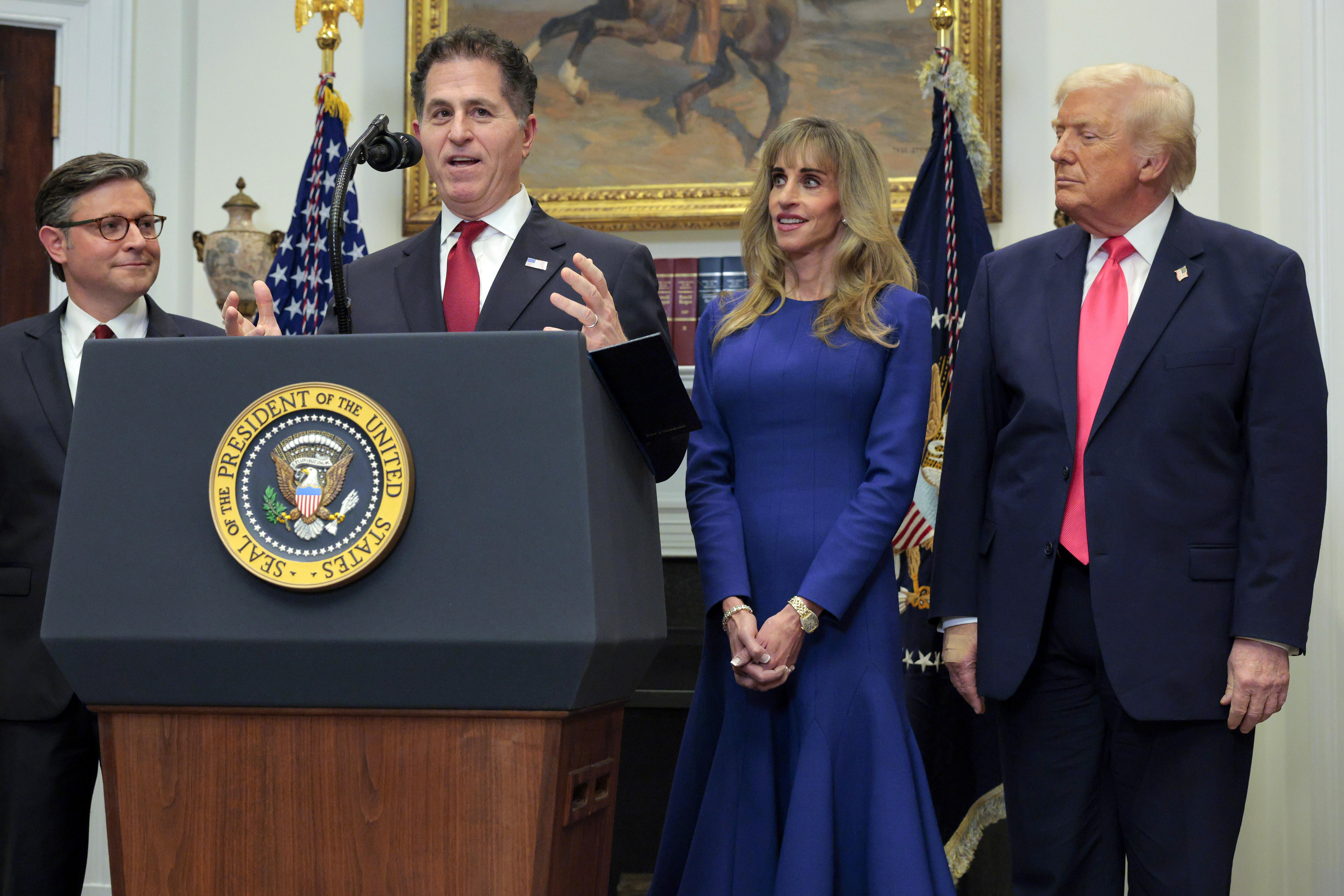

Billionaires Michael and Susan Dell have pledged $6.25 billion to help 25 million American children open newly created investment accounts under President Donald Trump’s Invest America initiative.
The Dells gift, announced on Dec. 2, will fund $250 deposits for children aged 10 and under who were born prior to the Jan. 1, 2025, qualifying date to receive the federal government’s $1,000 newborn contribution to their tax-advantaged Invest America accounts, commonly known as “Trump Accounts.”
“TWO GREAT PEOPLE,” Trump wrote in a Truth Social post, reacting to the Dells’ announcement. “I LOVE DELL!!!”
The $6.25 billion donation, which is intended to encourage families to activate the new child investment accounts authorized under Trump’s signature One Big Beautiful Bill Act, is expected to reach nearly 80 percent of American children aged 10 and under across 75 percent of zip codes.
“Children older than 10 may benefit, too, if funds remain available after initial sign-ups,” the Dells said in a statement.
“It is an incredibly practical and direct step to help families begin saving today.”
The Invest America program gives every child under 18 with a Social Security number access to a federally overseen savings and investment account that families can activate beginning July 4, 2026.
According to program materials, all accounts are professionally managed and invested in diversified index funds designed to grow over time.
Children born on or after Jan. 1, 2025, will automatically receive a $1,000 Treasury deposit at birth, while families and community members may contribute up to $5,000 total per year. Employers may contribute up to $2,500 annually to an employee’s child, and philanthropic or government contributions are uncapped.
When the children turn 18, they can withdraw the funds for “qualified purposes,” such as paying tuition, buying a home, or starting a business. The money will be taxed as ordinary income if used for non-qualified expenditures. The accounts automatically convert to traditional Individual Retirement Accounts at age 18, allowing any unused funds to keep growing over time.
“It’s a pro-family initiative that will help millions of Americans harness the strength of our economy to lift up the next generation, and they’ll really be getting a big jump on life,” Trump said at a June 9 White House event.
Economists at the Milken Institute say market gains could turn the $1,000 newborn seed deposit into more than $8,000 after 20 years, assuming historical average returns.
“Based on studies of previous efforts to provide funded savings accounts for newborns or young children, the program should increase test scores, educational attainment, and earnings of those participating,” Michael Piwowar, executive vice president at Milken Institute Finance, and Robert Shapiro, senior adviser at the Milken Institute, wrote.
“One study suggests that minority participants from low- and moderate-income families could be three times more likely to attend college and 2.5 times more likely to graduate.”
The program has also drawn less favorable reviews. The Institute for Family Studies said it would do little to help parents facing high early-childhood costs, while Tax Foundation analysts noted that adding another savings vehicle could complicate an already crowded landscape of tax-preferred accounts.
The Dells said they hope their gift will encourage families to claim the accounts and deposit more money into them so they can grow over time, and they encouraged other philanthropists and employers of eligible parents to join the effort.
“We know that this program will give young Americans more than a savings account. It will give them momentum. It will give them confidence and opportunity,” the Dells said.
“This is what Invest America was designed to do. We believe this effort will expand opportunity, strengthen communities, and help more children take ownership of their future. And we believe everyone has a role to play.”
Sign-ups for Invest America accounts are currently scheduled to open in July 2026. Families must activate the accounts through the Treasury Department, though eligible children will be auto-enrolled during the tax filing process with an option to opt out.
Andrew Moran contributed to this report.