In the spring of 1943, war correspondent Ernie Pyle (1900–1945) filed a story on the American infantry fighting in Tunisia. Here is part of that piece:
“The men are walking. They are fifty feet apart, for dispersal. Their walk is slow, for they are dead weary, as you can tell even when looking at them from behind. Every line and sag of their bodies speaks their inhuman exhaustion. … They don’t slouch. It is the terrible deliberation of each step that spells out their appalling tiredness. … They are young men, but the grime and whiskers and exhaustion make them look middle-aged.”
Developing a Craft
Pyle knew firsthand about middle age, as he was then in his early 40s and already gray and drawn with the rigors of being a war correspondent. By this time, his stories from the front had made his name a household word all across America. He wrote of sailors and airmen, of maintenance crews and supply outfits. The men he spoke with were eager to be included in his articles because he named them and so told their families and friends that they were all right. Other reporters sent home interviews with generals and reports of battles. Pyle brought home the boys and men fighting those battles.
He began honing this skill of making the news personal early on, first as a student journalist at Indiana University and then as a reporter for the Washington Daily News, where he reveled in living and working in the nation’s capital. Here in 1925, he met and married Geraldine “Jerry” Siebolds, who, as it turned out, suffered from what we today call bipolar disorder, and whose illness, coupled with drugs and alcohol, eventually made their marriage a misery for both of them.
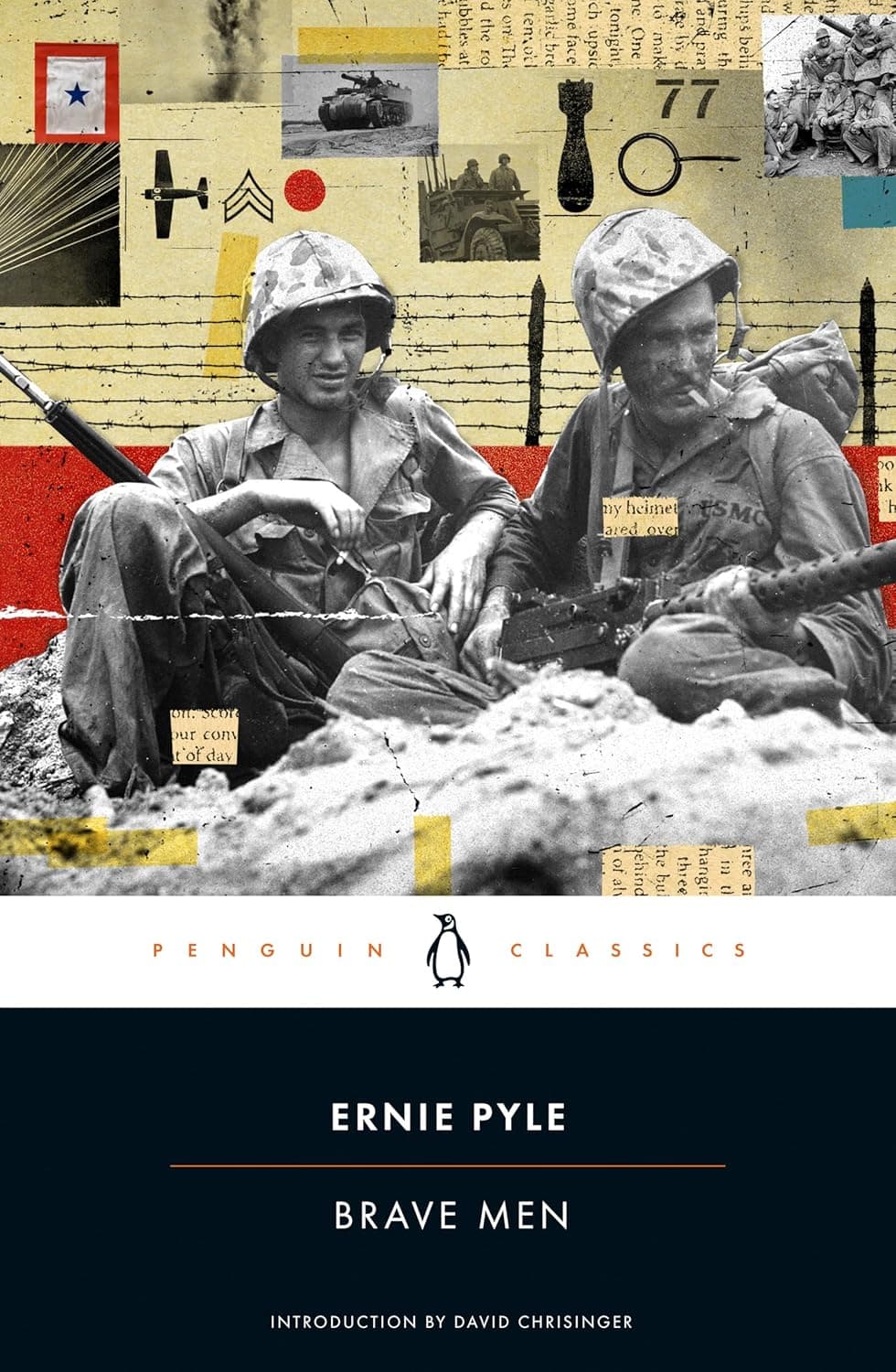
"Brave Men" by Ernie Pyle. This book remains one of the most powerful and personal accounts of World War II ever written. (Penguin Classics)
Nevertheless, throughout the rest of the 1920s and 1930s, Pyle carried on with his journalism and his interest in people from all walks of life. He spent several years making a name for himself writing about aviation. Amelia Earhart said of him, “Not to know Ernie Pyle is to admit that you yourself are unknown in aviation.” In 1935, seeking more adventure, he became a roving reporter and columnist for the Scripps-Howard newspapers, crossing and recrossing the United States with “the girl who rides with me,” meaning Jerry, and filing reports as well from Canada and South America. He covered major events and topics, like the Tennessee Valley Authority, but always kept an eye out for an unusual human-interest story.
‘The Death of Captain Waskow’
For his vivid coverage of the London Blitz in 1940, Pyle won national recognition back home. Assigned to Europe after America’s entry in the war, first to London and then to North Africa, he began writing the stories that would touch the hearts of Americans. Though not always in the front lines, he often shared the hardships of the men he described, and his dispatches from North Africa reassured his readers that their sons and husbands were standing tall in the face of their enemies.
It was in Italy that Pyle wrote what was and remains his most famous piece, “The Death of Captain Waskow.” In his account of the mortally wounded and beloved 25-year-old infantry captain, he demonstrated his talents as well as the tenderness he felt for the men around him.
The fighting around Anzio was rough and the terrain so rugged that teams of soldiers brought back the dead by mule through the mud and the mountain trails. After unlashing the captain from a mule’s back, some of his men came forward to informally pay their last respects. Two men cursed, not angrily, but sadly. Then Pyle observed:
“Another man came; I think he was an officer. It was hard to tell officers from men in the half light, for all were bearded and grimy dirty. The man looked down into the dead captain’s face, and then he spoke directly to him, as though he were alive.
“He said: ‘I’m sorry, old man.’
“Then a soldier came and stood beside the officer, and bent over, and he too spoke to his dead captain, not in a whisper but awfully tenderly, and he said:
“‘I sure am sorry, sir.’
“Then the first man squatted down, and he reached down and took the dead hand, and he sat there for a full five minutes, holding the dead hand in his own and looking intently into the dead face, and he never uttered a sound all the time he sat there.
“And finally he put the hand down, and then reached up and gently straightened the points of the captain’s shirt collar, and then he sort of rearranged the tattered edges of his uniform around the wound. And then he got up and walked away down the road in the moonlight, all alone.
“After that the rest of us went back into the cowshed, leaving the five dead men lying in a line, end to end, in the shadow of the low stone wall. We lay down on the straw in the cowshed, and pretty soon we were all asleep.”
By the time Pyle landed on Omaha Beach the day after the Normandy invasion, he was suffering from exhaustion and depression. Too many stories and too many corpses had taken their toll. Telling his readers that if he “heard one more shot or saw one more dead man, I would go off my nut,” he returned home that fall to New Mexico seeking rest and recovery. The adulation from the public, however, and his continuing battle to help Jerry with her mental troubles provided little respite.
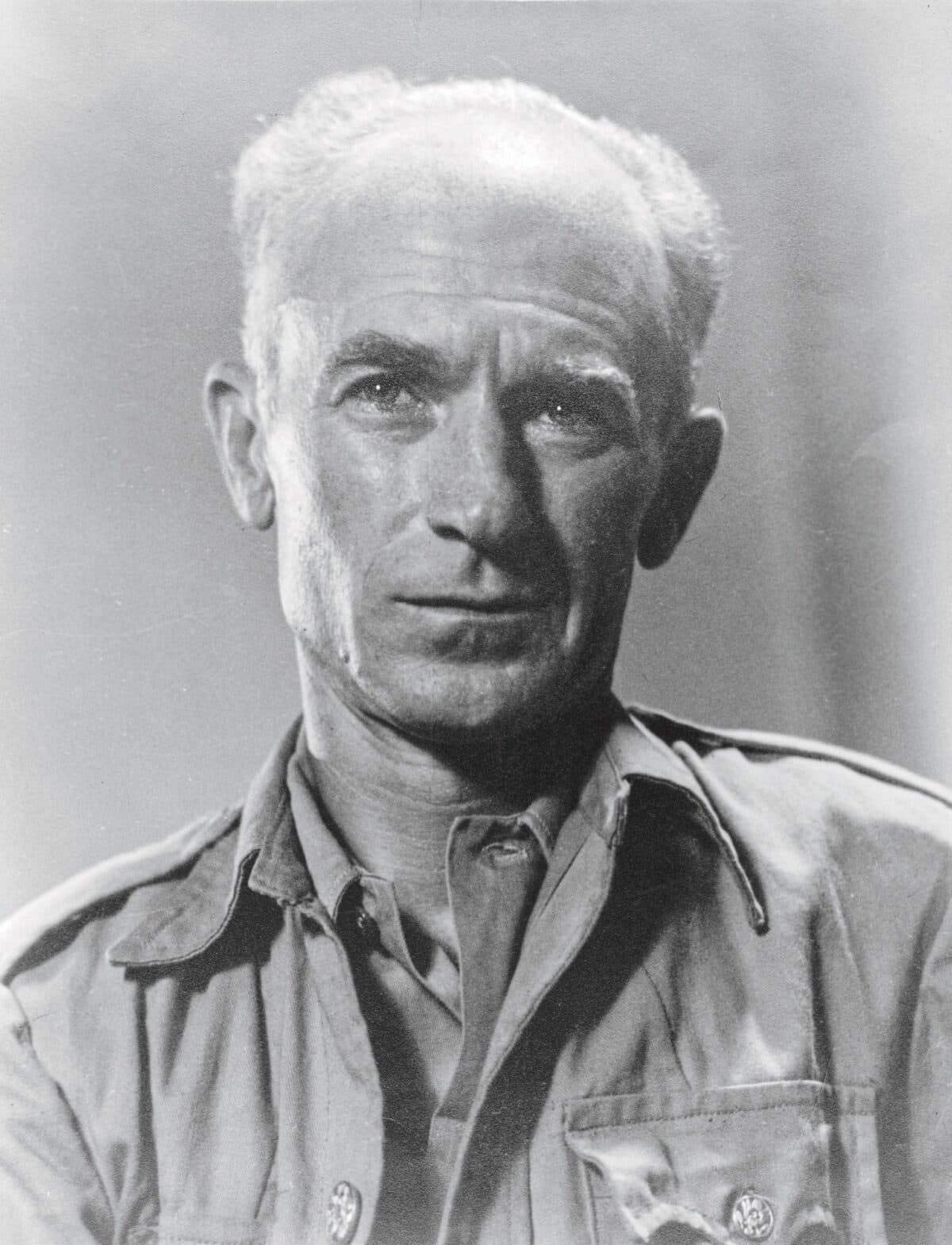
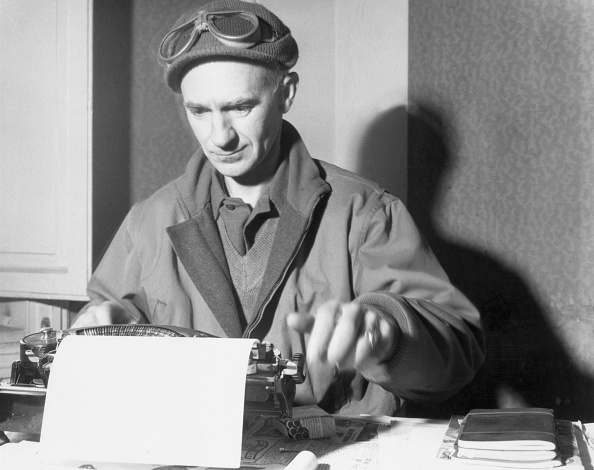
Portrait of journalist Ernie Pyle, photographed by Milton J. Pike on May 16, 1945. (Public Domain)
In January 1945, Pyle was off to the Pacific.
Though Pyle had written earlier about “warhorsing around the Pacific,” he was reluctant to return to combat and could have remained at home, having more than done his bit. Still, he felt that the public, the government, and his employers expected him to return to the troops.
Often overlooked as contributing to good character are others’ expectations. Pyle was fulfilling those. The men of whom he wrote, like all soldiers in combat, understood this mechanism well. When the shooting begins, you don’t let down your friends and comrades.
On le Shima, a small island near Okinawa, Pyle was killed instantly by Japanese machine-gun fire.
Having taken office after Franklin Roosevelt’s death, President Harry Truman delivered this tribute: “No man in this war has so well told the story of the American fighting man as American fighting men wanted it told. He deserves the gratitude of all his countrymen.”
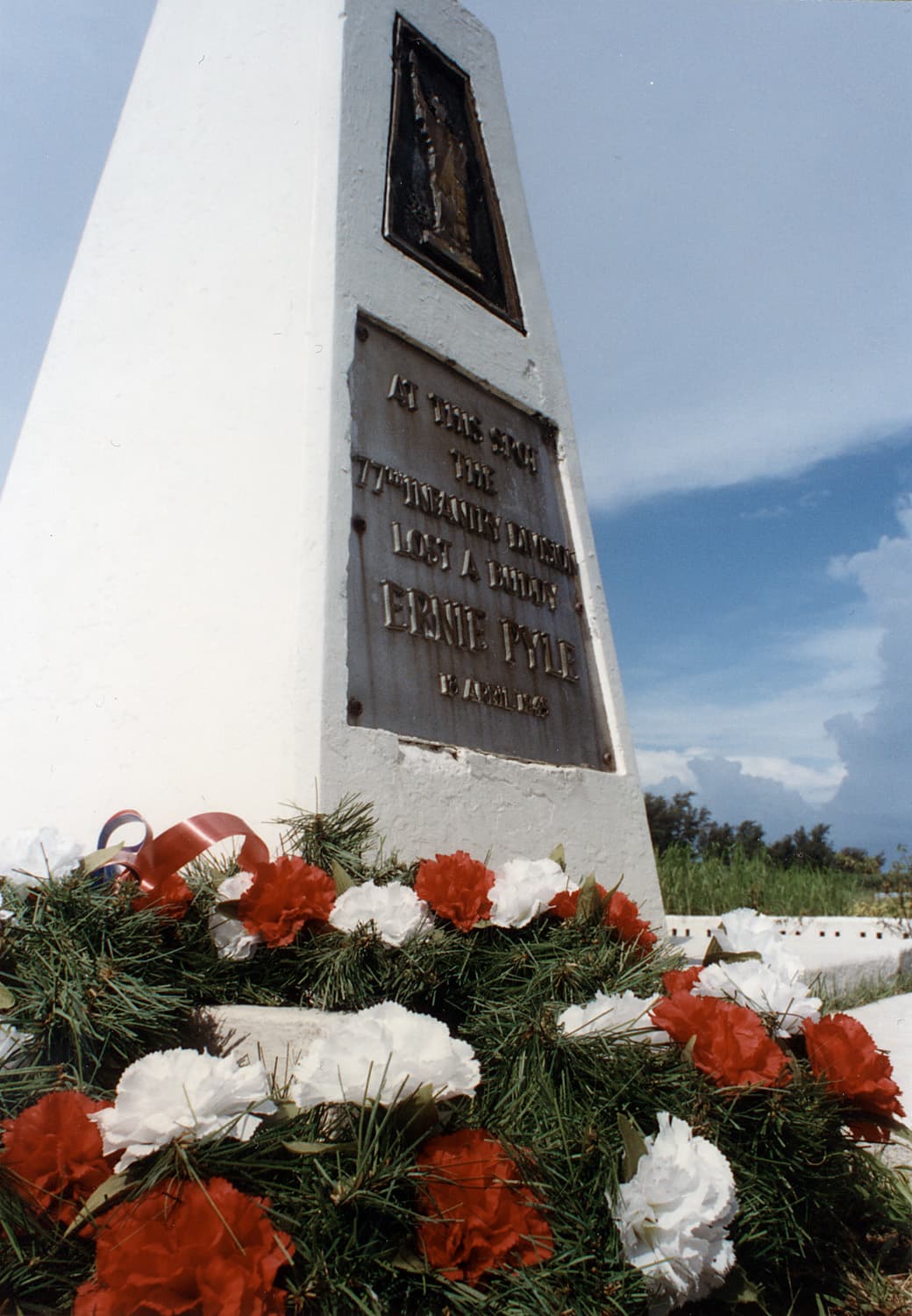
The Ernie Pyle Memorial on Iejima, Japan. The plaque reads: At this spot the 77th Infantry Division lost a buddy Ernie Pyle 18 April, 1945. (Public Domain)
Soon afterward, the soldiers with whom he was serving erected a monument on the site where Pyle died, with the inscription: “At this spot the 77th Infantry Division lost a buddy Ernie Pyle 18 April 1945.” The monument remains, and for 80 years has been the site of an annual memorial service.
What arts and culture topics would you like us to cover? Please email ideas or feedback to features@epochtimes.nyc