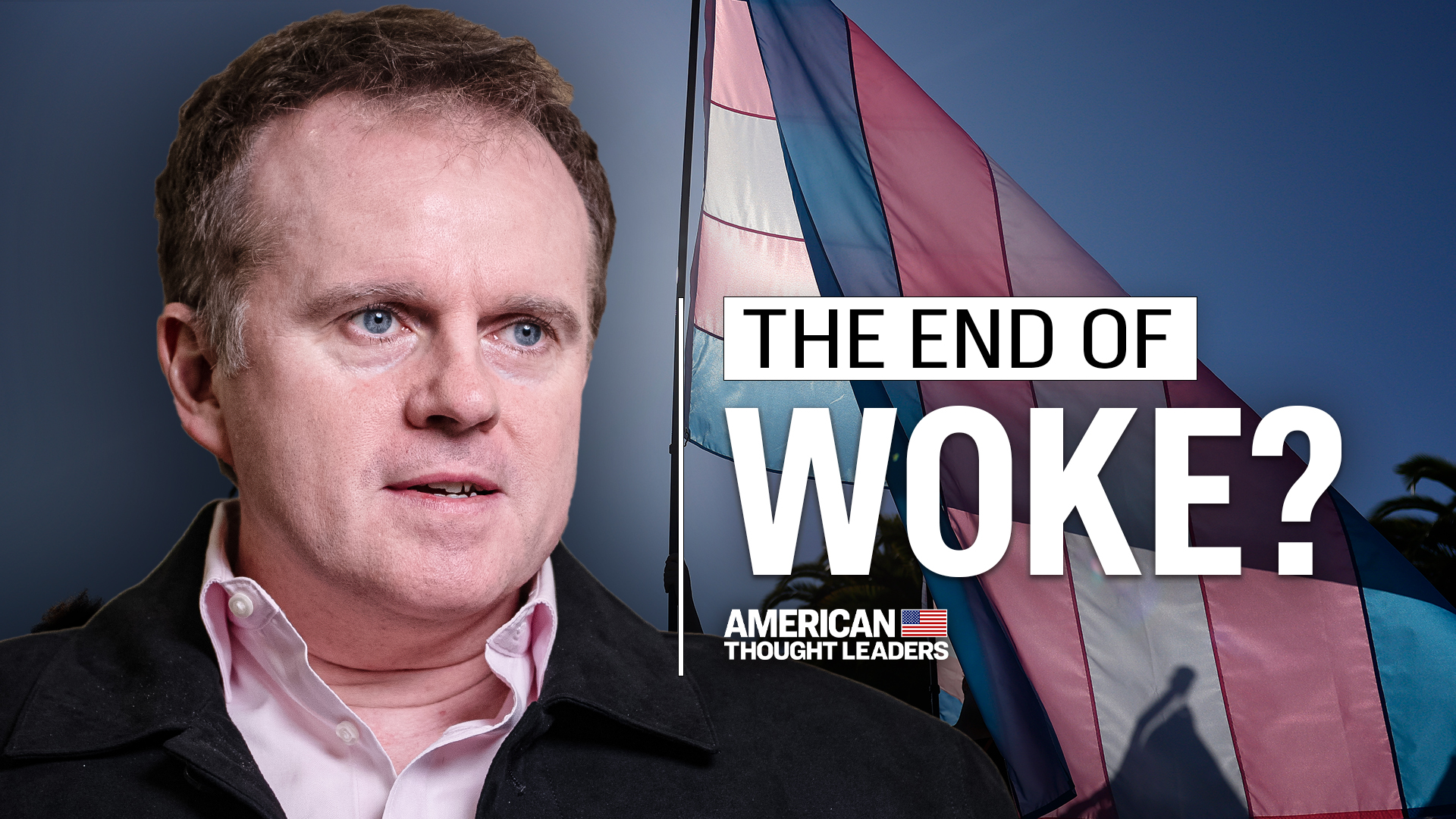

[RUSH TRANSCRIPT BELOW] Have we reached the end of “woke”? Comedian and writer Andrew Doyle thinks yes. But he believes new forms of what he calls the “authoritarianism impulse” will follow.
He’s the author of “The End of Woke: How the Culture War Went Too Far and What to Expect from the Counter-Revolution.”
Doyle is the creator of Titania McGrath, a fictional ultra-woke activist whose X account became hugely popular and currently has over 700K followers.
Doyle has also published satirical books under Titania’s name, including “My First Little Book of Intersectional Activism.”
In our conversation, we dive into the many ways woke ideology has transformed Western societies and explore growing restrictions on hate speech in Europe. In the United Kingdom, dozens of people are arrested for speech-related offenses every day, Doyle says.
Views expressed in this video are opinions of the host and the guest, and do not necessarily reflect the views of The Epoch Times.
RUSH TRANSCRIPT
Jan Jekielek:
You know, I was incredibly disappointed. I had scheduled this interview with Titania McGrath, and you came instead.
Andrew Doyle:
She’s not available. She’s busy. She’s always busy. She’s a workhorse. It’s not me. No, she was just a character I created to mock, as you know, to mock the woke movement. But you'd be surprised how many people accuse me of impersonating a woman online, which suggests to me they don’t understand the concept of an author creating a fictional character. It’s quite a flaw, that.
Mr. Jekielek:
There’s something about how people will intentionally misunderstand certain people and understand, in highly inappropriate ways, other types of people. And this is central to what you’re writing about, actually.
Mr. Doyle:
Yes, that is true. The willful misunderstanding. Well, willful or, I always like to assume that people mean what they say. And so if someone mischaracterizes me so wildly, I mean, I’m sure you’ve had it as well, but the sort of wild mischaracterization, the ascribing of views to someone. I’ve seen it about myself. I mean, I’ve read paragraphs about myself and I think I don’t recognize who they’re talking about. I don’t believe any of those things. I don’t say any of those things. I’ve never said anything remotely close to those things. So where has this fabrication come from?
And then it comes down to a question of, do I believe that they believe that? Or is this a lie, an attempt at defamation? And I don’t know, obviously. I imagine more often than not, it’s willful. But then sometimes I think people do get into a kind of, particularly in the culture war, which is of course what I’ve been writing about, you get into this kind of, it’s a kind of hysteria. I mean, one of the things I say in my book is that the culture war is really a case of imaginary hate. It’s people imagining fascists in the shadows. It’s people imagining this world of venom and bile and vitriol and hatred.
Mr. Jekielek:
And there’s some of that, but that’s not the world. The world is not that simple. But because of the technology that we live in, the media, people end up being siloed in these very small groups that all agree on particular points, and they sort of imagine, in many cases, that this is the whole world.
Mr. Doyle:
You know when you come across someone who strikes you immediately as if they have never encountered the opposing views to their position. They’ve never even read them. They’ve never had the curiosity to seek them out. And so to them, even entertaining an opposing point of view is just baffling. Why would you do that? Why would you not be sufficiently secure in your own worldview? Why be open to challenge? Why be open to a dissenting voice? Those people fascinate and terrify me a little.
I spend most of my time reading things I don’t agree with. Firstly, because it’s much more interesting. Secondly, because I want to know if I’m right or wrong about various things. I assume I’m wrong about most things. So doing that is a good exercise. And then, but the idea of just, I understand the comfort of it. You know that thing where you read a book or an article which effectively summarizes everything you think, but better than you can.
And it’s such a fun feeling, isn’t it? It’s so warm. And I enjoy that. But it’s like all forms of enjoyment. For me, it’s always tinged by a sense of guilt, you know, because it’s too easy. Oh, look, I was right all along because this person, this learned person in print, says that I’m right.
But that’s a boring way to live, I think. Much better to talk to other people and listen to their views. You might be a little bit rarer than you think in terms of how you think about things. I don’t think so. But what’s important? No, well, that’s interesting because, you know, you make a case, of course, that we may indeed be approaching the end of woke or at least hitting the inflection point.
But I’m actually quite concerned about the fact that our technologies exist today that are used constantly, as far as I can tell, volitionally or not volitionally, that kind of would prevent the end of polarizing information being pushed into the ecosystem constantly. But that’s always been the case. But as you say, I suppose the technology amplifies it now.
I mean, one thing I know I’ve called the book The End of Woke, but you know, having looked at it, I don’t mean it’s over, let’s have a party and go home. I mean, the case I’m making very clearly is that woke is the latest manifestation of the authoritarian impulse that recurs throughout human history. And so therefore, wokeness was just the latest version of it.
But there’s going to be some other version. The concept of authoritarianism can’t go away because it’s so deeply embedded in the human condition. So the title, I suppose, might be ill-advised. Maybe there should have been a question mark. But I’m really saying that this stage of authoritarianism, this wokeness, too many things have changed now for it to retain the stranglehold that it once had on society. That’s sort of gone.
But yes, absolutely, other things will happen. Other movements will take its place. And other examples of disinformation and misinformation, people just getting it wrong and not thinking beyond these very narrow parameters, that will happen as well. It certainly has been accelerated by social media and the digital age. That has happened. That’s why wokeness became a thing. That’s a movement that has never enjoyed the support of the population at large.
The More in Common initiative found that between 8 and 10 percent of the population of the U.S. and the UK, even at the height of wokeness, supported it. So if you think about that, that means this was a top-down imposed belief system that no one ever bought into. You take the example of the Latinx phrase, and every single poll and study shows that Hispanic people don’t use that phrase, and a lot of them don’t even understand the phrase.
Mr. Jekielek:
And don’t like it.
Mr. Doyle:
And they don’t like it. But you have these privileged white people saying, no, that’s what you should be called because it’s a more inclusive version of Latino. Just put the little x at the end. So it’s better for you. So much of the woke movement has been about very, very privileged people, very paternalistically saying they know best for the masses, for the plebeians, you know. I very much see the woke as Coriolanus incarnate. I would say what you say about one thing that does concern me, I mean, yes, the social media aspect, that’s not going anywhere. And I’ve fallen for it.
Sometimes when I see something online, I’ve gotten into the habit of double-checking and triple-checking every single story. And I have made mistakes where I’ve said to people, oh, did you hear about that? And then I found out the whole damn thing was a concoction, wasn’t real, that that’s bound to happen. It does force us to be more diligent and vigilant as we consume information or as we read this stuff. That’s a worry.
AI similarly worries me in that respect, insofar as it provides too many shortcuts for thought. And the temptation will be, oh, you know, chatGPT, just tell me what’s the best way to do this? What’s the best way to phrase this? What should I even think about this? And those shortcuts are deadly, I think. You know, I think you need to train the brain like a muscle. Not that I train any other muscle, and I’m very lazy, but I would say the brain I do try to train. At least I’ve got that, even if I’m sort of this sort of flabby mess. At least I’m thinking, and thinking to me matters more than anything else.
Mr. Jekielek:
You know, I keep thinking about all of this in the context of media. And you point out, you know, I was reading your chapter that’s specifically on the authoritarian impulse. And you talk about how the fact that we, despite everything that’s happened, do have a free press. But I would argue many, many of the big media that I would call the legacy media have kind of transitioned into a different kind of journalism, which they themselves would call activist journalism, where you assume the correct view ahead of time and contort the facts and the picture of the facts into what that is. If that’s indeed the case, and so many of our media do function this way, I don’t know if we really have a free press anymore.
Mr. Doyle:
Well, that’s where social media and online platforms can provide a benefit. You can get a corrective to that. You’re absolutely right, the legacy media is so ideologically captured one way or the other that it does the opposite of how the scientific method is meant to work, which is to try and disprove your own thesis and then reach a conclusion. And the legacy media doesn’t do that. You’re absolutely right. By and large, that sounds like a terrible generalization because there are good journalists still.
Mr. Jekielek:
Yes, and 100 percent there are.
Mr. Doyle:
But if you take an institution like the BBC, there are excellent journalists at the BBC. There are journalists who’ve been tearing their hair out over what’s been going on. But for a number of years now, there has been an LGBT desk at the BBC, and all stories relating to sexuality, gender, or orientation had to go past this desk first for approval. They effectively had the power of veto over stories.
For example, the WPATH files, which were leaked by Michael Schellenberger and Mia Hughes, are one of the biggest medical scandals of my lifetime. WPATH is the World Professional Association of Transgender Health. It is the leading international body on what they call gender-affirming care. It is the body of self-proclaimed experts and professionals who advise medical institutions across the globe, including the National Health Service in the UK, and so has incredible disproportionate influence, and they are very supportive of this notion of gender-affirming care. In other words, a vulnerable person, a child, can come and say, I believe I am this; I’m born in the wrong body, and that the initial response must be to affirm that, even to medicalize that, so that this individual’s perception of themself aligns more closely with their body.
Now, that in itself is a controversial, unscientific position to take. But what makes matters worse is the leaked memos from WPATH, which were released in the WPATH files, prove that senior individuals at WPATH and people who were working with them were fully aware that many of these vulnerable people could not possibly give informed consent to the treatment that they were receiving.
That’s very, very dangerous and dodgy. I mean, you have these doctors talking about how, yeah, these kids don’t even have biology in high school. They won’t understand it. They can’t possibly understand the concept of losing the capacity for sexual pleasure in later life or infertility in later life. How can a prepubescent even understand what any of that means?
So they knew all of this. Those leaked files should have been front-page news in all the papers for weeks. It’s that big a deal. The BBC hasn’t mentioned it once. I contacted the BBC over five times— it must be five or six times— to their press office asking why they are omitting the biggest medical scandal of our lifetimes. They first ignored my requests, even though I was working for a news network at the time in the UK called GB News.
Then, when they finally did get back to me, and I think they only got back to me because I managed to find a way to contact someone high up in the press office, I was saying, this isn’t good enough. Like, you’re the state broadcaster. You have a responsibility to answer these questions. And I eventually got a one-line response, which was that news editors make decisions about the stories of the day, depending on various factors. In other words, go away. We don’t want to answer your question.
I gave them some time, even when there was a big story about the White House because they discovered that Rachel Levine had effectively put pressure on WPATH to ensure that there was no lower limit to the age of transition, which is a big story. Even the White House talked about this. Even after that, even after the cast review, the BBC just didn’t mention it as though it never happened. I contacted them again. I got the same line back as though a robot, an automaton, just wrote the same message back to me.
So there’s an example of not just a network but the state broadcaster omitting a major story for partisan ideological reasons. And I don’t know why, but one assumes it’s because the LGBT desk said, no, we can’t report on this. And every reporter, no matter how good they are, had to defer to the power of veto. And that shows you how ideological capture works. It isn’t that everyone working for an organization suddenly is in lockstep over these issues, a certain contingent who is sufficiently powerful or sufficiently empowered by those in charge, which is what’s happened.
That is why Tim Davie, the director general, has resigned; it’s why the head of news has resigned, ostensibly because of this false editing of a Trump speech. But really, there’s a lot more going on here. There is a deep ideological rot at the heart of it.
Mr. Jekielek:
You absolutely need a free press in a free society. You point that out. Do we have one really when so much of it has this ideological capture to precisely amplify certain narratives that are convenient or compatible and eliminate ones that are not?
Mr. Doyle:
Okay, so if you start with a conclusion and seek to find evidence for your conclusion because of confirmation bias, you’re likely going to find it. But journalists are human beings, so you’re all going to have your own prejudices and expectations. But there’s a way to do it, and there’s a way to be professional and ethical. I mean, I did a two-hour special on the WPATH Files on GB News because no other channel would bloody touch it. And I was looking into it, and I was contacting WPATH. I think we sent over 50 requests to WPATH members to appear; not one agreed to. We contacted all sorts of people.
Now, during the course of those investigations in preparation for that show, if I had found incontrovertible evidence that gender-affirming care was actually a good thing and was actually beneficial for the patients, then I would have revised my opinion and reported accordingly. No such evidence exists, of course, which is the whole problem. In fact, the evidence all goes the other way, as Dame Hilary Cass’s Review showed. So although I had my views about what the evidence was likely to materialize as a result, if I were proven wrong, I would have the humility to report on that honestly.
Mr. Jekielek:
I am absolutely certain you would have, because again, your approach is different. You’re a truth seeker. That’s part of the reason why we’re having this conversation.
Mr. Doyle:
Why wouldn’t you, right?
Mr. Jekielek:
Well, this is exactly the point. This is exactly the problem.
Mr. Doyle:
That’s surprising, isn’t it? The idea that even when you are confronted with evidence, it’s a thing called belief perseverance. When evidence is presented that completely obliterates your point of view, but you still cling fast to the evidence.
Mr. Jekielek:
Well, and not to hack on the UK that much, but I just, but the obvious thing to think about is this grooming gang scandal.
Mr. Doyle:
Yes. So, I mean, the Jay report found that over, what was it, over 1,200 at least, or over 1,400 at least; I mean, we’re probably talking many more thousands of victims of children sexually assaulted and raped, and even in rare cases murdered. You know, children who had gone to the authorities, whose parents complained to the police, where figures of authority, social workers, police officers, and politicians deliberately obfuscated or said, you know, we can’t look into that because the perpetrators were predominantly men of Pakistani heritage.
I don’t know where you begin with that, because that is, well, firstly, it’s antithetical to the principles of a liberal democracy. We live in a society where the law has to be applied to everyone equally. You don’t have a parallel rule of law dependent on ethnic origin. That’s nonsensical and also kind of racist. I mean, you know, if you look at the latest report, the latest review found that the ethnic heritage was typexed out in some of the documents. I don’t know if you have typex in America, but maybe you call it white-out. It’s this paste that you put over words to delete them. And it’s been actually erased as though it wasn’t a factor.
Well, of course, it was a salient factor, not least because, culturally speaking, a lot of these men felt these white girls and Sikh girls as well were just trash, and so the rules didn’t apply to them. This is because they had come from a misogynistic culture, and that was key. They called them white sluts and white girls, and they were very clear that there was a racial motivation behind a lot of these attacks.
So it’s really important. I mean, the recording and recognizing that the ethnicity and the heritage in that case is important. Not to say, as I think some people feared, that you are making racist, essentialist statements about any given category of human being, but rather that, because it’s a cultural question, not a racial question. It seems obvious to me.
But yes, the fact that it was effectively covered up by people in authority, the fact that you had cases such as, was it the Times reporter who reported on the police showing up at a house where there were seven men of Pakistani origin with a naked, drunken 13-year-old girl, and they arrested the girl because she was drunk and disorderly, and they didn’t even question the men.
Any human being would have a few questions for those men, you would have thought. But so great was the fear of being accused of racism. So great was this sense that we have to have community cohesion that they were willing to allow the mass rape of children to preserve the myth that multiculturalism has been a success. Multiculturalism, wherever it has been applied, has been a failure, a catastrophic failure.
Mr. Jekielek:
You know, you could argue that this recent election in the United States was a kind of repudiation of woke and censorship and all sorts of these kinds of related things, but that hasn’t necessarily been replicated in other places like your home country.
Mr. Doyle:
Well, no, but we—I mean, look, we have a very authoritarian government in the form of the Labor government, but then the vast majority of the woke movement was presided over by a Right-wing conservative government. So wokeness infected both sides of the aisle. You know, it’s different with Trump. It’s different with the MAGA movement because there is an explicitly anti-woke tinge to that. Their most successful advert was the one with the strapline that Kamala Harris is for they/them, Donald Trump is for you. Because Kamala Harris had been talking about the importance of funding transgender prisoners in their sex transitional surgery, which is a preposterous notion anyway.
And then Trump came in with that slogan, which I’m sure he didn’t invent, but his advertising team—I think it actuated a 2.7 shift in his favor among those who saw that advert, which anyone who’s involved in political campaigning will tell you was a massive game-changing shift. So to say, you know, this was the woke election—that, you know, when people say the culture war doesn’t matter, well, it won an election in the biggest, the most powerful country in the world. So actually, it’s pretty key, I would say.
But yes, you’re right. It hasn’t been replicated in the UK because, in the UK, really, the Labour government got in on the back of fatigue, sort of mass fatigue. People were fed up with the Conservatives. They‘d been in charge for so long. They’d failed and reneged on most of their promises. You know, they promised to deal with the migration issue. It escalated massively under Boris Johnson. So they had failed hugely. Then there was Partygate, Covid, and various controversies. And what actually happened is Keir Starmer was elected in with a massive majority.
And you look at that on paper and you think, wow, there’s suddenly mass support for Keir Starmer. It was such a low turnout for him. He won fewer votes than Jeremy Corbyn did when Jeremy Corbyn lost in 2019. So it’s not like he has an incredible mandate. I think it’s something roughly around 27 percent of the electorate or something. It’s very low. He hasn’t got an overwhelming mandate, but he has got a massive, stonking majority in Parliament, which is why he’s able to introduce—I mean, he took the online safety bill, which was a conservative idea, and just ran with it.
So now we have this ridiculous situation where the internet is supposedly regulated by Ofcom, which is a regulatory body in the UK, who have been writing threatening letters to Rumble and American companies saying, you’re going to have to censor; otherwise, we’re going to fine you. That’s how hubristic Ofcom is and how hubristic the British government is. They still think they have an empire of cyberspace, right? It’s insane, actually.
Mr. Jekielek:
Are you not worried about talking about things this way, given that you’re—well, I guess you’re here—but you know, I understand people are constantly being arrested for speech violations.
Mr. Doyle:
In the UK, The Times’ freedom of information request—The Times of London, which is a big newspaper—found that 12,000 a year are being arrested in the UK for offensive things they write online. Now, some of those are going to be connected to other crimes like domestic abuse, but it’s still going to be in the thousands. This is still a very serious situation—30-a-day being arrested for speech crime.
The Online Safety Act has made that even worse. We have a police force that is trained by a quango called the College of Policing. An unelected quango. It’s got no authority, no accountability. You can’t vote them out. And they’ve trained the police in our country to believe that it’s their role to monitor speech and thought and to arrest people for offensive speech. So that’s so deeply embedded. The only way you’re going to deal with that is to abolish the College of Policing, which no politician seems to have the guts to do. But of course, it should go. It’s not fit for purpose. It’s an activist body. And everything trickles down from that.
Now, you don’t have that in the U.S. Firstly, you’ve got the First Amendment as this barrier to the imposition of authoritarian rule. I mean, you know full well that the Democrats would have introduced authoritarian measures on speech if they could. I mean, we know that because Tim Walz in the vice presidential debate with J.D. Vance literally said, explicitly said that the First Amendment doesn’t cover hate speech or misinformation. Actually, it does. You’re allowed to say things that are false. Free speech also covers lying, by the way. And yes, it covers being hateful if you want to be. That’s called living in a free society.
So the fact that the Democrats don’t understand the First Amendment, someone as high up as someone who was running for the vice presidency—that’s pretty chilling, isn’t it? But we don’t have the First Amendment. We don’t have a codified constitution. We don’t have these protections in place. What we have are hate speech laws encoded in the various acts. We’ve got the Public Order Act 1986 and the Communications Act 2003 and the Malicious Communications Act 1988 as well. We’ve never had a government in recent years willing to tackle this problem.
Mr. Jekielek:
As we’re talking here, it doesn’t feel to me, given all of these things, even whether in the U.S. maybe, but certainly not in many other countries, that we’ve hit peak woke. In some cases, it feels like it’s accelerating some of these ideas anyway. And so, I’m open-minded. I want to believe that. I want to believe that it’s happened, right? Actually, so this is, hence we’re here.
Mr. Doyle:
Yes, but you can’t post-cast review that. I mean, for instance, the gender issue, you have seen various sporting bodies around the world saying, you know, we’re changing that. And I am so grateful to hear this. Yes. And the Supreme Court in the UK ruled that sex in the Equality Act means biological sex. It doesn’t mean this esoteric notion of gender identity. That battle is being won.
And all of the various pieces on the chessboard are in place for a complete victory. It’s just going to take a while because the ideology is so deeply embedded. But because the ideology was always based on a fantasy, the idea that human beings can change sex, which they, as a matter of fact, cannot. It was never going to win out, ultimately. It couldn’t, in the same way that flat earthism couldn’t win out once we had the technology to photograph the earth from space.
There comes a point where falsehoods do die, and that was always going to die. So that’s one thing. The DEI thing, diversity, equity, inclusion, all of that is being exposed for what it really is. The $8 billion-a-year industry racket that is very racially divisive, and that does the opposite of what it claims to achieve.
Mr. Jekielek:
On this point, I want to just develop this very briefly. I did read a number of reports that showed when this type of training and this sort of standard model is applied, it actually increases the pull. You know, this is supposed to create more unity, create more understanding, but it actually goes in the other direction. Can you just explain those studies? You seem to know a bit more about that.
Mr. Doyle:
I mean, can anyone honestly say that since the Black Lives Matter protests and riots of 2020, and that hysteria that followed, where there was this sort of frenzy of conformity, and everyone had to post the black squares on their accounts and all the rest of it? Can anyone honestly say that race relations have improved since then? No, of course not.
We’ve become more racially divisive. We’ve been going backwards. We were actually doing pretty well. The Liberal project was doing well in terms of tackling inequality as and when it occurred. It was tackling racism as and when it appeared. That has been replaced with individuals such as Robin DiAngelo, the author of White Fragility, who basically claims that racism is more powerful now than it was in the era of Jim Crow, which is something she actually says because it’s invisible. And the only way you can find it is that you need experts in whiteness like her to come along and detect it.
All of this is very, very damaging for race relations. It’s all gotten a lot worse. The implementation of things like unconscious bias training sessions, which studies show, if it has any effect at all, is typically making the workplace more racist. People become hyper-aware. It’s not a good thing to be hyper-aware of race.
It’s not that you don’t notice it. I mean, when the dream of color blindness isn’t a dream of we literally don’t see the difference between white people, black people, whatever. It’s that we don’t care. We don’t care. Sam Harris made the analogy of ginger hair, or brunette, or whatever. You see it, but it doesn’t bear any relation to how you treat someone. So that’s the dream. And it’s obviously the goal.
But Robin DiAngelo, in her book, White Fragility, explicitly lists colorblindness as a white supremacist ideology. Which is, you know, I can think of no one who has expressed that dream more beautifully than Martin Luther King in his I Have a Dream speech, that we judge people by the content of their character, not the color of their skin. And here you have Robin DiAngelo, a white woman, basically saying that Martin Luther King’s idea is white supremacist. That’s how perverted the DEI industry is.
There’s a lot of fraud. There was a leaked screenshot from one of her training sessions at Coca-Cola. And on the screen, it says, try to be less white. So you’ve got these corporations paying a fortune for these individuals to come in and hector their white employees and tell them that they’re racist, even when they know they’re not. But that’s losing now.
I think we'll get back on track now in terms of the ongoing liberal project, which is just to treat everyone the same, give everyone the same opportunities. Stop caring about race. When you encounter racial prejudice, stand up to it. But don’t imagine it’s there when it doesn’t exist and persecute people on that basis. That was the terrible legacy of critical race theory, which started out, you know, as a legal discipline from the late 1980s, and ended up being applied to everything, you know, and particularly education, where it’s particularly dangerous.
And, you know, the question at the heart of critical race theory was a good one, which is now that we have equal protections for all people, irrespective of their ethnic origin, why does racism still persist in society? That’s a good question. The answer that they gave, which is that we have broad systemic injustice and that this is a white society created by white people for the benefit of white people, and therefore all white people are inherently racist, is that the only way to rectify past discrimination is through present discrimination. That’s just authoritarian bilge. And as has been shown, I believe, it ends up with a more racist society.
Mr. Jekielek:
Well, and you know, you might even argue that this is indeed the purpose of polarized groups: to have them fight each other and then believe that the other is an existential threat to that society. And so there’s always this, you know, equal and opposite reaction. You push one way. The project over the last however many years, the Great March through the Institutions, as it’s called, this Leftist, communist, Frankfurt School, whatever you want to call it project, the critical social justice project, created this backlash. This is one of the things you struggle with in the book, too, which is people believing that we have to stop this and maybe we need to use a heavy hand to do it.
Mr. Doyle:
A lot of people are making the case that liberalism has failed. That’s the case the woke were making as well, remember. Their entire thing was that liberalism has failed, so we need to introduce our authoritarian measures.
Mr. Jekielek:
Except liberalism hasn’t failed. I’m just remembering Douglas Murray in his book, who wrote something like, the minute that we achieved some semblance of everything working, suddenly we discovered that everything that was horrible. I forget who said exactly that.
Mr. Doyle:
I think it’s in his book, The Madness of Crowds. He talks about a train coming into the station, and the train comes in, and just as we’re almost at the destination, the driver slams on the accelerator and it bursts. I can’t remember. I think it’s something along those lines. And he’s right.
When I grew up, we'd reached that sort of sweet spot where we just, you know, I watched TV and I wouldn’t even notice the skin color of the characters. You know, I wouldn’t, it just wouldn’t even cross my mind to comment on it. And now we are hyper-aware of race all the time, which is really, really damaging. We were going completely in the right direction. Nothing was perfect because nothing could ever be perfect.
The reason why the woke got it so wrong about liberalism and said liberalism has failed is because they assume—because they think the world in the way they see the world, I suppose—in utopian terms. They assume that liberalism is a project with an end goal, and it’s not. Liberalism doesn’t say that. The world can be fixed. Liberalism acknowledges that we are fallible because we’re human and there will always be a negotiation, and that you fix problems as and when they arise. So the liberal project doesn’t have a utopian end goal.
But similarly, the same mistake is being made by a lot on the anti-woke side who say, well, you know, liberalism clearly didn’t work because woke appeared, you know. And in fact, they’ve gone so far as to blame wokeness on liberalism as though liberalism can possibly be culpable for its antithesis.And what’s so fascinating about that argument is it’s a complete misunderstanding of what liberalism is.
To say that wokeness is a form of liberalism or is the inevitable endpoint of liberalism is to have no concept of what liberalism means. Everything about wokeness is anti-liberal, not just explicitly in terms of the way its chief cheerleaders say that liberalism has failed and they’re against it, but also because inherent in wokeness is authoritarianism. Inherent in it is censorship, a mistrust of freedom of speech, and a demand that ideas should be imposed on a society that doesn’t want those ideas. All of that is about as far away from liberalism as you could conceive. So it doesn’t wash.
Mr. Jekielek:
Well, I think the idea, you know, this is a very glib summary, but it’s just that liberalism is weak. And so these other things come in, and that’s the problem.
Mr. Doyle:
But it’s not. Liberalism is the hardest thing to maintain. It is a sign of strength because it is tough. Authoritarianism is the easy way. If society isn’t going the way you want it, you just slam down your jackboot and you make sure everyone does what you want, whichever way that is, and whoever’s doing it, on the right or the left. That’s so easy. What’s so much harder is recognizing the imperfectibility of humankind and society and attempting to cultivate a society in which different viewpoints can live together. That’s harder, but it does take strength.
You know, you can’t have a liberal society, for instance, without the rule of law. The rule of law is absolutely key. I mean, I think a lot of people who criticize liberalism are really criticizing liberal universalism, as in the idea that they think liberals believe that you can just transplant anyone from any culture to another, and everyone wants the same thing, and everyone wants freedom.
Mr. Jekielek:
Or that all cultures are equal.
Mr. Doyle:
Or that all cultures are equal, which cannot be the case. Morally, they’re just not. A culture that believes that mutilating the genitals of children is acceptable is not as good as a culture that doesn’t. I mean, I don’t think that should be controversial. A culture that believes pushing gay people off buildings is not as good morally as a culture that doesn’t do that. And I have no problem with saying that. That shouldn’t be a controversial position to hold.
So the perception that liberalism is all about the idea that everyone wants the same thing, every culture is equal, and you can open all the borders is absolutely not the case. Every major liberal thinker in history has always understood the importance of rigidity when it comes to the rule of law, tradition, and culture, because they know that without those things, without the nation-state, frankly, liberalism cannot work. It’s a complete wild misunderstanding.
Mr. Jekielek:
This is one of the contentious issues today. This is, for example, what the NatCon [National Conservatism Conference] movement is basically saying. Nationalism is not a bad word. It’s not national socialism, which is this equivalency created after World War II. There’s this nationalism that caused all these problems. We’re going to get rid of nationalism. But nationalism is actually tied to liberalism, you’re saying, is kind of telling the opposite story.
Mr. Doyle:
Yes, that’s not true. I mean, excessive jingoism and worship of the state is what got us into those problems. That’s not the same as national pride. You take someone like George Orwell; if you read his essay, The Lion and the Unicorn, this is a socialist Left-wing thinker who understands the importance of tradition, patriotism, and a love of one’s country because he knows that without that, well, for a start, the working classes are screwed. You know you can’t have any defense whatsoever; democracy’s gone. You know, he gets all of that.
That to me is the strangest misapprehension. I suppose the best way to see Elizabethan liberalism is that it has to be cultivated over a long time. This is what I get; I say it’s not easy. You can’t just magically make it happen. It takes decades and centuries.
We in the UK fought for centuries to get free speech. We had the Magna Carta in 1215. We had the Bill of Rights in 1689, which guaranteed parliamentary debate. The Magna Carta itself is a radical notion that the king should be subject to the rule of law. That’s, at the time, hugely radical. The king was bullied into it by the barons. You had to fight common law, English common law, the great tradition of common law.
None of this came easy. It was very easy to destroy. You know, the first thing that Hitler did when he came to power was get rid of freedom of the press. It’s the first thing he did. You know, that’s what authoritarians do. They destroy. That’s the long-fought-for thing.
So one of the arguments I make in the book is that for a liberal society to exist, you have to cultivate not just the rule of law, which is always open to dispute, of course, because there can be and are unjust laws, but also tradition, you know, culture, shared values, all of those things, which is an ongoing, complicated social contract, which is open to continual negotiation and revision. That doesn’t come easily.
So when you say, okay, well, you know, liberalism didn’t work, wokeness turned up, so now we need a sort of strongman society. We need someone to just deport anyone we disagree with. You know, we need to outlaw certain points of view, censor certain points of view, to make sure that that never happens again. I don’t buy it. That’s just, you’re just repeating the same mistake.
Mr. Jekielek:
You’re just reminding me of, you know, Dennis Prager, and we said, I mean, this is a paraphrase, but the, you know, one of the biggest frauds or subterfuges or something was that the Leftists convinced the liberals that they were on their side.
Mr. Doyle:
Right. Oh, that’s interesting. Well, there can be liberals on the Left and there are liberals on the Right. I mean, liberal is not a Right-Left dynamic. Maybe that’s the complication. As far as in America, people think liberal just is a synonym for Left-wing.
Mr. Jekielek:
Well, they, it’s used that way often.
Mr. Doyle:
I don’t think Prager does, by the way.
Mr. Jekielek:
But no, but this is the point, right? Exactly. He creates that distinction, just in what I said, what he says was that, the way I read that, and what I understood from it, and it was fascinating, and actually helped me understand a lot, is that somehow, whatever the liberal movements were, let’s take feminism. It starts with the idea, you get suffragettes, you want to get the vote, all these very, very reasonable things. And then it somehow gets turned into by Leftists, it gets captured by the Leftists and turned into something else. But that goes far beyond the plan, right? Of equality or,
Mr. Doyle:
That’s the key phrase, isn’t it? Something else. It’s not the same thing. Like, so you could say that there were authentically liberal-minded people in the woke movement, perceived injustice and wanted to resolve it the second they started saying, and the way we’re going to do that is through taking away other people’s freedoms, then they’re no longer liberal. By definition, they’re no longer liberal. Wokeness is what happens when liberal values are not adhered to. So it would be like saying that divorce exists because of marriage. Divorce is the fault of marriage, because without marriage, divorce wouldn’t exist. Well, that’s true, but because you failed at marriage, doesn’t mean that marriage is to blame for your failure. Does that make sense?
Mr. Jekielek:
Yes, of course.
Mr. Doyle:
Yes, that’s an interesting perception. A lot of Left-wing people just simply aren’t liberal and never have been.
Mr. Jekielek:
This is something that you actually mentioned in the book as well, which is that, you know, the straw men make up the bulk of political discourse. I think you say something like that, right? And it’s kind of a funny thing. So I was just talking about this earlier with a few people that we’re just talking across each other.
Mr. Doyle:
Absolutely. I can’t bear it.
Mr. Jekielek:
But it seems crazy to be like, well, let us make sure we define our terms before we have this conversation.
Mr. Doyle:
There’s a whole chapter in the book where I define what I mean by liberalism. Because liberalism is defined so differently by so many different people, I’m saying, okay, I accept that. But what I don’t want people to do is come along and say, yes, but my version of liberalism is what I think you mean, so, you know, yes, defining our terms is really important. And the other thing we could all really do, I know it’s time-consuming, but when we’re in an argument or a debate with somebody who disagrees with us, is to take the time to say, okay, this is what I think your stance is, and reiterate that person’s stance to them to their satisfaction, and then the debate begins. Because I actually think everyone is arguing over each other.
You get two people in a room, one person says, trans women are women, and someone else says, no, trans women are men. Well, one person there believes that woman is a biological category. And one person there thinks that woman is an identity category. So they’re arguing about completely different things. So that conversation can go nowhere, because you’ve got one person imposing what they think their definition is on the other person and interpreting that person’s words accordingly. So you can’t get anywhere. The straw man thing is a waste of time.
You know, that’s why when someone attacks me online by putting ideas into my mouth that I do not hold, I just block them. I can’t be bothered with that. What’s the point? I can’t—you’re not arguing with me; you’re arguing with yourself. So you don’t need to tag me in; go away and argue with the imaginary Andrew Doyle in your head. You don’t need me there. You know, so the straw man thing we have to be very, very aware of. And so when people talk about liberalism and wokeness, they’re talking about something else. Wokeness cannot be liberal by definition. So when people start talking about wokeness as a form of liberalism, then already there’s no level playing field on which to have the game. You may as well just leave it aside.
Mr. Jekielek:
Going back to Titania McGrath for a moment here, was this, was the original idea of this, of creating this character, just like a release valve for yourself?
Mr. Doyle:
Partly, yes. I was so frustrated by, you know, one thing in my comedy career, and I‘d done stand-up for a long time, is that I’d always mocked every side and I'd always mocked foolishness and folly and power in whatever form it took. And all of a sudden, there was this movement, incredibly privileged, largely upper middle class, lecturing everyone else, including people much, much less privileged than them, bullying people online. I hate bullies so much. Most of this is about my hatred for bullies, really.
And so, I thought, why is no one mocking this? You’ve got a closed system of thought that comedians have always mocked, whether that be politics or religion or whatever it might be. Any closed system of thought is the obvious target for the satirist and the comedian. No one was touching this. In fact, they were complicit with it. You had comedians saying, you can’t joke about that because that’s offensive to this group and trying to police each other. Well, that to me is already funny. And so, yeah, I mocked it because I was just seeing it was annoying me that people were giving this movement a free pass.
Mr. Jekielek:
Well, because the main thing in most cases, they’re worried…
Mr. Doyle:
About their careers, sure. So there’s a number of things. A lot of people don’t mock radical Islam because they don’t want to be decapitated. A lot of people don’t mock wokeness because they don’t want to lose the opportunity to get booked on panel shows. That’s not really a good enough reason, is it? A lot of comedians are careerists first and they’re not really vocationally comedians.
Mr. Jekielek:
Well, maybe it’s just comedy, right? I mean for you, maybe not though, but I mean, people say it’s just comedy. It’s not, you know, not wanting to risk your life over it or...
Mr. Doyle:
Your career over it. But wait a sec, it is my career, right? Well, you know, and I do get that, you know, not all of us can afford, you know, it’s only the very rich, the super-rich, that are uncancellable. So, you know, you’ve got to get on with the business of living. Comedians need to make a living, but I kind of think, why are you even doing it if you’re going to, I mean, I think it is cowardice to be honest.
Mr. Jekielek:
What’s the most outrageous thing? I keep thinking about Titania. I’m sorry.
Mr. Doyle:
You wish she were here.
Mr. Jekielek:
No, but that was my plan, as I mentioned earlier. But there were examples where your posts were taken incredibly seriously.
Mr. Doyle:
Oh yes, well, people believed them. That still happens, which is weird. I don’t tweet, as her, anywhere near as much as I used to. It’s just every now and then. But when I tweeted after Trump’s election victory, that went viral because she said, I just had to fire my immigrant housekeeper, because even though I explained to her why Donald Trump is evil, she still voted for him. There is no place for racism in my house.
And so now that was actually a paraphrased version of something that I had seen someone genuinely say. The punchline I added, but you know, and so many people believed that it was real that they got very angry. Ted Cruz quote-tweeted it, saying, can this be real? So even he wasn’t sure. And it got people very angry and got people very agitated.
But that’s what I like about the act of embodying a satirical character online is that you end up mocking both sides because you’re mocking the woke movement and everything they stand for, and you’re also mocking the other side who fall for these tweets, which are too absurd to be true. The way I try to judge it is that I try to just slightly exaggerate to the point where you should know that there’s something wrong there, you know? But the trouble is that the woke can outdo you every time. They can end up saying even more ridiculous things than you do.
Titania was going on about, don’t say good boy to your dog because you shouldn’t assume the gender of your dog. You shouldn’t impose heteronormative expectations on the canine trans community, or whatever. And this was years before suddenly I saw articles about vets who were genuinely including gender identity as a category on the forms that you fill out for your dog. Because when I wrote that, I thought, “Well, this is too absurd for anyone to actually do.
But then they do it, and you think, oh, in Titania McGrath’s first book, because I wrote two books as her. In the first book, she said she problematized Helen Keller as this woman, deaf, dumb, and blind. But she lectured the world and wrote books, staggering white privilege. That’s what she said. And then an article came out about someone doing the same thing, problematizing Helen Keller for her white privilege.
So, I actually did a thread of all the times that Titania’s tweets have been replicated in reality by the mainstream media. She was arguing for not putting male or female on birth certificates years before medical journals started saying the same thing. So that’s the problem with that kind of satire; you’re mocking something which is self-satirizing, I suppose. I think someone might have read those and thought, hey, that’s actually a good idea. I hope not.
The only one where I thought that might be the case was when she tweeted to white parents, saying, if you really want to prove that you’re not racist, you need to send your teenage daughters on unaccompanied walking holidays in the tribal regions of North Pakistan. And then Forbes magazine, two weeks later, put out an article about the same thing. Of course, women should be able to just wander, young women unaccompanied, through an area where they are clearly at risk, you know, because of cultural differences.
Mr. Jekielek:
You know, the censorship and this whole kind of realm of speech policing, I don’t know, I think the jury’s out on that one.
Mr. Doyle:
But that’s not specific to wokeness, is it? That’s every authoritarian regime in history. It’s just that the free speech battle is the hardest battle. I mean, that’s the one that you never win. You can only keep trying to persuade people.
Mr. Jekielek:
Like you argue, liberalism is, the whole liberal project is indeed like that.
Mr. Doyle:
Yes, exactly. I wrote that book, Free Speech and Why It Matters. The arguments in that book…
Mr. Jekielek:
And by the way, you wrote it at a time when it was a lot more controversial than right now, right?
Mr. Doyle:
Yes. That was 2020.
Mr. Jekielek:
Yes, I don’t remember when it was, but I remember thinking, this guy has some guts to publish this, right?
Mr. Doyle:
Which was weird because it shouldn’t be controversial, but that was the reason I wanted to write the book, partly because I wanted to restate the case for free speech. So the arguments aren’t original to me. You know, these are arguments that have been reiterated by much smarter people than me throughout history. But I wanted to reiterate them in a short, succinct, accessible way because I think we have an obligation to do so. I think every successive generation has to make the case for free speech because it’s not something that’s won and then is in our grasp evermore. It’s always at risk.
Every day, you know, you read an article about people trying to eliminate free speech or draw their own exceptions or carve out exceptions. That’s why the First Amendment, even though it’s a great protection, is not invulnerable to attack or modification or misinterpretation. You know, all of that can still happen. That’s what a lot of campaigners and activists want. But you look at the danger of that. I mean, they want exceptions to be carved out for hate speech.
No one can define hate speech. No one knows what it means. And human beings hate. That’s an emotion that has developed in us over many, many years. You can’t wish away a human emotion with the stroke of a pen. You may as well try to legislate against envy. It doesn’t make sense. So, you know, when you try, I mean, if you look at all the various definitions of hate speech across European statute books, none of them agree. No one knows what it is.
Mr. Jekielek:
The only way with this is to cultivate a strong moral code.
Mr. Doyle:
Quite, which is part of this social contract that I’ve been talking about in the book. What you’re aiming for is a high-trust society. A high-trust society only comes about through generations of that negotiation of that social contract. That’s the only way that it can exist. And look how quickly it can dissolve.
Mr. Jekielek:
It can come apart. Well, and that’s one of the criticisms, too, I think, of liberalism. Just today, actually, I was thinking about Japan. There were a few people posting on X about Japan and just how remarkable, and one of the things I noticed, my wife worked there for years. She speaks some Japanese, enough to kind of get by, and took me for the first time. I’ve always been infatuated with the country and the culture, but this was wonderful to be taken there. But it’s an unbelievably safe country.
Mr. Doyle:
And so was Sweden. I mean, Sweden had the highest level of trust in Europe for a long time. And since the migrant crisis, where they had this reckless migration policy, 20 percent of all Swedish citizens are now not born in Sweden. That’s an unsustainable number. And there are grenades going off in the streets and there are gunfights.
I had a friend of mine, a Swedish comedian, texting me six years ago saying, there are bombs going off in my road. This is happening all the time. And no one in the media is talking about it. I mean, Sweden’s a very good cautionary tale for everyone else. If you had a liberal system, you would say, we will have controlled migration at a pace that we can ensure assimilation.
Mr. Jekielek:
Well, exactly. This is the part that I think most countries gave up on, even if they thought it was right at one point, saying, look, here are our values. We require you to live by these if you want to live in this society.
Mr. Doyle:
No one said that. The Swedish government didn’t say that. They said you can import your own values, and this is the evil of multiculturalism. We’re going to allow parallel communities. You should make citizenship conditional on assimilation, obviously. If you import significant numbers of people from a culture that thinks women are trash and are just objects for your own satisfaction, then you can’t be surprised if things go wrong. It’s just not sustainable. And that, again, is not a racist point. That is acknowledging the differences in culture, which is completely true.
And if it weren’t true, by the way, you wouldn’t have Iranian feminists risking their lives by taking their veils off and dancing in public. They are not going to be very, and they are not. I’ve spoken to Iranian women on my show in London, and they are appalled at Western so-called progressives who don’t understand that they are on the wrong side here, that they are siding with the most ultra-reactionary, patriarchal, if you will, aspect of Islamic countries. You know, out of what? Some misguided sense that we don’t want to be considered racist.
How about you stand up for the rights of female Muslims, or gay Muslims, or Muslims who don’t go along with this theocratic nonsense? How about them? Like, why are you siding with the powerful majority there? And how can you square that with being progressive and being anti-racist? It doesn’t make any sense to me. You know, the big question of women’s rights. You can’t just say women’s rights are key except for women in Islamic countries. They don’t matter. How can you say that and think you’re on the right side of history? That’s insane.
Mr. Jekielek:
You mentioned education as one area that was, you know, very compromised. I mean, you have dramatic reductions in the U.S. Again, I was looking at, just beginning to look at a report on this whole school system, in some cases, elite schools who threw out their requirements for, whether actually grading, but the results are some of the worst outcomes in 50 years.
Mr. Doyle:
Yes, because they think group identity is more important than meritocracy. I mean, you should never hire someone on the basis of their skin color or sexual orientation. This goes without saying. You hire the people who are best for the job. You admit people to top universities who are the best and most capable students. Harvard and the other Ivy League schools had a genuinely, authentically, systemically racist system where they discriminated against Asian Pacific people.
So I oppose racism, and I think those sorts of things should be stripped out. It’s just hilarious to me that the people who complain about systemic racism didn’t complain about it where it actually was. They just ignored that. Obviously, because so many teachers, and particularly academics, are now activists first and educators second. So they think it’s their job to energize and galvanize politically their charges. It’s all gone wrong. Yes, the universities are in a mess at the moment.
Mr. Jekielek:
The question is, do you, is it really, have we reached that inflection point on the side of education? Education affects every area. We’re talking about medical schools. You know, I’ve heard about some crazy things in medical schools.
Mr. Doyle:
No, education is my big worry. I have a chapter on education in the book precisely for this reason, because I think that education is the key to everything. I think we need a major overhaul of the educational system, starting from very, very young, the whole thing. And, you know, my generation was poorly educated as far as I can see. I didn’t have the education that my parents’ and grandparents’ generation had. They had much more rigorous education. One thing that really bothers me is this, I mean, you know, this low expectation of children.
When I was teaching at a school in Ipswich, I wanted to teach Dickens to the 11 and 12-year-olds, and I was told they wouldn’t understand it, so there was no point. Well, hang on, my parents understood it at that age. You know, why aren’t we teaching Shakespeare to primary school kids? You know, children are hungry for knowledge. They’re at that point in life where they are desperate to rise to the challenges that you set for them.
I had to teach this terrible play. I don’t want to say the name of it in case the playwright’s still alive, but it was so bad, and so lame, and so unchallenging. Maybe that was partly my fault. I couldn’t disguise my contempt for this play. And I couldn’t disguise the fact that I thought it was trash. And I couldn’t disguise the fact that I wanted to be teaching The Tempest instead.
But then I went to another school and I was asked to direct a play for the Year 7s, the little kids, the 11-year-olds. And I did a version of The Tempest with them. And what was good about that is when they didn’t understand the language, you have the conversation. And then by performing it, they learn it and they love it. Children need to not be patronized. I know that sounds counterintuitive, but, and obviously there are different levels of intelligence and they are different, you don’t give children a copy of Finnegans Wake, but you do, you do give them texts that they can’t, that will push them.
Mr. Jekielek:
But, you know, on this show regularly, I go into educational institutions that are trying to correct this problem that you’re discussing at various levels, at the university level, at the grade school level, middle school, all of it. And there’s just really wonderful things going on. And absolutely young kids can be learning Shakespeare and all sorts of stuff and reciting it. And I mean, I’ve seen wonderful stuff. So there’s a hopeful area, but it’s a relatively small effort thus far.
Mr. Doyle:
With my parents’ generation, they still have fragments of poetry in their mind that they can just rattle off because part of the curriculum was rote learning. You‘d have to learn poems by heart and you have to learn your times tables and you’d have to learn your facts. I did a show with John Cleese recently. I produced his show in England and he was able to—I mean, we filmed the show in a Norman tower, a Norman building, and I told him the date of the construction of the building and he said King John, so that was when King John was on the throne straight away without missing a beat.
And I asked him about this and he knew the dates of every single monarch in English history, the exact dates, the order, everything, and he knew them so well he could just skip between them. With my generation, no one can do that. We cannot do that. How much easier would my life be if I could? Like, honestly. I promise you, things like that, to have those facts just to grab out of the air is so much better for you. And the mechanics of education, there’s been an emphasis now too much on what the child feels, what the child thinks they want. It doesn’t matter what they want. They’re kids. What you need is that kind of rigorous rote learning, drill this into you, and then the creativity comes.
One of the cases I make in the book is this very point, that it might not be right for every child. But if you take someone like Shakespeare, he had the most rigorous grammar school education where rote learning was just baked into it. He learned Ovid, Cicero, and Plautus, even the Roman comedies. He had these texts; you know, he had to recite them. And that’s why he was able to produce works of genius that no one has ever matched, because he had that bedrock of knowledge from which he could create. Giving kids a bunch of, you know, potatoes and paint and saying, you know, create something. Isn’t that beautiful? That’s amazing. Well, it’s fun. That’s a recreational thing. And I think kids should do that.
But it’s not going to teach them to be great artists. In order to be a great artist in later life, or indeed a great mathematician or scientist, or whatever, you need to have that bedrock which is baked in through a tough, disciplined education, which I still kind of resent that I didn’t have. I think I was failed by education. I’m constantly catching up. I’m constantly reading books. I think, oh, I should have read that in school.
But one told me to, and when they did, I ignored them. And because there was no discipline, I never did homework. I used to turn up late. I never did homework. Not once in my school career did I go home and write an essay because I could get away with it because I was lazy, and I hate that and I resent myself for it. But I’m not blaming the teachers; that was the culture.
But, you know, how much better would it have been for me if I was in one of those cold classrooms, forced to recite poetry and the times tables and getting caned if I didn’t get it right? I think I probably would have been—I’m actually not pro corporal punishment, but I think I would have been—I would be a smarter, more interesting person today. To me, one of the most important things that people don’t talk about enough is the arts.
And I’ve got a chapter on the arts, and I’ve got a chapter on comedy in the book because the arts can only ever flourish with patronage. They can only ever flourish with people in power, with lots of money, trusting the artists to get on with what they do. And that hasn’t happened for a long time, really. In the UK, we’ve got the Arts Council. But if you apply for a grant from the Arts Council, you effectively have to be woke, and you have to be ticking various boxes ideologically.
They are effectively funding propaganda, not art. The fact that we live in this culture, the woke culture, means that no great art is being produced. It can’t be. So I would like to see—you know, the problem is the people who’ve made a lot of money are often quite, you know, entrepreneurial, capitalistic, but they don’t—they see the arts as a frivolity—it’s just film, it’s just books, it’s just fun.
Well, it is fun, but it’s also the bedrock of civilization, and all of our problems are downstream from the arts. It’s one of the reasons I came to Arizona to work with Rob Schneider, Graham Linehan, and Martin Gourlay. And we set up a production company. It’s early days, but we want to create stuff that changes the culture. Not new forms of ideological indoctrination, but things that are anti-ideological, as in they don’t have an ideology. Great art doesn’t have an ideology.
So I think that needs to be a conversation that needs to happen. You’ve no idea. I mean, Hollywood, the BBC, and all the streaming services—they’re all so captured by ideology that nothing of value is being produced. The reason why Shakespeare was able to flourish was that he had very rich patrons who trusted him to get on with it and didn’t tell him what to write or how to write it. That’s not going to happen now. So I think that’s something we should probably be talking about more. The other thing we should probably be talking about, if we are at the end of Woke or the inflection point: how do we bring along those people who are completely truly lost?
I was at UC Berkeley last week for the last stop on Charlie Kirk’s tour, and I was invited to be on the panel. One of the reasons I wanted to do it is because I don’t think—I don’t believe murderers should have a veto. Like, I think Turning Point should be really congratulated for carrying on with the tour rather than cancelling it. But then the protests outside that event, you know, we’re just on stage talking about various ideas, and it was so cordial and so nice, and all the people, all the kids in the audience were enjoying it, and it was so civil.
And outside, people are setting off smoke bombs, fireworks, throwing glass bottles, screaming at police, telling them to kill themselves, screaming at people trying to get into the event, mocking Charlie Kirk, beating people up. Someone got beaten bloody—a guy wearing a freedom t-shirt trying to break through the barriers. These are like toddlers who’ve escaped from the creche. And they were all screaming about fascists. There were no fascists there. So I don’t know how you break through that mass hysteria. That’s delusional. That’s what that is.
And then I wrote an article about that for the Washington Post. And there were over 1,800 comments on that article. And they’re all kind of crazy. And they’re all saying the same thing. But Turning Point are fascists, and not one of those commentators knows what a fascist is. is. The reason why this bothers me is that it’s not just that a few students or a few Antifa idiots don’t know what facts are so historically illiterate that they don’t know what fascism is, and they’ve imagined these goose-stepping monsters into existence. They’ve conjured these enemies into existence so they have something to fight. So they have a purpose, right? That I kind of get. It’s sad and pathetic and infantile, but fine. Some people are sad and pathetic and infantile.
But when you have people who read the Washington Post, middle-class professionals who are politically informed, all making the same category error, all lacking the critical capacity to re-examine their views and see just how wrong they are. I mean, these are factually wrong statements. I’m all for being challenged. But if you don’t know what fascism means, let’s not have an argument about fascism because you’re already far, far behind. That worries me because that suggests a kind of mainstream problem in America. I mean, one of the best things people could do is learn what a fascist is, and let’s retire the phrase. It was very uniquely part of the early 20th century. Neo-Nazis do exist, but they couldn’t fill this room. There’s hardly any of them.
Let’s just get back to the real world. We have to sort of engage with what reality is. All of these people out there who interpret mainstream conservative values as fascism, you know, maybe you can tell me. I don’t even know where you begin with that because that is so untethered to the real world. It’s like chatting with a madman. How do you reason with a madman?
Mr. Jekielek:
So as we finish up, what else do we need to be thinking about? You know, an anecdote that Rob Schneider recounted at that event that you were just describing, and then also at this fundraiser where you and I met for the first time for Epoch Times. I think there’s a hint there, you know, and this is also, I think, Charlie Kirk’s approach, actually, which was you kind of have to do it with love and compassion, as much as when the person you’re looking at really doesn’t like you very much, just to put it nicely, and you’re an evil person for some reason. But they’re actually just mistaken. I don’t know. There isn’t another solution. The other solution is… all the other solutions are grossly illiberal solutions, let’s say, ultimately, if you play them out.
Mr. Doyle:
If I’m in a venue and people outside are screaming fascist, I know that’s not about me anyway. They don’t know who the hell I am. I was just one of the many people who appeared at the event. But I also spoke to all of the speakers. That night, none of them were fascists. There were no fascists there. So they’re screaming at nothing.
Mr. Jekielek:
No, I’m sure. Of course, there were no fascists there. The point is that Turning Point for them represents fascists or something like that. Yes. And that’s the reason they were yelling that, right?
Mr. Doyle:
Well, this is an interesting experiment. Could you sit down with one of those people who were screaming fascists and other things, which I won’t say, because I imagine you don’t want me to swear? Could you sit down with them and say, okay, explain your position. Why are Turning Point USA a fascist group? What exactly is that? Whenever I’ve seen people try to explain that, firstly, they uncover pretty clearly that they don’t know what fascism is.
Secondly, they discover that they don’t know what Turning Point stands for. You know, it was the same in the aftermath of Charlie Kirk’s death. People saying, oh, he said that gay people should be stoned to death. No, he didn’t. Oh, he said this, he said that, like just factually incorrect things that they just want to believe are true. That’s the weird thing about this anti-fascist lot: I’ve never seen people more keen on fascism in a weird way. They love it. They can’t exist without it. They want it to be everywhere.
So I think sitting down with those people and getting them to really talk through where they’re coming from. I'll tell you what I think the argument boils down to from what I’ve heard them say is that yes, okay, Turning Point and Charlie Kirk and people like that, they don’t say overtly fascist things, but they either secretly believe them and are masking them, or they will become—these are the seeds. So what starts with mainstream conservative values ends up at fascism.
That, by the way, is the exact fallacious reasoning of Brutus in Julius Caesar. He has a soliloquy where he effectively says, I know that Caesar isn’t a tyrant and doesn’t appear to have tyrannical tendencies, but anyone who becomes too powerful will become tyrannical. He uses the phrase, so Caesar may, and that’s very revealing. He may. So in other words, the entire justification for Brutus murdering Caesar is because of something he might be. This is this identical reasoning.
And Shakespeare is doing that to show you what folly that is. And of course, it leads to civil war and everything falls apart, right? And in trying to prevent a tyrant or a king from ruling Rome, they end up with a de facto king in the form of an emperor, Augustus, right? So he’s making that clear. Those who believe that mainstream conservatism is nascent fascism are making the same mistake, they think.
It’s like the—what was it? The No Kings rally. That’s straight out of Julius Caesar. The whole concern in Julius Caesar is that he’s going to be a king. And there was a real fear of kings in the Roman Republic because they didn’t want to go back to the time of kings. I mean, that’s a kind of delusion, isn’t it? It’s what Trump may become. It’s what the Republicans might turn into. You can do that with anyone.
I would argue that there are clearer examples of authoritarianism on the Democrat side, but I think it’s there too on the Republican side. I think authoritarianism is baked into every mainstream political party in the West. I think it’s a question of degree, and it’s a question of reining it in when you see it. Could we have that conversation? Could I sit down with someone who is convinced that there are fascists in every shadow and ask them to tell me why?
And would they be responsive if I could persuade them that it’s not true, that they are suffering from a mass delusion? Do these people still retain the capacity, on reflection, to admit, yes, I got that wrong, I was screaming at phantoms of my own imagination? And do they, or are some people so lost? Has the culture war driven people so mad that they’re forever lost? And I’ve kind of reached the conclusion, which might be a bit dispiriting, but I think you have to reserve your energies for people who are still capable of argumentation and let the others just rage into the void.
Mr. Jekielek:
I might add that I think that most people are that way. Like most people, I think, are reachable. That’s what it seems like to me.
Mr. Doyle:
I think that’s right. And I think that, even at Berkeley, one of the points that someone very rightly, you know, after I'd written the Washington Post piece, someone wrote into the Washington Post, a professor at Berkeley, and the message was forwarded to me. And I don’t know if they’re going to publish it or not, but they should. And he made the point that most of those protests, or a lot of those protesters, were not students. They were from outside. And now I know that, and he’s absolutely right to pull me up on it because I should have made that clear in the article. It wasn’t a deliberate omission; I just didn’t make that point, which I should have done. There’s still a lot more Left-wing people on the side of sanity.
The thing that really upset me was after Charlie Kirk’s murder was the thousands of people. online celebrating that murder, gloating about it. People who call themselves progressive, dancing on the grave of an innocent victim. And that really shook me because it made me think there’s a real problem at the heart of that movement where there’s such a lack of basic humanity. But even then, you have to remind yourself, those are the ones you’ve seen online. I would say most, I like to think most left-wing people were equally disgusted by the murder of Charlie Kirk.
The problem is so few of them felt they could say it. I know Cenk Uygur did. A few others did. Is it Ezra Klein at the New York Times? He wrote a piece saying he was mourning for him. He got attacked for that. But the problem is it’s not, it’s too prevalent in that movement, the glee about murder, to the extent that most Leftist commentators just didn’t say anything. So it may not be the majority, but it’s a cancer at the heart of that movement. And it really is incumbent on Leftists to cut it out, I think, to deal with those people.
Firstly, you’ve got to remember, most people want the same thing. Most people are decent human beings, and most people want other human beings to have a fair shot at things, and we might disagree about, you know, fundamentally me and the woke, although we’re antithetical, agree on the fundamental principle which is we don’t want anyone to be mistreated because of their immutable characteristics.
So, you know, we want justice, or we want, you know, we want a world in which people are happier. To put it very, very simply, we just disagree about how to get there. They think the best way to achieve that is through authoritarianism and tyranny. And I think it’s through freedom and liberty. I think I’m right, but they think they’re right.
So, yes, I think, but it’s the ones that are so, it’s the ones screaming at fascism, screaming at fascists that don’t exist, screaming at a specter. I hope you’re right. I hope that’s just a very minority thing. But if it is a minority thing, it’s a minority that seems to be tolerated by the majority. Best you can say is that it’s not being dealt with sufficiently. That’s what I would say.
Mr. Jekielek:
Andrew, I’ve absolutely enjoyed this conversation. Final thought as we finish?
Mr. Doyle:
The thing I would like to reiterate and emphasize is that we shouldn’t expect authoritarianism to die of natural causes, that it takes eternal vigilance, that it takes continually pushing back against. And don’t, and I suppose, be very cautious about tribal thinking and assuming that authoritarianism won’t emerge on your own side. I’m making the case in my book that actually authoritarianism is the default of human nature, that I believe we have this kind of, I suppose, as Thomas Hobbes said, we have a kind of brutish pre-civilization or state of nature, not the Rousseau idea that we’re all born innocent and sweet and wonderful, more like the Hobbes idea that we’ve just got to be. That’s what civilization is.
I think civilization is us building up armor against this brutish aspect of human nature, taming it. I think that’s what civilization is all about. And I do worry when these groups come along and say we have all the answers. I think anyone who says they’ve got all the answers is wrong. And anyone who says that if they can impose their wishes on society, everything will be perfect. That’s what every ideologue in history has said. And not one of them has ever been proven right.
So if I’m going to summarize in a final thought, I would say, I want to make the case for liberalism. I want liberalism to be properly understood and properly thought about. And to have those discussions and those debates. Too many people are jettisoning the principles that we'd all kind of collectively agreed on over many, many decades. What I would say is jettison the principles of liberalism at your peril.
Mr. Jekielek:
Well, Andrew Doyle, it’s such a pleasure to have had you on.
Mr. Doyle:
Thanks for having me. It’s been fun.
This interview was partially edited for clarity and brevity.