It’s the dog days of summer, that season when heat and humidity have placed you under house arrest and tedium has left you restless and in need of an adventure. Or maybe it’s the tail end of January: You’re facing another six to eight weeks of ice and temps well below freezing, and you’re feeling grim about the mouth, and wondering when you’ll see the sunshine again.
Time for a change. Time to become a living room Indiana Jones. Open up that laptop or phone, sift through the dust of days gone by, and track down artifacts of culture and history. Along the way, you’ll learn new things, have some great good fun, and get your mind off whatever mess is dominating today’s headlines.
To illustrate how this works, I’ve selected America from 1890 to 1914 as my template, the years just before World War I, which radically changed Western culture and ushered in the 20th century. To the French, this era was part of the Belle Epoque, when Paris was the cultural capital of the world. To the British, it was the Edwardian period, the “long Victorian summer” before the Second Horseman of the Apocalypse mounted his red horse, unsheathed his sword, and took the lives of 382,000 of the island’s young men. For Americans, 1890–1914 was part of the Progressive Age, which promised advances in science and technology, while hinting at utopia.
The age appealed to me for its seeming innocence and its steadfast belief in the march of progress. Let’s board the time machine and see what happens.
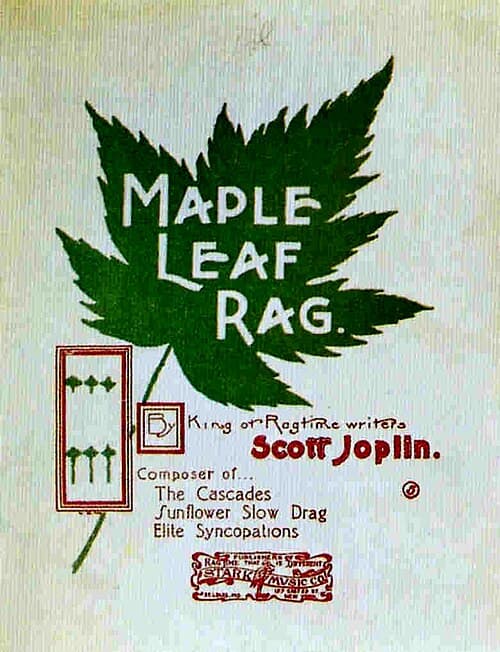
The cover of a copy of the "Maple Leaf Rag" by Scott Joplin. (<a href="https://commons.wikimedia.org/wiki/User:Schorle">Schorle</a>/<a href="https://creativecommons.org/licenses/by/3.0/deed.en">CC BY-SA 3.0</a>)
The Hit Parade
Type “Enduring American Song Hits 1890–1910” into your search bar, and you’ve already struck paydirt. Here are the classics played on parlor pianos, sung on vaudeville stages, and whistled by boys on their way to school. “Ta-Ra-Ra-Boom-Dee-Ay!,” “The Sidewalks of New York,” “Give My Regards to Broadway,” and “School Days” are just a sampling of the great hits from that era. You can brush away the cobwebs by searching for these songs on YouTube to listen to versions, both old and new.
Here’s another discovery awaiting you on this journey into the opening years of the 20th century: ragtime and player pianos. Search for “Maple Leaf Rag Humana Player Piano” and prepare to be amazed by those jumping ivory keys and the clarity and pace of Scott Joplin’s 1899 masterpiece, which launched the ragtime craze.
As you explore this corner of Americana, you’ll encounter performers like Enrico Caruso, Lillian Russell, Bessie Smith, and John McCormack. Catchy Broadway show tunes churned out by early Tin Pan Alley songwriters are also treasures for the taking.
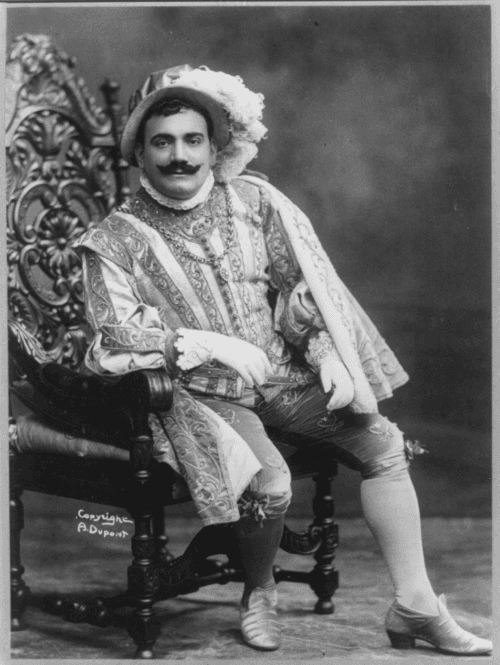
The famous Italian tenor sits in costume in 1908. (Public Domain)
Buried Books
Like the parlor songs, modern readers will recognize many literary titles published between 1890 and 1910. Oscar Wilde’s “The Picture of Dorian Gray,” H.G. Wells’s first novel “The Time Machine,” Arthur Conan Doyle’s Sherlock Holmes adventures, Stephen Crane’s “The Red Badge of Courage” are still widely read today.
But the antiquarian excavator will dig deeper. According to a 1945 Time magazine article, “Books: Hit Parade 1895-1945” scholar and writer Harry Thurston Peck contacted leading American bookstores in 1895 to compile the nation’s first best-seller list, published in “The Bookman.”
An illustration for H.G. Wells's "The Time Machine," published in Famous Fantastic Mysteries in August 1950. (Public Domain)
These lists give us a fascinating look at what people were actually reading at the turn of the century. Here are John Fox Jr.’s “The Trail of the Lonesome Pine,” Michael Arlen’s “The Green Hat,” and several bestsellers by Winston Churchill, an American novelist often confused with the British statesman. Interestingly, the Time article reports that in America, “non-fiction was notably unpopular during the years between 1895 and 1911.”
To see first-hand what our ancestors read, take a look at many of these out-of-print books at sites such as Gutenberg and Forgotten Books. You may find a classic or two to take home from this antique shop of literature.
More Artifacts From the Past
Want to know what Mom or Grandma was making for supper when Theodore Roosevelt was president? You might be surprised to learn that red flannel hash was popular and decide to try it yourself. Curious about sports and fitness back then? Dig around online and you’ll discover baseball was the great American game. If you were a Gibson Girl, you exercised, hiked, and rode bicycles, but you also focused on posture and presence. Interested in early cinema? A look at the shorts on YouTube will bring a smile. A similar dive into American artists can take you from the Wild West of Frederic Remington to the formal portraits by John Singer Sargent.
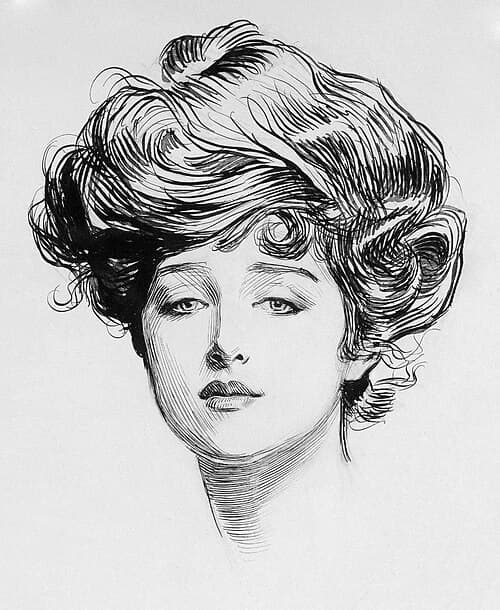
The archetypical Gibson girl was drawn by Charles Dana Gibson in 1891. (Public Domain)
“Seek and you will find; knock and the door will be opened:” Let that bit of wisdom be your motto. Whatever your interests, pick any era in American history, and you’ll likely find predecessors as enamored with the topic as you are.
But first a word of warning: Watch out for the temptation of nostalgia. We read of these times so different from our own and wish we’d lived then rather than now. Yet we should remember that all times and all places in human history brought their own challenges and dangers. In the Progressive Era, antibiotics were nonexistent and death might come from a scratch on the foot, babies and mothers routinely died at birth, and millions lived in grinding poverty whether in city ghettos or on struggling farms.
Instead of wishing yourself into the past, consider this living room expedition a vacation from the present. Journalist Jim Bishop once wrote, “Archaeology is the peeping Tom of the sciences. It is the sandbox of men who care not where they are going; they merely want to know where everyone else has been.”
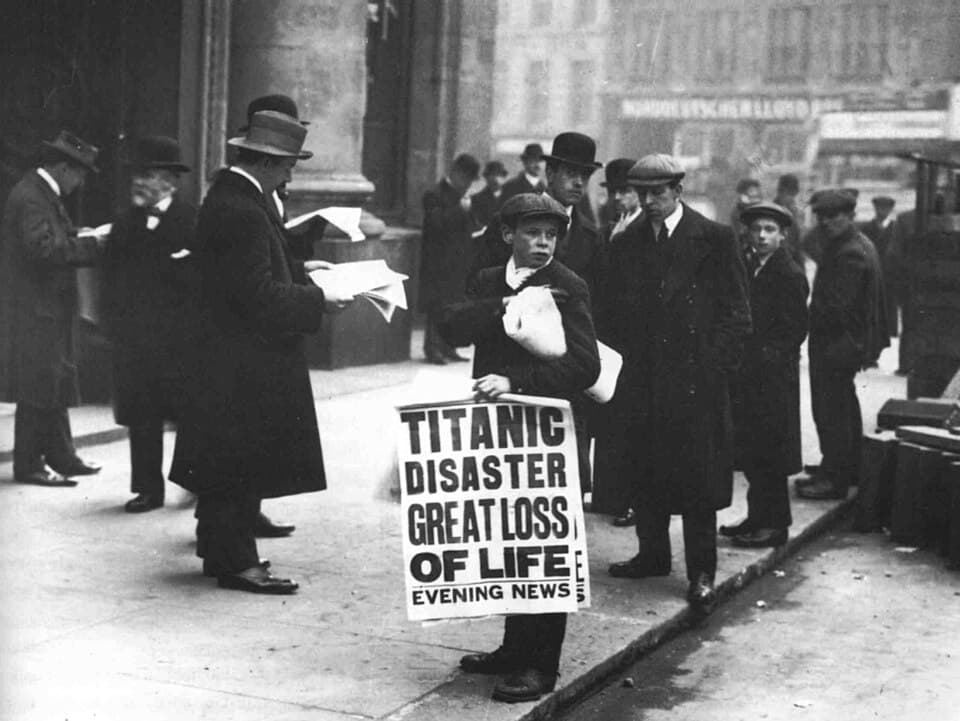
The catastrophic news of the Titanic's sinking went out on sheets of newspaper, a far cry from the 21st century's OLED screens. (Public Domain)
Seek and you will find; knock and the door will be opened:” Let that bit of wisdom be your motto. Whatever your interests, pick any era in American history, and you’ll likely find some predecessor equally enamored with the same topic.
What arts and culture topics would you like us to cover? Please email ideas or feedback to features@epochtimes.nyc.