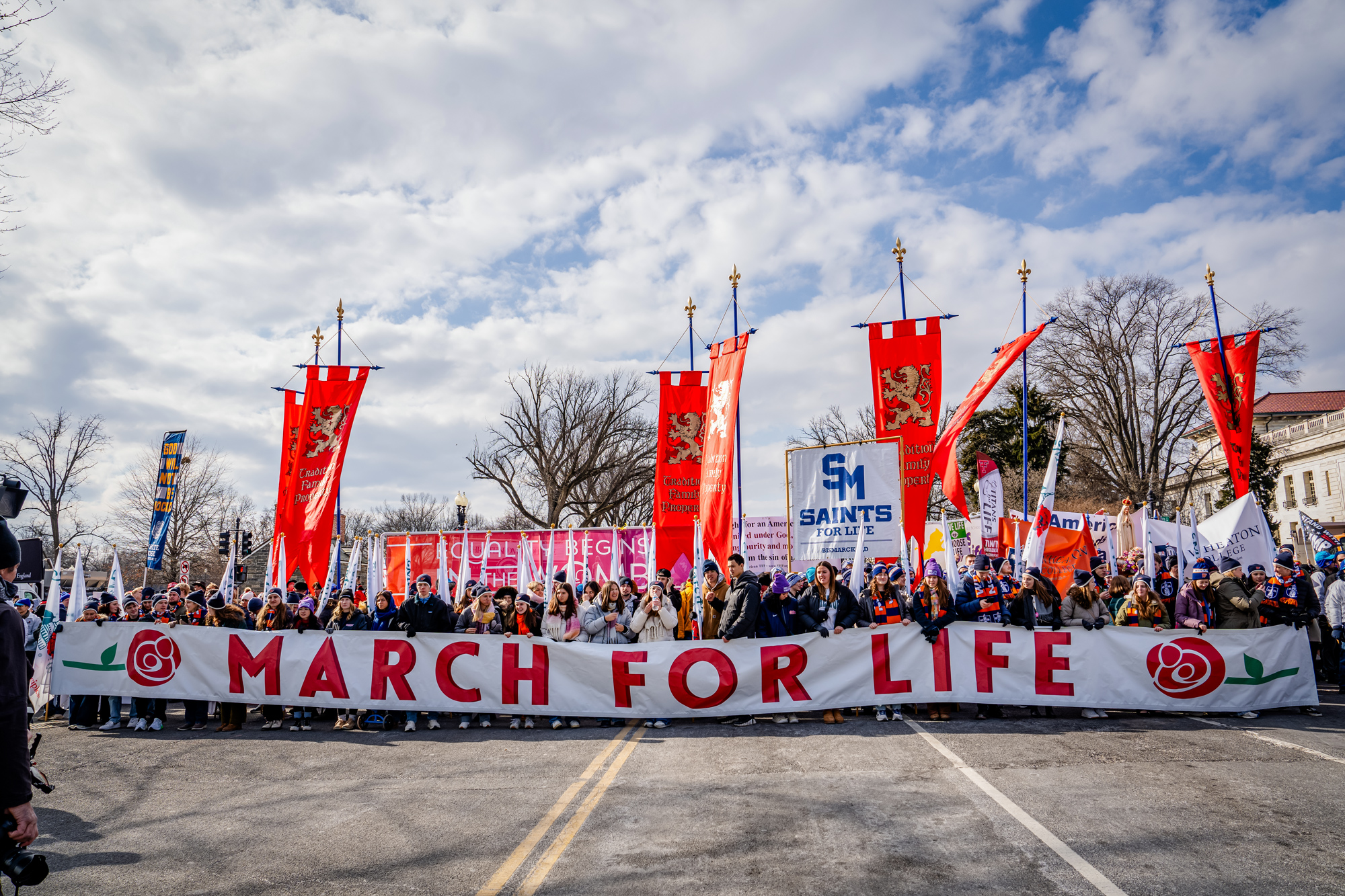


WASHINGTON–The 53rd annual March for Life is expected to draw tens of thousands on Jan. 23, as pro-life groups continue the fight for legal recognition and protections for unborn life.
President Donald Trump is expected to address the crowd via video while Vice President JD Vance, House Speaker Mike Johnson (R-La.), and others will address demonstrators in-person. After a rally near the Washington Monument, participants are expected to march to the steps of the Supreme Court building, denouncing abortion and calling for recognition and protection of unborn human life.
“Our 2026 March for Life theme is Life is a Gift, emphasizing what lies at the heart of the pro-life movement—an unshakeable conviction that life is very good and worthy of protection, no matter the circumstances,” the march organizers state on the event’s website. “Life is a Gift invites everyone to embrace life as something to be cherished and celebrated from the very beginning.”
The march was started in the aftermath of the Supreme Court’s Roe v. Wade decision, which said abortion was protected under the Constitution. The pro-life rally continued after that decision was overturned in 2022, as abortions increased due to lingering federal and state policies.
One of those policies is the deregulation of access to abortion pills. In the week before the March for Life, multiple Congressional Republicans called on the Trump administration to reverse President Joe Biden’s deregulation of the pill.
In Trump’s first administration, his Food and Drug Administration (FDA) maintained a requirement that the pill be dispensed in person. However, that requirement was revoked in 2021 under the Biden administration, which further deregulated the pill by allowing any pharmacy to provide it in person or through the mail, where states allowed it.
Pro-life leaders have offered high praise for Trump, who has described himself as the most pro-life president in U.S. history. During his first term, he not only implemented many pro-life regulations, but also helped shape the conservative majority that ultimately overturned Roe at the Supreme Court, which returned the matter of abortion to individual states.
Although the movement has seen some state-level losses since Roe’s demise, it’s also enjoyed many wins. Just last year, the Supreme Court issued a ruling that made it easier for states to prevent Medicaid dollars from flowing to Planned Parenthood, a major abortion provider.
After entering office a second time, Trump continued pushing pro-life reforms last year and signed a massive spending package that defunded the abortion provider. Some of his actions, however, have raised concern among pro-life individuals.
For example, Trump has resisted regulating the abortion pill, and his FDA approved another generic version of mifepristone last year.
During a press call on Jan. 22, Susan B. Anthony List President Marjorie Dannenfelser said, “Not only has this administration not moved when it absolutely could move but they added, of course, a generic version of the abortion drug, making it far more accessible and far cheaper.”
“So, this is not the direction that we are hoping for,” added Dannenfelser, whose organization is one of the most influential in the pro-life movement.
After Roe was overturned, Trump said the states should handle the issue. Dannenfelser, meanwhile, argued that the lack of abortion pill regulations undermined state laws and led to an increase in abortions. She also called on lawmakers to protect the Hyde Amendment, which prevents federal tax dollars from being spent on most abortions. Trump signed an order to enforce Hyde last year but suggested more recently that House Republicans should be “flexible” on the issue.
According to Gallup, Americans have historically favored at least some restrictions on abortion.
Recent polling by Marist and the Knights of Columbus, a conservative Catholic group, showed that 67 percent of Americans aged 18 and older support placing legal limits on abortion, with 57 percent supporting limiting abortion to the first three months of pregnancy. The majority (54 percent) also opposed using taxpayer dollars to pay for abortions.