
Taiwan’s government has pledged support for the distributor of a documentary on forced organ harvesting in China after he received more than 150 threats and was repeatedly drawn into police investigations over threats sent by people impersonating him.
The Mainland Affairs Council, Taiwan’s top government agency handling relations with China, said it met with Guan Jianzhong, head of Lion Film and Television Culture Co., on Oct. 5 and confirmed it would coordinate with law enforcement agencies to help protect him and address cases of transnational repression.
Guan brought the Canadian documentary “State Organs” to Taiwan. The film examines evidence of forced organ harvesting in China, including from prisoners of conscience, and has been screened at venues across Taiwan since 2024. The film, which has received international awards and public support, has faced threats against its screenings because it exposes the Chinese Communist Party’s (CCP’s) forced organ harvesting industry.
The latest concern involves what Taiwanese officials described as a new tactic. People are using Guan’s name and phone number to threaten others, with victims reporting the incidents to police, and leaving Guan repeatedly summoned to explain himself to authorities.
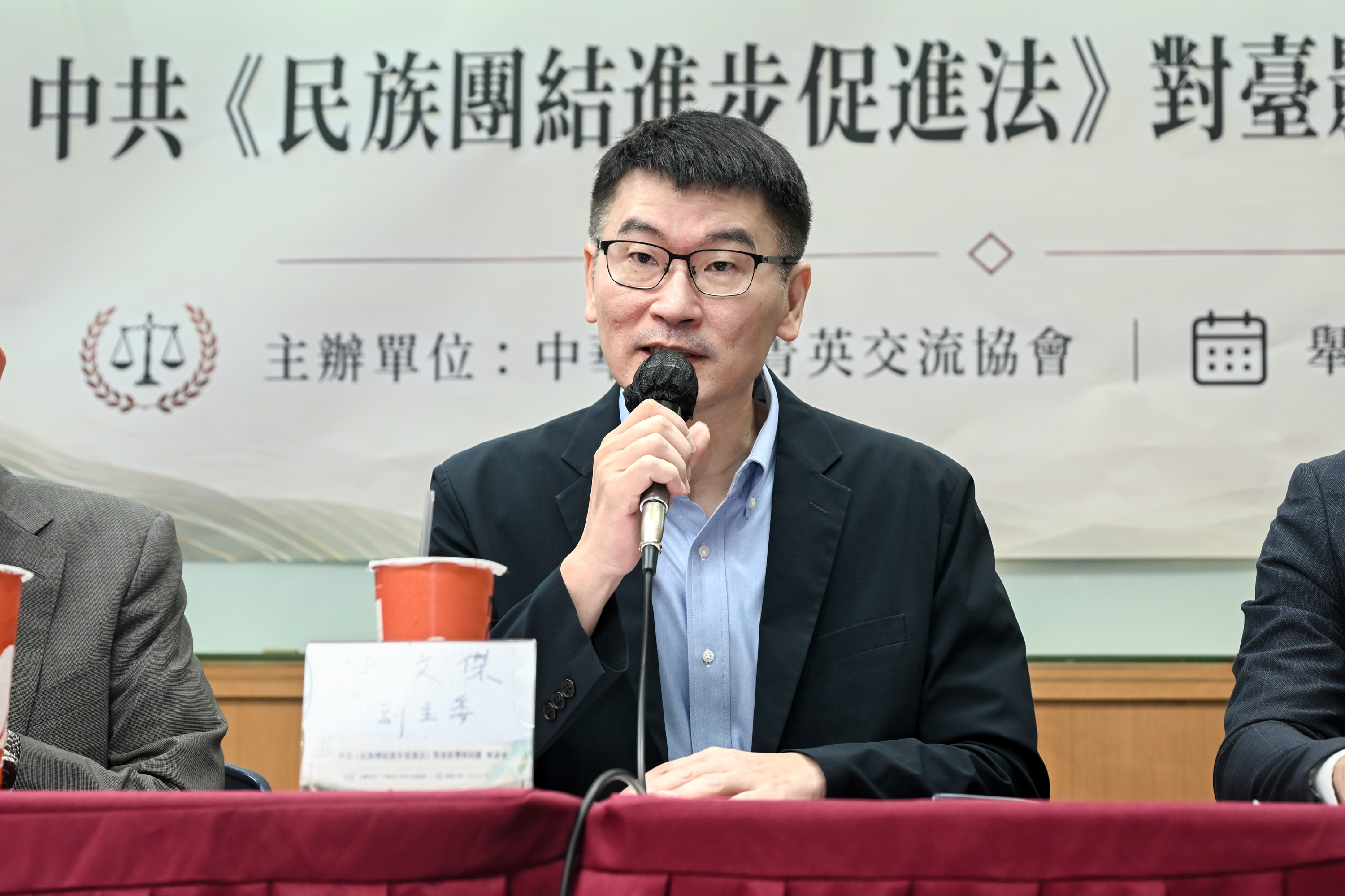
Liang Wen-chieh, deputy minister of the Mainland Affairs Council, said on Oct. 1 at a news conference that the Taiwanese government was treating the incidents as potential cases of transnational repression by the CCP, while acknowledging that authorities were still investigating the specific circumstances.
“The apparent objective was to make Guan run around [to police stations across Taiwan],” Liang said.
The incidents cited by Liang include a case in November 2025 in which someone used Guan’s phone number to threaten and extort money from a lawyer. Guan was subsequently summoned by police over a suspected offense involving unlawful interference with another person’s freedom.
In December 2025, someone threatened the Kuma Academy, a Taiwanese civil-defense organization, using Guan’s identity, thus forcing him to appear before prosecutors in Taipei. On Sept. 29, someone again used Guan’s name and phone number to threaten the Taiwan Falun Dafa Association, resulting in another police inquiry.
Under coordination by the Mainland Affairs Council, Guan reported the incidents to police on Oct. 1. The council said it would work with Taiwan’s National Police Agency and Ministry of Justice to coordinate the cases so Guan would not have to repeatedly respond to separate investigations across the country.
The council also warned members of the public to be cautious if they receive threatening or harassing calls from someone claiming to be Guan, saying that the caller could be impersonating him.
At the Oct. 5 meeting, Liang expressed support for Guan and said the Taiwanese government would assist people targeted by the CCP’s transnational repression.
Guan said the threats were intended to create fear and discourage people from discussing the documentary.
“The essence of the threats and harassment by the CCP is psychological warfare, attempting to create social fear and produce a chilling effect,” Guan said.
He urged people not to give in to intimidation, saying that some viewers had been deeply moved by the film and were willing to speak publicly about the human rights issue.
The documentary has become a focal point for debate in Taiwan over freedom of expression and CCP influence beyond China. Since its Taiwan release in 2024, the film has been screened nearly 1,000 times, while Guan and theaters involved in screenings have received more than 150 threatening messages. Some threats included references to bombs, shootings, and other forms of violence.
Taiwanese authorities have characterized the incidents as part of a broader pattern of transnational repression. The specific perpetrators behind the threats and impersonation incidents involving Guan have not been publicly identified.
Zhong Yuan contributed to this report.