
British-South African swimmer Lewis Pugh has spent much of his time in the murky waters inhabited by sharks.
While some would balk at the idea of being in the vicinity of the underwater creatures, the endurance athlete recently took one of his most ambitious plunges yet in the hopes of shifting the public’s perception of the often misunderstood sea dwellers—a mission that comes nearly 50 years after the summer blockbuster “Jaws” hit theaters.
On May 15, Pugh set out in the bone-chilling, choppy waters surrounding Martha’s Vineyard, embarking on a nearly 60-mile trek around the affluent island perched off the coast of Massachusetts.
Twelve grueling days later, he finished the final leg of his swim right where he began, stepping out of the ocean near the historic Edgartown Harbor Lighthouse.
“It’s been one of the toughest swims of my life,” Pugh said on Instagram on May 26. “Cold water, relentless wind, big waves and the constant thought of what might be beneath me.”
The 55-year-old swimmer spent several hours braving the Atlantic waters each day in order to complete his journey around the island.
He is the first person to accomplish such a feat, adding to his extensive list of swimming records, including being the first person to swim across the North Pole and complete long-distance swims in every ocean.
Pugh said he chose to brave the chilly waters hugging the shores of Martha’s Vineyard for one very special reason: The island is where director Steven Spielberg filmed his Oscar-winning shark film decades ago.
“'Jaws has shaped our perception of sharks as vindictive killers,” Pugh penned. “That fear spread across the globe and lasted for half a century. Now it’s time to change the narrative for a new generation.”
The 1975 cult thriller introduced audiences around the world to a vicious shark terrorizing the fictional New England town of Amity Island.
The Roy Scheider-led film, based on Peter Benchley’s 1974 novel of the same name, portrayed the rogue great white as nothing more than a mindless, bloodthirsty machine bent on destruction.
“That movie did a lot of damage by creating a false narrative that sharks are monsters,” marine biologist and shark conservationist Ocean Ramsey told The Epoch Times.
“In reality, sharks are highly intelligent, curious, and often cautious animals.”
This sentiment is shared by Pugh, who noted that sharks are far from the monstrous killers often depicted on screen.
“They’re magnificent. They’re essential. And they’re seriously endangered,” he wrote on his Instagram post. “Right now, sharks need us ... It’s an ecocide taking place right now, and we must stop it.”
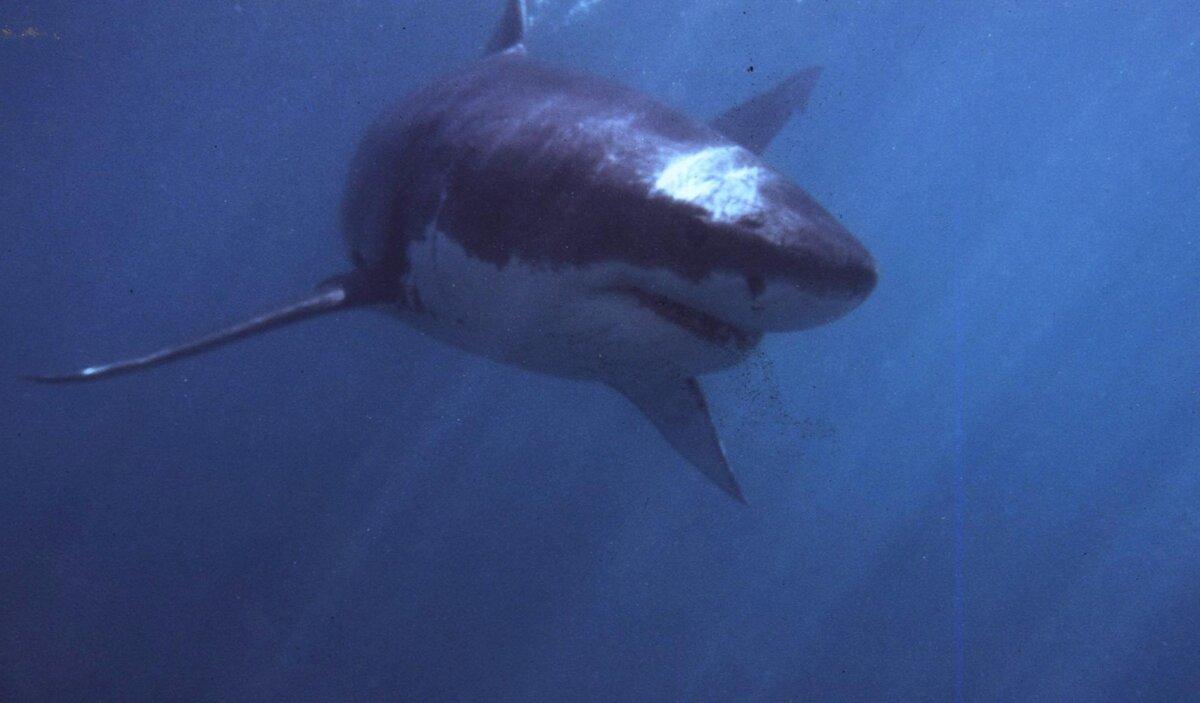
A Great White Shark swimming off Gansbaai, about 180 km from Cape Town. (Theo Ferreira/AFP via Getty Images)
The International Fund for Animal Welfare reports that humans kill approximately 100 million sharks per year—roughly three sharks every second. To put that figure into perspective, only around 10 people die each year from shark attacks.
While some sharks are hunted and killed after attacking humans—though usually not in the explosive manner in which the sharp-toothed “Jaws” villain met his grisly end—the vast majority are slaughtered for their meat, skin, and fins.
The 1975 film also fueled a rise in trophy shark fishing, the practice of targeting exceptionally large sharks for sport—a point Spielberg has previously lamented.
“That’s one of the things I still fear—not to get eaten by a shark, but that sharks are somehow mad at me for the feeding frenzy of crazy sport fishermen that happened after 1975,” Spielberg said on the BBC Radio 4 program “Desert Island Discs” in 2022.
“I truly, and to this day, regret the decimation of the shark population because of the book and the film.”
Despite often being portrayed negatively in the media, Ramsey said sharks are incredibly vital to the health of the ocean.
“As apex predators, they help maintain balance in the marine ecosystem by regulating the populations of other species,” she told The Epoch Times. “This natural balance prevents the overgrazing of seagrass beds and encourages movement around coral reefs, which, in turn, supports biodiversity and ocean resilience.”
Ramsey, who has written several books about the powerful fish, including the 2019 guide “What You Should Know About Sharks,” emphasized that sharks face greater threats from humans than humans do from them.
“If people understood how essential sharks are to ocean health, and how vulnerable they are right now, I believe they would care as much as I do,” Ramsey said.
“Sharks aren’t something to fear—now more than ever before, they’re something to fight for.
“They’re not just important ecologically—they’re awe-inspiring, graceful, and deserving of our respect and protection,” the conservationist continued.
“I encourage everyone to look beyond the fear-based headlines, educate themselves, and support efforts to conserve these incredible animals. When we do things that help protect sharks, we protect so many other species at the same time—and ultimately, our own future.”