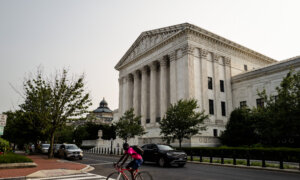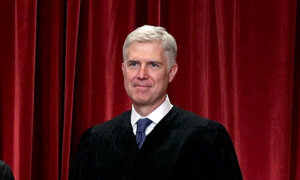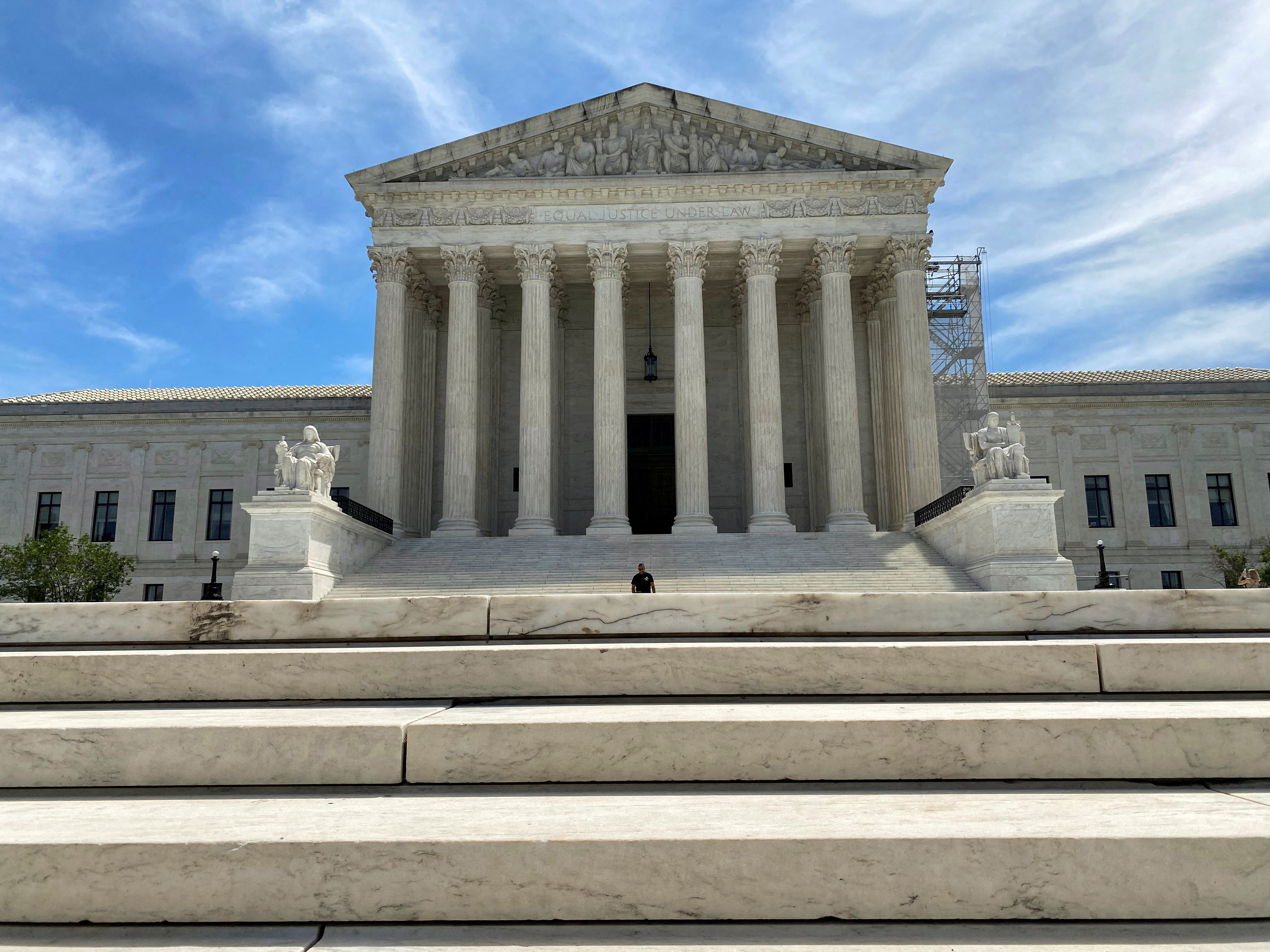

The Supreme Court on Dec. 3 heard arguments in a case examining whether a street preacher can bring a First Amendment claim against a city ordinance—and if a victory in the case would imply his previous conviction was invalid.
The case concerns Christian evangelist Gabriel Olivier, who wants to challenge a Brandon, Mississippi, ordinance that bars protesters from demonstrating too close to a local concert venue.
Olivier tried to file a civil claim under 42 U.S. Code, Section 1983, which allows individuals to sue governments over alleged violations of their civil rights. But lower courts said precedent in a previous case, Heck v. Humphrey, meant he could not sue since he had already pleaded guilty to violating Brandon’s ordinance.
At the outset of Wednesday’s Supreme Court hearing, some of the justices seemed skeptical of Olivier’s claim in light of that precedent.
“If you go ahead with your suit and you win and you have the statute declared facially unconstitutional, what follows from that logically is that the past conviction was infirm, the past conviction was invalid,” Justice Elena Kagan told Olivier’s attorney Allyson Ho. “So, if we take Heck for all it’s worth, I think you can’t win.”
However, some of the justices later seemed to take the opposite view as they probed the larger implications of the Heck rule.
Questioning an attorney representing the city, Justice Sonia Sotomayor asked how a convict could challenge a law—even decades later—without first getting their prior conviction overturned.
“What you’re basically saying is simply because they’ve been previously convicted, they cannot seek prospective relief 20 years from now, unless they get an expungement,” she said. “But if they’re barred for some procedural reason, they have no protection.”
Justice Samuel Alito also questioned the logic of that implication.
“Doesn’t it seem a stretch of the underlying reasoning, the rationale of Heck to say” a convict is “forever barred from engaging in what you think is protected First Amendment activity because you were previously convicted under this statute and received more or less a slap on the wrist?”
According to a court filing by the city of Brandon, Olivier was one of several individuals heckling people through a bullhorn, calling them “whores,” “sissies,” and “Jezebels.”
When they refused to move to a designated protest area nearby, Olivier and one other person were arrested.
Olivier pleaded no contest to the charges, paid a fine of $304, and was given a suspended sentence of 10 days in prison. It wasn’t until after his sentencing that he sought a court order blocking the city ordinance on First Amendment grounds.
A federal district court dismissed the suit on the grounds that the Heck precedent says plaintiffs cannot file suit under Section 1983 if their success would “necessarily imply the invalidity” of a prior conviction.
Alito asked Ho if the justices would need to “backtrack” on some parts of the Heck decision, since blocking the city ordinance would imply Olivier’s conviction was wrong.
Ho said that would not be necessary, since her client is not seeking to overturn or invalidate his conviction. Instead, he is seeking purely “prospective” relief, and wants to avoid future prosecution.
The Heck decision, she said, was intended to stop convicts from challenging their detention without going through the usual process of bringing a habeas petition, or from seeking damages related to prior confinement.