
The U.S. Supreme Court on Aug. 24 ruled that President Donald Trump may—for the time being—implement his election integrity order ahead of the November midterm elections that will determine control of Congress.
A federal judge in Massachusetts had blocked portions of Trump’s order that were aimed at regulating mail-in ballots and verifying voter registration lists. While the Supreme Court didn’t rule on the legality of Trump’s executive order, it said the states that sued weren’t harmed and therefore shouldn’t have received relief from the Massachusetts judge.
However, that same judge blocked part of Trump’s order—the portion focused on mail-in ballots—in a separate case that involved different litigants. It’s unclear whether the aspect of Trump’s order focused on mail-in ballots will ultimately be implemented.
Following the Supreme Court’s decision, the Justice Department asked the Massachusetts judge to lift that particular block, in a case brought by a nonprofit, based on what the Supreme Court said on Aug. 24 in the other case involving state litigants.
The Supreme Court stated that its new order “does not mean that any measure taken by the Government to implement the Order will necessarily be lawful ... but the [executive order] itself does not harm the States, so the District Court lacked jurisdiction to bar the Government from trying to implement it.”
In other words, any concrete injury that the litigating states may experience would come from later agency actions implementing it, and states may then sue over that issue when it arises.
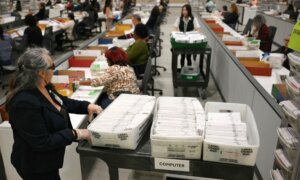
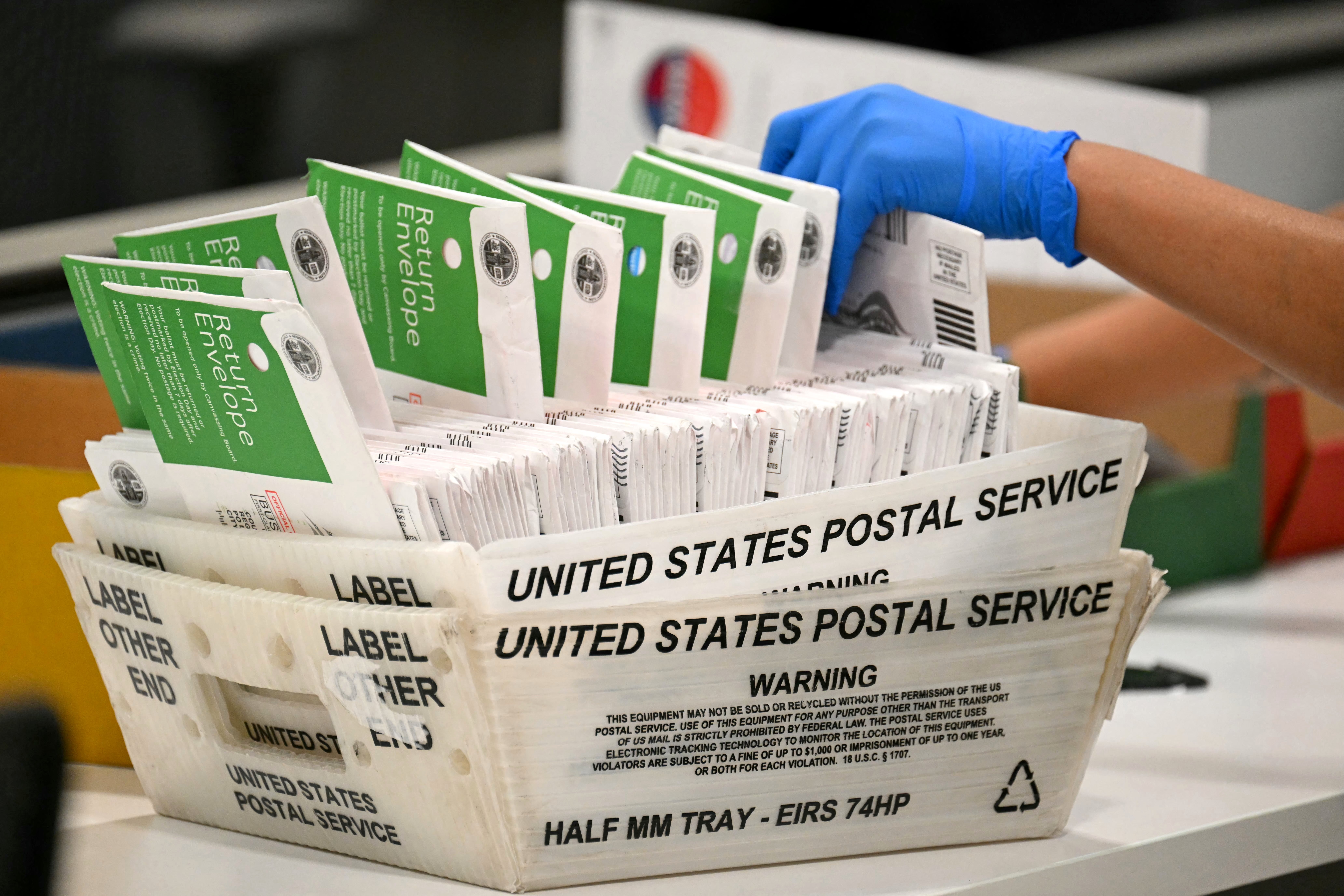
The executive order requires federal agencies to develop state-by-state lists of verified U.S. citizens of voting age. It directs the U.S. Postal Service (USPS) to begin the process of creating new government regulations about how mail-in and absentee ballots are handled, publish the proposed regulations to allow for public comment, and eventually publish the final, binding regulations.
The executive order forbids the postal service from sending mail ballots to anyone not on the verified citizen lists. It also requires the USPS to impose new envelope design and barcode standards for election mail.
A federal district court had blocked the executive order’s enforcement in the 23 states and in the nation’s capital. The new Supreme Court ruling stays that lower court order while the litigation plays out.
In her June 25 order, Massachusetts-based U.S. District Judge Indira Talwani blocked the executive order’s Section 2, which directs the U.S. Department of Homeland Security to compile lists of voting-age U.S. citizens in each state, and Section 3, which requires the USPS to propose standards for mail-in and absentee ballots to be used in federal elections.
Section 2 is an attempt “to intimidate local election officials to use the necessarily incomplete ... lists as a resource, lest they face criminal prosecution,” Talwani said.
The judge said that Section 3 could not stand because “no law enacted by Congress delegates authority to control mail-in voting to USPS.” The postal service does not have statutory authority to finalize “any binding regulations on mail-in voting.”
On July 25, the U.S. Court of Appeals for the First Circuit upheld Talwani’s order, finding that allowing the executive order to take effect before elections happen in September and November “would sow confusion and threaten disenfranchisement of many eligible voters.”
Supreme Court Justices Sonia Sotomayor, Elena Kagan, and Ketanji Brown Jackson dissented from the Aug. 24 ruling.
In her dissenting opinion, which was joined by Kagan, Sotomayor said that it is clear that the states “face a sufficiently concrete and imminent injury to satisfy Article III” of the U.S. Constitution. The states should not be required to wait to “bring their serious challenges to the Executive Order,” she said.
Jackson said in a separate dissent that on the one hand, the federal government is arguing that the mail-in voting changes it plans to implement are “too speculative and distant” to be challenged in court, while at the same time seeking “emergency relief right now to immediately implement those changes.”
“This suspect scenario appears tailor-made to weaponize this case as a means of destabilizing the nation’s vote-by-mail systems through court-assisted procedural maneuvers,” she said.
The justices did not deal with the separate order Talwani issued on Aug. 11 in League of Women Voters of Massachusetts v. Trump.
In that case, she blocked the postal service from implementing Section 3. Unlike her June 25 ruling, the August order prevents the USPS from carrying out the provisions of the section with respect to upcoming federal elections throughout the entire United States, instead of just in the states that sued over them.
The injunction apparently remains in effect.
On Aug. 21, the USPS published new rules on implementing Section 3. The agency stated that it acted so it could implement the rules quickly if the government is allowed to enforce the section before the upcoming elections.