

Rewriting the script on the Middle East began last May when President Donald Trump visited three Gulf states, securing hundreds of billions in deals and resetting relations.
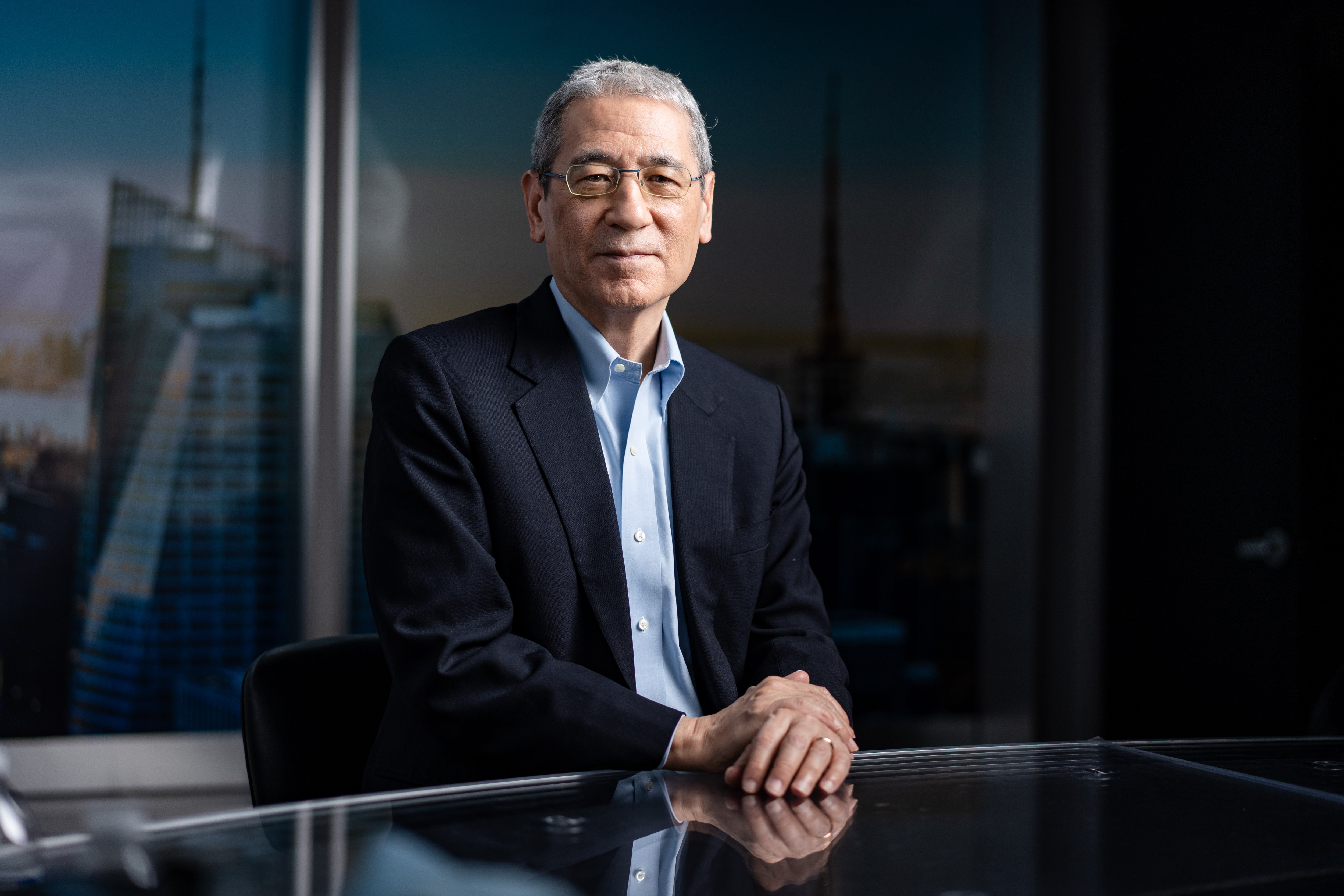
“Trump’s triumphal tour through the Middle East, those three Gulf states, really pushed China and Russia out of the region ... and what we have witnessed since then is the further reduction of Russian and Chinese influence there—and that’s culminated with the strike on Iran of the 28th of February,” Gordon Chang, China commentator and author of “Plan Red: China’s Project to Destroy America,” said on EpochTV’s “American Thought Leaders” program, which aired on March 2.
According to Chang, the U.S.–Israel strikes on Iran have shown the limits of China’s power and, like the U.S. operation in Venezuela, have cut down the Chinese Communist Party’s (CCP’s) global power without directly engaging with Beijing.
Trump’s recent actions are a message to the CCP: “Not on my watch,” Chang said.
“And this is what Americans need to hear, because we underestimate our own power,” he said.
“We have a lot of people in our country who say, ‘Oh, the Chinese are going to take over.’ ... But no, that’s not the way we are. That’s not in American DNA.”
Proxy Wars?
Chang said that Trump’s National Security Strategy—which makes few mentions of China directly but states the United States will not allow hostile powers to encroach on the United States’ ability to move and trade freely, such as in the South China Sea—shows that “China is foremost in President Trump’s mind.”
“I believe that President Trump is going after the Chinese [authorities], and he’s not doing it directly, but he is doing it indirectly, and he’s cutting off their sources of support,” he said.
For example, Chang said, the operations in Venezuela and Iran could end China’s ability to obtain the cheap oil it has become dependent on. China is by far the primary buyer of Iranian oil, which is sanctioned and therefore available to Beijing for a discount, and Venezuelan oil was likewise purchased by China at a deep discount. The loss of leaders in both countries also reduces Beijing’s ability to expand its influence and project power in those areas.
He noted that Venezuelan oil is also a lifeline for Cuba, where China has a military presence. Trump has also reset relations with Panama, which has driven out Chinese influence over the canal.
“This is freedom moving forward,” Chang said.
Furthermore, Beijing’s response thus far—limited to rhetoric—reinforces the idea that “China is not a superpower,” he said.
“It always criticizes the U.S., but when the U.S. is determined to do something, it cannot stop us, and that shows the limits of Chinese power,” Chang said.
While some reports say Beijing intends to use chaos in the Middle East to distract the United States from the Indo-Pacific, Chang says decisive action in the Middle East can hit Beijing where it hurts, and he believes Ukraine may be a similar case.
“The Chinese are looking at Ukraine really as the template and the future, and the people in Taiwan say that their future is being written on the battlefields of Ukraine,” he said.
“If the United States allows Russia to keep territory through acts of aggression, then the Chinese will think that they, too, can do the same thing, and the United States will accede to a Chinese grab of Taiwan or parts of Japan or the Philippines.
“We have to understand that just because we do things in one part of the world, it affects other parts of the world. It’s not isolated.
“That’s why I think it’s very important to prevail and make sure that Iran becomes a free society. We do that, we certainly put China in a very difficult position.”
‘Iran Is Not Iraq’
Trump had run on a promise of no more foreign wars, so it is understandable that many Americans were taken aback or not fully on board with the strike on Iran, Chang said. But he believes the current operation won’t be like the drawn-out campaigns of the past and will ultimately save more lives.
“There won’t be peace in the Middle East or even the wider world until we get rid of that regime. That regime has declared itself to be an enemy of the United States,” Chang said, pointing to remarks the Iranian president made in December 2025 that Tehran was in “a state of war” with the United States, the terrorism the regime funds, and an Iran-linked cyberattack on a Pennsylvania water system in 2023.
“The Iranian regime has got to go. It has a nuclear weapons program. It’s got ballistic missiles. It is a danger to the international community.”
Chang said it was “unacceptable” to continue to verbally condemn Iran’s nuclear program without backing up the criticisms with action while the regime continues to “execute tens of thousands of its own citizens.”
Referencing Alexis de Tocqueville, Chang said that history has shown democracies are slow to go to war, and sometimes that only prolongs it.
“We ignored Osama bin Laden. We ignored him after he killed six Americans by bombing the North Tower of the World Trade Center in February 1993. We ignored him until one day, when he reached out and killed 2,977 Americans. Then we said, ‘Well, how did that happen?’” Chang said.
He pointed out that the UK and France acted similarly when the Third Reich began militarizing, and had they acted sooner, millions of deaths and World War II may have been avoided.
“We’re the Britain and France of this century until President Trump decided no, we were not going to allow these threats to gather,” he said.
Chang says Trump’s actions upend decades of adhering to the “managed decline” theory of containing regimes rather than aiming for restoration.
Chang also pointed to indications that Iran would not be a drawn-out affair that ends in dependency, with America offering business in the long run rather than merely aid. Trump has also said operations in Iran could take four or five weeks, and that things are already ahead of schedule.
“Iran is not Iraq,” Chang said, echoing the Trump administration. “Iran has tradition—that tradition was interrupted for 47 years by the theocratic regime, but the Iranian people will get this right, and we saw how many people in Iran wanted to be free. So that is a real indication that Iran can work.”
He also encouraged all Americans, whether Republican, Democratic, or Independent, to support the president and their country.
“This is the struggle of our lifetimes, and we better recognize it. Although the United States is a far stronger society than China, we can lose our country ... because we’re not defending it with the vigor and with the determination that’s necessary.”
Chang noted that “this is a consequential moment” in which the Chinese regime could, for internal reasons unclear to the West, lash out.
“As Lenin said, there are decades when nothing happens, and then there are weeks when decades happen. Well, the weeks that we’re now in, decades are happening, and we have to be vigilant,” Chang said.