In the second half of the 19th century, the Moran family became a vital force in American art. As an immigrant family of handloom weavers from England, all four Moran brothers developed impressive reputations as professional artists
They did more than produce art, though. They also taught, established art societies, pioneered techniques, popularized art forms, and inspired others.
None of the sisters in this large family became professional artists. However, Elizabeth Moran (1839–1913) married Stephen James Ferris (1835–1915), a talented painter and etcher who added his own luster to the family legacy.

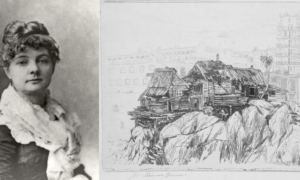
A portrait of Elizabeth Moran Ferris, 1878, by Stephen James Ferris. A drawing in pencil. (Public Domain)
An American Artist
Ferris was born in Plattsburgh, New York. His family’s roots ran back to the early 18th century, when a Quaker ancestor emigrated from Wales.
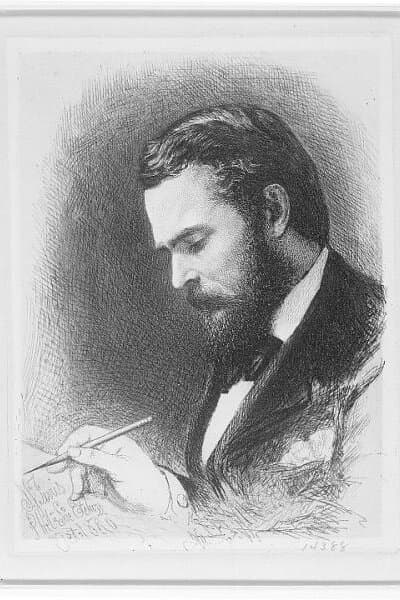
A self-portrait, 1880, by Stephen James Ferris. Library of Congress. (Public Domain)
At age 21, he relocated to Philadelphia, the city most of the Morans called home. There, he studied at the Pennsylvania Academy of the Fine Arts. For two years, he studied art technique with Samuel Bell Waugh, one of America’s most respected portraitists.
Ferris developed a proficiency for capturing notable figures. He later traveled to France to study under academic painter and sculptor Jean-Léon Gérôme (1824–1904), an artist he admired so much that he named his only son after him.
Joining the Family
Ferris’s connection to the Moran family may have begun in 1860, when he observed John Sartain demonstrate the process of etching. Learning alongside him was Thomas Moran (1837–1926), who would become the family’s most famous artist because of his oil landscape paintings of national parks. This was most likely Ferris’s first introduction to the Moran family, allowing him to meet Elizabeth. They wed in 1862 and had a boy and girl.
Ferris worked closely alongside his brothers-in-law throughout his career. In 1880, together with Peter Moran (1841–1914) and fellow etcher Joseph Pennell, Ferris co-founded the Philadelphia Society of Etchers, an offshoot of the Philadelphia Sketch Club, which Ferris also helped establish.
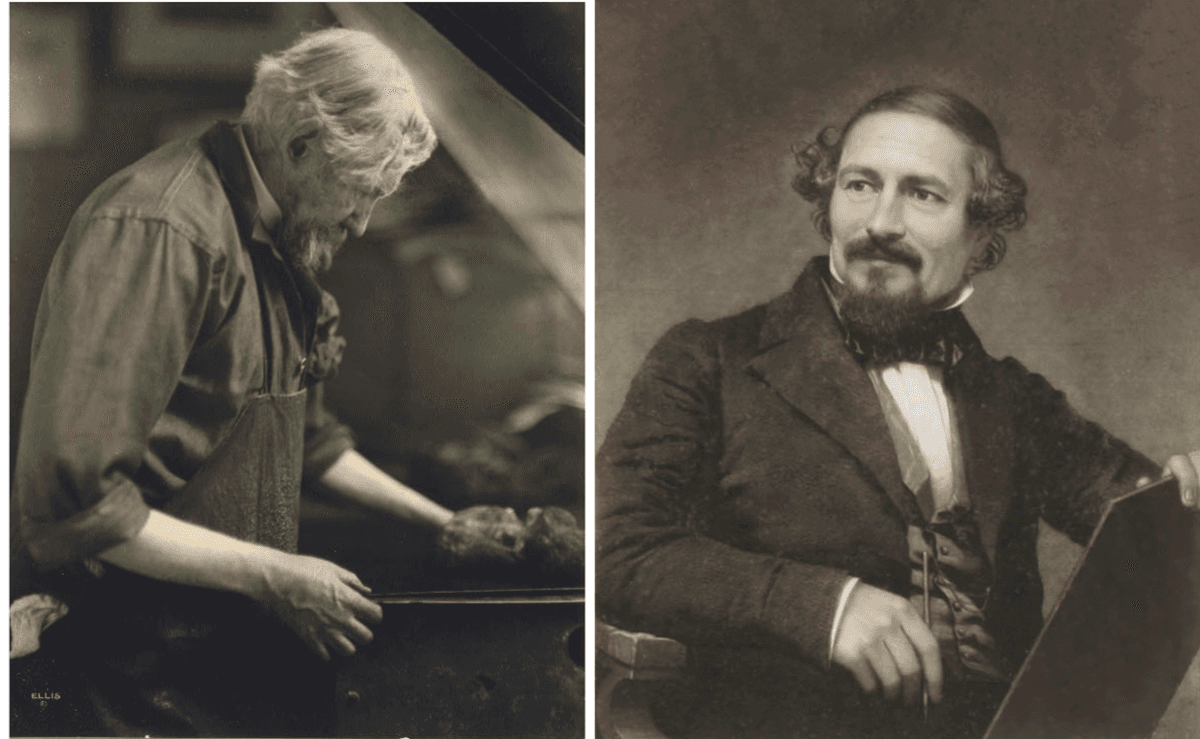
(Left) A portrait of Joseph Pennell working at a printing press, 1922, by William Shewell Ellis. Photography. Library of Congress. (Public Domain) (Right) John Sartain, 1875. Engraving. (Public Domain)
Based in Philadelphia for most of his career, Ferris served as an instructor for 26 years at the Philadelphia School of Design for Women. Thomas and Peter also aught at the school for many years, and in 1865, Ferris and Thomas co-hosted a lecture series there.
Ferris’s work was displayed at the Philadelphia School of Design, the Pennsylvania Academy, the Boston Art Club, and the National Academy of Design.
The Ferris Collection
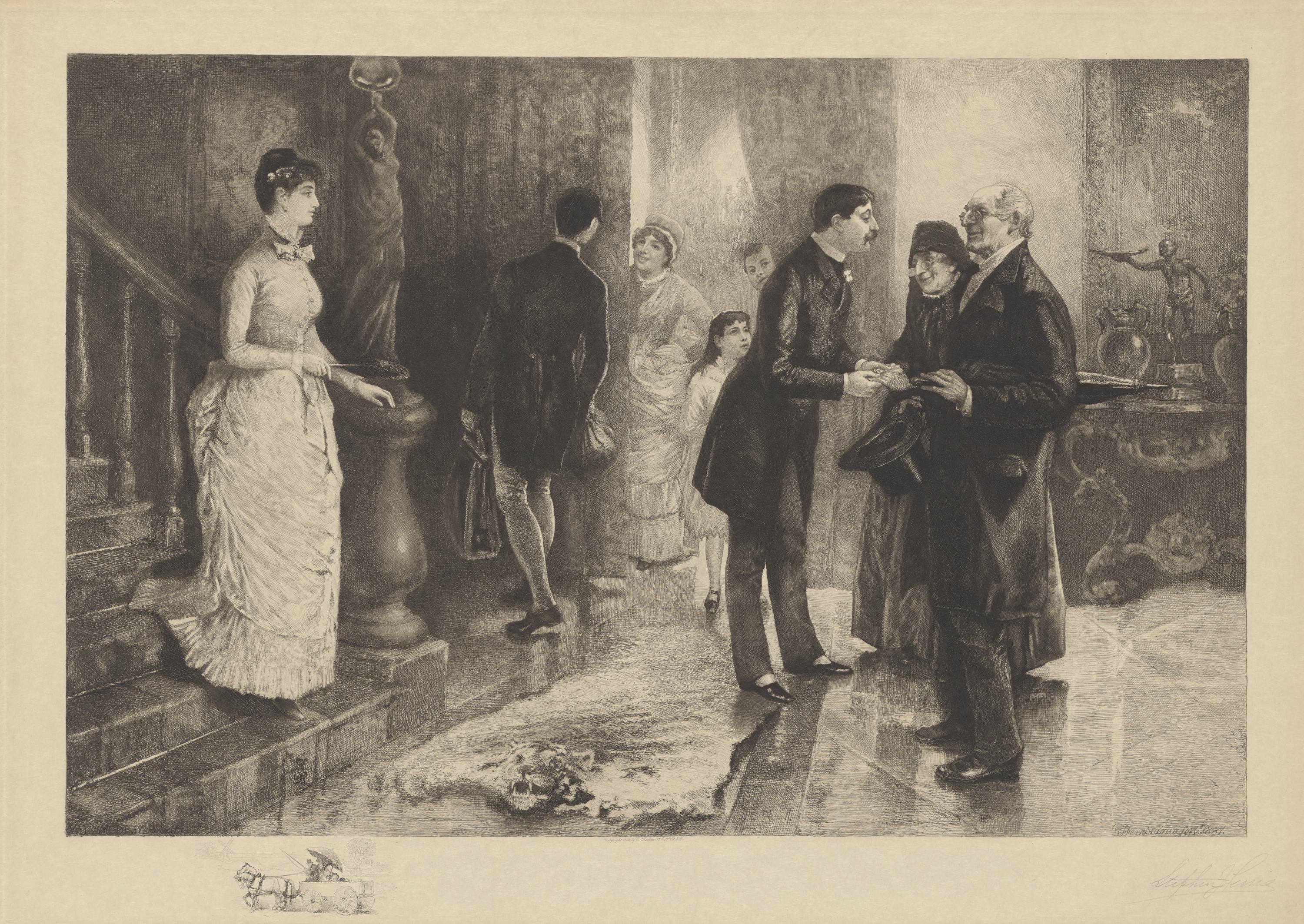
Over his lifetime, Ferris produced more than 2,000 portraits, both as paintings and etchings. He built a respectable reputation in the United States and in Europe. In 1876, he won the prestigious Fortuny Prize in Rome for best portrait.
Just the year before, Ferris produced his first published etching, a reproduction of Alexander von Wagner’s dramatic painting “Chariot Race in the Circus Maximus, Rome in the Presence of the Emperor Domitian.” He collaborated with brother-in-law Peter on one of the largest etchings produced in the United States up to that point. Peter, who specialized in drawing animals, drew the horses; Ferris used his skill at portraiture to draw the human figures and some of the architecture. It received high acclaim.
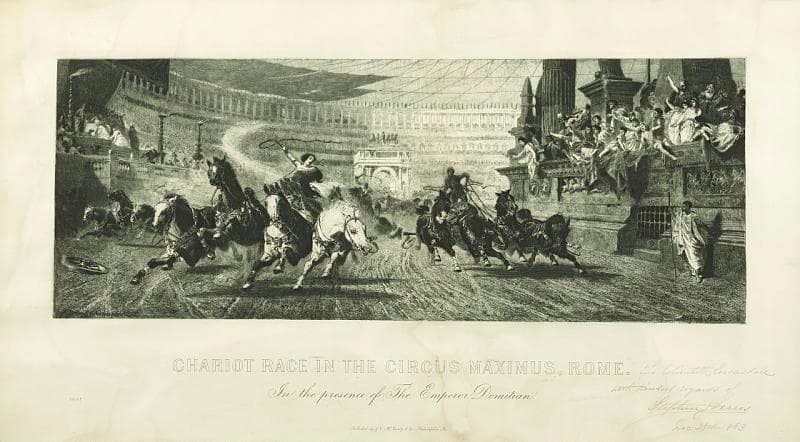
“Chariot Race in the Circus Maximus, Rome in the Presence of the Emperor Domitian,” 1875, by Stephen James Ferris and Peter Moran. Smithsonian. (Public Domain)
In addition to producing a prolific number of portrait and figure etchings, Ferris was an avid art collector.
He amassed a collection of thousands of European and American prints for self-study and appreciation, which included originals and reproductions of masterpieces from the 17th through 19th centuries and works by members of the Moran and Ferris families.
This impressive collection was donated to the Smithsonian Institution by his family after Ferris’s death. The Ferris Collection of Prints remains one of the Smithsonian American Art Museum’s largest holdings today, a lasting legacy of a man who helped preserve and expand the Moran family’s artistic story.
What arts and culture topics would you like us to cover? Please email ideas or feedback to features@epochtimes.nyc