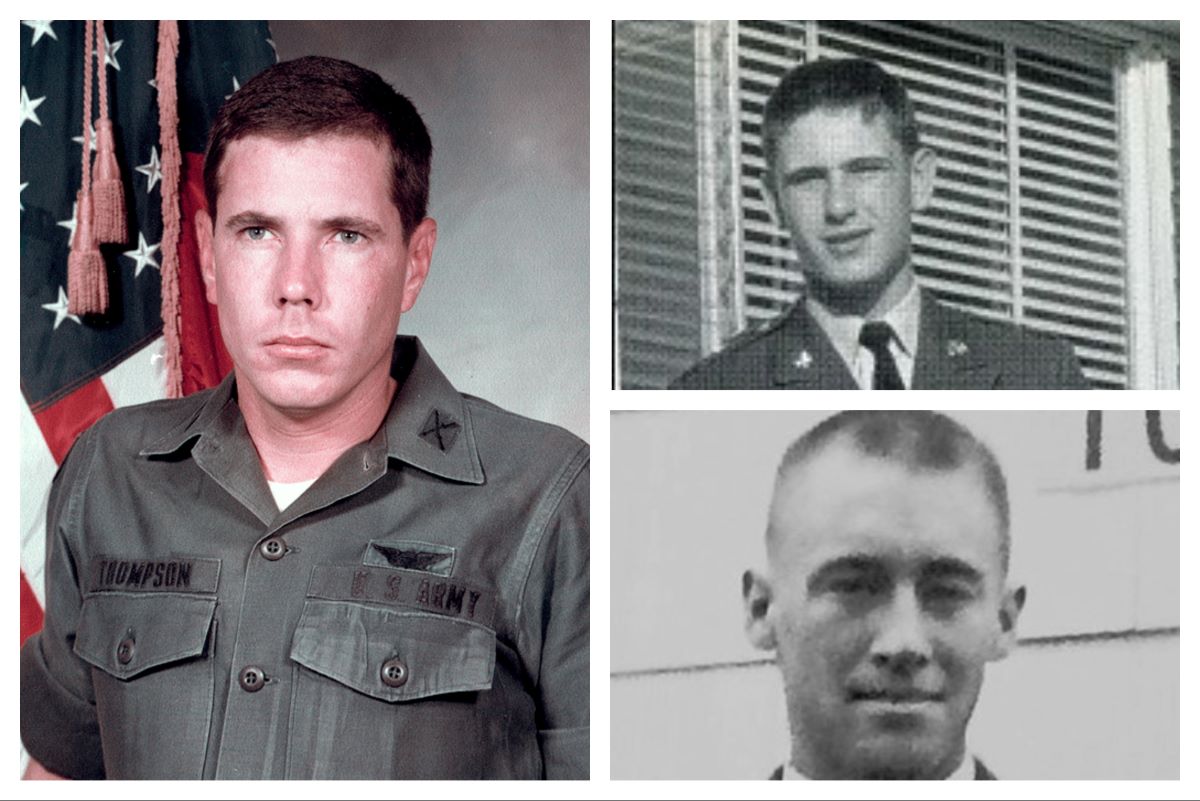
On March 16, 1968, American soldiers brought hell on earth to Vietnam’s Son My, a cluster of villages including My Lai, My Khe, Co Luy, and Tu Cung. Under the command of Capt. Ernest Medina, Charlie Company went on a spree of murder, rape, and arson that resulted in 300 to 500 Vietnamese deaths of men, women, and children slaughtered individually or in groups for their supposed support of North Vietnamese troops.
Though the military initially covered up the massacre, contending first that the soldiers had fought the enemy and then quietly launching an investigation, on Nov. 12, 1969 journalist Seymour Hersh broke the story of these atrocities, shocking American voters and fueling the antiwar movement. With this news, the shame of what came to be called the My Lai (pronounced “mee lie”) Massacre became a black stain on American history.
Further details revealed, however, that one helicopter pilot and his crew of two acted as heroes of virtue during this horrible slaughter.
The Valiant Crew
Hugh Thompson Jr. (1943–2006) grew up in Stone Mountain, Georgia, one of two sons in a working-class family. His parents—his father was a veteran of World War II—taught both boys discipline, integrity, and patriotism. On graduating from high school, Thompson served for three years in the Navy, was honorably discharged, and took charge of a mortuary back home to provide for his wife and family.
In 1966, feeling the need to support the expanding U.S. military efforts in Vietnam and also wishing to learn to fly, Thompson enlisted in the Army. After he’d trained as a helicopter pilot, he was sent to Vietnam, where, in January 1968, he became a member of the 123rd Aviation Battalion of the 23rd Infantry Division.
On March 16, he and his men, Spc. Glenn Andreotta and Spc. Lawrence Colburn, both serving as door gunners that day, were ordered to serve as reconnaissance and support for the infantry in the Son My operation.
A Massacre of Innocents
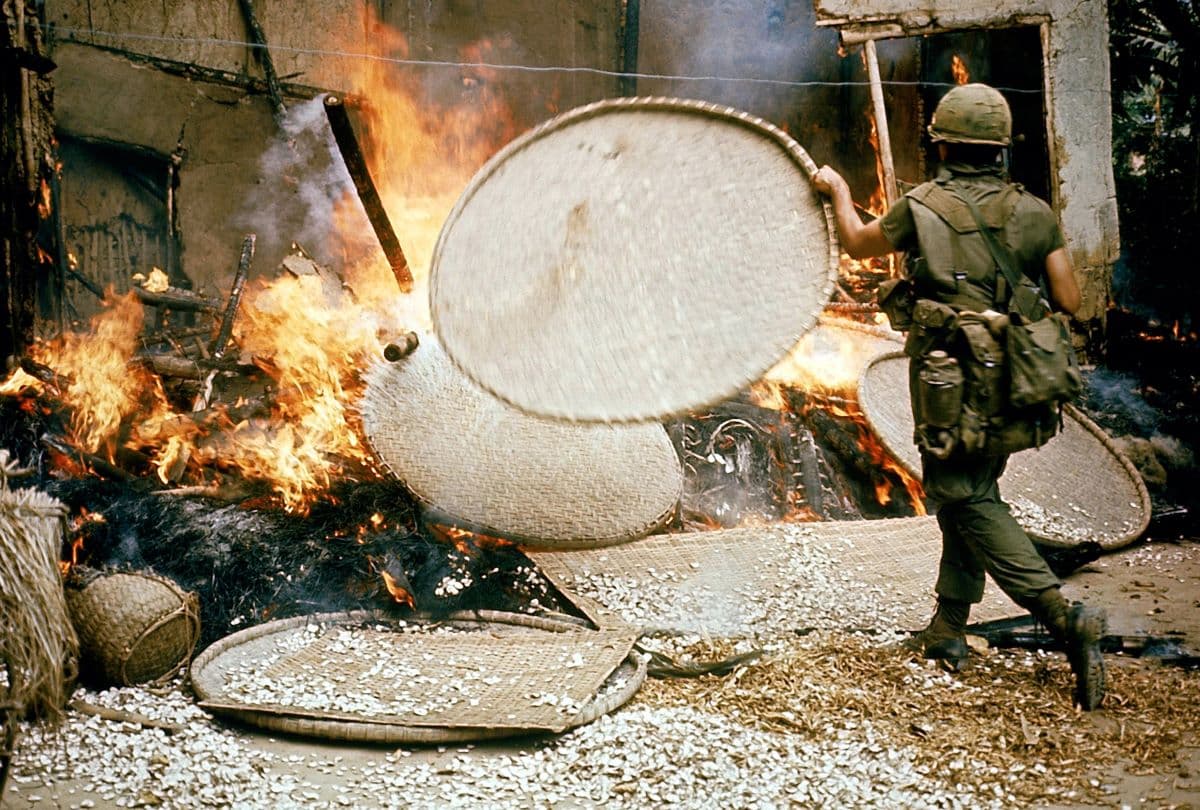
A U.S. soldier burning down a dwelling during the My Lai massacre. (Public Domain)
Assigned to root out Vietnamese guerillas and supporters of the communist North, the soldiers of Company C entered the Son My district angry and frustrated by casualties inflicted over the past weeks in the area. Poorly led and poorly disciplined, they came looking for revenge.
Early that morning, platoons commanded by Lts. William Calley and Stephen Brooks entered the hamlet of Tu Cung. The killing began when an American soldier bayoneted one man and another soldier threw a villager into a well and tossed in a grenade. Unleashed, other soldiers shot crying women and babies in a temple while Calley and some of his men forced between 70 and 80 villagers into an irrigation ditch, where they were machine-gunned to death.
As the morning progressed, Charlie Company carried its campaign of murder to other hamlets. It was midmorning when Thompson and his crew, having marked with green smoke the spot where a woman lay wounded so as to secure her medical aid, saw Capt. Medina shoot and kill her.
The Standoff
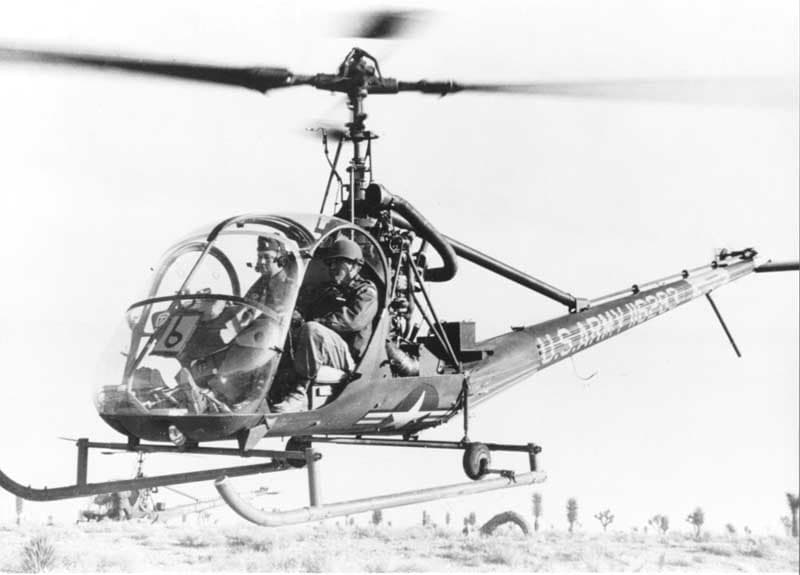
Hiller OH-23 Raven, three-seat, light observation helicopter, similar to the one Thompson commanded during the massacre. (Public Domain)
That murder, followed by his discovery of a ditch containing more bodies of women and children, horrified Thompson. He radioed the other helicopter pilots: “It looks to me like there’s an awful lot of unnecessary killing going on down there. Something ain’t right about this. There’s bodies everywhere. There’s a ditch full of bodies that we saw. There’s something wrong here.”
Then came the moment that first revealed Thompson’s courage and character.
He landed his aircraft, saw close-up the dead and dying, and confronted Calley. Here is part of their terse conversation:
“Thompson: ‘What’s going on here, Lieutenant?’
Calley: ‘This is my business.’
Thompson: ‘What is this? Who are these people?’
Calley: ‘Just following orders.’
Thompson: ‘Orders? Whose orders?’
Calley: ‘Just following ...’
Thompson: ‘But, these are human beings, unarmed civilians, sir.’
Calley: ‘Look Thompson, this is my show. I’m in charge here. It ain’t your concern.’”
Calley then told Thompson to board the helicopter and “mind your own business.” Thompson obeyed the order to board the aircraft, but refused to mind his own business after spotting Lt. Brooks and soldiers from the Second Platoon going after another group of villagers. He landed the helicopter between the Vietnamese and their pursuers, then gave an extraordinary order to his two-man crew. “Y'all cover me!”
He ordered his crew to open fire on U.S. soldiers if they fired on him or the villagers. With his chopper acting as a protective wall for the villagers, Thompson then persuaded Brooks, who was superior to him in rank, to back off and permit the evacuation of the Vietnamese. Two other helicopters flying as his escorts removed them, and Thompson’s own aircraft left the field with a boy Andreotta had rescued from an irrigation ditch filled with yet more bodies.
The Aftermath
Back at base—it was still morning—Thompson’s angry protest about the killings found their way to Lt. Col. Frank Barker, who quickly ordered an end to the carnage. On receiving that order, Medina told his men to “knock off the killing.”
The killing stopped, but, despite the attempted cover-up, the incident refused to die. Of the 30 soldiers eventually charged with either participating in the massacre or in the cover-up, only Calley was convicted. Sentenced to life in prison in 1971, he served just three years under house arrest before being released.
As part of the cover-up, the Army awarded Thompson the Distinguished Flying Cross for taking the child to a hospital while “caught in intense crossfire.” He threw away the citation. During his time in Vietnam, he was shot down five times, breaking his back in the last crash. Andreotta died in combat three weeks after My Lai, shot through the head from ground fire. Colburn survived the war.
In 1969, appearing in a closed session before the House Armed Services Committee to give his account of My Lai, Thompson was excoriated by some committee members. Democrat Mendel Rivers even tried without success to have Thompson court-martialed for ordering his crew to turn their weapons on American troops.
Later, when the events at My Lai began making the news, many citizens attacked Thompson as being unpatriotic, some going so far as to issue death threats and to throw mutilated animals on his porch.
Recognition
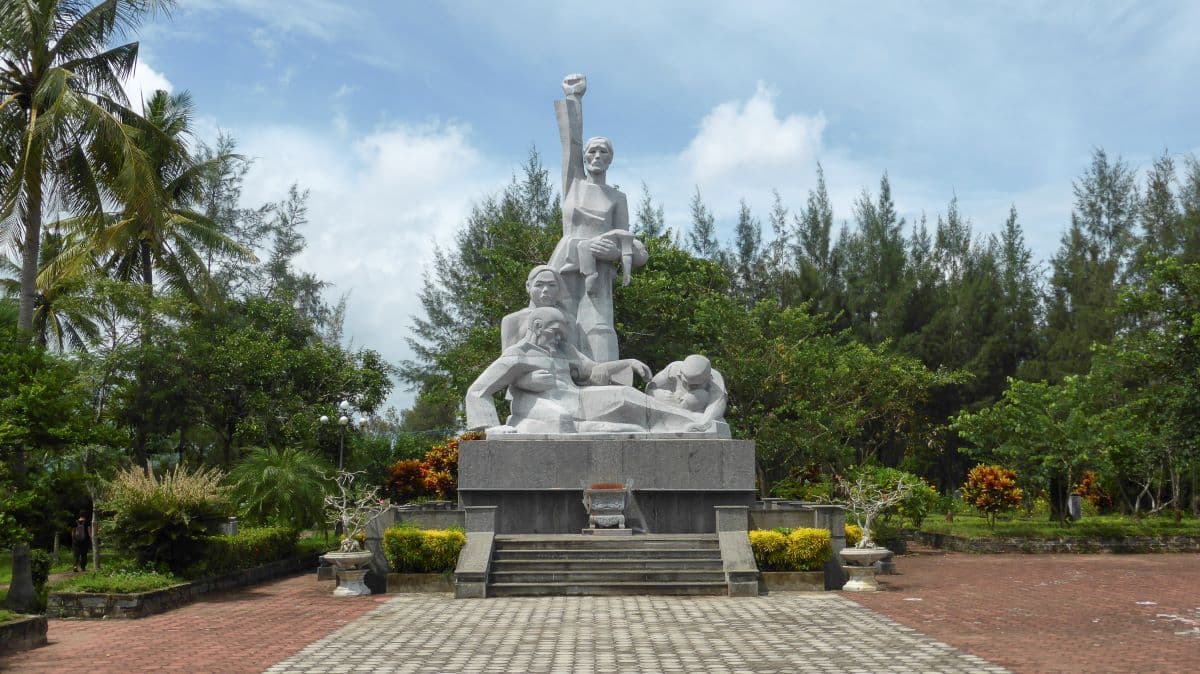
Son My Memorial to remember the victims of the My Lai massacre. (<a href="https://www.flickr.com/people/32051524@N08">JvL</a>/<a href="https://creativecommons.org/licenses/by/2.0/">CC BY 2.0</a>)
Yet 30 years afterwards, Thompson and his crewmates received the Soldier’s Medal, the “Army’s highest award for bravery not involving direct contact with the enemy.” They were honored for doing the right thing in refusing to countenance the immoral killing and trying their best to stop it. About the same time, Georgia senator Max Cleland “entered a tribute to Thompson, Colburn and Andreotta into the record of the U.S. Senate. Cleland said the three men were, ‘true examples of American patriotism at its finest.’” Thompson would later speak on the moral code governing America’s warriors at both the Naval Academy and West Point.
A final note: In that same year they received the Soldier’s Medal, Thompson and Colburn returned to My Lai, where they met some of the people they’d rescued. There, they dedicated and helped establish a new elementary school for the children of the village.
What arts and culture topics would you like us to cover? Please email ideas or feedback to features@epochtimes.nyc.