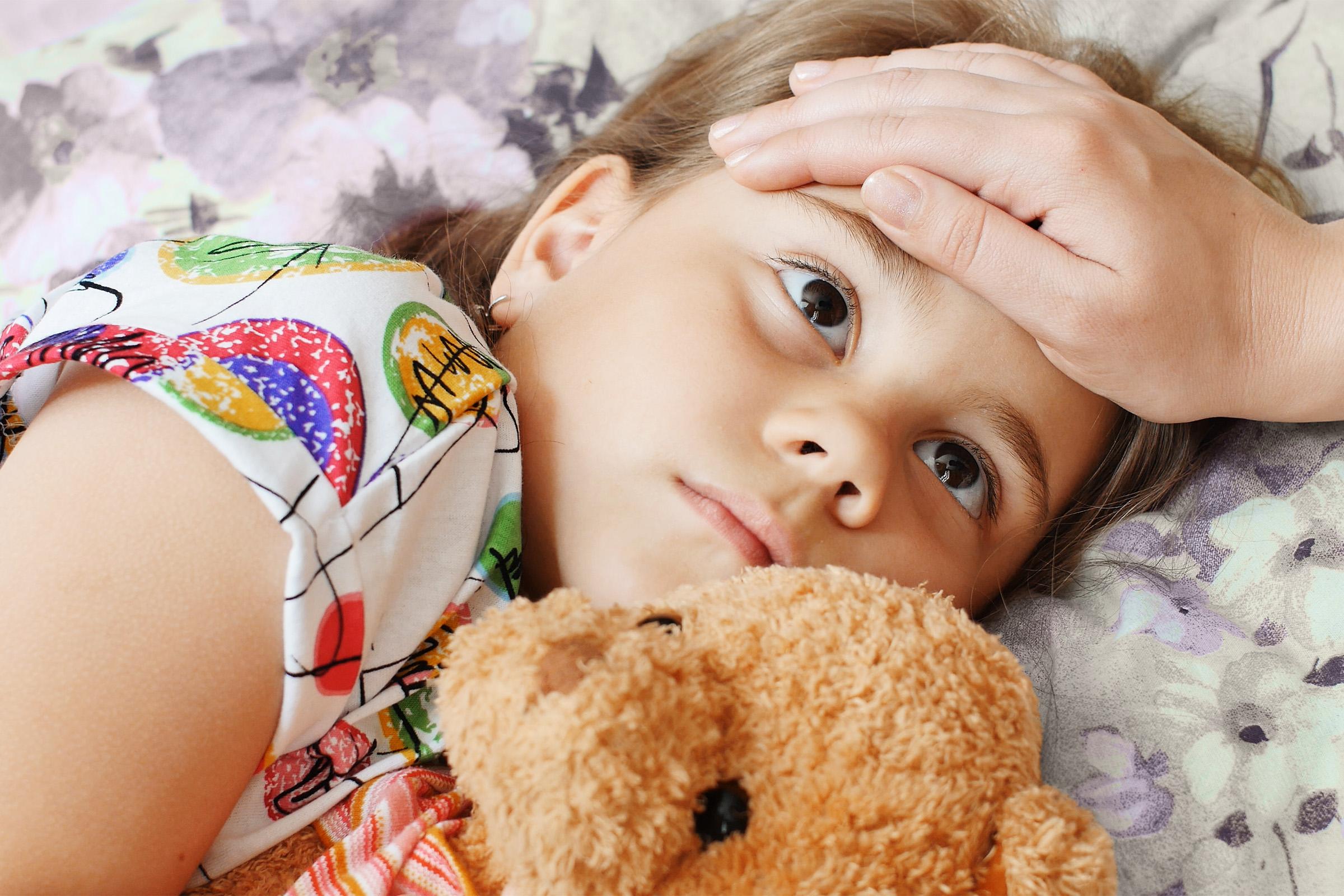
Paola Brown was about 3 years old when a neighborhood child came down with measles, and her mother took her over to be exposed. Years later, when Brown had children of her own, she became fearful of infections and responded the way she’d been taught by suppressing the fevers that often accompany common childhood illnesses.
It’s conditioned parental behavior: Your toddler spikes a 102-degree fever, and you reach for fever-reducing medication or find other ways to eliminate discomfort.
Those common fevers, however, and the stream of colds, flus, and childhood bugs that come with them are actually building a fortress of immunity that could protect against serious diseases decades later.
Some research suggests that fevers, which accompany common childhood infections such as measles and chicken pox, could be a biologically meaningful part of the process. Research has linked both fevers and exposure to certain childhood infections with lower risk of certain cancers, heart disease, asthma, and allergies in adulthood—raising questions about why we try to avoid common immune-activating events that pose little harm.
Of course, some fevers and infections are mild and part of normal immune development, while others, depending on severity, age, or underlying health, still require careful monitoring and medical attention.
The Hygiene Hypothesis
Known as the
hygiene hypothesis, the theory suggests that early exposure to microbes helps train the immune system to distinguish threats from harmless substances. Being too hygienic or isolated from microbes does not provide the training ground your immune system needs to build tolerance.
“Most routine childhood infections are self-limited and part of normal immune development, especially in healthy children,” integrative pediatrician and Epoch Health contributor Dr. Joel “Gator” Warsh told The Epoch Times.
Situations that expose children to diverse bugs—having many older siblings, attending day care, living on a farm, having measles and certain other infections, and frequent contact with cattle, poultry, and cats—can all positively affect how the immune system matures and are associated with fewer allergies, according to the authors of a BMJ editorial.
Vaccines, antibiotics, and antiviral treatments represent a trade-off. While they have reduced the incidence of severe infections, they also correspond to rising rates of asthma and allergies, the authors noted.
“The challenge before us is to find ways of reproducing the protective effects of early childhood infections, while at the same time reducing the burden of serious (and less serious but still troublesome) infectious diseases,” they wrote.
Fever’s Role in Immunity
Fever itself may play a critical role in immunity. Children who had fevers before their first birthday were less likely to have allergies five or six years later, according to a
study published in the Journal of Allergy and Clinical Immunology.
Fevers trigger a surge in circulating cytokines, signaling proteins that control inflammation and are believed to help modulate immune responses to allergens.
“The complexity of these cytokine changes makes it hazardous to speculate on a precise mechanism for the association between fever and allergic sensitization,” the authors wrote, adding that if fevers are indicative of intense immune stimulation, then each fever could further reduce the likelihood of developing allergies.
Febrile (fever-causing) childhood illnesses were associated with reduced risks for melanoma, ovary, and multiple cancers combined. Acute infections in adults were associated with lower risks of meningioma, glioma, melanoma, and multiple cancers combined. Frequency of infections was associated with greater risk reduction, with febrile childhood infections showing the greatest protection.
Where Science Has Made Connections
Several studies have found more specific associations between common childhood illnesses and improved health outcomes.
Lower Risk of Cancers
Children with at least one infection-related hospital contact in their first two years had a lower risk of cancer in early to mid-adulthood compared with children without an infection, according to a Danish
study of more than 68,000 people published in Cancer Epidemiology.
The number of febrile infectious diseases decreased the risk of most cancers, breast cancers excluded, with the strongest association found between those who had rubella and chickenpox, according to a study published in Medical Hypotheses.
An Italian study published in Leukemia Research found that most childhood pathogens may protect against Hodgkin’s lymphoma, while measles may protect against non-Hodgkin’s lymphoma. Notably, a separate study published in Hematology/Oncology and Stem Cell Therapy investigating 16 cases of spontaneous regression of Hodgkin’s lymphoma reported that regression followed a measles infection in five cases.
Mumps infections were associated with a 19 percent decrease in risk of ovarian cancer, according to meta-analysis results published in Cancer Causes Control. In this association, the mechanism could be that mumps—but not the mumps vaccination—confers higher levels of anti-MUC1 antibodies. Ovarian and breast cancer patients with high circulating anti-MUC1 antibodies have higher survival rates.
Fewer Cases of Heart Disease
The hygiene hypothesis might also explain why the immune system is able to suppress inflammation in the arterial wall.
“Improved hygiene in the early childhood might partially explain the rise of the greatest epidemic of the 20th century, the coronary heart disease,” according to the authors of a study published in Atherosclerosis.
The risk of acute coronary events decreased among those with childhood infectious diseases—chickenpox, scarlet fever, measles, mumps, mononucleosis, and rubella—according to the study findings. The more infections one had, the lower the risk of heart events.
Another study in Atherosclerosis found subjects with a history of measles and mumps had a lower risk of mortality from cardiovascular disease than those without a history of infections. The risk became lower as the number of infections increased.
Reduction of Asthma and Allergies
The association between early childhood infections and the development of allergies is more nuanced. While repeated lower respiratory tract infections early in life were associated with asthma and wheezing at age 7 in a
study published in BMJ, other infections were associated with reduced asthma and respiratory symptoms.
The strongest protective effect was found among children who had recurrent runny noses and infections caused by herpes viruses in their first year. Asthma diagnoses were also less common in a small number of children who had measles.
Those who had measles infections were less likely to test positive for four common allergens in a small study, while hay fever was less common in measles-infected children compared with those who hadn’t been infected, and more common in those vaccinated for measles versus those who were unvaccinated, according to a larger study published in Clinical & Experimental Allergy. However, the authors said that the results could also be explained by birth order, as younger children are exposed to more infections from older siblings in the home.
Why Parents Fear Fevers
Most parents want to medicate fevers immediately—understandable given that it’s common for children to have two to six fevers a year in their first three years.
A qualitative study published in Children found that mothers especially consider fevers as a medical crisis, and their decisions are driven primarily by emotions rather than facts.
One mother in the study blamed health care professionals: “They never told me: ‘Stay calm because what matters most is that the child is well, not just that the fever goes down.’ Instead, the message is: ‘Paracetamol first, ibuprofen if that doesn’t work, and alternate between the two.’”
Paola Brown, a homeopathy educator, described the common practice of immediately medicating a child’s fever as a culturally driven response rooted in parental anxiety. After researching a supportive versus controlling approach to fevers, she opted to prioritize hydration and rest over antipyretics such as paracetamol.
“Parents will medicate the child, but what they’re really medicating is their anxiety,” she told The Epoch Times.
Brown said the change in her own approach to her children’s fevers coincided with what she calls “the fever years” with her son, who had black tarry stools as a toddler and test results that made doctors suspect he had inflammatory bowel disease. Yet when she began letting his immune system fight off bugs naturally, his bowel movements normalized.
The National Institute for Health and Care Excellence recommends that a parent’s response to fever should be based on ensuring adequate hydration and responding to the level of distress, rather than reducing body temperature.
A Cautious Approach
While there may be benefits to getting certain early childhood illnesses, they are not harmless or positive for every child, Warsh said. Infection severity, timing, and the child’s underlying health factor into reactions.
“You only benefit if the child survives the infection and recovers without serious complications,” he said. “And there may be downstream effects we don’t yet fully understand.”
Fevers in infants less than 2 months old require prompt medical evaluation. Other situations when it’s appropriate to seek care include fevers above 104 degrees Fahrenheit, fevers of 100.4 degrees Fahrenheit for more than 48 hours in children younger than 2, fevers lasting more than three days in children older than 2, signs of dehydration, and fevers accompanied by seizures. Additionally, children whose immune system is compromised because of steroids, cancer, or sickle cell disease should be seen promptly.
Fevers should not be treated with ice baths, sponging, alcohol wipes, or excessive layers of clothing, according to the American Academy of Pediatrics.
What Science Still Doesn’t Know
Much of the research on the benefits of childhood illnesses is speculative, and more studies are needed, Warsh noted.
Long-term studies should examine how infection patterns, timing, severity, and vaccination status affect downstream autoimmune, allergic, and metabolic health outcomes, he added. Studies on vaccines need clarity on dose, sequence, and context—not just whether they prevent specific diseases.
Natural infections typically trigger broader innate and adaptive immune responses than vaccines, which narrowly target specific pathogens for controlled immune responses. Both shape immunity differently, Warsh said, with long-term benefits being far from understood.
However, what is better understood is that well-nourished, healthy children tend to fare better when they get sick compared with metabolically stressed children suffering from chronic inflammation. Infection context is important and includes nutrition, sleep, stress, microbiome health, toxin exposure, and genetics, he said.
“The conversation shouldn’t be ‘infections: good or bad,’ but when, how severe, and in what biological environment.”