
The Big Picture
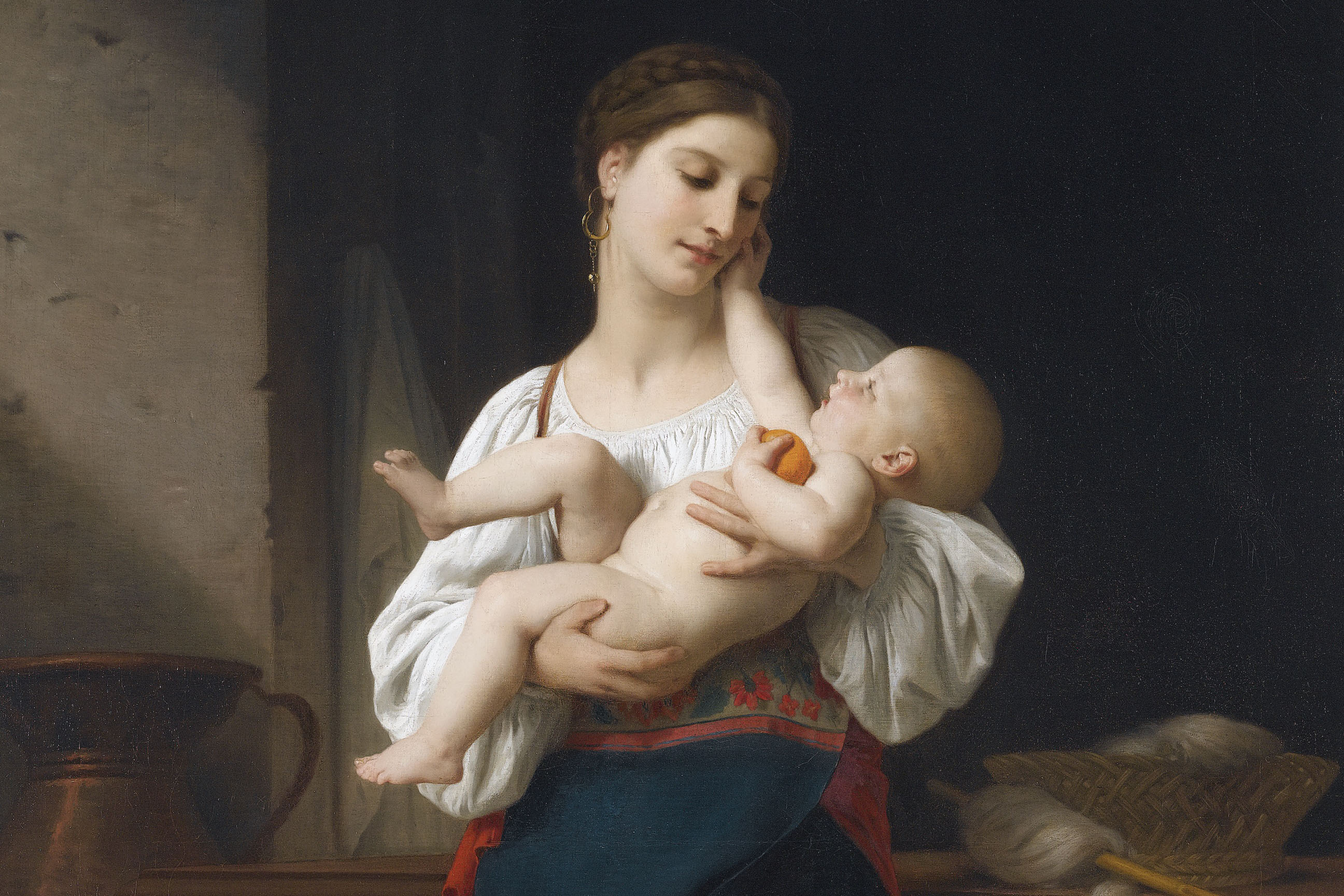
Motherhood in the 19th and early 20th centuries was publicly revered and idealized. Several songs of America’s Civil War (like “Just Before the Battle, Mother”), manuals for domestic living, and popular novels all sang the praises of mothers, though fiction also provided many instances of mothers who failed to meet these ideals. It was only natural that poets joined this chorus.
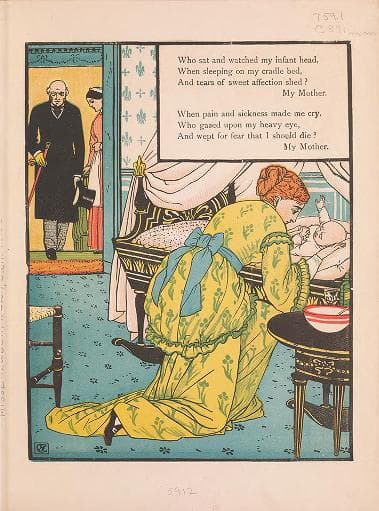
When pain and sickness made me cry,
Who gazed upon my heavy eye,
And wept for fear that I should die?
My Mother.
Who dress’d my doll in clothes so gay,
And taught me pretty how to play,
And minded all I had to say?
My Mother.
Who ran to help me when I fell,
And would some pretty story tell,
Or kiss the place to make it well?
My Mother.
Who taught my infant lips to pray,
And love God’s holy book and day,
And walk in Wisdom’s pleasant way?
My Mother.
The next poem emphasizes the unique place of a mother in the world.
Hundreds of stars in the pretty sky,
Hundreds of shells on the shore together,
Hundreds of birds that go singing by,
Hundreds of bees in the sunny weather,
Hundreds of dewdrops to greet the dawn,
Hundreds of lambs in the purple clover,
Hundreds of butterflies on the lawn—
But only one mother the wide world over.
The Light in the Window
Many such poems, of course, were aimed at older children and adults. Though Margaret Widdemer was born late in the 19th century and died in 1978, her poem “ The Watcher” is firmly rooted in her youth. Despite its language and age, here is a scenario familiar to all parents who ever stayed awake into the night awaiting the return of their daughters and sons from a prom date or an evening out with friends.
She always leaned to watch for us,
Anxious if we were late,
In winter by the window,
In summer by the gate;
And though we mocked her tenderly,
Who had such foolish care,
The long way home would seem more safe
Because she waited there.
Her thoughts were all so full of us—
She never could forget!
And so I think that where she is
She must be watching yet.
Waiting till we come home to her,
Anxious if we are late—
Watching from Heaven’s window,
Leaning from Heaven’s gate.
Sometimes, too, these same young people who gently mock their mothers find themselves entangled in some enormous mistake they’ve made or some danger they hadn’t foreseen, and wish for those days when they were children and all responsibility lay in the hands of their mothers.
Over my heart, in the days that are flown,
No love like mother-love ever has shone;
No other worship abides and endures,—
Faithful, unselfish, and patient like yours:
None like a mother can charm away pain
From the sick soul and the world-weary brain.
Slumber’s soft calms o'er my heavy lids creep;—
Rock me to sleep, mother,—rock me to sleep!
Mother, dear mother, the years have been long
Since I last listened your lullaby song:
Sing, then, and unto my soul it shall seem
Womanhood’s years have been only a dream.
Clasped to your heart in a loving embrace,
With your light lashes just sweeping my face,
Never hereafter to wake or to weep;—
Rock me to sleep, mother, — rock me to sleep!
Mom in the Mirror
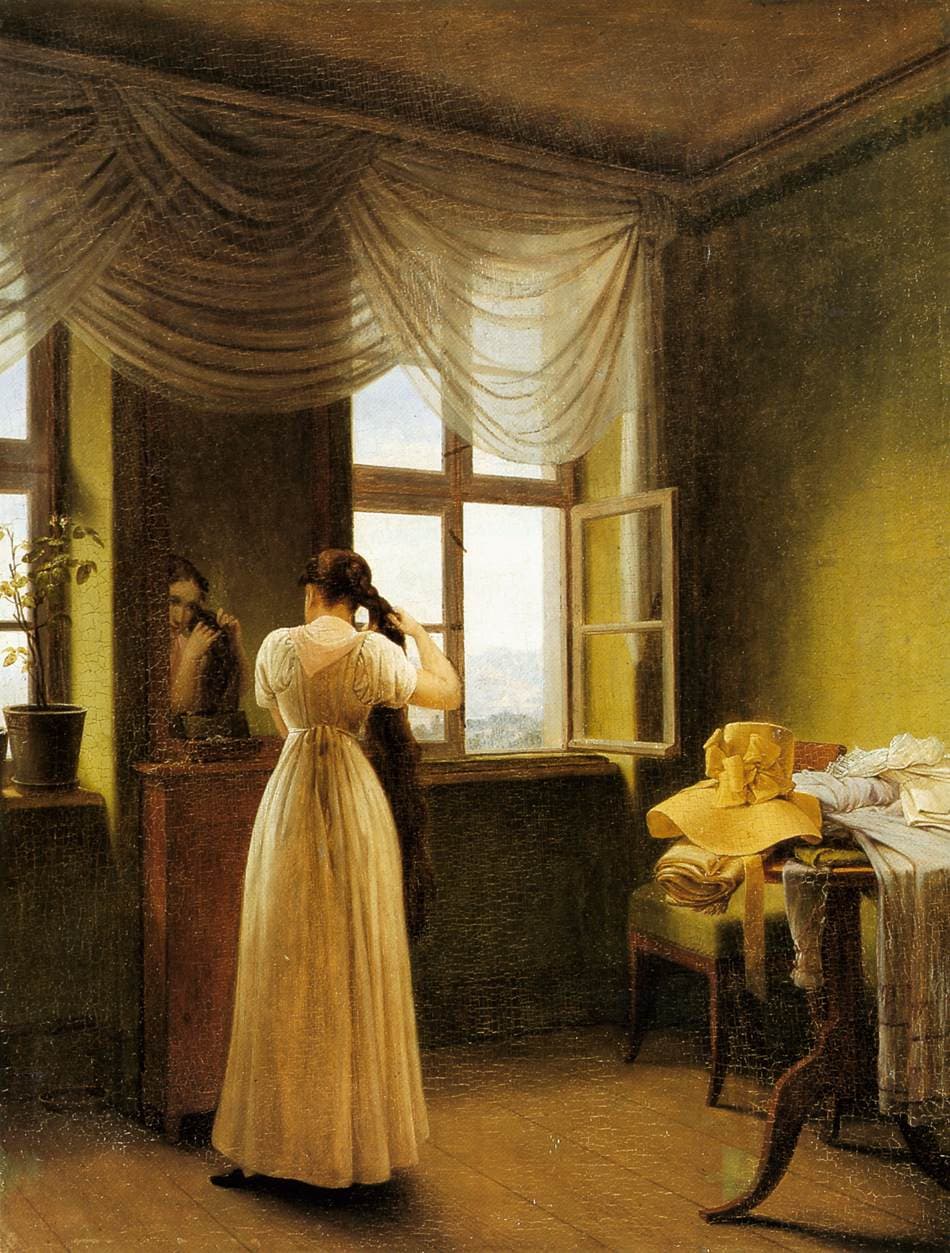
Do you know that your soul is of my soul such a part,
That you seem to be fibre and core of my heart?
None other can pain me as you, dear, can do,
None other can please me or praise me as you.
Remember the world will be quick with its blame
If shadow or stain ever darken your name.
“Like mother, like son” is a saying so true
The world will judge largely “the mother” by you.
By yours then the task, if task it shall be,
To force the proud world to do homage to me.
Be sure it will say, when its verdict you’ve won,
“She reaped as she sowed. Lo! this is her son.”
In “The Best Loved Poems of the American People,” we find Will S. Adkin’s “If I Only Was the Fellow,” another piece of verse urging readers to live up to their mothers’ aspirations for them. A search online reveals two versions of the poem and nothing about the life of the poet. Judging by the language, it’s clear he was an American and likely born in the 19th century. Here is the poem in its entirety, giving us the flavor of the spoken word of the day and at the end a lesson that sticks.
While walking down a crowded
City street the other day,
I heard a little urchin
To a comrade turn and say,
“Say, Chimmey, lemme tell youse,
I’d be happy as a clam
If I only was de feller dat
Me mudder t’inks I am.
“She t’inks I am a wonder,
An she knows her little lad
Could never mix wit’ nuttin’
Dat was ugly, mean or bad.
Oh, lot o’times I sit and t’ink
How nice, ‘twould be, gee whiz!
If a feller was de feller
Dat his mudder t’inks he is.”
My friends, be yours a life of toil
Or undiluted joy,
You can learn a wholesome lesson
From that small, untutored boy.
Don’t aim to be an earthy saint,
With eyes fixed on a star:
Just try to be the fellow that
Your mother thinks you are.
The Best Mother’s Day Gift Ever
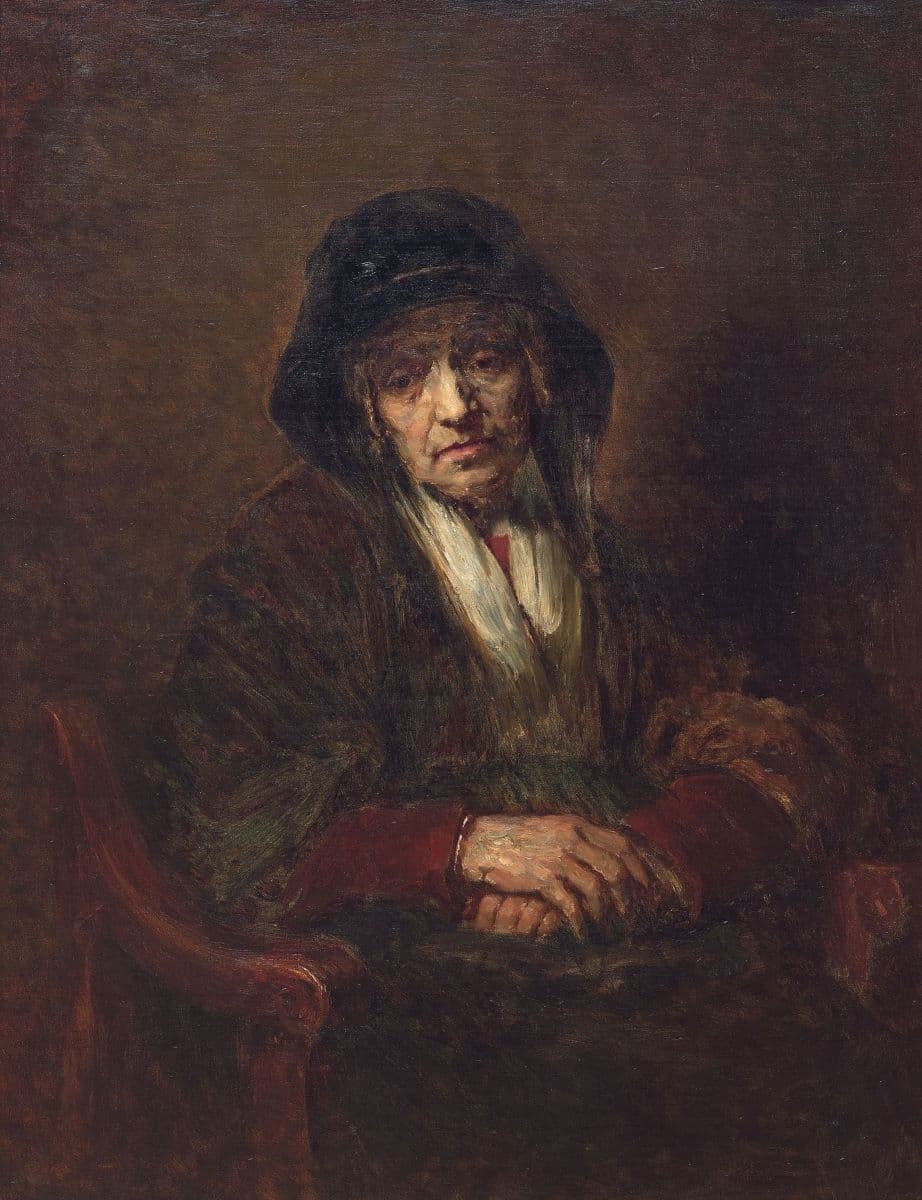
“She’s somebody’s mother, boys, you know,
For all she’s aged and poor and slow.
“And I hope some fellow will lend a hand
To help my mother, you understand,
“If ever she’s poor and old and gray,
When her own dear boy is far away.”
The boys move along. Meanwhile, we have this final glimpse of the old woman:
And “somebody’s mother” bowed low her head
In her home that night, and the prayer she said
Was “God be kind to the noble boy,
Who is somebody’s son, and pride and joy!”
Sentimental? You bet. But here’s the message for Mother’s Day. Whether they are deceased or alive, we honor our mothers by our words and actions. It’s a simple equation: When we do ourselves proud, we do our mothers—and fathers—proud. If our mothers were cruel, or cold, or absent in our lives, our honor and pride are doubled when we behave virtuously, for we have exchanged their negative example for a positive one.