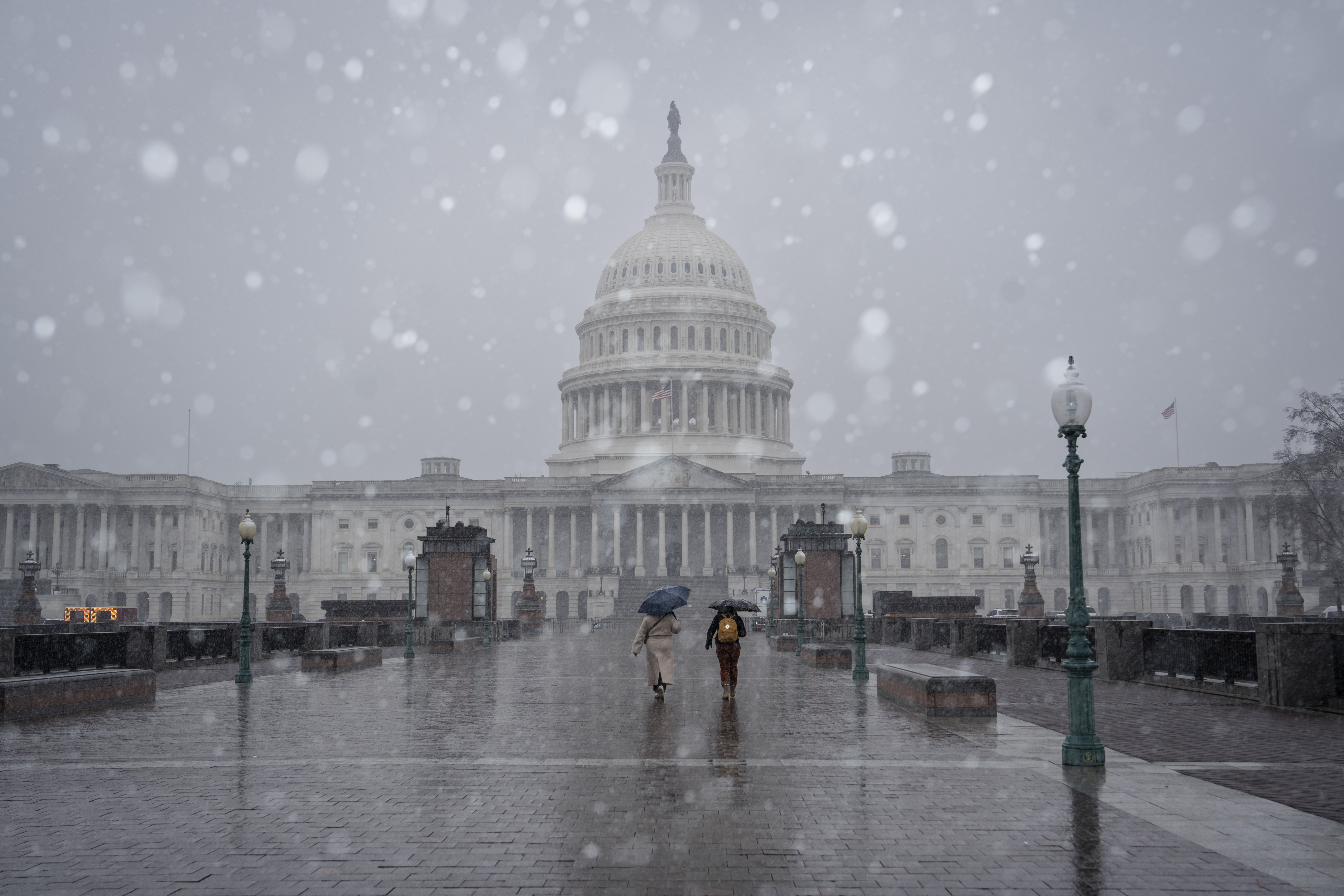

The Senate on March 12 failed to advance legislation to fund the Department of Homeland Security (DHS), extending the agency’s partial shutdown into its 27th day.
The procedural vote tally was 51–46, short of the 60 votes required to overcome a filibuster. Lawmakers also failed to move the legislation forward during a previous vote on Feb. 24. Major DHS enforcement components—including Customs and Border Protection and Immigration and Customs Enforcement (ICE)—remain unaffected because they secured funding through 2029 under 2025’s tax-and-spending package.
However, other parts of the department have been impacted by the lapse in funding, including the Federal Emergency Management Agency, the Coast Guard, and the Transportation Security Administration.
Although roughly 96 percent of the federal government has received funding, DHS has remained partially shut down since Feb. 13.
Democratic lawmakers have said they will not support a DHS funding bill unless changes are made to immigration enforcement policies, particularly those related to ICE operations.
The bill would have provided $5.7 billion for the Federal Emergency Management Agency, an increase of $873 million over fiscal year 2025 levels, excluding the $26.367 billion allocated for the Disaster Relief Fund.
It also proposed $3.25 billion for the U.S. Secret Service, including $44 million for planning and coordinating upcoming national special security events such as the 2026 FIFA World Cup, America250, and the 2028 Summer and Paralympic Games in Los Angeles.
Under the measure, the Transportation Security Administration would receive $7.96 billion, including $300 million for checkpoint property screening systems. The bill would also fully fund exit-lane staffing, the Law Enforcement Officer Reimbursement Program, and the Canine Reimbursement Program, while setting aside $13.9 million to reimburse airports for installing explosive detection systems.
The legislation would also have allocated $2.6 billion to the Cybersecurity and Infrastructure Security Agency, including $40 million to continue election security initiatives funded in fiscal year 2024.
It would also provide $122.9 million for U.S. Citizenship and Immigration Services, including $112 million for the E-Verify program and $10 million aimed at reducing application backlogs.
Democrats outlined 10 conditions for backing the legislation following the fatal shootings in Minneapolis of protesters Renee Good and Alex Pretti, which involved immigration agents.
Among the proposals are limiting enforcement to targeted operations, requiring judicial warrants before entering private property, strengthening warrant standards, verifying citizenship status before placing individuals in immigration detention, and requiring agents to clearly identify themselves.
Additional proposals would require officers to display their agency affiliations, last names, and unique identification numbers and to provide that information verbally upon request. Democrats also sought to prohibit immigration enforcement actions at “sensitive locations,” including churches, schools, child care facilities, courts, medical facilities, and polling places.
The White House and Republican lawmakers have rejected conditions outlined by Democrats. On Feb. 18, the White House called a Democratic counterproposal to fund DHS “very unserious.”
DHS has relied on administrative warrants in enforcement operations. Federal immigration officers are not currently required to wear body cameras, although outgoing DHS Secretary Kristi Noem recently said that agents operating in Minneapolis would begin using them.
Border policy adviser Tom Homan has defended agents’ practice of wearing masks, which Democrats have criticized.
“I don’t like the masks either, but because threats against ICE officers are up over 1,500 percent [and] actual assaults and threats are up over 8,000 percent, these men and women have to protect themselves,” Homan said during a February interview with Ed O’Keefe on CBS’s “Face the Nation.”
Homan has also said federal law permits the use of administrative warrants.