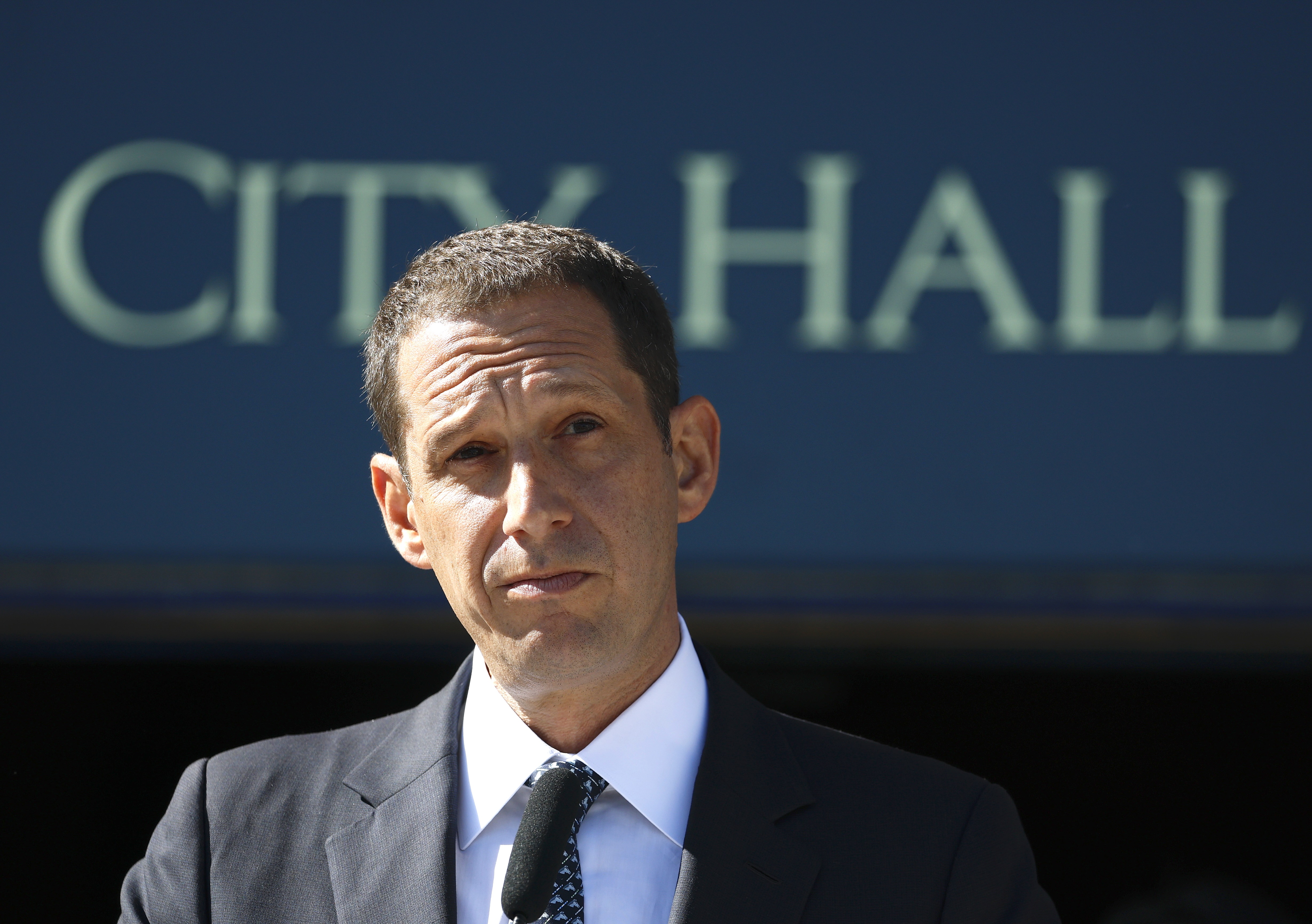

San Francisco voters passed a package of charter amendments proposed by Mayor Daniel Lurie, giving his office more power to manage the city.
Three of the measures—D, E, and F, were proposed by Lurie, while a fourth, Measure A, was initiated by Board of Supervisors president Rafael Mandelman. This measure changes the charter relating to city commissions and departments, passed with 63.4 percent support.
Measure D, which made changes to the ballot measure process, passed with 54.8 percent of the votes. Measure E, which changes the city administrator’s authority as well as city contracting, passed with 64.2 percent of the votes. Measure F, which makes changes to executive branch management, passed with 59.9 percent.
The package of propositions A, D, E and F, is to “improve neighborhood services, speed up permitting and reduce wasteful spending,” according to the ballot argument Lurie submitted to the Department of Elections.
“Every dollar City Hall wastes and every month a permit sits on a desk shows up in the price of a home,” Lurie said in a statement on Nov. 4. “These reforms give us the tools to build faster, spend smarter, and deliver results San Franciscans can see.”
The measures are “the most significant changes to how City Hall operates since the City Charter was last rewritten in 1995,” the statement said.
Proposition A, which Lurie backed, would eliminate, consolidate, and change the function or authority of certain commissions or boards in San Francisco. Nine commissions will move from charter to municipal code, and eight will be eliminated or merged.
Proposition D requires at least six of 11 supervisors’ votes, or signatures from 8 percent of registered voters, to place measures on the ballot.
Previously, four supervisors, the mayor alone, or 2 percent of voters’ signatures were enough to put measures on the ballot.
Proposition D removes the mayor’s sole authority to place measures on the ballot.
“San Francisco is the only city in California that allows these low thresholds—and that’s why we have the longest and most confusing ballots in the state.” Lurie wrote in the Proposition D text.
Since 1996, the city’s voters have voted on 418 ballot measures as of April this year, according to an April 15 report by a charter reform working group created at Lurie and Mandelman’s request.
Citizens have weighed 152 charter amendments from 1996 through 2024, which has resulted in a 538-page charter “packed with political fights that played out at the ballot box,” according to an analysis by GrowSF, a nonprofit organization that supports Lurie.
“Those changes made the city harder to govern and less responsive to residents’ needs,” GrowSF said, noting that among the 152 charter amendments in the same period, the Board of Supervisors placed 147.
Opponents argued that Proposition D’s requirement of about 42,500 signatures for a citizen initiative will price out neighborhood groups, labor unions, and community advocates.
San Francisco Labor Council, San Francisco Senior & Disability Action, and United Educators of San Francisco were among the groups that opposed Proposition D.
“Wealthy interests can afford to pay one million dollars to collect 42,500 signatures,” opponents wrote, “We’ll lose our voice in the democratic process.”
Proposition E would give the City Administrator more authority over purchasing rules, raise the threshold for supervisor approval of contracts from $10 million to $25 million, and extend the City Administrator’s term from five years to 10 years.
San Francisco spends more than $6 billion on contracting each year.
“It’s a necessary step to end waste, fraud, and ballooning costs that frankly should have been done decades ago.” Lurie wrote in the rebuttal.
“Under our current system, multiple city employees, including 6 department heads, were investigated for running contracting schemes that landed some of them in prison.”
Proposition F would give the mayor more power to restructure the executive branch, including rearranging or combining departments; hire and fire most department heads; and remove his appointees to city oversight commissions without cause.
The proposition would break the checks and balances the Board of Supervisors and Oversight Commissions provide, Small Business Forward wrote in its official opposition document.
“Even if you do like this Mayor and trust this Mayor to have your interests in mind, you may not like or trust the next Mayor or the one after that,” the document said.