
U.S. Secretary of State Marco Rubio spoke by phone with European Commission President Ursula von der Leyen on June 9 about efforts to contain the Ebola outbreak in Congo and Uganda.
The talk comes ahead of the World Cup, which the United States will co-host with Canada and Mexico from June 11 to July 19. Eleven of the tournament’s 16 host cities will be in the United States.
During his call with von der Leyen, Rubio sought coordination with Europe to respond to the Ebola outbreak, which has rapidly evolved in Congo and crossed into Uganda, according to a U.S. State Department readout.
Rubio conveyed to the EU commissioner that Washington’s “highest priority” would be safeguarding public health and “preventing this Ebola outbreak from reaching our shores.”
The European Commission has not yet publicly commented on Rubio’s phone conversation with von der Leyen.
A State Department spokesperson told The Epoch Times by email that the United States is “engaging diplomatically” with other countries to coordinate Ebola response efforts in order to protect U.S. citizens, visitors, and athletes traveling for the World Cup.
“The United States has stepped up. Now the world must do more to step up as well. Other countries must do their part to ensure this outbreak does not spread further,” the spokesperson said. “Action is required now. That includes financial contributions and implementing commonsense restrictions on travel from the affected area.”
The World Health Organization (WHO) declared the Ebola outbreak a public health emergency of international concern on May 17. The outbreak is caused by the rare Bundibugyo strain, for which no approved vaccine or treatment exists.
Rubio told reporters last month that U.S. authorities “cannot and will not allow any cases of Ebola to enter the United States.”
“We’ve surged assistance to make sure that [the outbreak] is being contained there,” Rubio said of the Ebola outbreak in Congo. “And obviously multiple agencies involved here are also very involved in tracking people just to make sure that nobody comes into this country that has Ebola and creates a problem for us.”
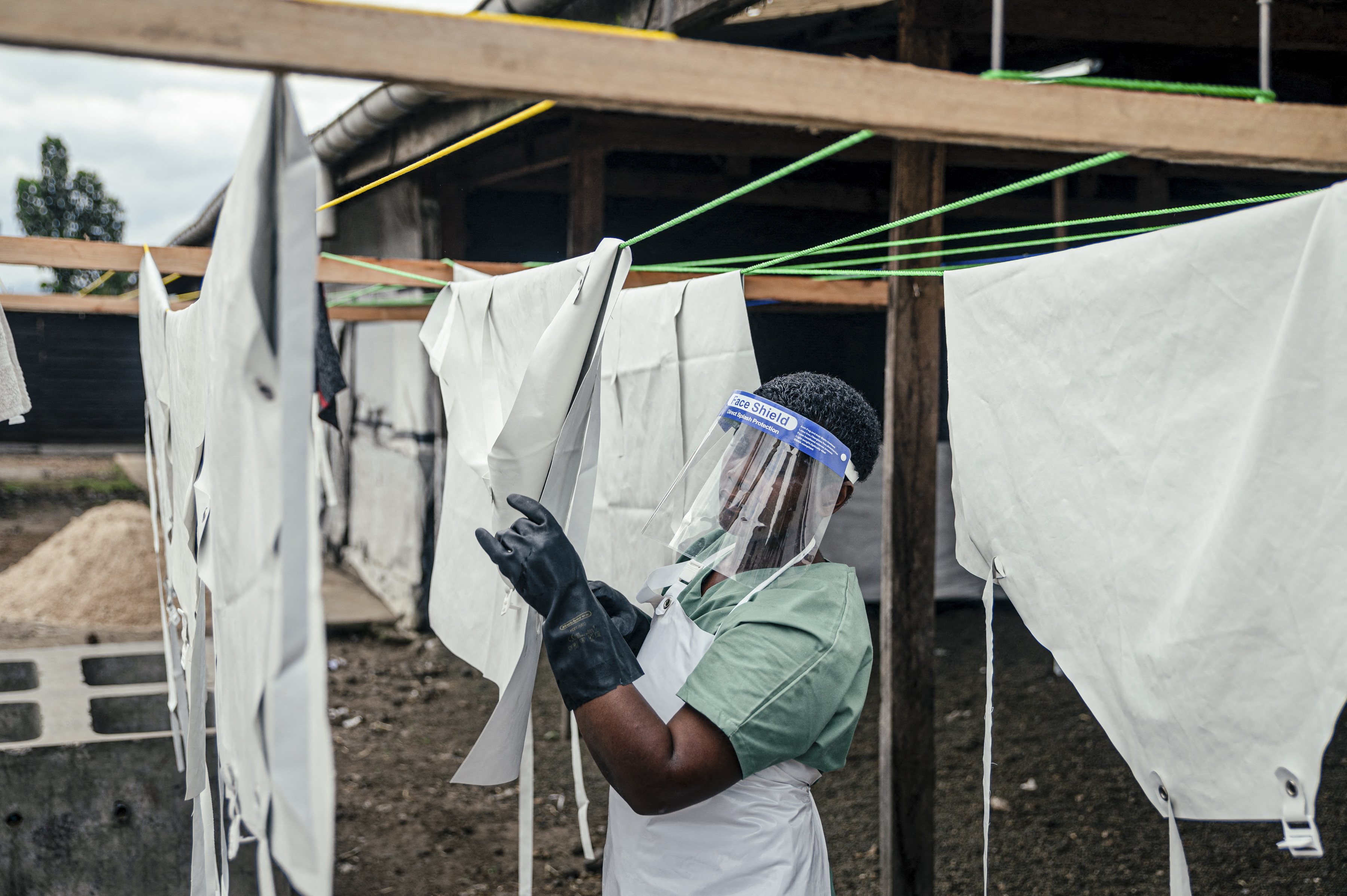
The State Department said on June 5 that it has committed more than $200 million to the Ebola response, which aimed at supporting contact tracing, border and point-of-entry screening, response efforts at dozens of health clinics in affected areas, and community education to combat misinformation about how Ebola spreads.
The funding comes on top of $350 million in response efforts and other humanitarian assistance for Congo, Uganda, and South Sudan, according to the department, making the United States the largest financial contributor to the Ebola response.
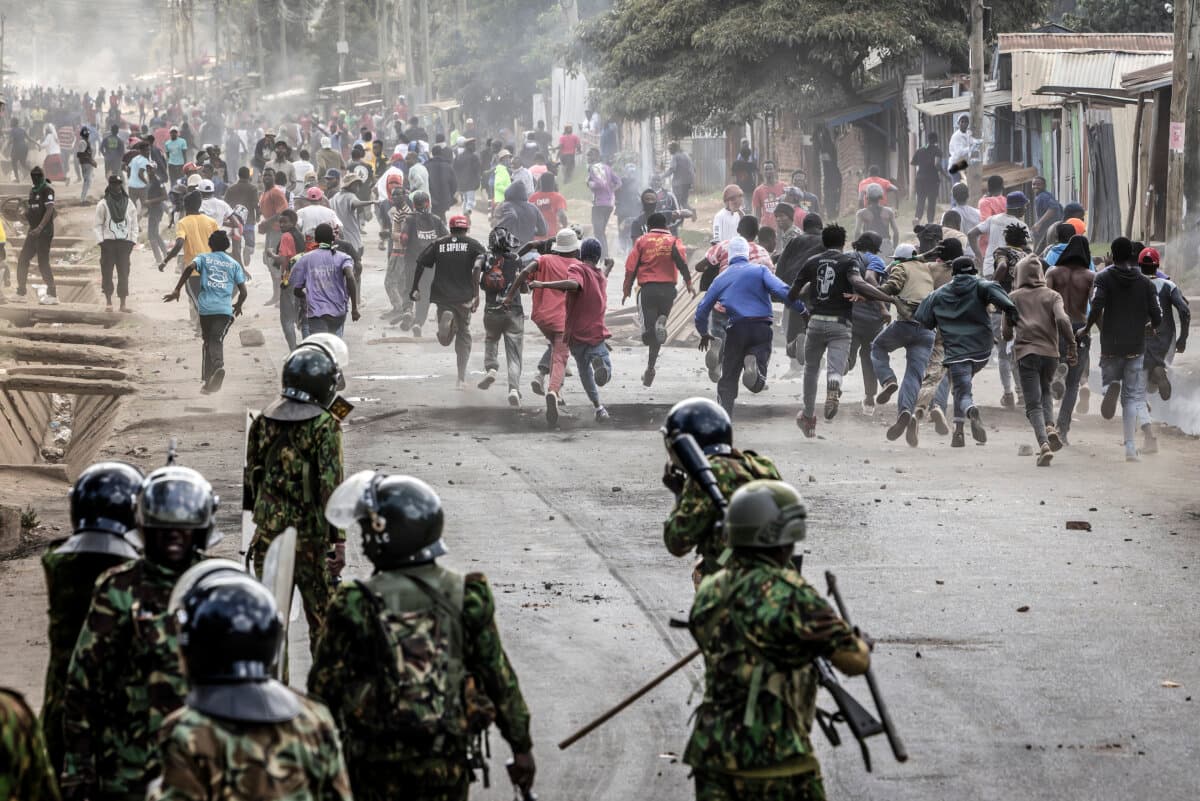
Demonstrators run for cover during clashes with Kenyan police officers at a demonstration against a controversial U.S.-built Ebola quarantine center slated to begin operations at Laikipia Air Base in Nairobi, Kenya, on June 9, 2026. (Luis Tato / AFP via Getty Images)
The outbreak has resulted in 598 confirmed cases, including 115 deaths in Congo as of June 8. Uganda has reported 19 confirmed cases, including two deaths, according to the U.S. Centers for Disease Control and Prevention.
One U.S. national, Dr. Peter Stafford, who was working in Congo, contracted the virus and was transferred to Germany for treatment in May. He was discharged from the hospital on June 6 after recovering.
Ebola is caused by infection with an orthoebolavirus and spreads through contact with the blood or bodily fluids of infected people, according to the WHO.
The Bundibugyo strain, a rare form of Ebola that can be transmitted between humans, previously caused outbreaks in Uganda in 2007 and in Congo in 2012, the CDC stated on its website.