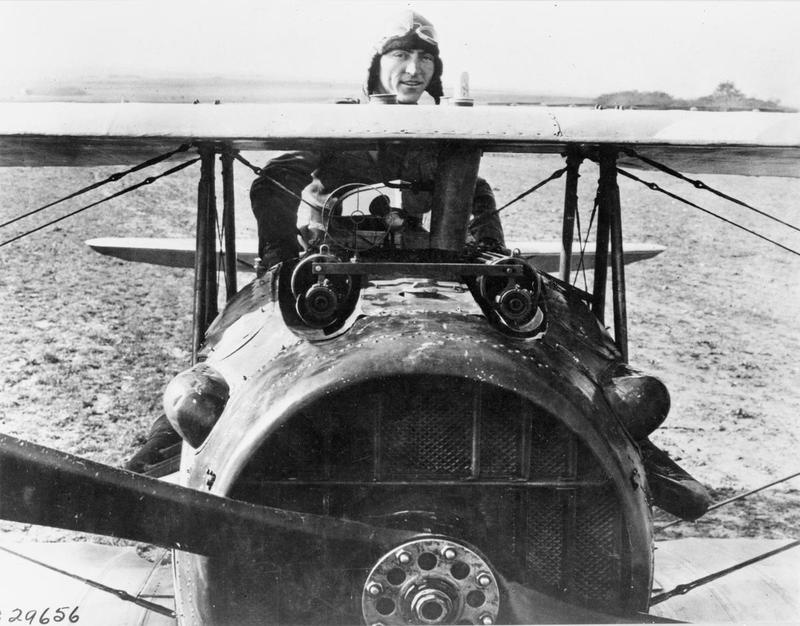
In October 1942, 52-year-old Edward “Eddie” Rickenbacker and his aide, Col. Hans C. Adamson, boarded a Boeing B-17 in Hawaii. They were accompanied by a sergeant returning from sickbay to his outfit in Australia and five crew members commanded by Capt. William Cherry. Secretary of War Henry Stimson and Gen. Henry “Hap” Arnold had asked Rickenbacker to make the trip and investigate the combat readiness of Army Air Force units in the Pacific.
In his younger days, Rickenbacker had won fame and applause for his daredevil exploits, first as a race car driver and then as a pilot in World War I, where he shot down 26 German aircraft, becoming America’s top ace and a recipient of the nation’s Medal of Honor. Torn between a career in the automobile industry and aviation, he eventually settled on the latter and became president of Eastern Airlines. His knowledge of aircraft and his connections to the military made him an ideal candidate for evaluating the readiness of the Army Air Force to fight the Japanese.
Rickenbacker had faced death on land and in air. Now he would face it in the water, where his enemy was the most implacable of adversaries: Mother Nature.
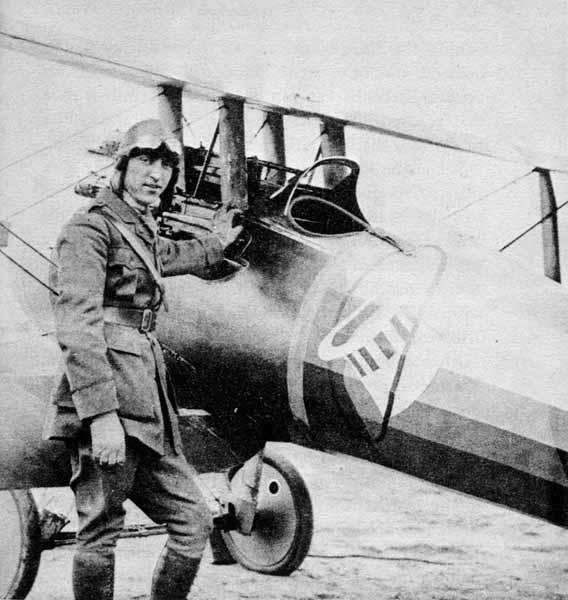
Eddie Rickenbacker standing by a Nieuport 28, the plane he flew. (Public Domain)
Lost and Down
Rickenbacker and the B-17 were bound for Canton Island, a coral atoll approximately 1,800 miles from Hawaii. There, the plane would refuel before completing its journey to Australia. But the estimated time of arrival at Canton found Capt. Che
rry flying over nothing but ocean. Faulty equipment and possibly an inaccurate reading of wind speeds before departure had drawn the aircraft off course, and now they were lost and running out of fuel.The men aboard prepared for the inevitable. They arranged pillows and mattresses to absorb some of the shock of the coming crash, laid out a stock of provisions and water, and readied the plane’s three rafts—two holding five men and the other held two—for launching. One of the crewmen grabbed two fishing lines. Rickenbacker, who was still dressed in a business suit and hat, snatched up a 60-foot-long length of line. All knew they would have just a minute or less to make their exit if they survived the crash.
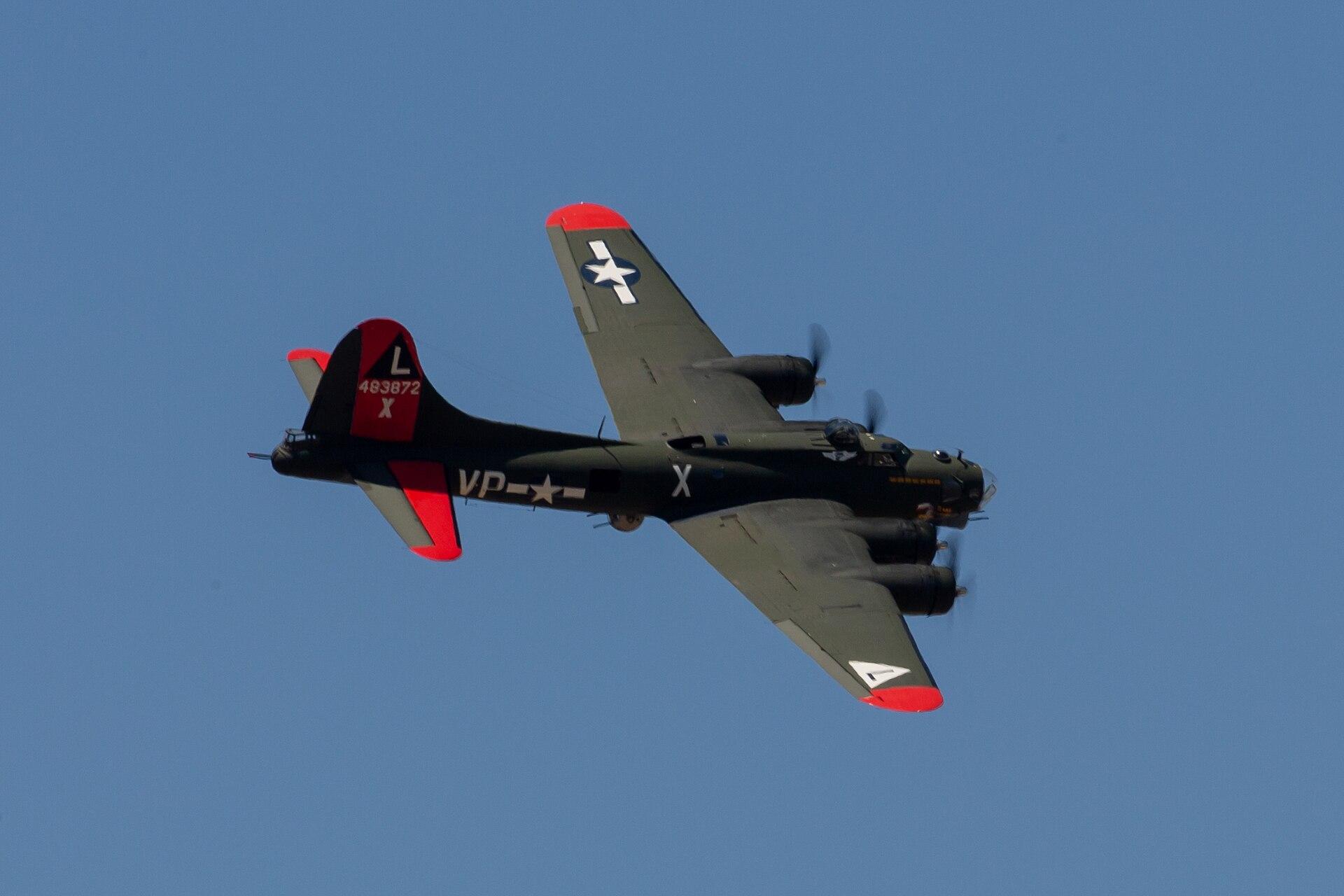
Rickenbacker and his seven comrades made a water landing in a Boeing B-17 plane. (Public Domain)
Though Cherry’s expert landing kept the plane afloat for at least a minute, several men suffered cuts, abrasions, and other injuries because of the hard smackdown into the water. All, wearing life jackets, escaped onto the rafts and pushed away from the B-17 before it sank. But the water and provisions went down with the ship, leaving the eight men with only four oranges as sustenance.
Men Against the Sea
In a vivid account “Eddie Rickenbacker and Six Other People Survive a B-17 Crash and Three Weeks Lost in the Pacific Ocean,” writer Billy A. Rea gives us the grim details of the ordeal these men endured. For starters, the larger rafts were made for a maximum of three men, not five. The lack of water and food would test them to the limits of their strength. The salt water and fierce sun left them lacerated with sores and cracked skin that became open wounds. Sharks circled the rafts night and day. Perhaps worst of all was the uncertainty of whether some American plane or ship would
eventually rescue them.Rickenbacker became the unofficial leader for this crew of castaways. The rope he’d brought allowed the men to bind the three rafts together. The men designated him as the dispenser of the oranges, which they shared over the next several days. When sympathy failed to inspire the men, Rickenbacker resorted to harsh criticism as a way of overcoming their despair and firing them up. Billy A. Rea wrote, “Several of the men, Rickenbacker later learned, had sworn an oath that they would continue living, hoping for the pleasure of burying him at sea.”
To help keep up their spirits, Rickenbacker gathered the men daily, sometimes twice a day, to sing hymns and pray together. In his book “One Nation Aways Under God,” Senator Tim Scott (R-S.C.) wrote that Rickenbacker “encouraged them to hold on, reminding them that God had not abandoned them, even in the face of such overwhelming odds.”
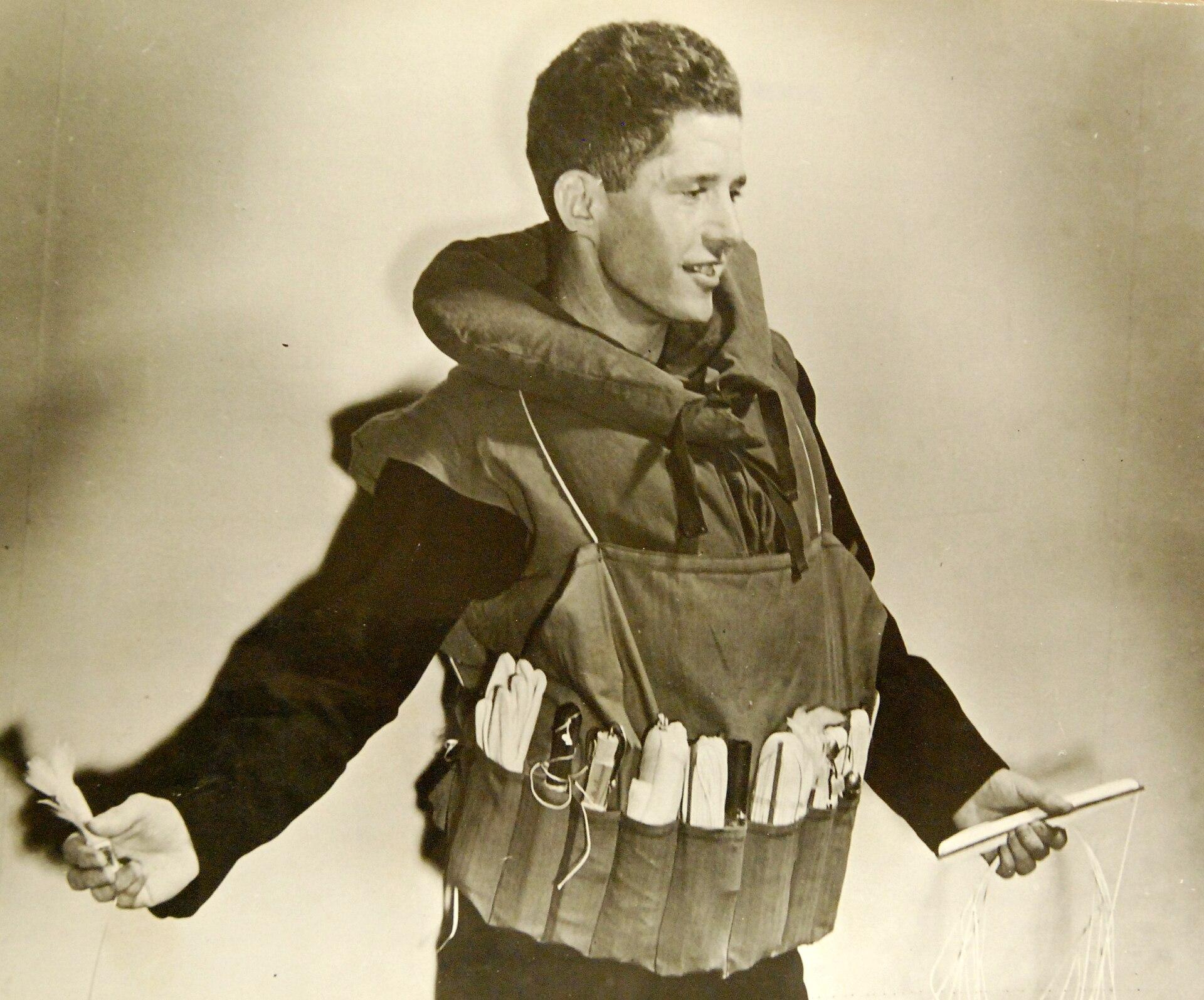
It was because of this brutal ordeal that fishing kits were added to Navy lifeboats. National Museum of the U.S. Navy. Library of Congress. (Public Domain)
A Bird, Rainfall, and Rescue
A small miracle bought the men some time. Rickenbacker was resting with his battered hat pulled over his eyes when a gull landed on his head. Moving slowly, he reached up, seized it by the legs, and killed it. The men ate every morsel of the dead bird, including its bones, and used its intestines as bait to catch fish. Later, when their dehydration had become almost unbearable, a squall dumped water over the three rafts, which the men collected by soaking it up with everything from handkerchiefs to shirts and wringing it out into containers.These respites from thirst and hunger notwithstanding, their state of health worsened. Sgt. Alexander Kaczmarczyk, the airman heading back to duty after a long stint in sickbay, weakened with every passing day and finally died. To ensure that he had indeed passed, Rickenbacker insisted that they wait until daylight before committing his body to the sea.
On Day 20 of their ordeal, the men decided to separate the rafts in hopes of improving their chances of rescue. Capt. Cherry set out alone in the two-man raft, and three other men followed his example in one of the larger rafts, leaving Rickenbacker with the two men too weak to even raise their heads and drink.
The next day, two U.S. float planes found Rickenbacker’s raft. He waved his old hat at them, the only member of his small crew with the strength to do so. Miraculously, both Capt. Cherry and the three men in the other raft were rescued about the same time as well. Rickenbacker was so weak that he had to be carried aboard the rescuing ship.
All seven men received treatment and recovered from their nightmarish days at sea.
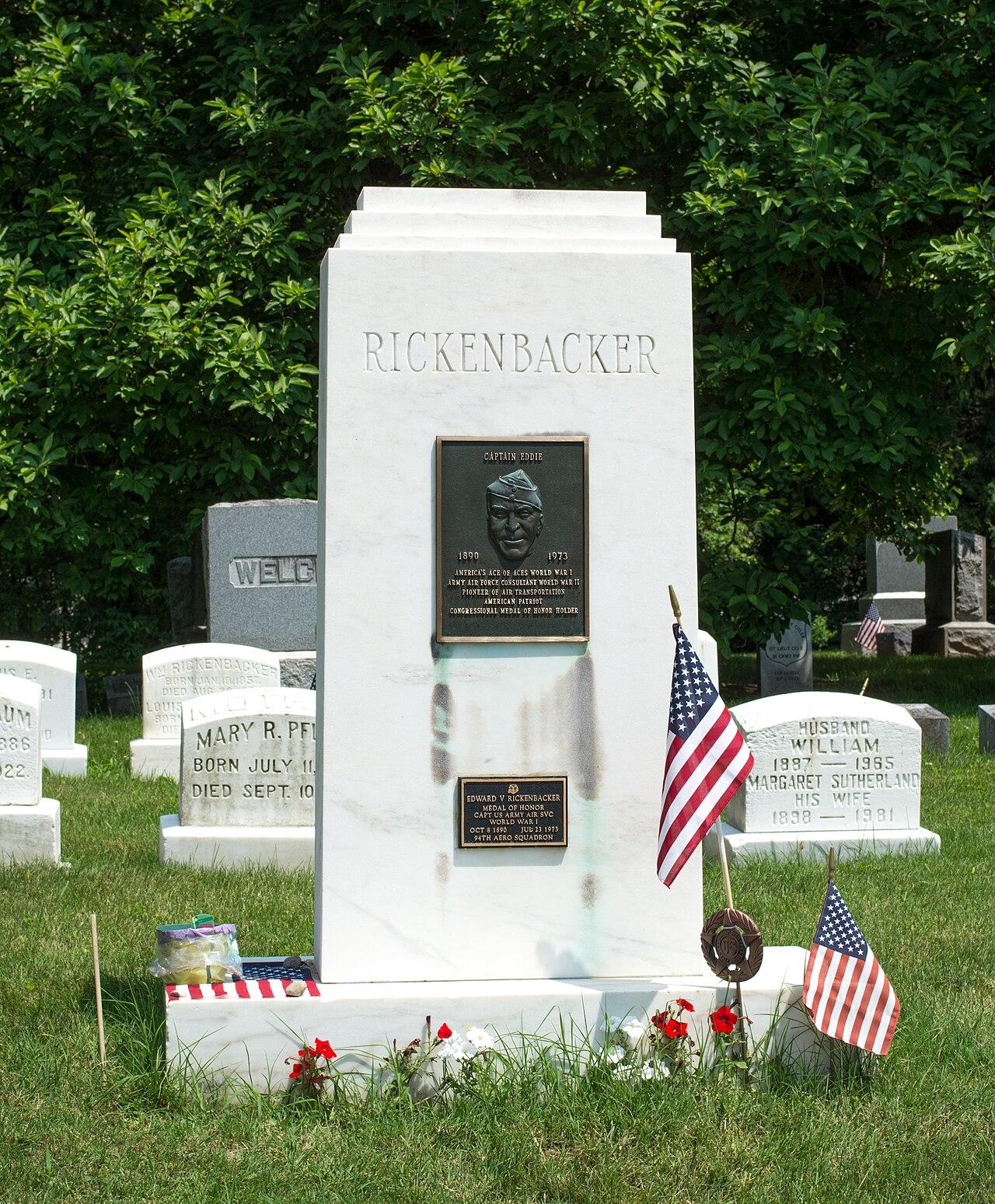
Rickenbacker survived the water landing and lived to the age of 82. He is buried in Columbus, Ohio. (Public Domain)
Though long a man of faith, his epic survival left Rickenbacker a changed man. As Senator Scott wrote, in his autobiography Rickenbacker wrote, “From the time of the Pacific ordeal, my faith in God was an active, open part of my life.” Coupled with his indomitable determination to survive and to lead the others to safety, that faith earned him the nickname “the Great Indestructible.”
What arts and culture topics would you like us to cover? Please email ideas or feedback to features@epochtimes.nyc