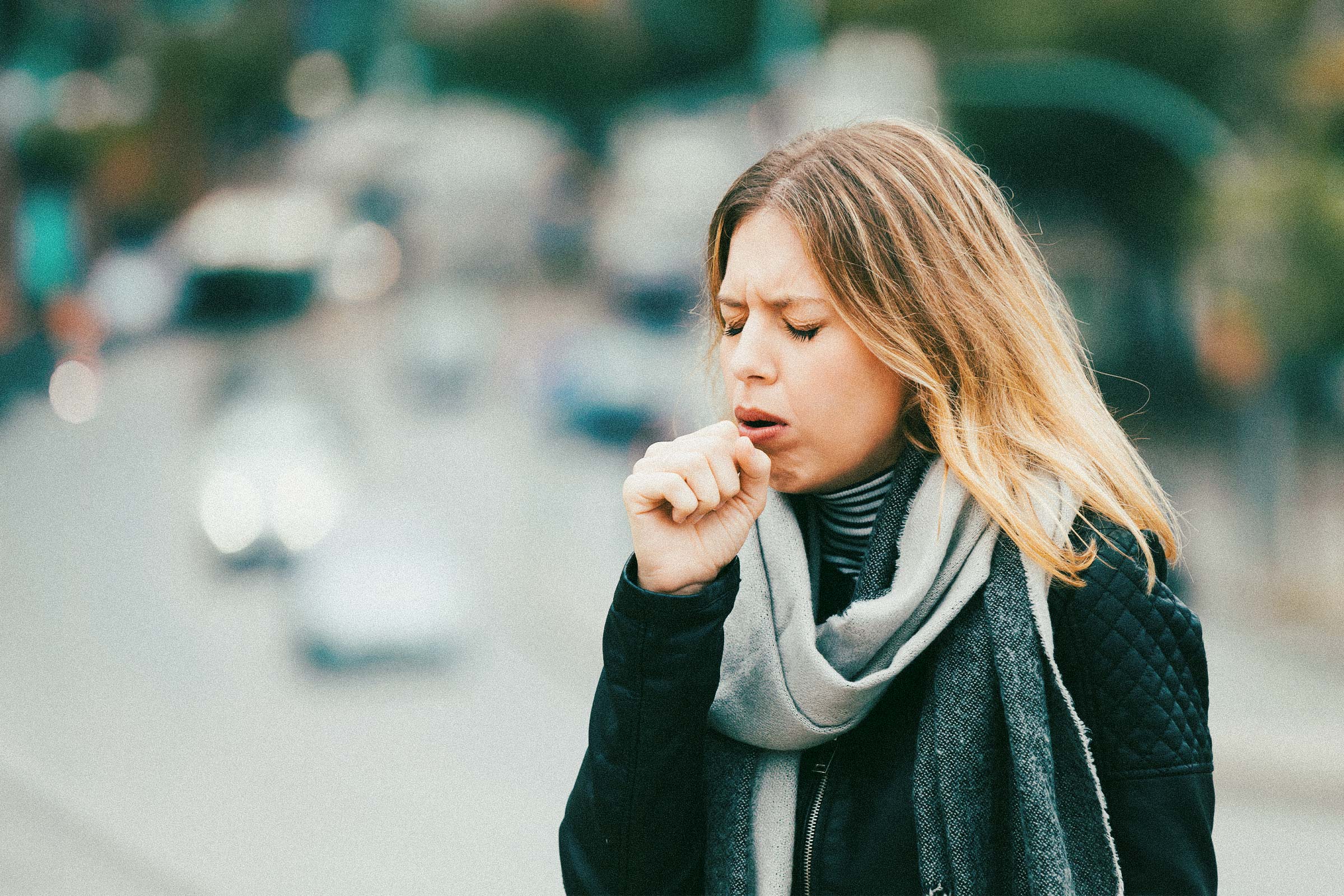
Your phlegm may reflect an underlying imbalance in the body.
Everyone knows that phlegm is the mucus produced during coughing. However, for traditional Chinese medicine (TCM) physicians, it’s more than that. It is a waste that accumulates throughout the body.
Lee Ying-Ta, a physician at Tzuhang Chinese Medicine Clinic in Taiwan, told The Epoch Times that in TCM theory, phlegm is considered a byproduct formed when the body’s fluid metabolism becomes imbalanced.
Types of Phlegm
Hu Naiwen, a TCM practitioner in Taiwan and a contributor to The Epoch Times, said that TCM considers phlegm an important factor in the development of illness.
However, phlegm should not be eliminated entirely. Without it, the trachea and bronchi may become too dry, potentially leading to a dry cough. Phlegm also plays an important role in clearing the respiratory tract.
The color and texture of phlegm often reflect different types of internal imbalance. Broadly, it can be classified into the following categories:
- Cold Phlegm: Usually white in color and commonly associated with internal cold conditions. It also happens with colds accompanied by chills and loose stools.
- Heat Phlegm: Typically yellow or green, often occurring during infections, or the type of cold that comes with dry, sore throat, thirst, dry cough, and fever.
- Deficiency Phlegm: Foamy or thin in consistency, usually associated with physical weakness, long-term cough, or slow metabolism.
- Excess Phlegm: Thicker and sometimes difficult to cough up, often linked to a buildup of metabolic waste in the body.
When phlegm accumulates in the lungs, it may cause symptoms such as coughing with phlegm, nasal congestion, or a runny nose. If it stagnates in the stomach, it may lead to digestive discomfort such as vomiting or bloating. When phlegm accumulates in the joints, it may result in sensations of heaviness in the limbs or numbness.
Treatment Based on Body Type
Lee cited a case of a woman in her 50s with persistent phlegm due to allergic rhinitis, which appeared thin, clear, and foamy. Despite nearly two months of hospital treatment, her symptoms did not improve.
She later sought help from a TCM practitioner. After receiving herbal medicine tailored to her body type, her symptoms improved significantly over time.
Such cases are quite common in clinical practice, Lee said. Patients range from children to middle-aged and older adults, with children and women outnumbering men.
Practitioners first identify the type of phlegm before selecting appropriate therapies such as herbal medicine or acupuncture, Hu noted. The specific medications and dosages are then adjusted according to each patient’s individual situation.
TCM emphasizes “treatment based on pattern identification,” meaning treatment strategies are chosen according to each person’s body type and the underlying cause.
Cold phlegm is treated with warming methods, while heat phlegm is treated with clearing methods. Deficiency phlegm requires tonifying methods, whereas excess phlegm requires reducing methods.
One of the classical herbal formulas for reducing phlegm is Er Chen Decoction. The formula includes two main ingredients: aged Pinellia rhizome (ban xia) and peel (chen pi). A 2020 study noted that the active compounds in these phlegm-eliminating herbs may help inhibit excessive airway mucin secretion.
When symptoms of excessive phlegm occur, seeking early medical care and appropriate treatment may help prevent coughing from worsening and reduce the accumulation of phlegm in the lungs, which could lead to inflammation.
Stewed Pear With Rock Sugar
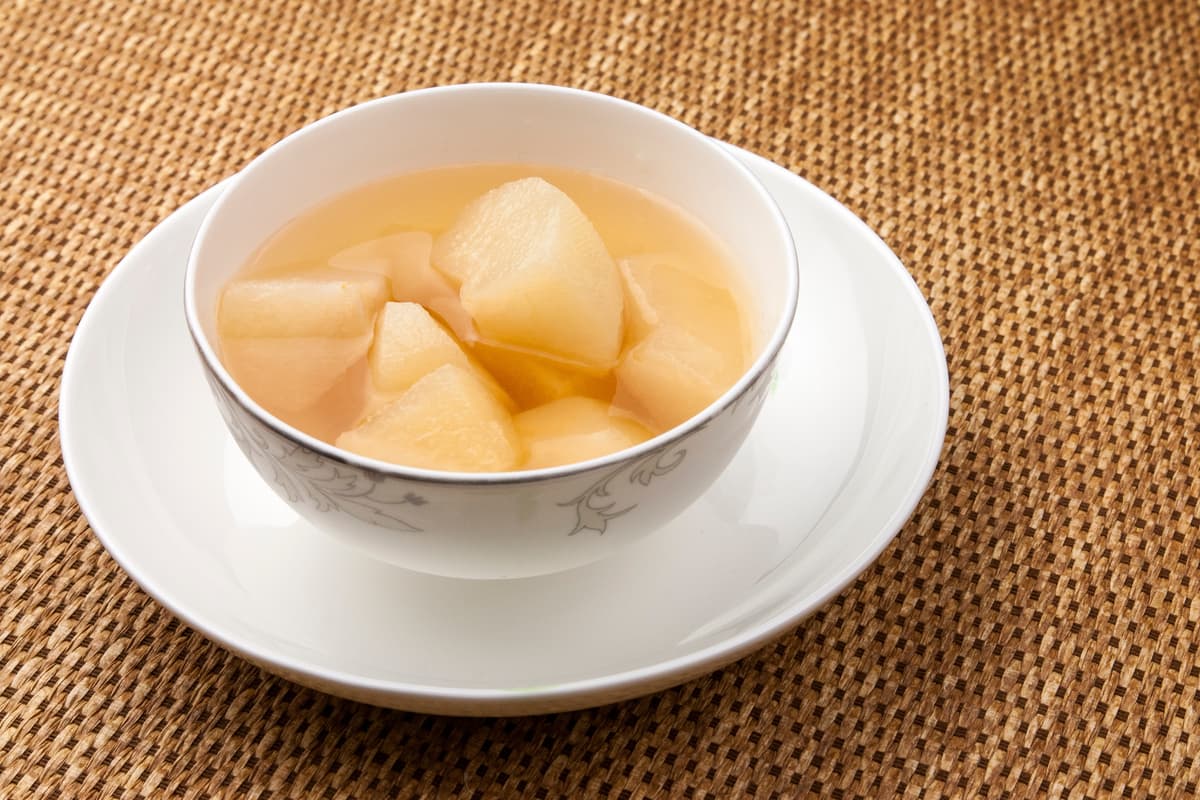
(buzzhouse/Shutterstock)
Pears cooked with rock sugar are a classic dietary remedy for heat phlegm, Lee said.
Pears have been found to help moisturize the lungs, remove sputum, and suppress cough.
However, people with weaker digestive function or those with cold-related illnesses should avoid eating pears.
Ingredients
- 1 pear
- A small amount of rock sugar
Instructions
- Wash the pear thoroughly, peel it, remove the core, and place a small amount of rock sugar inside the hollowed pear.
- Place the pear in a pot and add enough water to cover it. Bring to a boil, then reduce to low heat and simmer for about 30 minutes, until the pear becomes soft.
- Allow the pear to cool slightly, then eat the pear and drink the liquid while still warm.
Adjusting Diet
Cold or chilled foods should generally be avoided, especially during a cold, Lee said.
If a TCM practitioner diagnoses a person as having a cold body type, they should avoid foods considered cooling in nature, such as pears, melons, dragon fruit, bananas, grapefruit, and star fruit. In TCM theory, green tea and coffee are also regarded as cooling.
Conversely, if a person is diagnosed as having a heat- or dry body type, they should avoid foods considered heating or drying, such as fried foods, spicy dishes, and roasted peanuts.