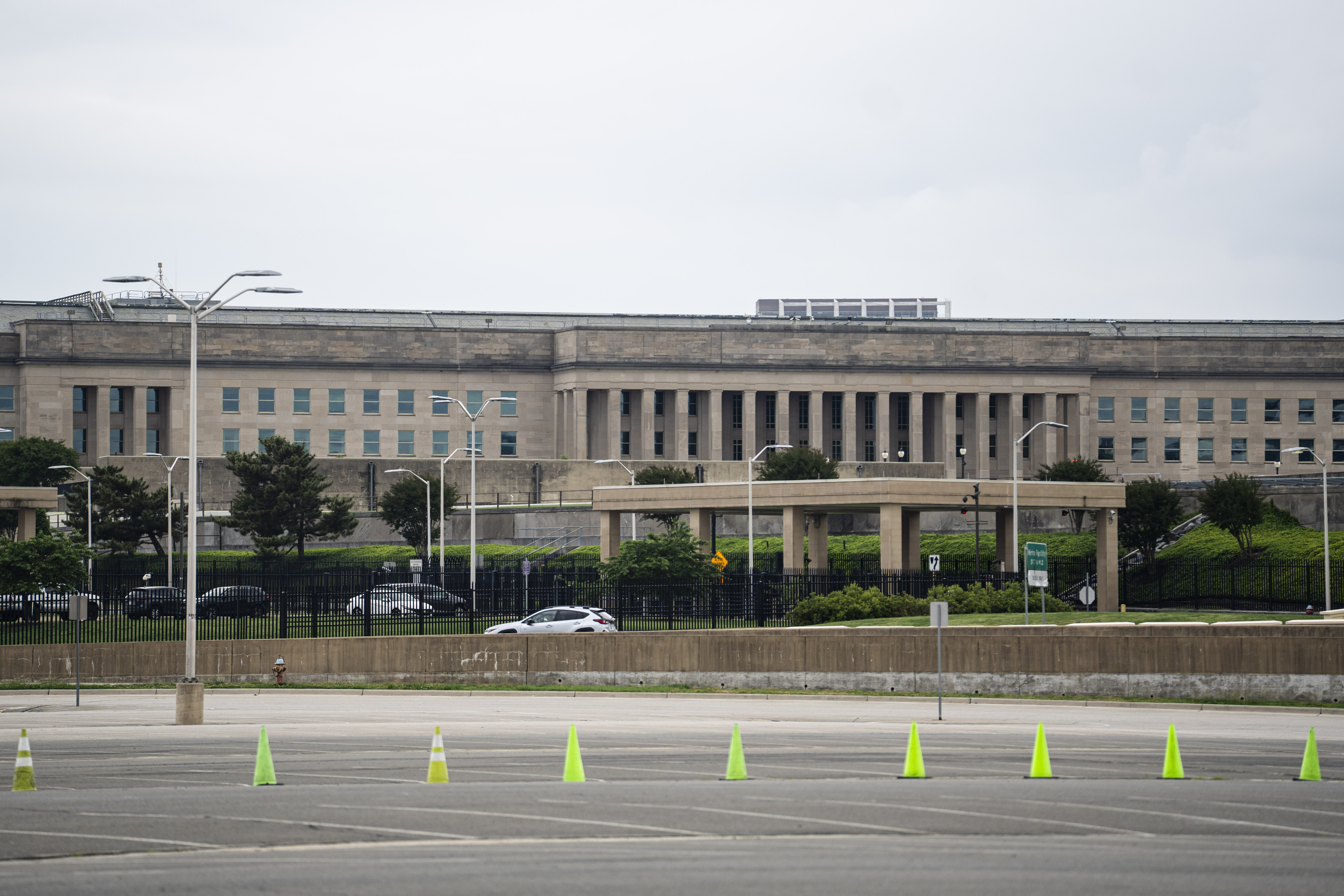

The Pentagon Press Office has been designated a classified space in the complex, with journalists being evicted from the area to make room for a new classified speechwriter area.
“The Pentagon Press Office has been redesignated as a Sensitive Compartmented Information Facility due to speechwriters from the Office of the Secretary of War sharing the facility,” Joel Valdez, a spokesperson for the War Department, announced in a post on X on June 1.
He was responding to a post from a journalist noting that the area has routinely been used to allow journalists to speak with public affairs officers, who have historically answered press questions.
Members of the press have had some form of restricted access to the Pentagon since 1943, with the Pentagon Press Office opening around the time of the Vietnam War. Following the leak of the Pentagon Papers, journalists’ access was restricted, but press access to the compound had become more open in the intervening years.
Now, Valdez said, journalists will be able to access Assistant to the Secretary of War for Public Affairs Sean Parnell “by appointment only.”
Valdez suggested that there was nothing irregular about the change.
“These speechwriters routinely handle classified material and require SIPRNet access. As a result, journalists will no longer be permitted to enter the office space. There’s nothing controversial about that.”
The move comes as the Pentagon and President Donald Trump have decried a flurry of classified intelligence leaks to the press and raised concerns that the administration is locking down press access to information in the Pentagon.
Last October, many outlets turned in their press badges rather than sign a pledge promising not to seek or publish any unauthorized material, including unclassified information. The Epoch Times agreed to the government’s policy.
On May 19, The New York Times sued the Department of War, arguing that a requirement that journalists be escorted while on the grounds violated the First Amendment.
The newspaper described the requirement as “an unconstitutional attempt by the Pentagon to prevent independent reporting on military affairs.”
The interim policy was instituted by Secretary of War Pete Hegseth following previous court rulings.
In March, U.S. District Court Judge Paul L. Friedman ruled that the pledge demanded by the Pentagon was unlawful.
“The Court recognizes that national security must be protected, the security of our troops must be protected, and war plans must be protected,” Friedman wrote in the decision. “But especially in light of the country’s recent incursion into Venezuela and its ongoing war with Iran, it is more important than ever that the public have access to information from a variety of perspectives about what its government is doing.”
After that ruling, the escort policy remained in place following an appeals court ruling that stayed part of Friedman’s decision.