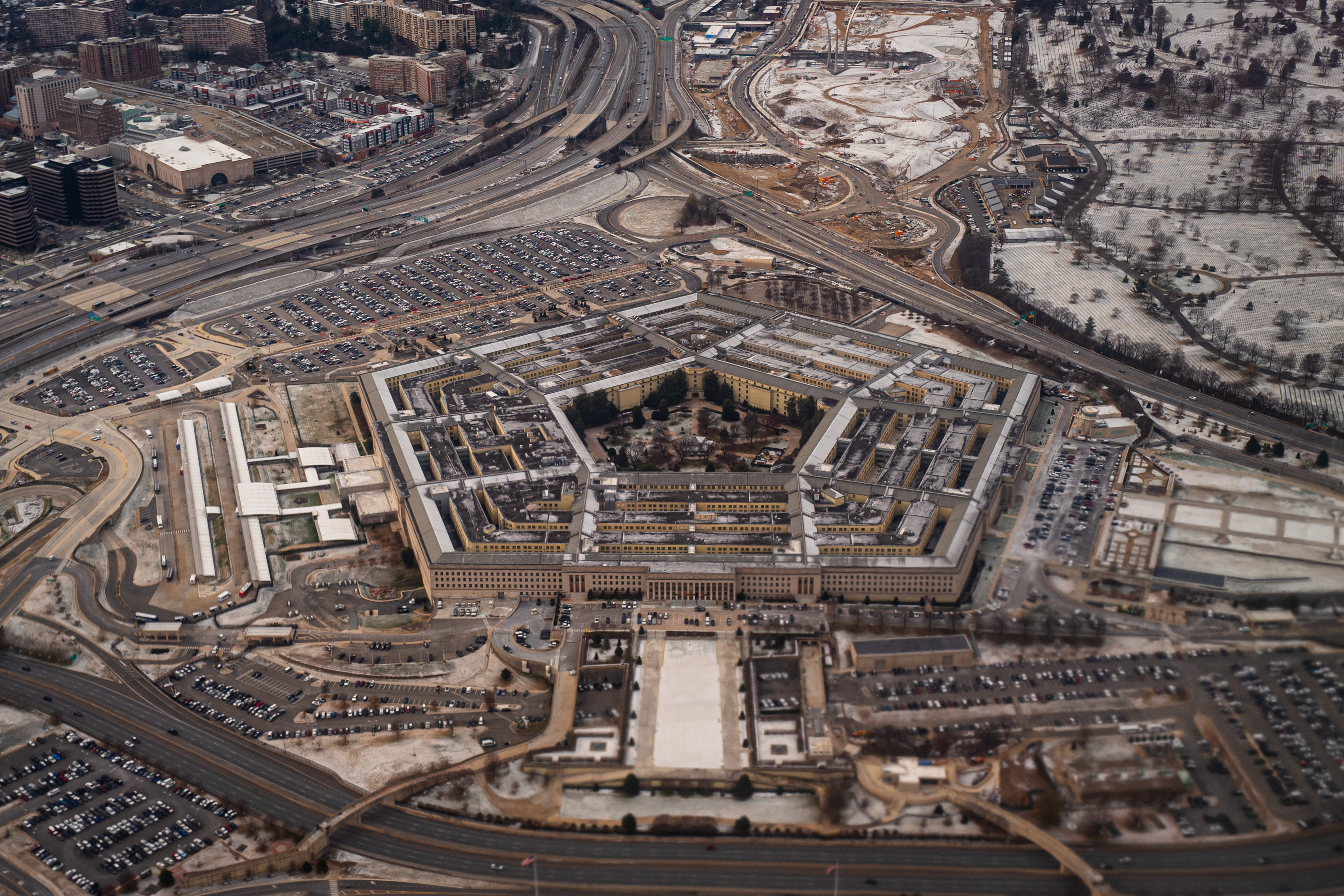

The Pentagon is appealing a federal judge’s rulings that it curtailed the First Amendment rights of journalists by limiting their access to government buildings, as well as how they obtained information.
In a notice of appeal on April 10, the Justice Department targeted three separate rulings from U.S. District Judge Paul Friedman. It came the day after Friedman said that the Pentagon had issued a revised press policy that violated his prior ruling on the policy’s predecessor.
The initial policy compelled media outlets to sign agreements vowing not to solicit unauthorized information from Pentagon officials at the risk of losing their press credentials. The New York Times sued, and Friedman ruled in favor of the paper on March 20.
While appealing the ruling, the Pentagon instituted a new policy restoring credentials for some reporters while requiring any journalists who enter the building to remain accompanied by an escort. It also, among other things, changed the prior policy’s language restricting the solicitation of unauthorized or non-public information. Instead, it prohibited the “encouraging, inducing, or requesting” disclosure of that information.
The Pentagon immediately announced it disagreed with Friedman’s rulings and intended to appeal.
“The Department has at all times complied with the Court’s Order—it reinstated the PFACs of every journalist identified in the Order and issued a materially revised policy that addressed every concern the Court identified in its March 20 Opinion,” Pentagon spokesman Sean Parnell said in a statement.
The Pentagon “remains committed to press access,” Parnell added.
When enacting the interim press policy, the administration argued it was not violating Friedman’s previous order and was putting a new procedure in place while the case was on appeal.
“The [Pentagon] has issued a revised policy that omits the Challenged Provisions and replaces them with meaningfully and materially different provisions that were carefully designed to address the concerns identified in the Court’s Opinion,” the Justice Department said in March.
It stated that some of the new language around disclosure was intended to provide more clarity to journalists. Friedman had criticized the original policy for being too vague and opening the journalists to arbitrary enforcement.
The New York Times argued the Pentagon had instead tried to sidestep the March 20 ruling with its interim policy.
“The department simply cannot reinstate an unlawful policy under the guise of taking ‘new’ action and expect the court to look the other way,” Friedman wrote in a 20-page opinion.
He also said that even though the Pentagon restored credentialing for certain reporters, the access now granted “is not even close to as meaningful as the broad access” journalists had in the building previously.
Before, Friedman had ordered the Pentagon to restore press credentials to multiple New York Times reporters and said that ruling applied across the board to all affected media, not merely the plaintiffs. After Thursday’s ruling, attorneys for the New York Times said it “powerfully vindicates both the Court’s authority and the First Amendment’s protections of independent journalism.”
Stacy Robinson and Joseph Lord contributed to this report.