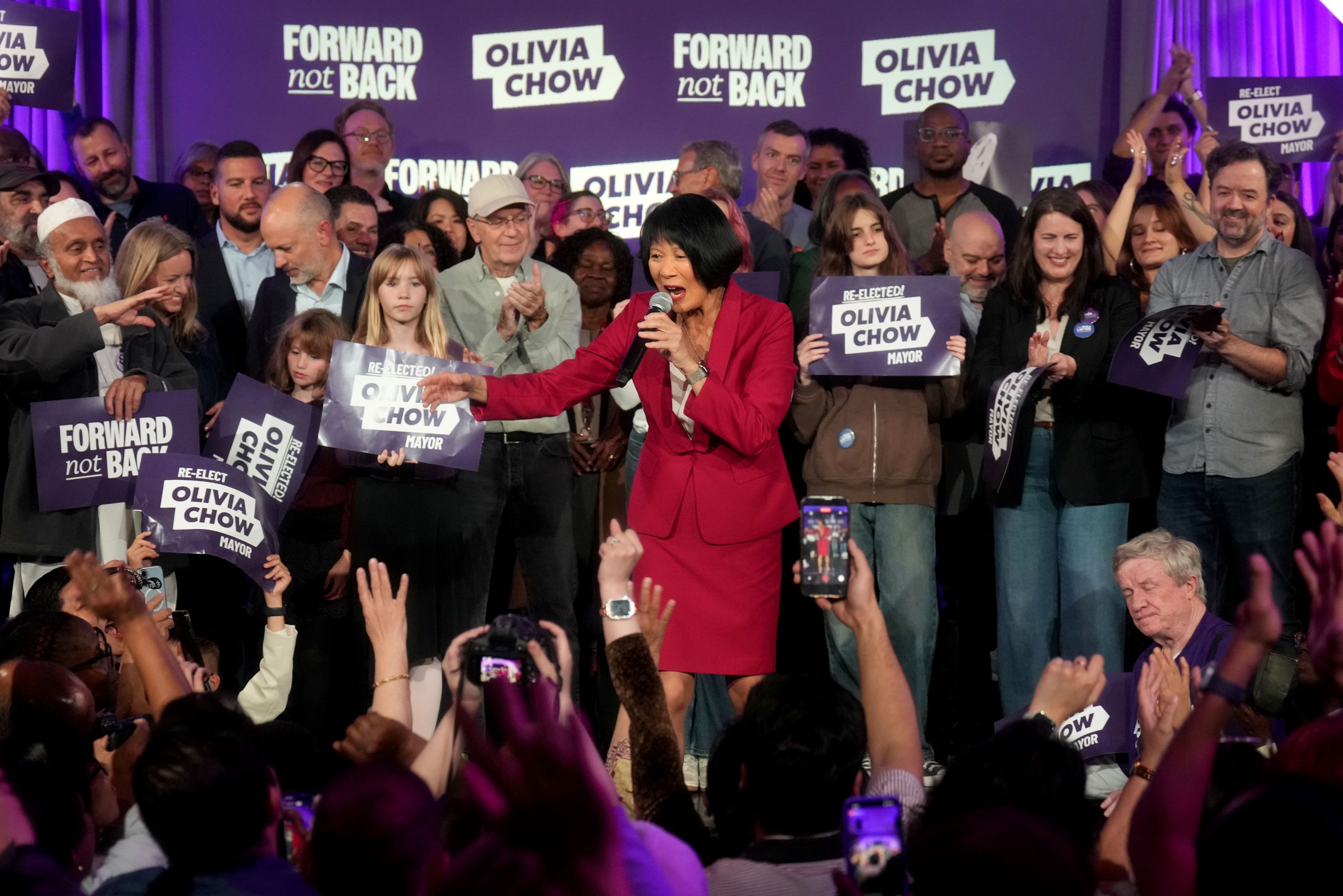
Olivia Chow has once again won the Toronto mayoral race, securing a second term after first becoming mayor in a 2023 byelection.
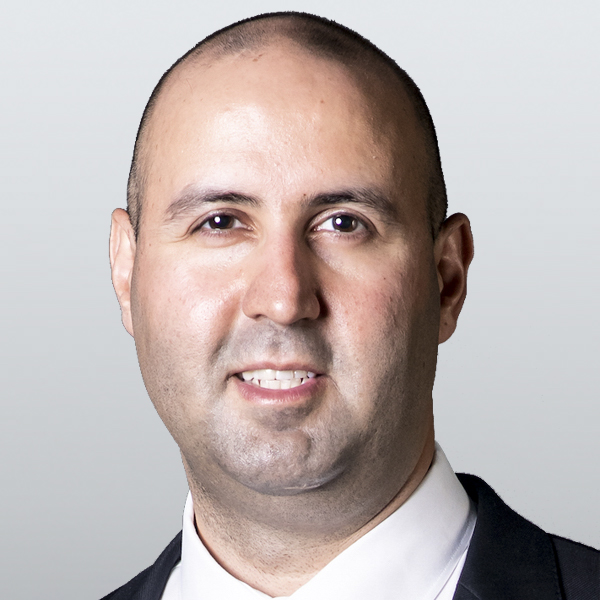
The Oct. 26 Toronto election was a close race between Chow and Ward 19 City Councillor Brad Bradford. Preliminary results as of 11:30 p.m. show Chow has won 54.1 percent of the vote, and Bradford 41.1 percent.
A total of 53 candidates ran for mayor, but the candidate who came closest to the two front-runners received less than 1 percent of the vote.
Elections took place in 414 municipalities in Ontario on Oct. 26.
In Ottawa, Mark Sutcliffe was re-elected mayor, securing a second term after first being elected in 2022.
In Mississauga, City Councillor Alvin Tedjo defeated incumbent Carolyn Parrish to become the city’s next mayor, while in Hamilton, business leader Keanin Loomis was elected mayor, with incumbent Mayor Andrea Horwath finishing third.
Meanwhile, Patrick Brown won his third mayoral term in Brampton, Berry Vrbanovic won a fourth term as mayor in Kitchener, and Josh Morgan was re-elected as mayor in London.
In Oshawa, City Councillor Tito-Dante Marimpietri will be replacing outgoing Mayor Dan Carter, while in Windsor, City Councillor Fred Francis defeated incumbent Mayor Drew Dilkens.
Chow’s Victory
Chow just finished serving her first term as the city’s mayor after winning a June 2023 byelection to replace Mayor John Tory, who resigned in February of the same year.
In her victory speech, Chow said she will serve all residents of Toronto, whether they voted for her or not.
“I am the mayor of every neighborhood, every community, every person, every person who calls Toronto home,” she said. “I will listen to you. I will stand up for you, and I will work every day to earn your trust.”
Bradford also ran in the 2023 byelection, placing eighth. He has represented Ward 19, Beaches-East York, on city council since 2018.
Chow had been the frontrunner since registrations for municipal elections closed on Aug. 21 and had a 17-point lead over Bradford in September, but the gap narrowed considerably since then, according to several pollsters.
The two leading candidates made their last pitch to voters during a televised debate last week, laying out plans aiming to combat the rising cost of living and tackle other voter concerns.
Chow had vowed to provide free meals to every primary school student in the city and establish a TTC fare cap that would activate after 10 trips in a week. She has said that Toronto has made progress under her leadership, citing new affordable housing, frozen TTC fares, and improved 911 wait times.
Bradford had pledged to maintain property tax rates at their current levels and find budgetary efficiencies to reduce the city’s overall spending obligations. He had also criticized Chow’s leadership, raising concerns about rising crime and issues such as the renaming of Yonge-Dundas Square to Sankofa Square.
In his election-night speech, Bradford said he called Chow to congratulate her and wish her well in her new term.
“I said I want her to succeed, and my supporters and the nearly 400,000 people that cast a vote for us tonight, they want her to succeed too. We all do, because we all love this city,” Bradford said.
Acclamations
The Town of Kapuskasing is the largest municipality in the province to have a fully acclaimed council. The northern Ontario town of roughly 8,000 people is among 18 other municipalities that are acclaimed for the 2026-2030 term.
An acclamation occurs when only one candidate is certified for an available position, eliminating the need for a contested vote. In Ontario, acclamations are more prevalent in smaller municipalities.
The number of candidate acclamations has declined to 400 in 2026, a decrease from the 548 recorded in 2022 and 477 observed in 2018, according to the Association of Municipalities of Ontario (AMO) statistics.
Mayoral acclamations have also surfaced throughout the province, including in southern Ontario towns like Whitchurch-Stouffville and Newmarket, which sit on the northern edges of Toronto.
A total of 104 mayors and reeves received acclamation this year, marking a decrease from the 139 acclaimed council leaders recorded in 2022 and 120 in 2018.
This year’s municipal elections also featured many newcomers. A total of 4,502 candidates, or 68 percent of the field, had never held municipal office, up from 66 percent in 2022, according to AMO.
Meanwhile, 2,161 incumbents ran for the same or a different municipal position. They accounted for 77 percent of the potential incumbent candidates for available positions and 32 percent of all candidates.
Internet voting is also becoming more common, with 272 municipalities, or 66 percent of municipal governments, offering it alongside other voting methods. This is up from 52 percent in 2022.
The remaining 87 municipalities, including Toronto and Ottawa, offered in-person voting only.