News Analysis
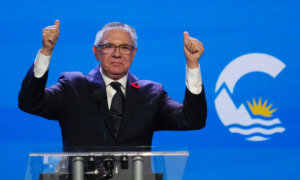
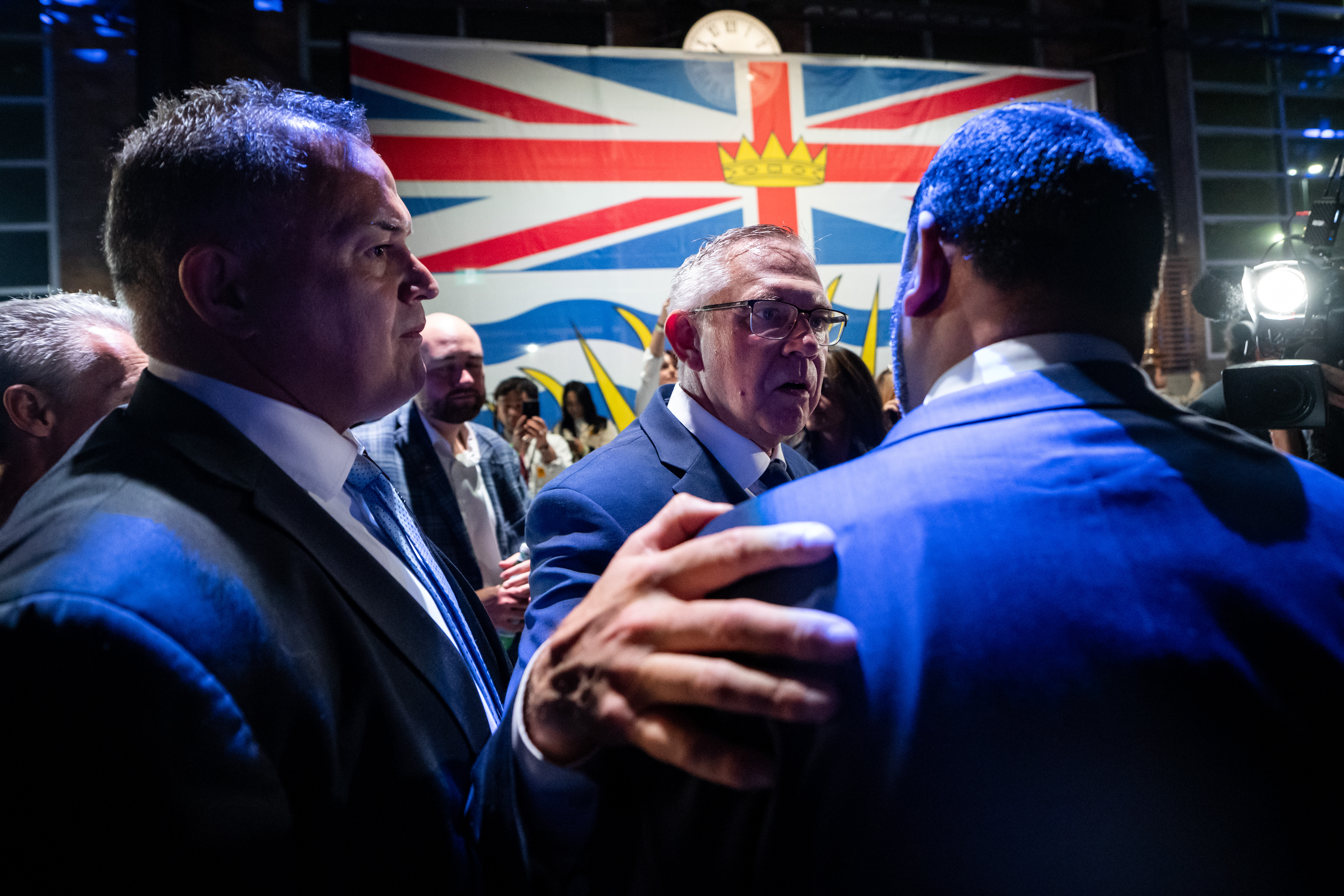
The B.C. Conservatives have focused their campaign message on economics, reflected in interim leader Lorne Doerkson opening his victory speech with bringing capital to B.C., cutting red tape, and boosting resource development.
In the climate of Canada’s ongoing affordability crisis and the federal Liberals’ fortunes turning around in part as a result of economic commitments, it’s no surprise that the messaging has resonated with B.C. voters.
But economic and resource policies are just one aspect of B.C. politics that has undergone significant change over the past several years. The province has also seen fundamental changes in a host of areas ranging from public safety and cultural shifts to education and property rights.
Some issues, such as property rights, have been hot-button topics in B.C., with court rulings creating uncertainty over private property ownership amid aboriginal title claims in parts of the province. Doerkson has been clear that repealing the Declaration on the Rights of Indigenous Peoples Act (DRIPA), which has been cited in some land title court rulings, is a main focus of his government.
On some of the more contentious public safety and cultural issues, with many unions and provincial institutions favouring some of the existing policies, it remains to be seen how much of a fight the B.C. Conservatives may face, or be willing to tolerate, as they set out to form their priorities.
Facing institutional resistance to some of the proposed changes was also part of Ontario Premier Doug Ford’s experience after he swept to power in 2018, having campaigned on promises to deliver results on a host of economic issues and take action on various cultural files. This included changes to school curricula such as the approach to sex education put in place by the previous Liberal government, which weren’t fully fulfilled after becoming mired in legal action by teachers’ unions and facing negative media coverage.
As well, there have been court rulings in B.C. favouring existing harm-reduction drug policies, which could hamper the Conservative government’s drug policy approach.
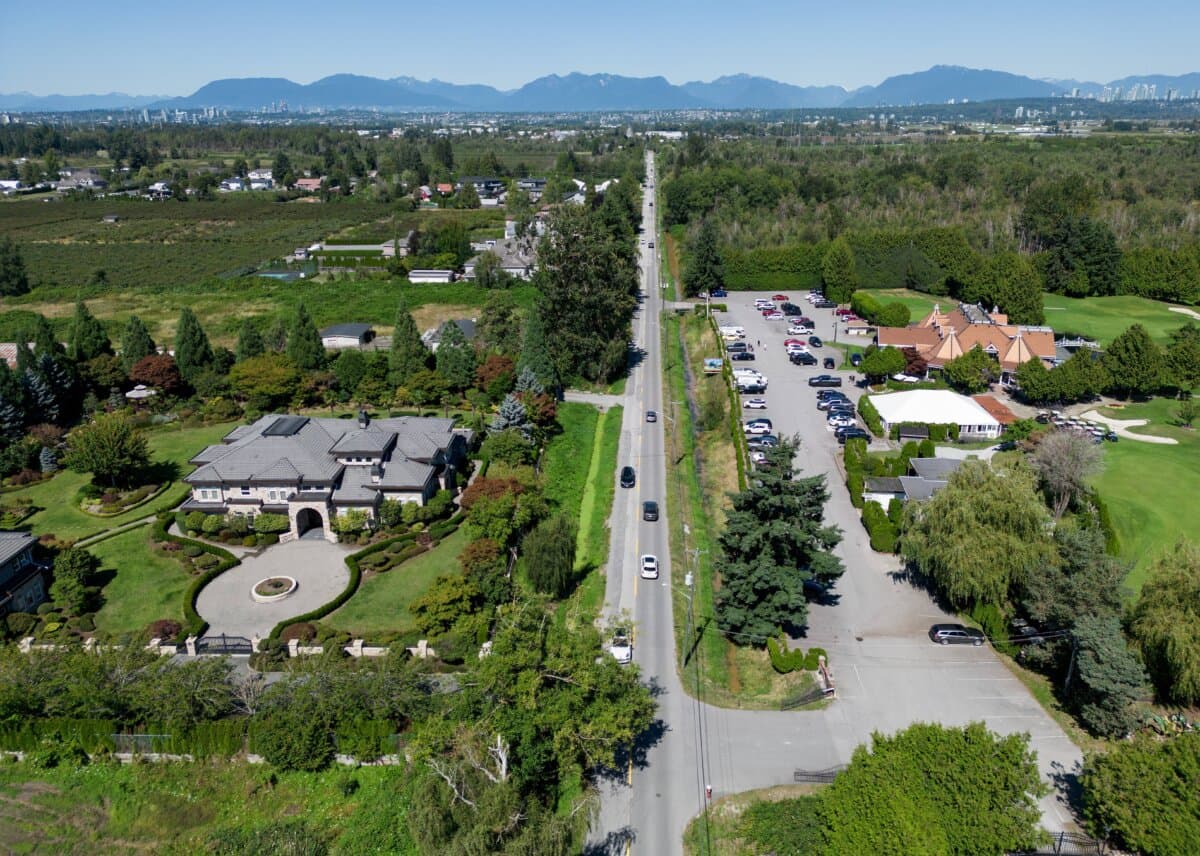
Properties that fall within the boundaries of a Cowichan Nation aboriginal title claim are seen along No. 6 Road in Richmond, B.C., on Aug. 22, 2025. (The Canadian Press/Darryl Dyck)
Property Rights
Property rights in B.C. have been front and centre following several court rulings involving DRIPA and aboriginal title, including an August 2025 B.C. Supreme Court decision recognizing the Cowichan Nation’s aboriginal title over approximately 732 acres of private and Crown land in Richmond.
The decision is being appealed by the federal and B.C. governments as well as the five other parties to the case, including the Cowichan, which are seeking aboriginal title over a larger area.
The Cowichan decision was followed by a December 2025 ruling by B.C.’s Court of Appeal over the province’s mineral claims framework, which found that DRIPA incorporated its parent declaration, United Nations Declaration on the Rights of Indigenous Peoples (UNDRIP), into provincial law and that B.C. law must be consistent with UNDRIP going forward.
David Livingstone, a political science professor at Vancouver Island University, said that property rights and the building up of investor confidence in B.C. are likely items Doerkson will keep pursing, but that fully repealing DRIPA as Doerkson has promised could prove difficult.
“If he does actually try to repeal DRIPA, then I think you’re going to see a huge reaction coming from the other side of the political aisle, and certain factions of the First Nations community,” he told The Epoch Times.
However, Livingstone said the uncertainty over private property rights in B.C. needs to be addressed as soon as possible, or people will continue emigrating out of the province and investment will continue to falter.
“Doerkson has got to deal with that soon,” he said. “That’s going to be contentious. It’s going to be hard.”
Stewart Prest, a political scientist at the University of British Columbia, said the B.C. Conservatives will have to come up with an alternative framework for keeping up cooperation with First Nations.
“The Conservatives are going to have to find something positive to replace that effort with,” he said in an interview, noting it’s not yet clear what that might be.
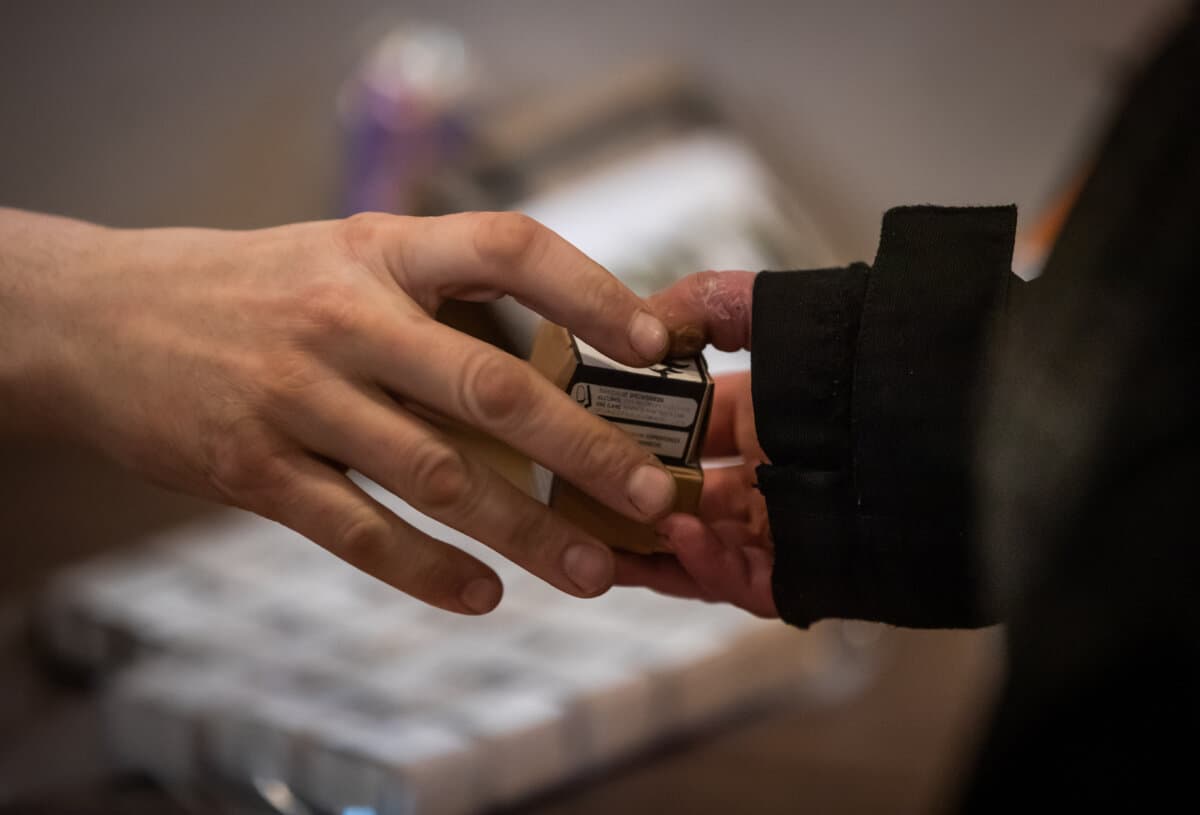
A man receives a tested supply of cocaine in Vancouver on Feb. 9, 2022. (The Canadian Press/Darryl Dyck)
Drug Policies
Making changes to B.C.’s drug policies may be more straightforward politically, given that former Premier David Eby’s NDP had already walked back the decriminalization pilot program and allowed it to expire in January this year, as well as largely recriminalizing public drug use in May 2024. The changes came amid public backlash, with parents raising alarm about finding needles near schools and playgrounds.
The B.C. Conservatives have vowed to end the current safer-supply approach and instead focus on expanding addiction treatment services and broadening the framework for involuntary treatment in the province.
The safer-supply program currently allows those deemed at risk of overdose from illegal drugs to receive prescriptions for the pharmaceutical-grade versions of controlled drugs, including fentanyl and other opioids.
While Prest said there is “an appetite for finding ways to reduce public drug consumption,” he said some of the B.C. Conservatives’ proposed policies to expand involuntary treatment measures may face constitutional challenges.
“That can violate individuals’ constitutional freedoms, and so that too can can open up a variety of cans of worms,” he said.
Judicial decisions may also add complexity; the B.C. Supreme Court ruled in September that federal legislation breached constitutional rights in preventing non-medicalized safer-supply programs from operating without giving the programs a practical way to obtain an exemption.
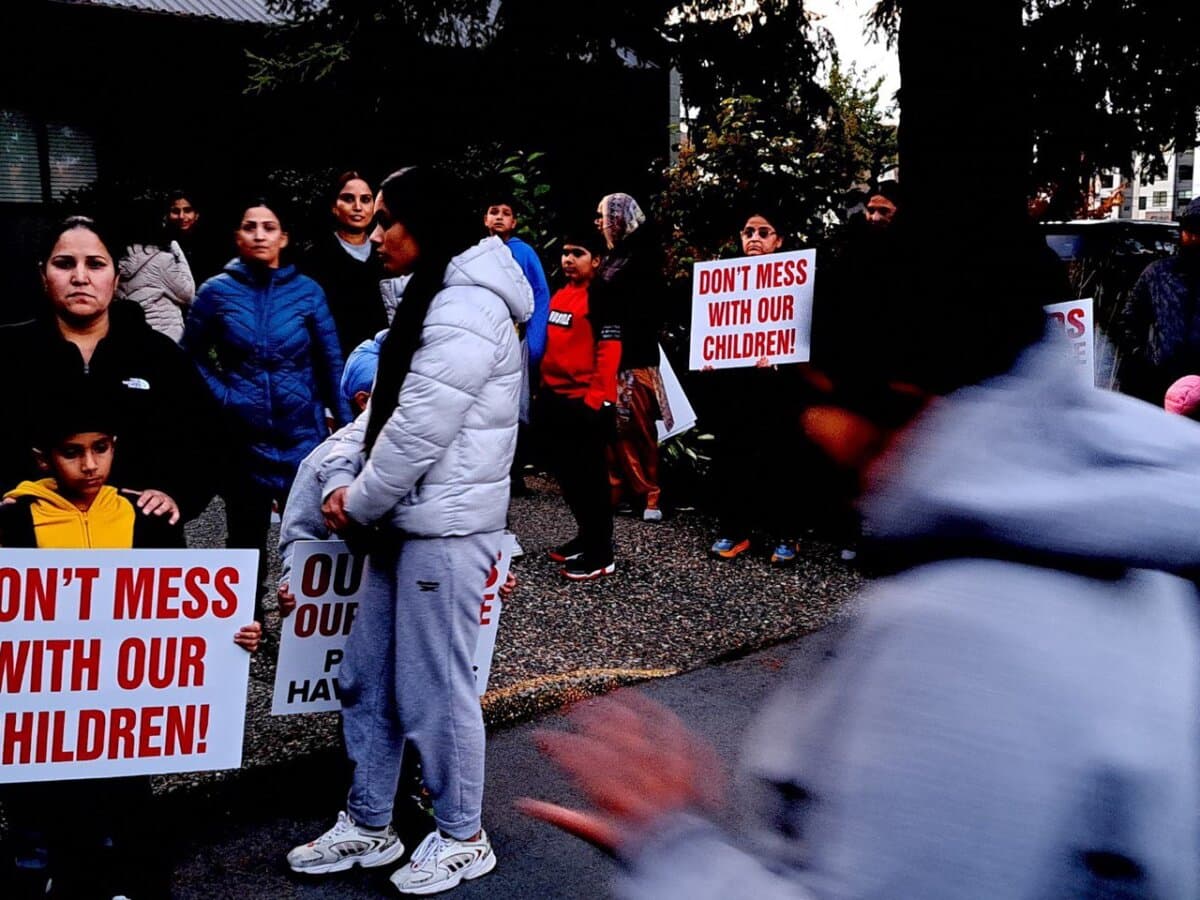
People gather to protest against SOGI (Sexual Orientation and Gender Identity) education in schools, in Abbotsford, B.C., on Sept. 28, 2023. (Jeff Sandes/The Epoch Times)
SOGI and Cultural Issues
Social and cultural controversies familiar across North America have also been in the spotlight in B.C. in recent years, including the Sexual Orientation and Gender Identity (SOGI) curriculum and the removal of the statues of several historical figures.
A statue of Canada’s first prime minister, Sir John A. Macdonald, was removed from outside Victoria City Hall on Aug. 11, 2018, as part of a decision by city council to pursue greater reconciliation with indigenous peoples.
On July 1, 2021, violent protesters toppled a statue of Captain James Cook and threw it into Victoria’s Inner Harbour.
Under former leader John Rustad, the Conservatives repeatedly challenged the inclusion of SOGI resources in schools. Bruce Banman, the second former BC United MLA to join the B.C. Conservative caucus in 2023, raised the issue in the provincial legislature a number of times at that time.
Doerkson initially said early in the campaign that he wouldn’t discuss SOGI, but he followed up several days later by saying that SOGI teaching resources should be removed from schools.
“SOGI has been a lightning rod for division in this province,” he said Sept. 25. “I think that SOGI has to be removed.”
Livingstone says that, based on how the campaign has unfolded, he expects the Doerkson government will likely stay away from more contentious issues, especially given how the party effectively pushed out the more socially conservative Kerry-Lynne Findlay as leader. Findlay, who won the leadership race on May 30, resigned on Sept. 20 after several MLAs quit or were ousted from caucus over disputes with her leadership.
However, Livingstone adds that there will still be those in caucus who would push for those cultural issues to not be forgotten.
“I think there’s going to be a number of people in caucus though who won’t let him go too far in that direction,” Livingstone said.
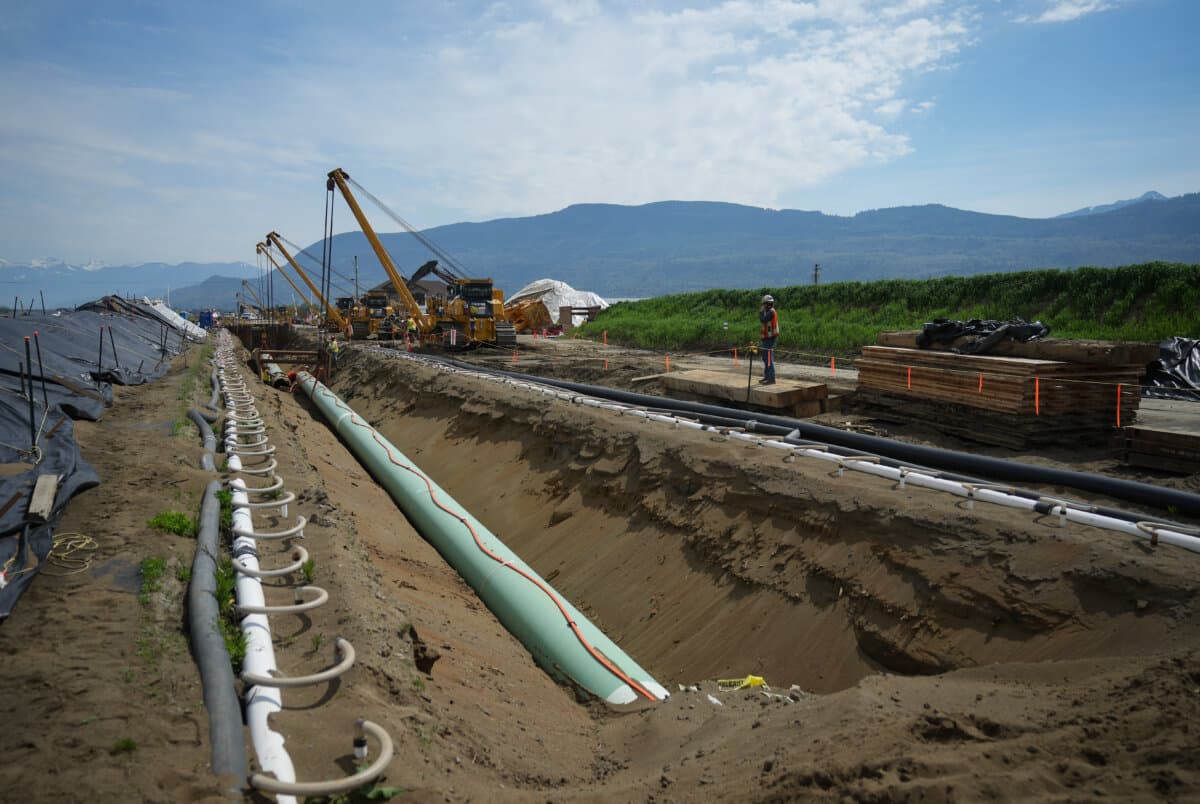
Workers position pipe during construction of the Trans Mountain pipeline expansion in Abbotsford, B.C., on May 3, 2023. (The Canadian Press/Darryl Dyck)
Focus on Economy
Mario Canseco, president of polling firm Research Co., said the B.C. Conservatives are likely to soft pedal on social issues and focus their actions on tackling affordability, jobs, and housing, thereby avoiding the political risks of wading into controversial topics.
“This is the free-enterprise coalition of the past, and similar to the one that elected governments under [Christy Clark] and Gordon Campbell,” Canseco said, referring to past B.C. Liberal premiers. The B.C. Liberals rebranded as B.C. United in 2023 and subsequently merged with the B.C. Conservatives in 2024.
“So those elements that are more socially conservative might be in a very different situation now than the one they envisioned can happen,” Caseco added.
Prest also said that Doerkson is most likely to focus on economic matters in the party’s first mandate and that this can include emphasizing infrastructure, transportation, and resource projects.
“I think the things they will look to move on most quickly are going to be concrete matters,” Prest said.
In his first post-election press conference on Oct. 25, Doerkson said the election results showed that British Columbians were looking for change from the governing NDP, which has been in power since 2017.
He said he would commission an independent review of the province’s finances, given that it is facing a nearly $14 billion deficit. He also said he supports the Pacific Link oil pipeline between Alberta and B.C., proposed by Ottawa and Alberta.
He reiterated his campaign promises to not raise taxes and to increase the basic personal tax exemption to $32,000, which he said would save most working British Columbians about $1,000 a year.
He also reiterated his commitment to repeal DRIPA and to establish an expert commission within his first 100 days in office to reduce health-care wait times.