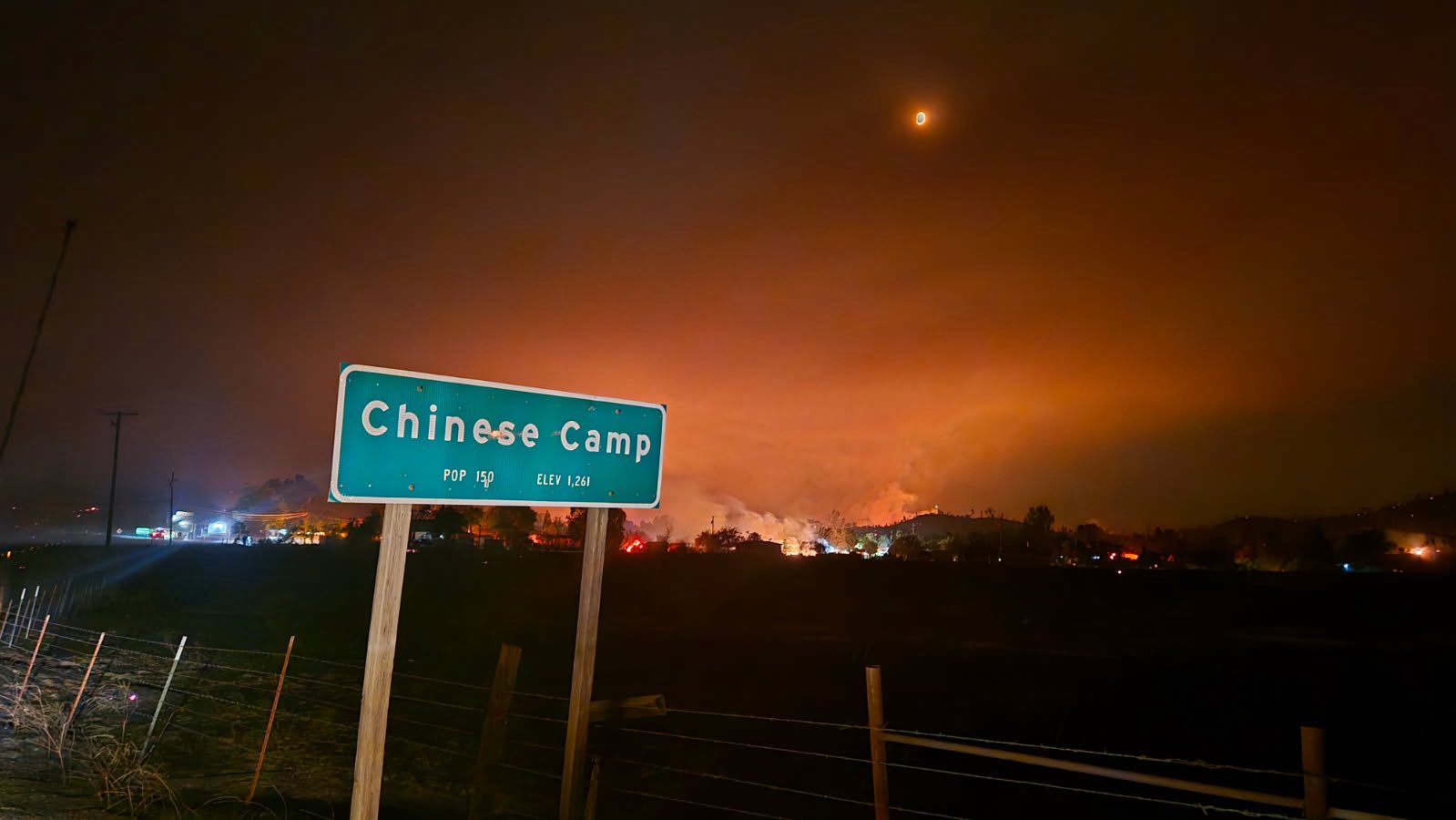

A lightning-caused wildfire continued to rip through Northern California with zero containment on Sept. 3 after destroying homes in the historic gold mining town of Chinese Camp, California.
The 6-5 fire was sparked during a lightning storm just before 8:30 p.m. on Sept. 2 north of Don Pedro Overlook Trail and Old Pedro Road near the Red Hills. It had grown to nearly 6,500 acres by the afternoon of Sept. 3, according to fire officials.
The blaze was one of nearly two dozen fires burning in the region about 120 miles east of San Francisco.
Flames moved quickly across the Sierra Nevada and into the state’s historic gold rush region, reaching homes in Chinese Camp the first night.
Nearly 640 firefighters were assigned to the fire.
“The 6-5 fire near Chinese Camp (Tuolumne County) remains the largest fire being suppressed,” the California Department of Forestry and Fire Protection (CalFire) reported.
Several residential areas around the fire remained under evacuation orders and warnings.
CalFire’s Tuolumne-Calaveras Unit was working to contain multiple fires lit by the storm. Multiple ground and air resources arrived on the second day, and more fire engines, bulldozers, crews, and aircraft were on order, CalFire reported.
The fire spread quickly in dry tall grass, brush, and timber over challenging terrain. Fire crews were forced to hike to many remote locations, officials said.
The exact number of homes and structures destroyed in the Chinese Camp community was not yet known.
It was unclear how many of the town’s gold rush-era structures, including an 1854 post office, were also damaged. Other buildings include a Catholic church built in 1855 and the town’s general store and tavern built in 1934.
A damage inspection team was ordered to assess the destruction.
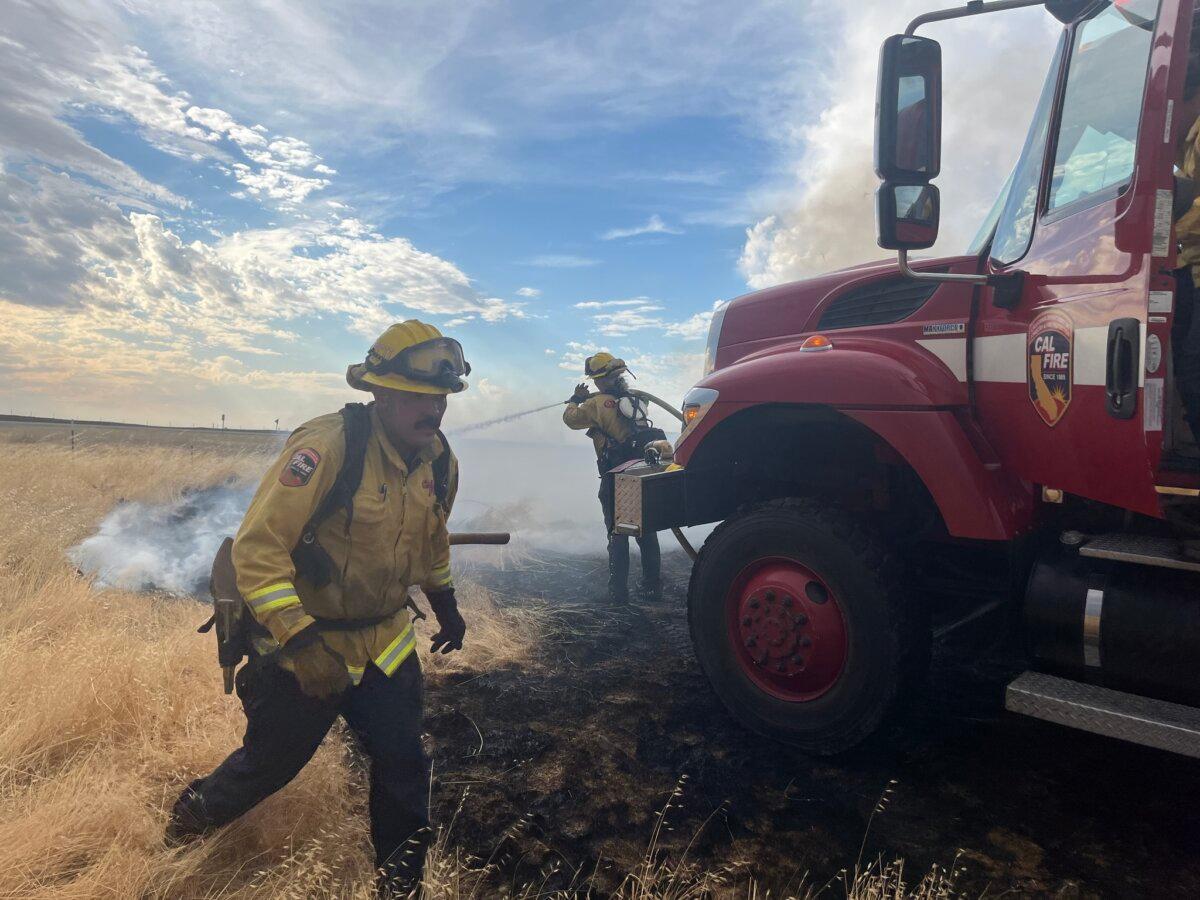
Nearly 640 firefighters battled a lightning-caused wildfire near the historic gold mining town of Chinese Camp, Calif., on Sept. 3, 2025. (CalFire)
Former resident Randy Simpson said he hoped that his former neighbors in the tight-knit community are safe.
“So sad. ... My kids went to Chinese Camp Elementary School,” Simpson posted on Facebook. “Lots of history there. We enjoyed hiking and horseback riding. We did gold prospecting in Sims [Creek], kids used to play in the creek and catch frogs.
“I hear ... my old house is still standing.”
About 100 residents were evacuated and the main highway between San Francisco and Yosemite National Park was closed by fire officials on the first day.
The Chinese Camp Elementary School was not damaged, according to CalFire.
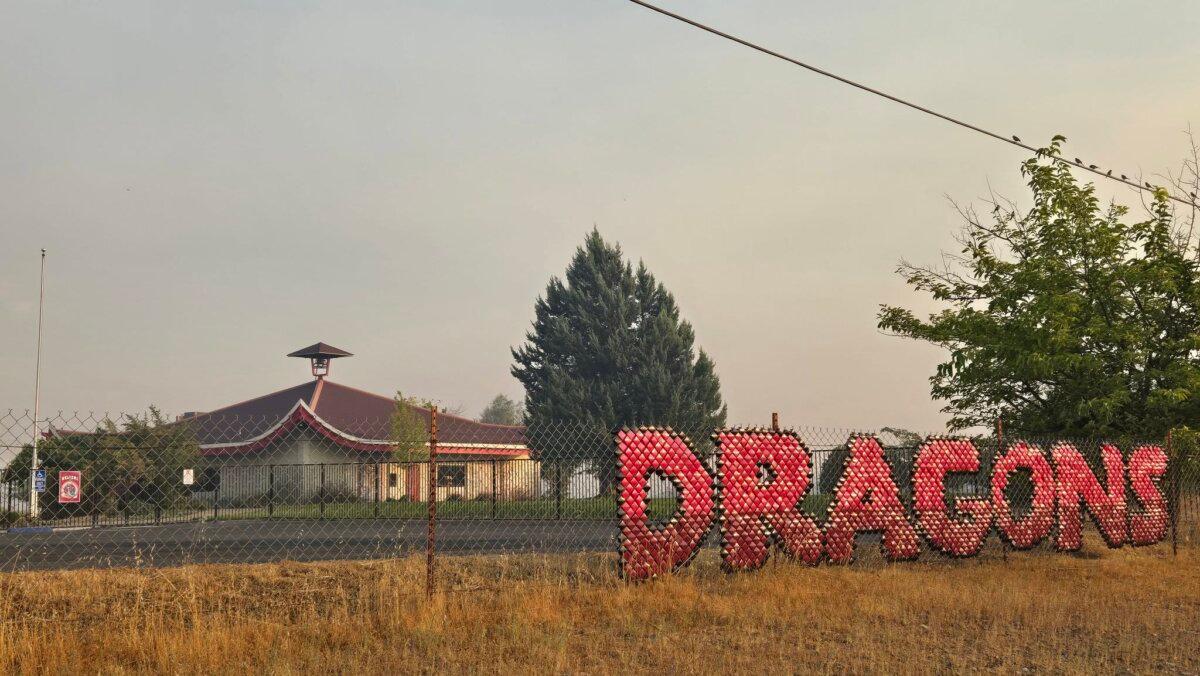
Chinese Camp Elementary School was not damaged in the wildfire that grew quickly in Northern California's historic gold mining region. (CalFire)
Gusty winds continued to be a challenge to crews as the blaze threatened multiple communities, including ancestral tribal lands, according to fire officials. Temperatures around the fire region were expected to linger in the 90s over the next few days with little rain in sight.
The camp was founded in the 1850s during the California gold rush in Tuolumne County by thousands of Chinese immigrants who arrived looking to strike it rich on Gold Mountain. One company of Chinese miners was driven out of a nearby mining camp by miners who were jealous of the group’s success, according to Tuolumne County’s historical information.
The miners, who were mostly Cantonese from Guangdong Province, settled in nearby Camp Washington, where they felt safe. More Chinese miners came to live in the camp, and it became known as “Chinese Camp.”
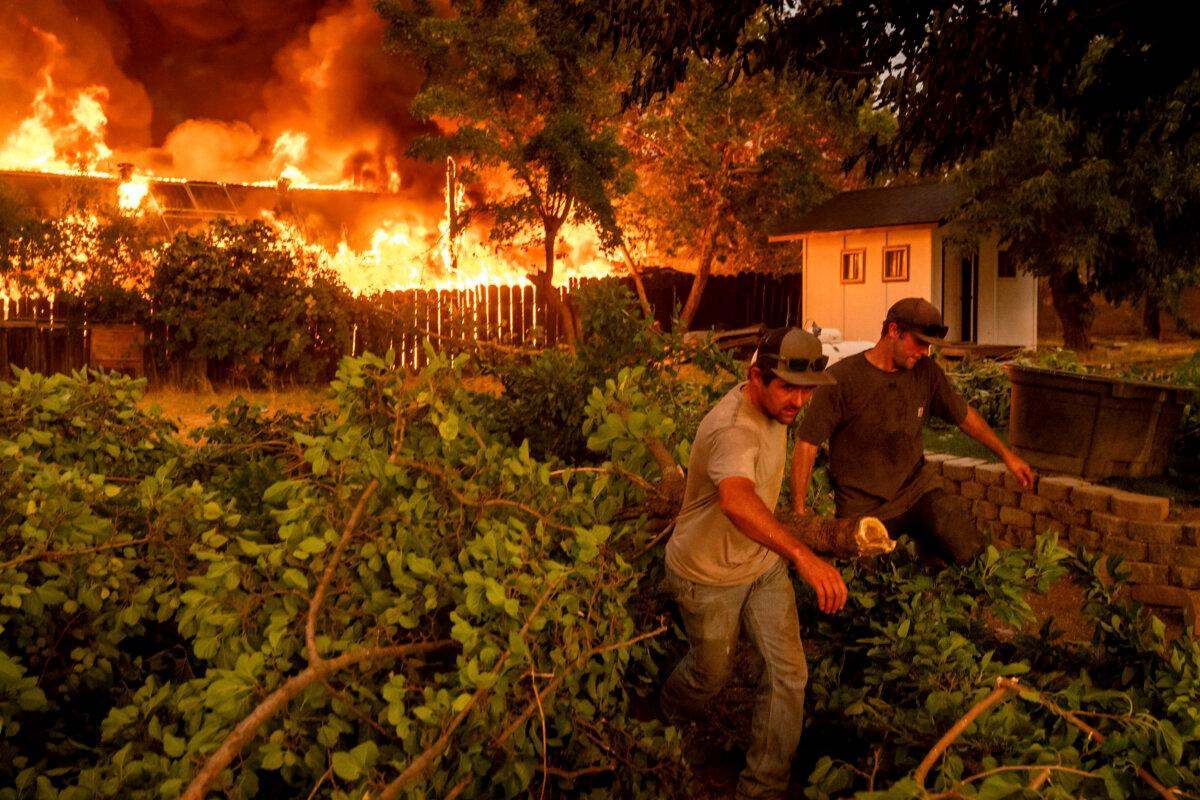
Layne Smith (L) clears vegetation to stop flames from spreading to his home as the 6-5 fire burns through the Chinese Camp community in Tuolumne County, Calif., on Sept. 2, 2025. (Noah Berger/AP Photo)
By 1860, Chinese settlers owned 10 boarding houses. Six cooks, two barbers, three saloon keepers, four bakers, two tailors, seven herb doctors, a grocer, and a musician were among the Chinese people serving hundreds of local miners and residents, according to the county.
They also had a school and a cemetery, but most of their final remains were sent by the community back to their homeland in China, as was their tradition.
Today, only about 60 residents live in the community, according to the latest census. The community produces lumber for cedar fences. It is near a handful of family-operated cattle and livestock ranches and a biomass plant.