
Gov. Gavin Newsom signed new laws in California on Oct. 9 to ban medically unnecessary cat declawing and add new puppy mill regulations.
Three of the laws aim to create better transparency for buyers making pet purchases.
“Sunlight is the best disinfectant, and it’s time to shine a light on puppy mills,” Newsom said in a statement. “Greater transparency in pet purchases will bring to light abusive practices that take advantage of pets in order to exploit hopeful pet owners.”
The legislation was crafted to protect animals and Californians by addressing fraudulent pet breeding and selling practices, according to the governor.
Assembly Bill 506, by Assemblyman Steve Bennett of Ventura, requires pet sellers to disclose the pet’s origin and health information. It also voids contracts that include nonrefundable deposits, which are often used in bait-and-switch schemes to sell people unhealthy pets, and it feeds the puppy mill industry, according to Newsom.
Assembly Bill 519, by Assemblyman Marc Berman of Menlo Park, prohibits third-party pet brokers, particularly online ones, from selling cats, puppies, and rabbits bred by a third party for profit in California.
Senate Bill 312, by state Sen. Thom Umberg of Santa Ana, requires dog importers to submit health certificates electronically to the California Department of Food and Agriculture within 10 days of shipment, and requires the state department to provide the certificates upon request.
The nonprofit animal welfare organization San Diego Humane Society celebrated Newsom’s approval of the puppy mill bills.
“We’re thrilled to share Gov. Gavin Newsom signed all three bills in the ‘Stop The Puppy Mill Pipeline’ legislative package designed to reduce consumer fraud and animal abuse in pet sales!” the group posted on social media. “This marks a huge stride toward a more compassionate, humane future for animals across California!”

A veterinary technician vaccinates a dog at a drive-through pet vaccine clinic at Mission Viejo Animal Services Center amid the COVID-19 pandemic in Mission Viejo, Calif., on June 23, 2020. (Mario Tama/Getty Images)
The laws will go into effect Jan. 1, 2026.
No More Declawing
Declawing a cat for non-medical reasons will also be banned starting Jan. 1, 2026.
Assembly Bill 867, by Assemblyman Alex Lee of San Jose, also prohibits anyone other than a licensed veterinarian from declawing a cat.
“Banning cat declawing in California is a historic milestone for animal welfare,” Lee posted on Facebook on Oct. 10. “After years of pushing to make this a reality, I’m proud to see California create a more compassionate society for our feline friends by moving away from this inhumane practice.”
The law only allows licensed professionals to perform the procedure for therapeutic purposes, such as for injury, infection, disease, or other medical conditions that jeopardize the cat’s health. It prohibits the procedure for cosmetic or aesthetic purposes.
Vets will also have to file a written statement with the state’s Veterinary Medical Board to explain the reason for the procedure and to report the date it was performed.
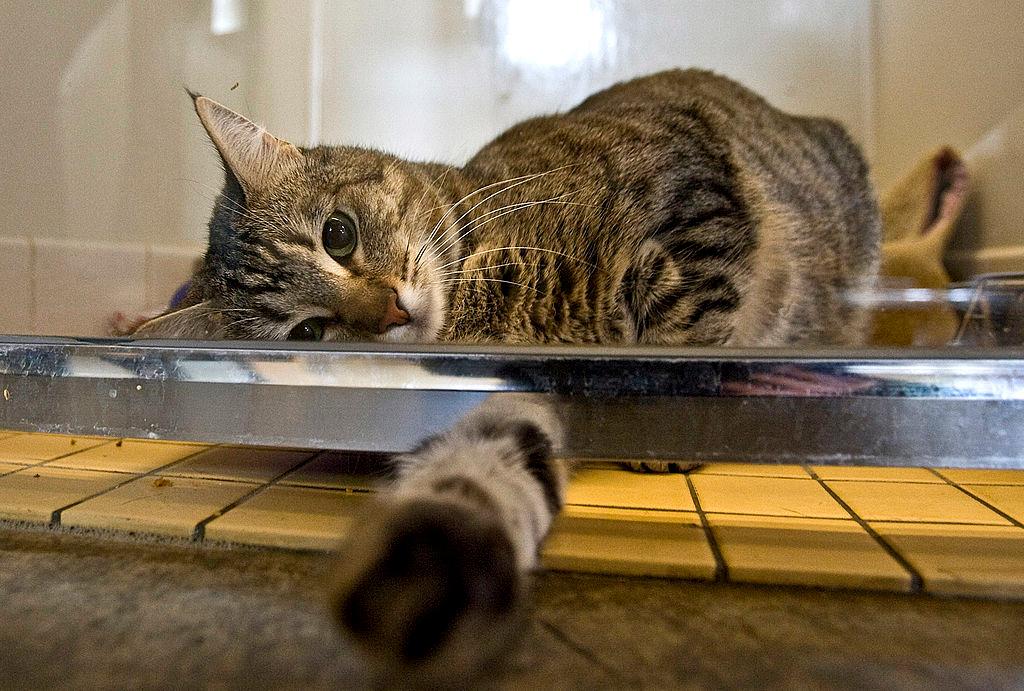
Lola, a domestic shorthaired cat, reaches under the enclosure at the Sacramento SPCA in Sacramento, Calif., on Feb. 1, 2008. (David Paul Morris/Getty Images)
Violating the law could result in fines and suspension or revocation of the veterinarian’s state license.
Cat declawing is a barbaric surgical procedure that permanently disables cats, according to Lee. The bill received bipartisan support.
The bill was sponsored by The Paw Project, Animal Legal Defense Fund, Humane World for Animals, and Humane Veterinary Medical Alliance.
“Declawing removes an integral part of an animal’s anatomy and subjects animals to the risks of pain, infection, behavioral changes, and lifelong lameness,” the Paw Project, a nonprofit focused on ending declawing, said in a statement to the Legislature. “Safe and effective alternatives to declawing include simple training, nail caps, and other established deterrent methods.”